2026-08 Feldkirch (A), Liechtenstein, Brig (CH), München (D)
Vacation photos
Maria Matejka
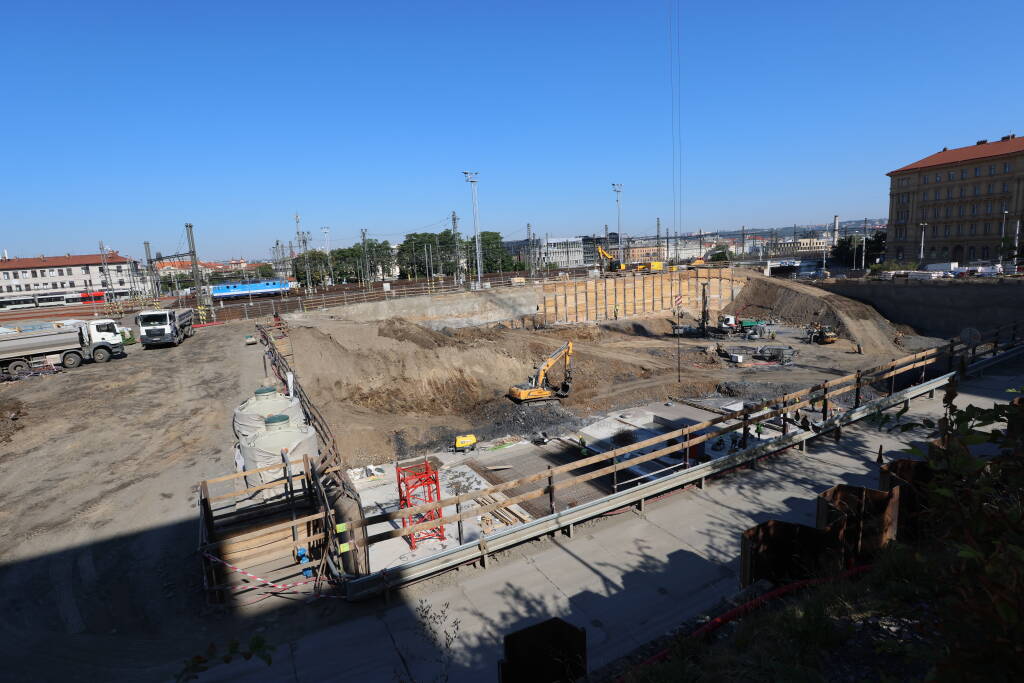
Documentation photo from prague main station. Formerly a depot site, later an office building, now yet another building in the form of a hole in the ground and some foundations in progress.
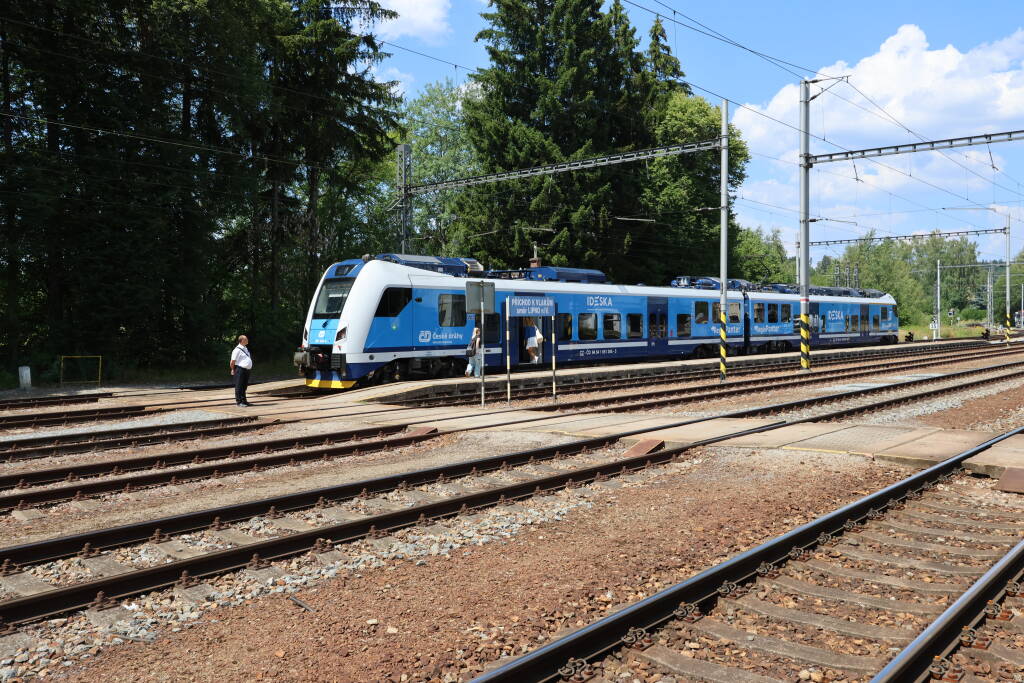
Station Rybník, a "panther" train to Lipno nad Vltavou.
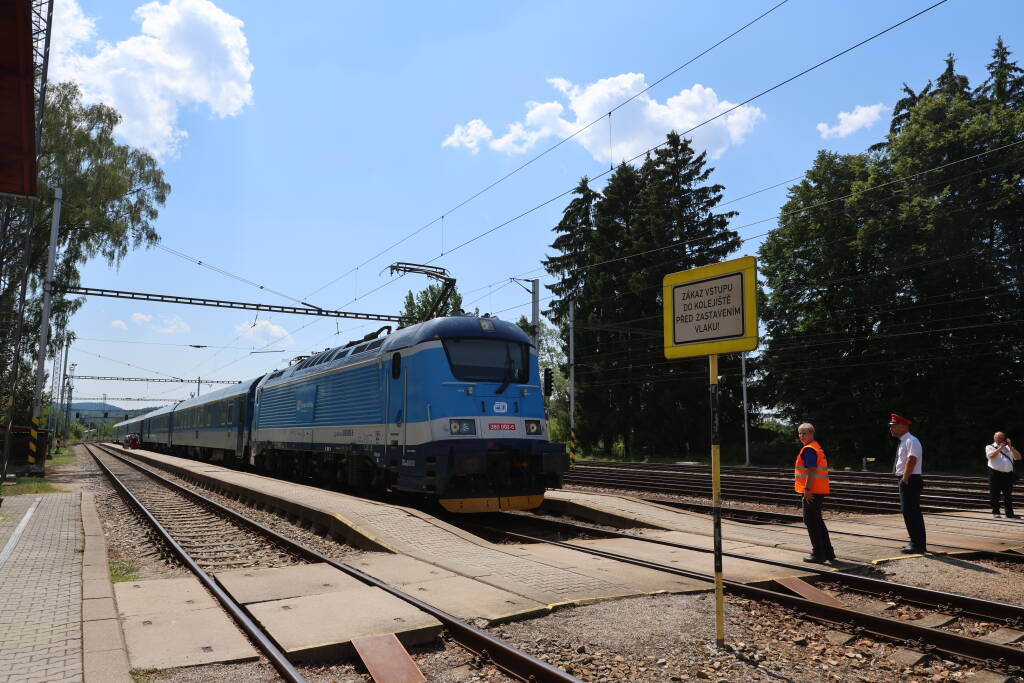
Eurocity back to Prague, headed by a Messerschmitt (Škoda E109). We're going to substitute bus transport.
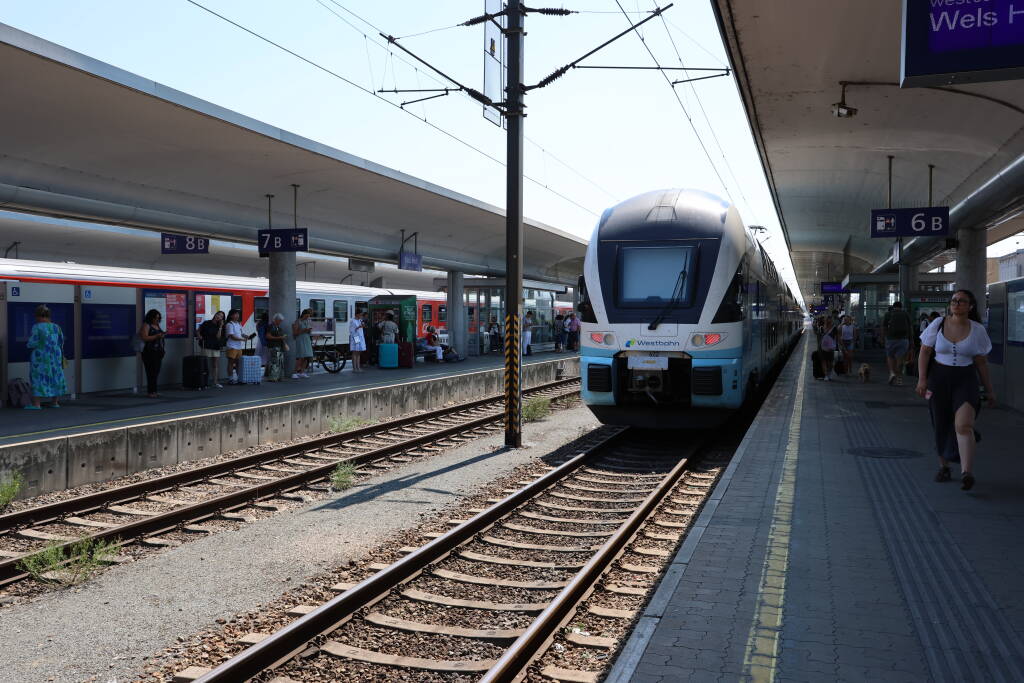
Linz. Westbahn leaving in direction Wels.
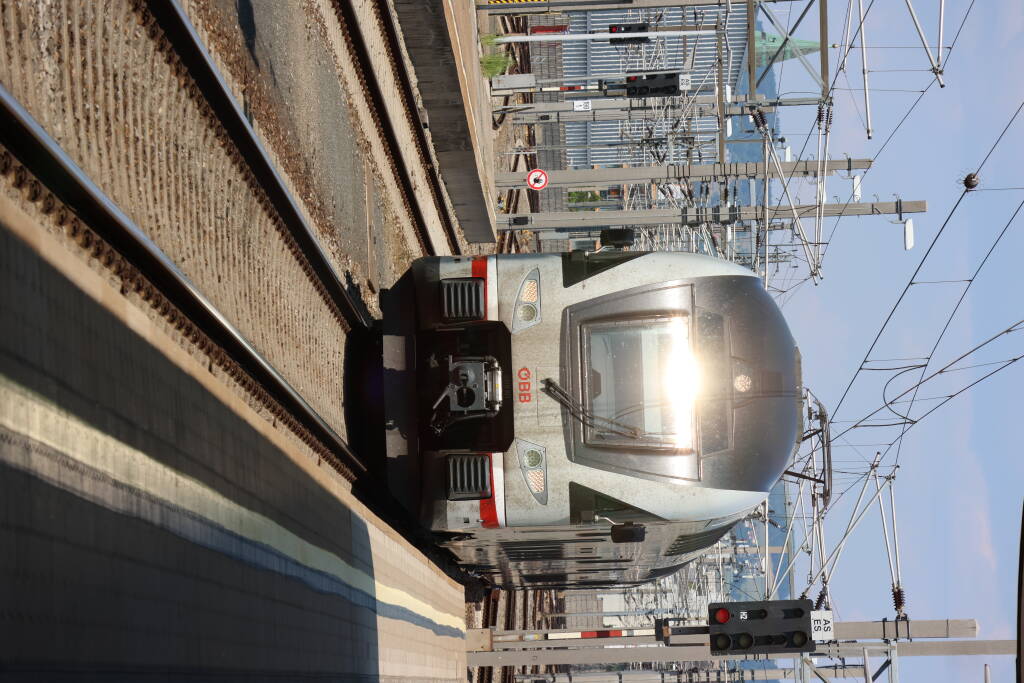
Another track, IC to Salzburg arriving. The face looks gnarly but I let him go, I need the next train which takes me directly to Feldkirch.
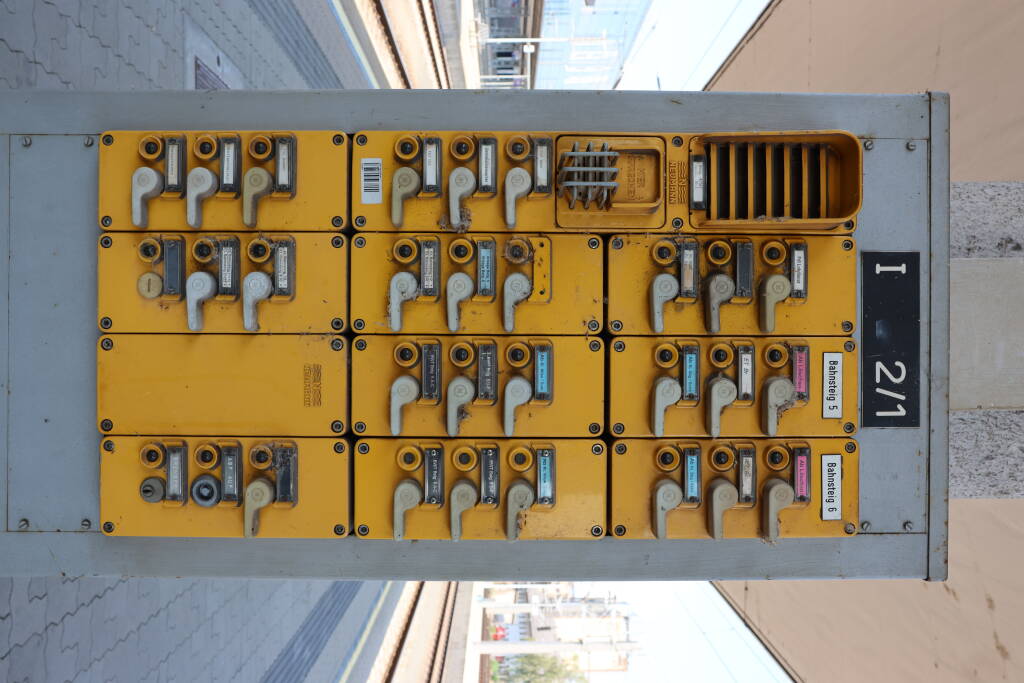
A panel for announcement control. I resisted my urge to take my key and announce something.
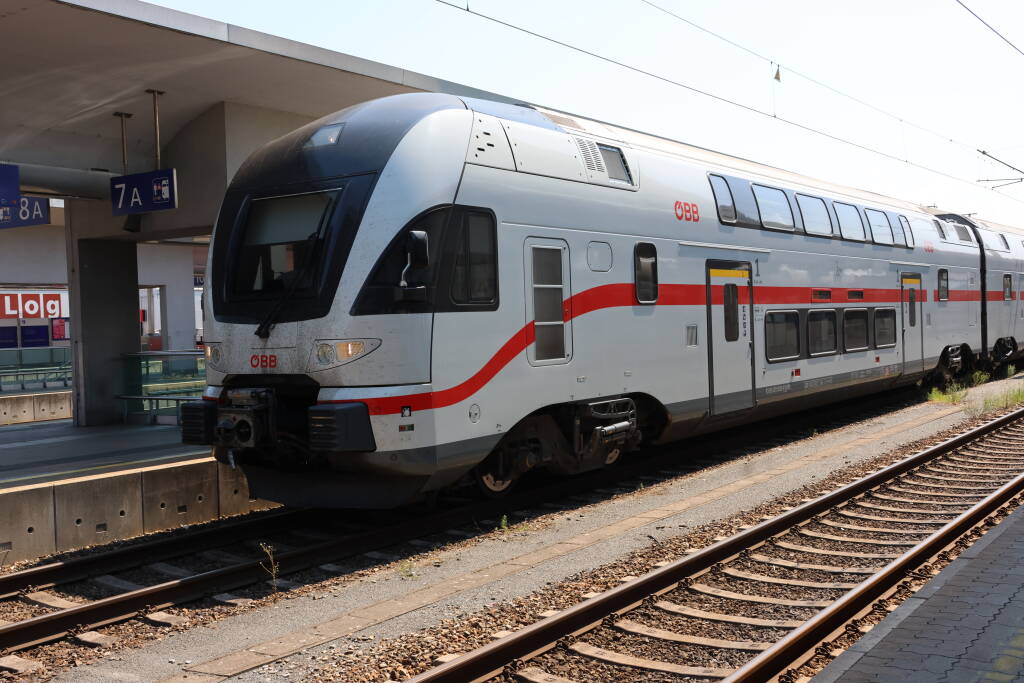
From the side, this unit looks like almost sobbing.
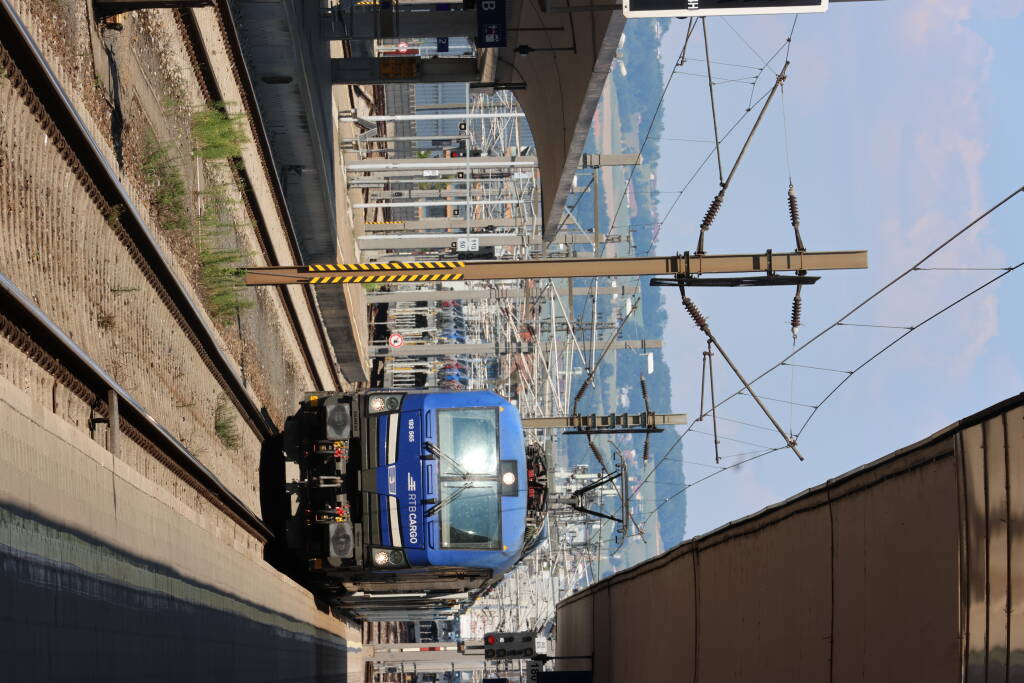
Finally our train!
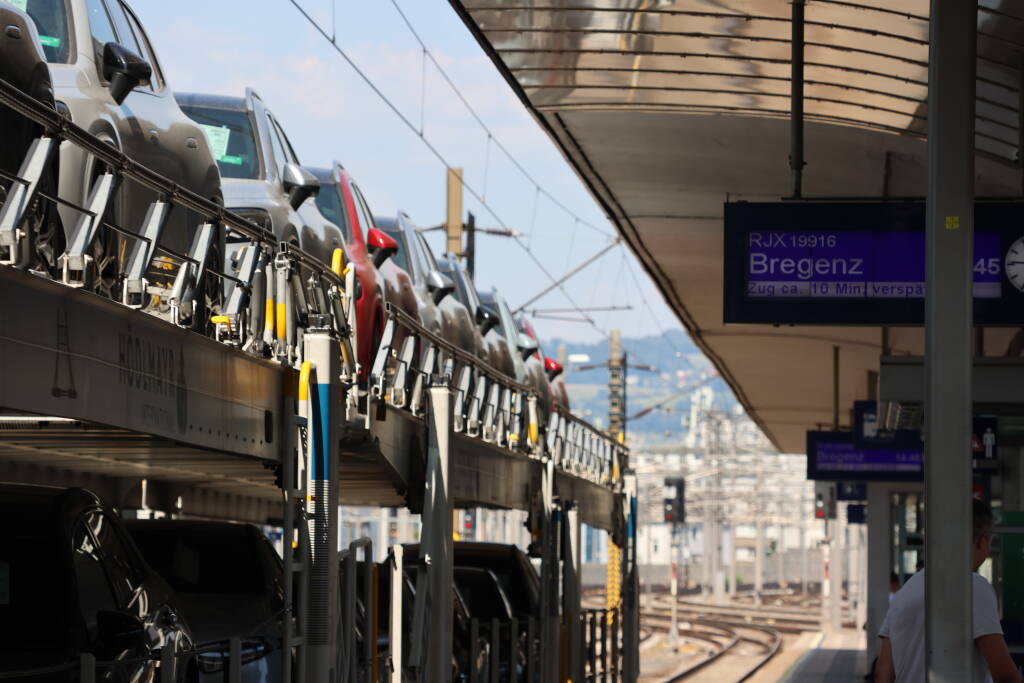
What, we're going by cars? That's like Vegas Loop!
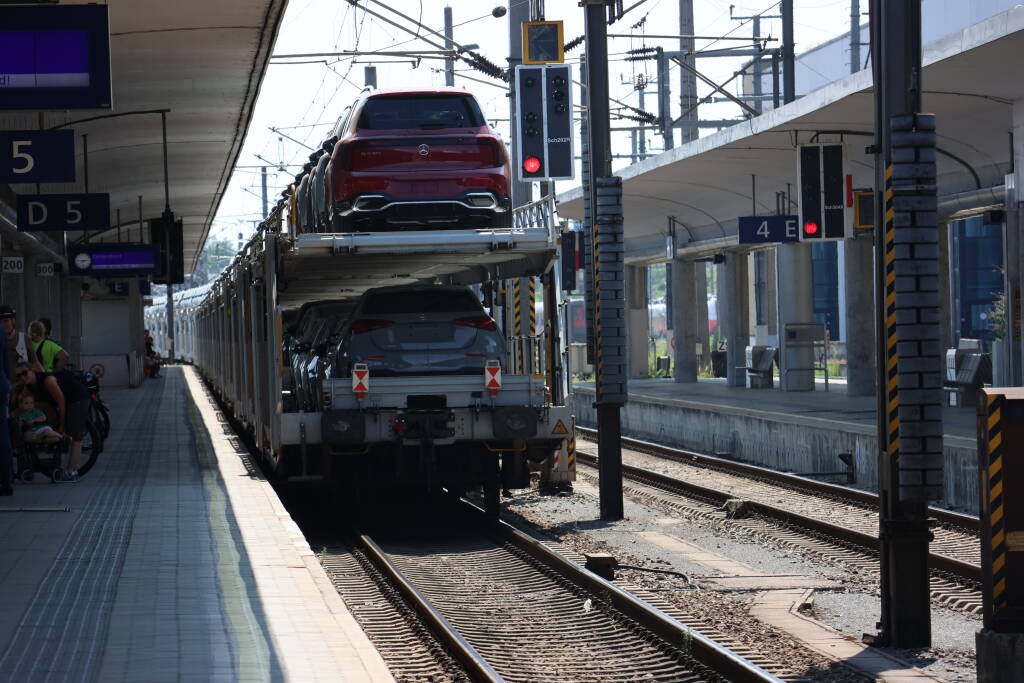
Oh no, didn't stop here …
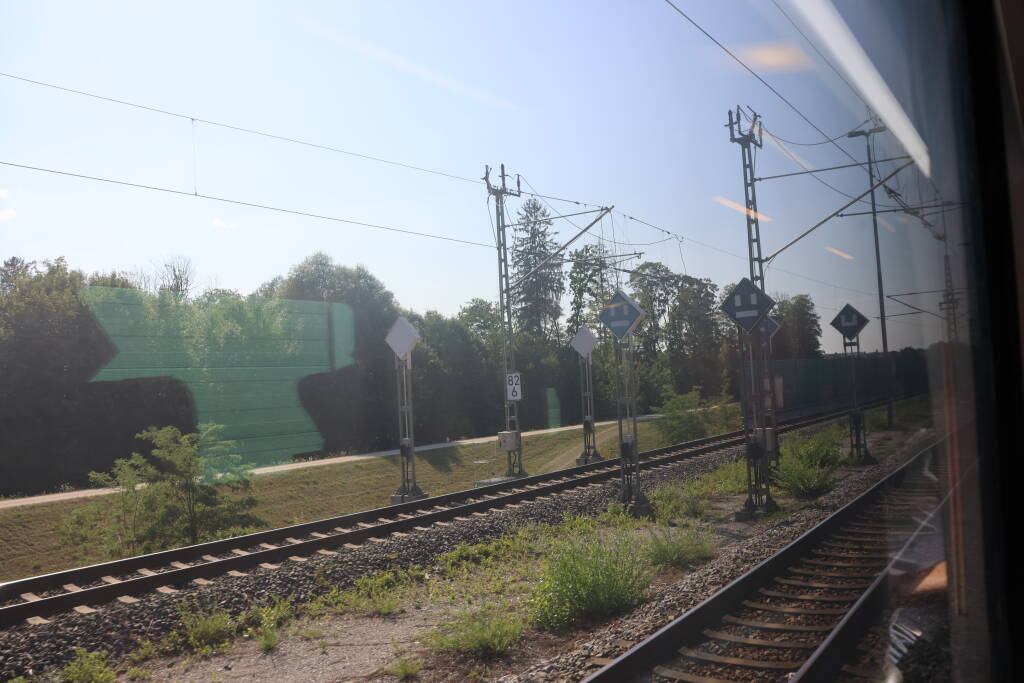
Finally in the right train. The signs are alerting about creepers in this area.
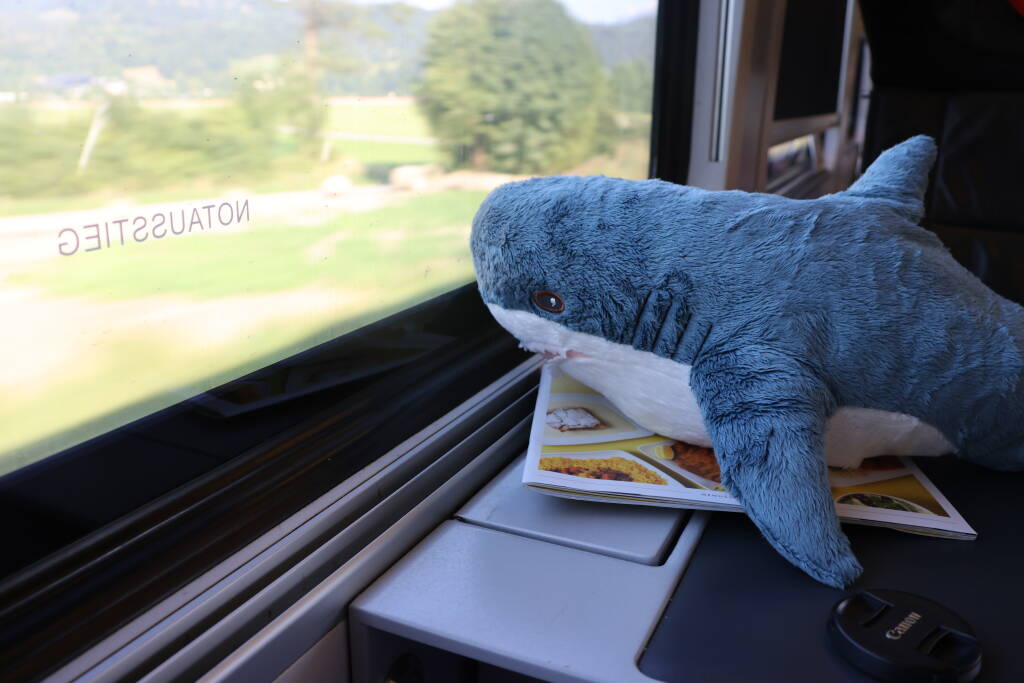
Smålhaj enjoys the views.
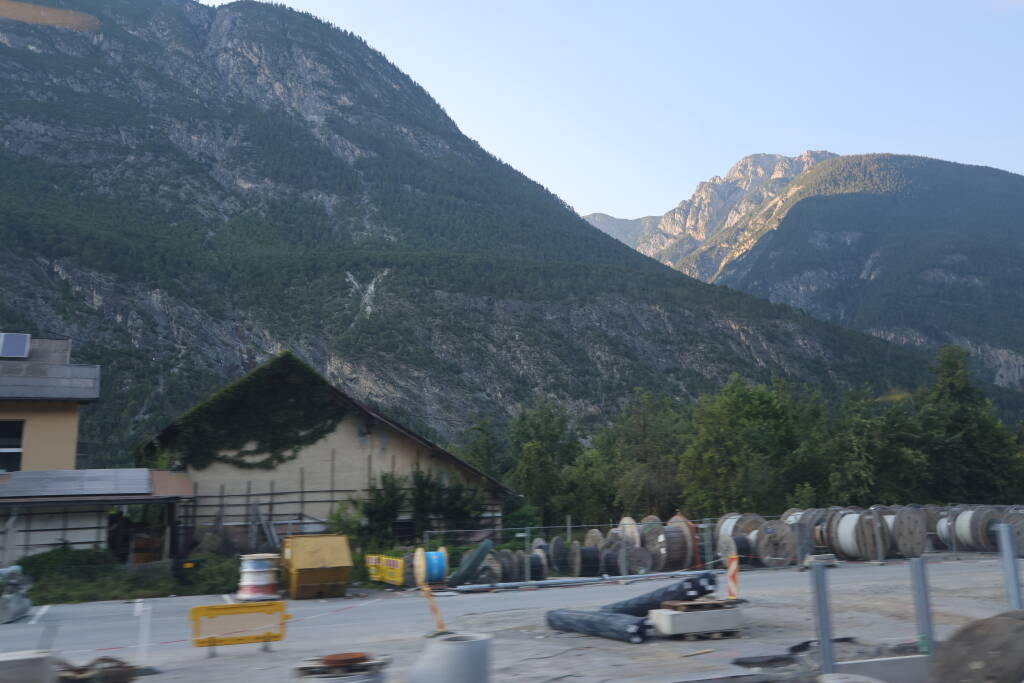
Views are decent.
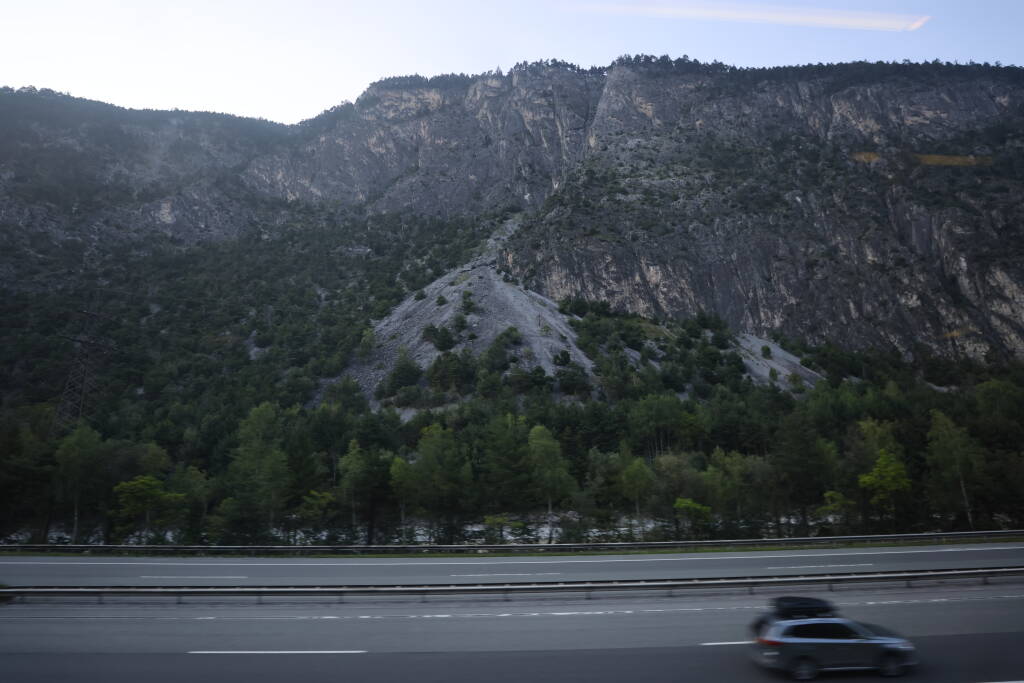
No wonder Smålhaj is enjoying that.
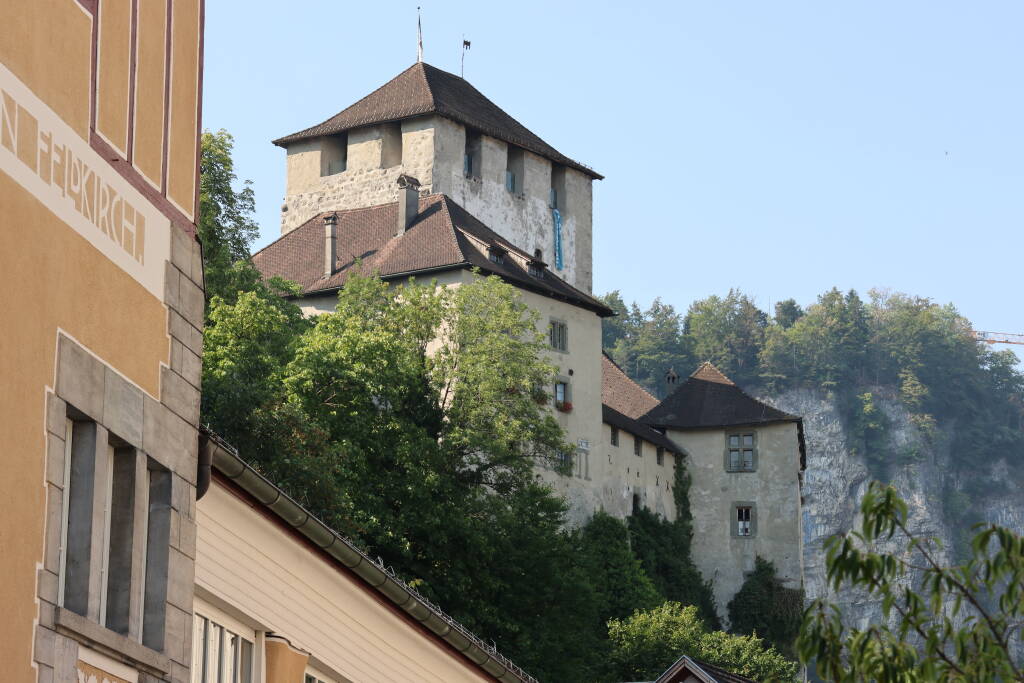
Day two, Feldkirch. Time to visit the castle.
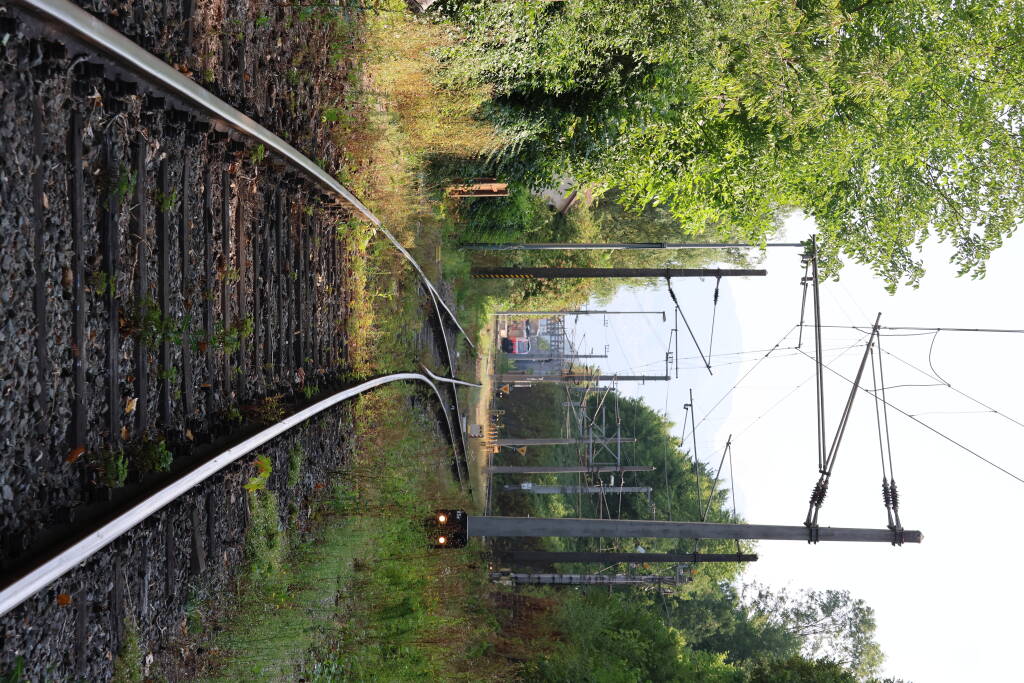
But first some old railways. A single-track section between the tunnel and the station.
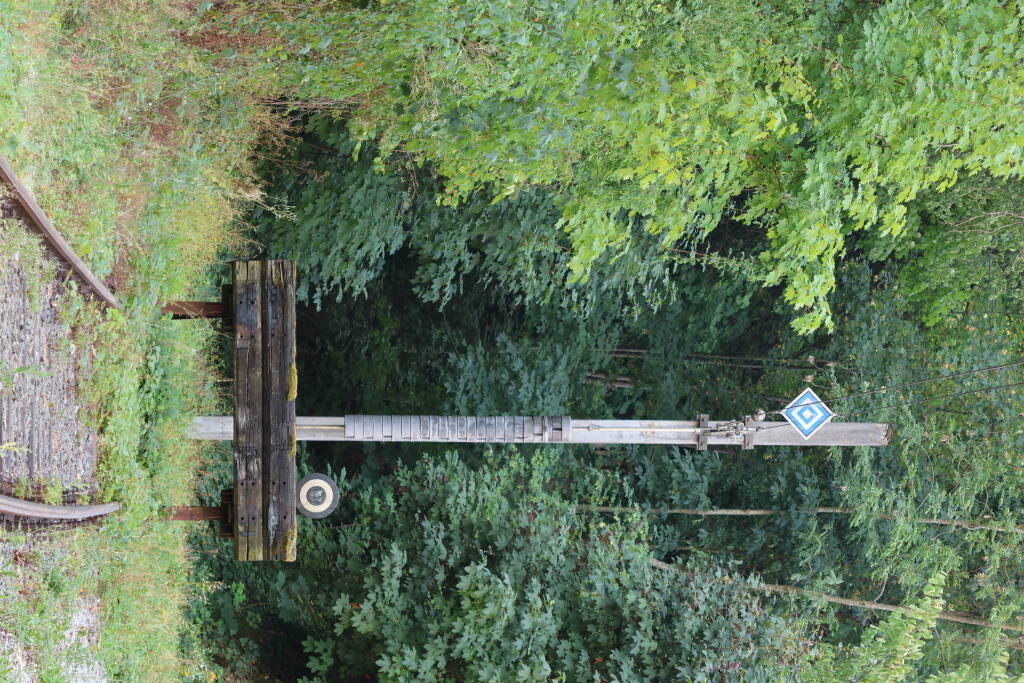
But it ends here.
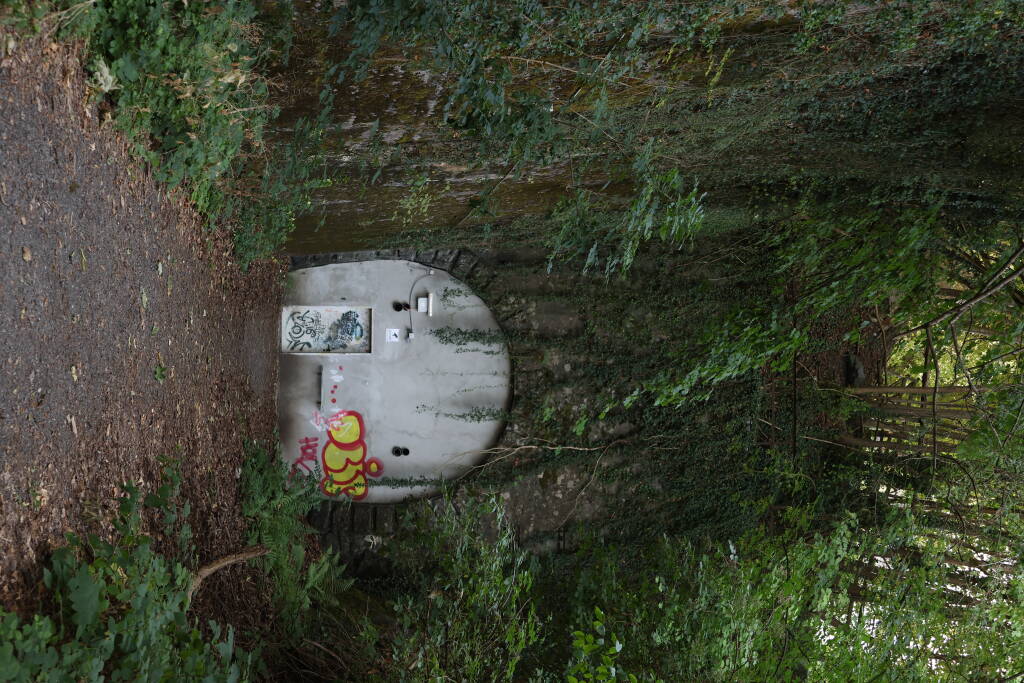
Tunnel is walled off. Nearby, there is a new one, two-track.
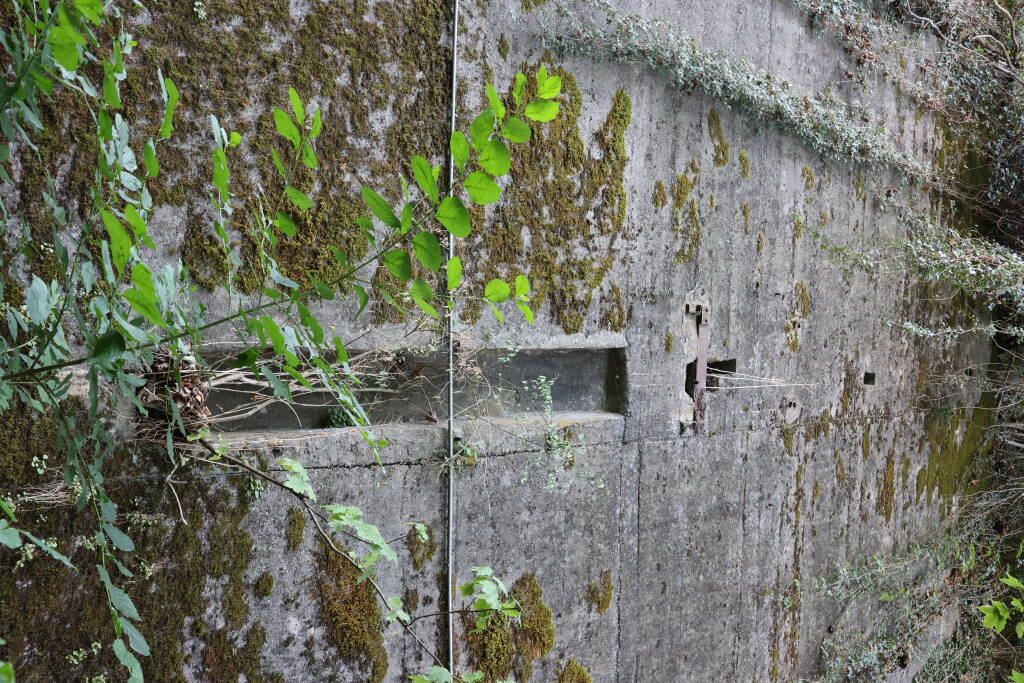
Remnants of the catenary or whatever are still visible.
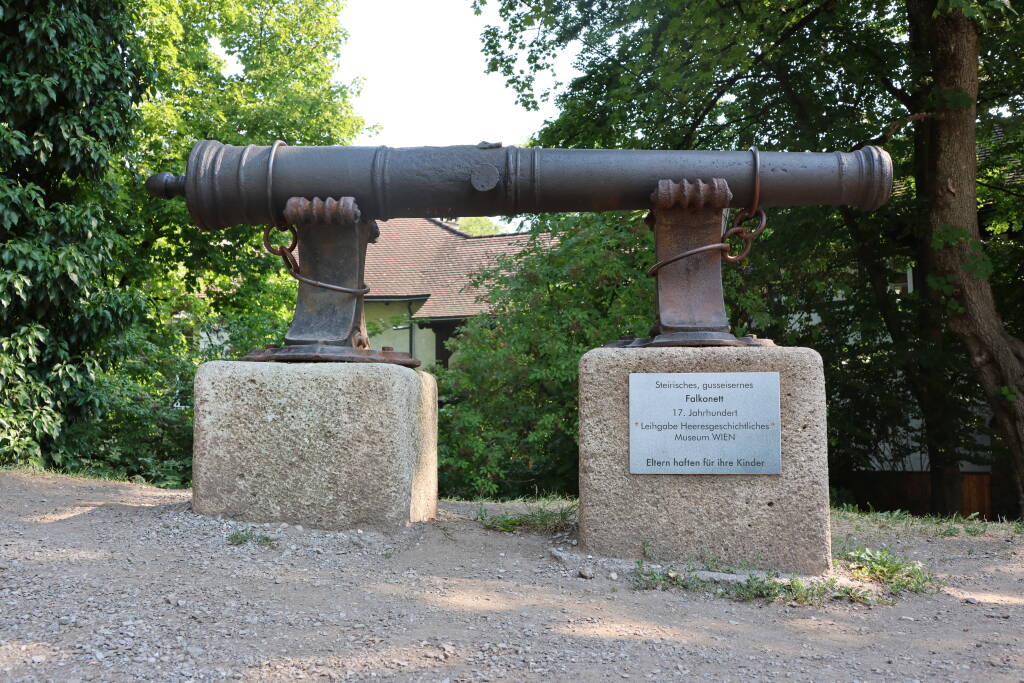
A cannon in front of the castle. Parents, watch out for your children. Why? To not shoot the cannon inadvertently? Do you let your children have gunpowder or what?
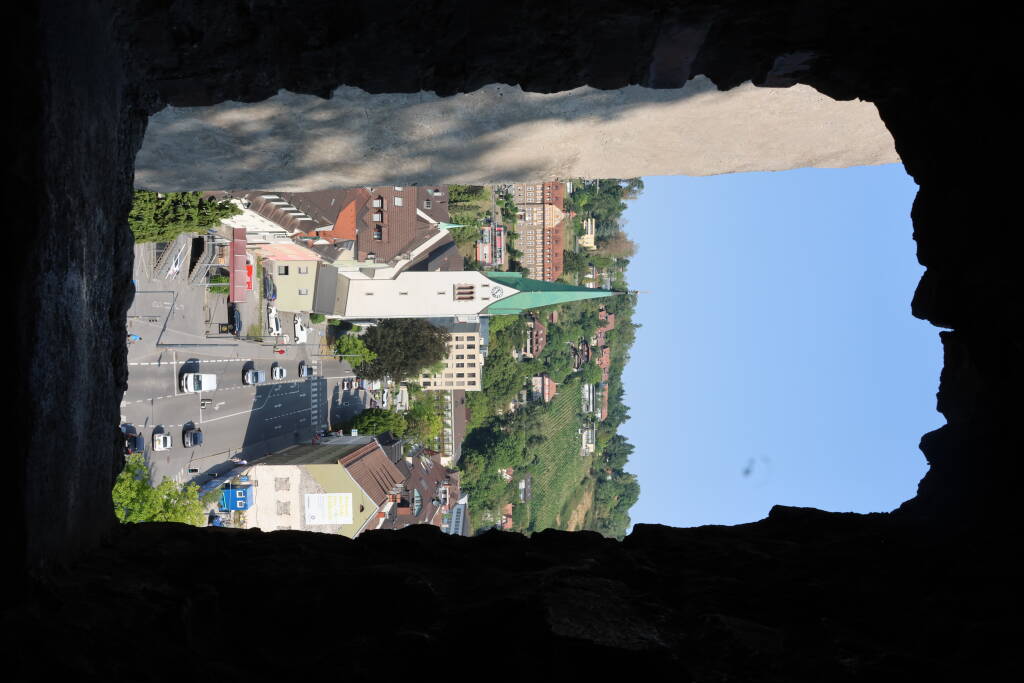
A church (and other things) can be seen from the castle.
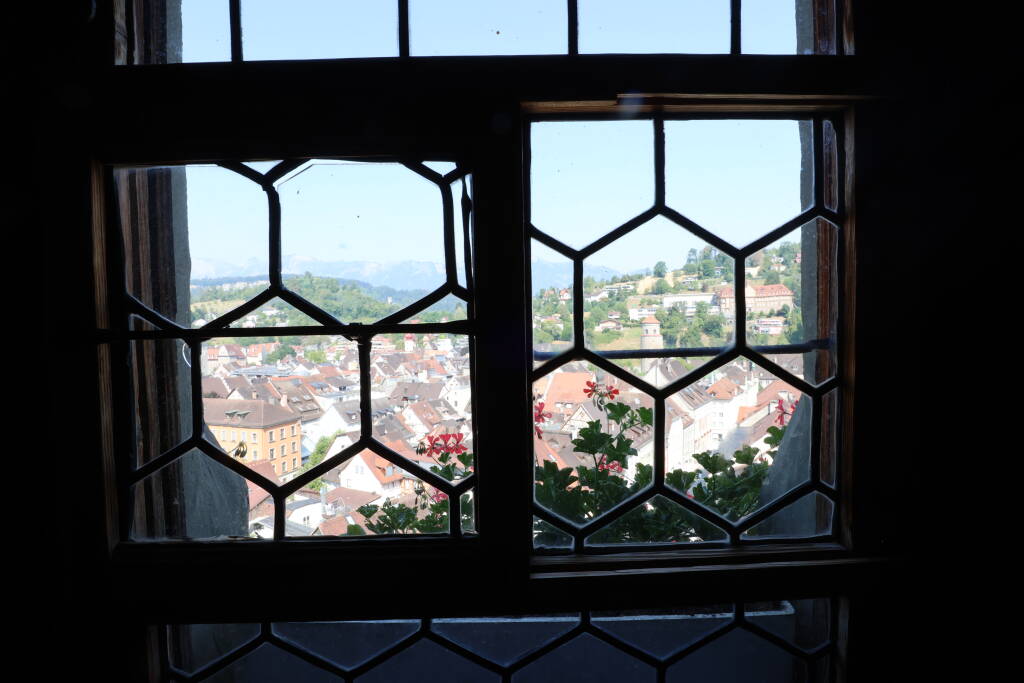
Windows are small and movable to one side.
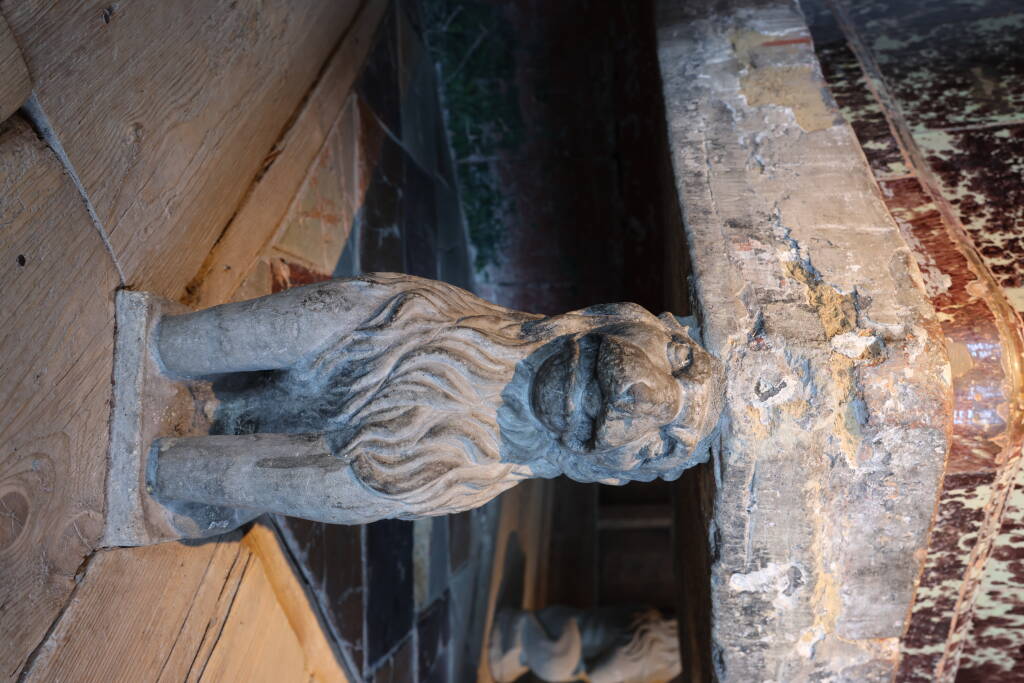
Stove is held up by stone(d) lions.
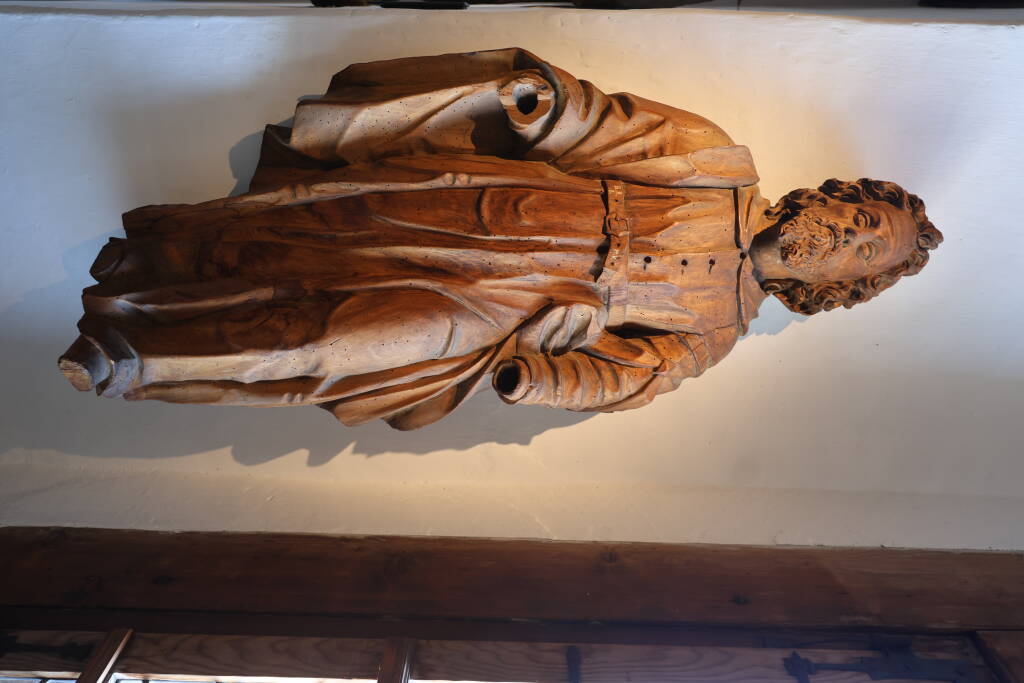
An unknown saint who somehow lost both hands and feet to add injury to insult. (Not the only one.)
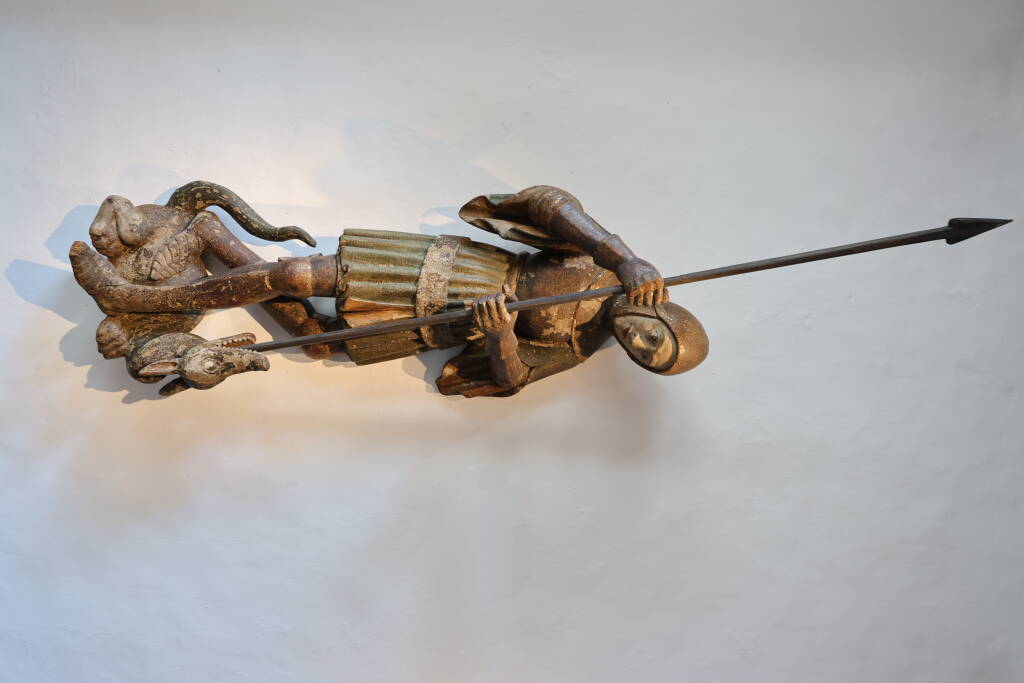
Saint George, The Dragon Killer.
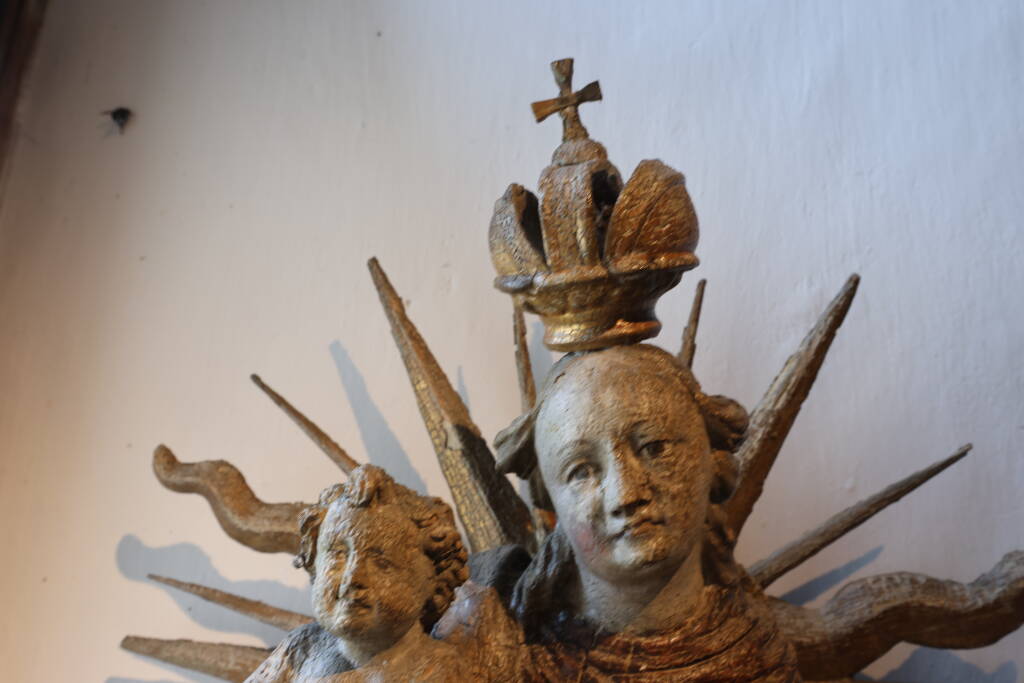
Did you know that the whole saint family has resting bitch face?
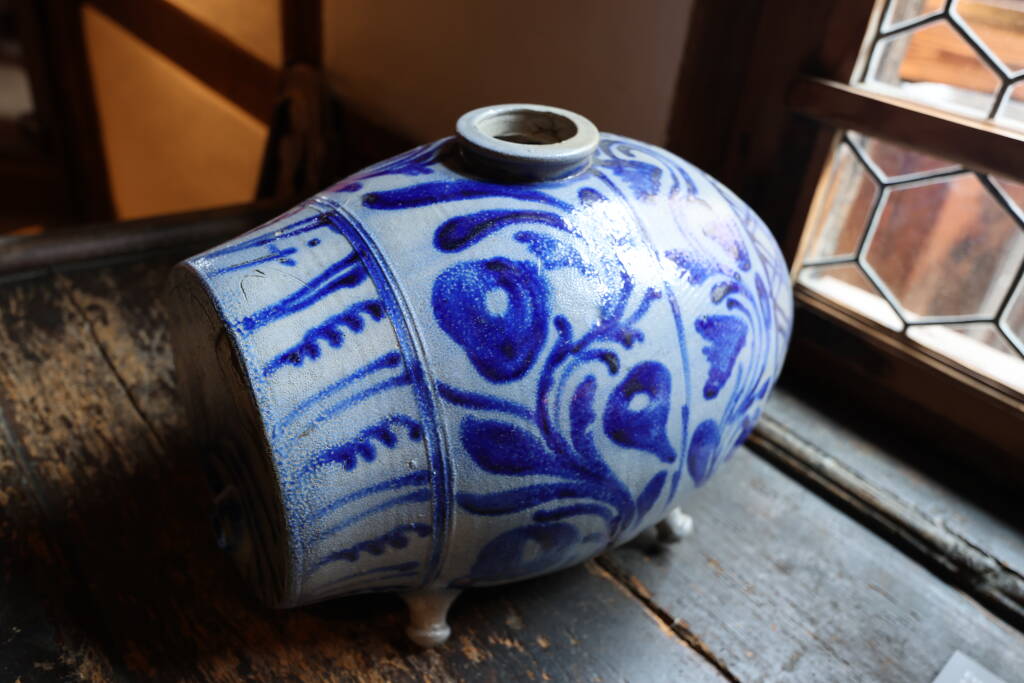
A stoneware vinegar barrel (!), probably fired in one piece?
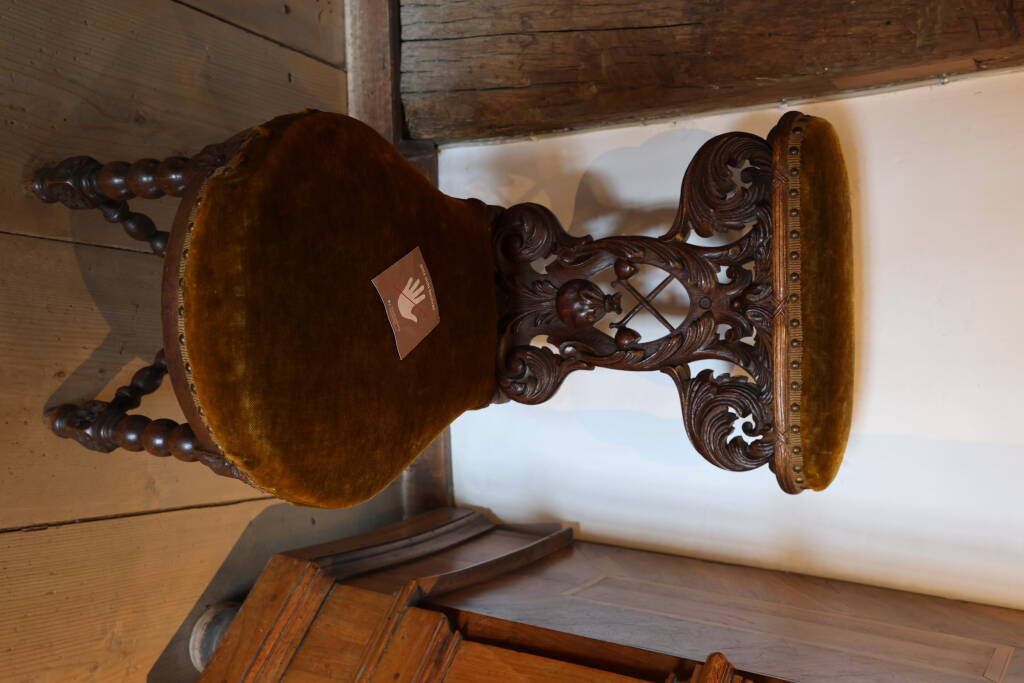
Label says "smoker's stool". I would have some additional notes to that.
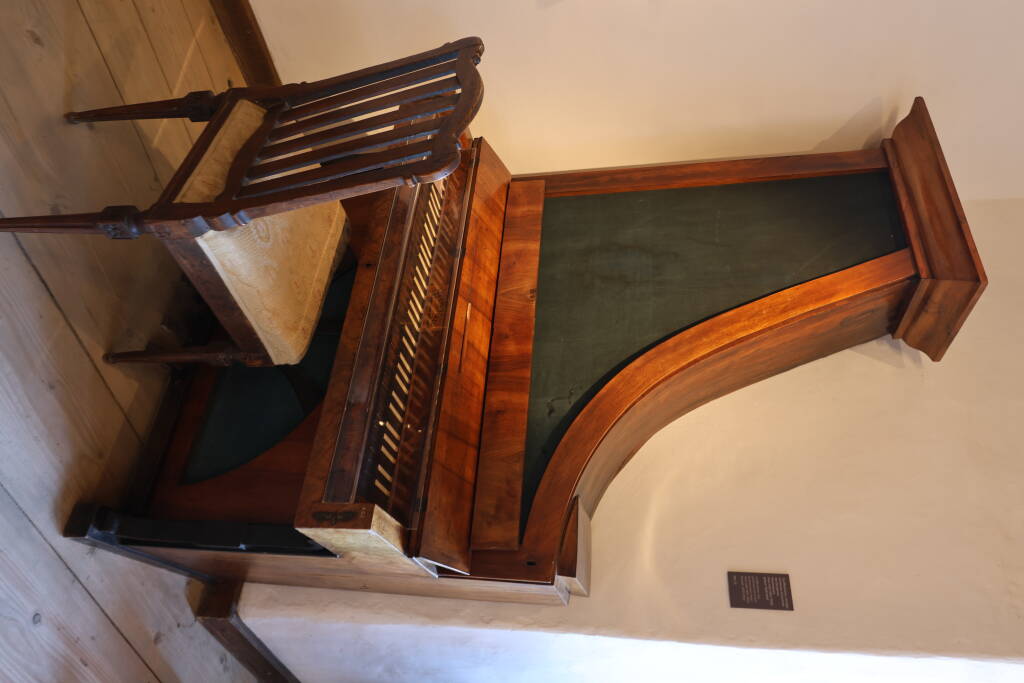
An upright piano before it was known as such.
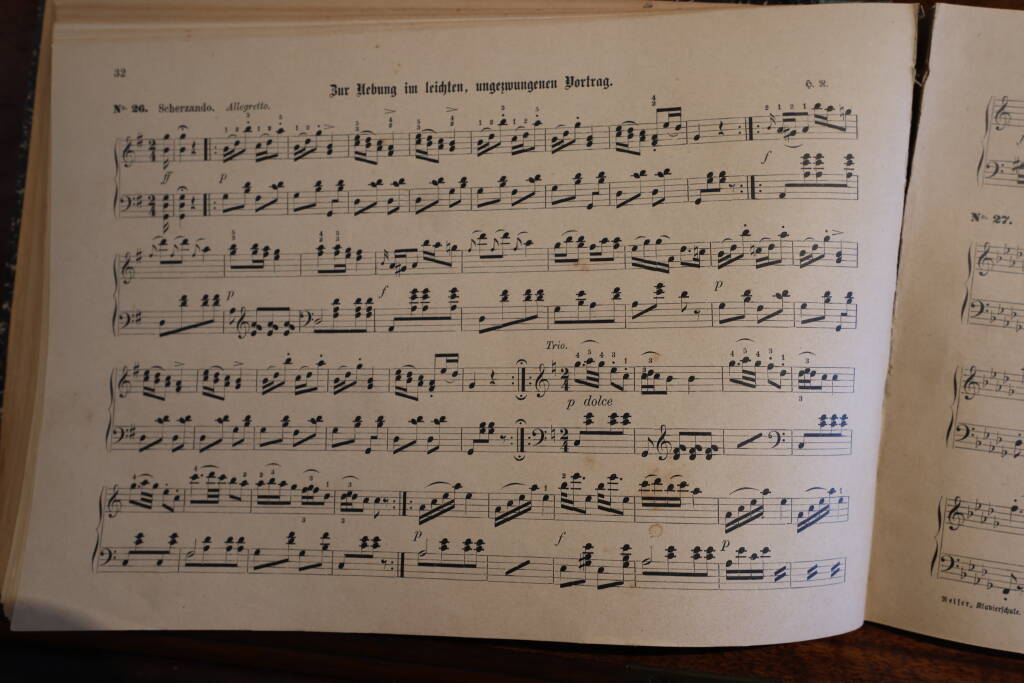
One of the pianos had some sheet music there. This looks playable.
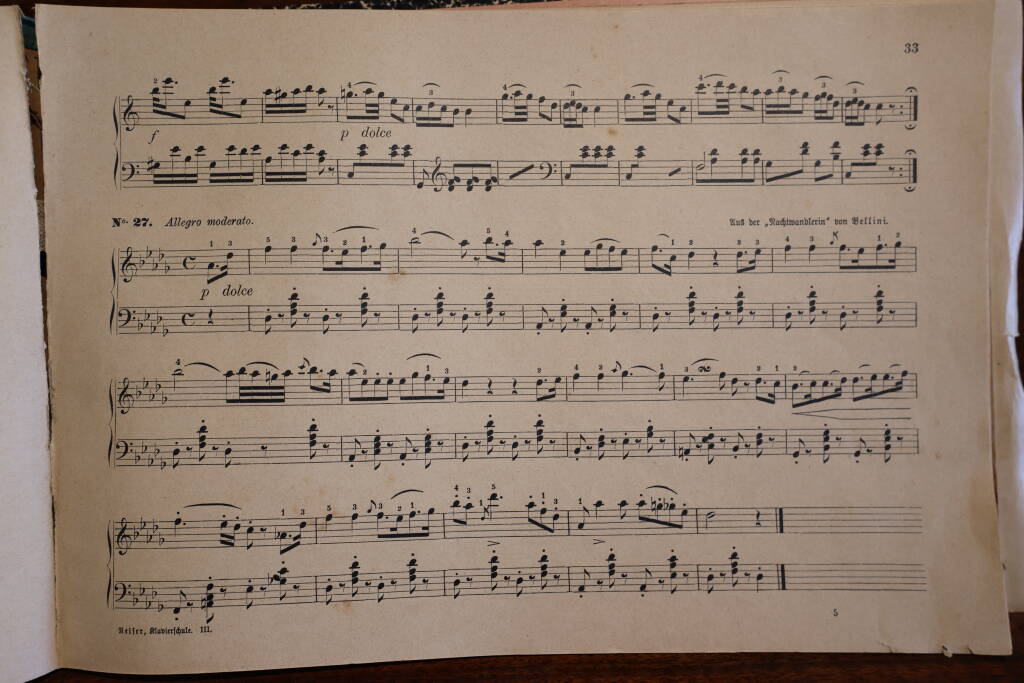
Five flats is kinda annoying to read though.
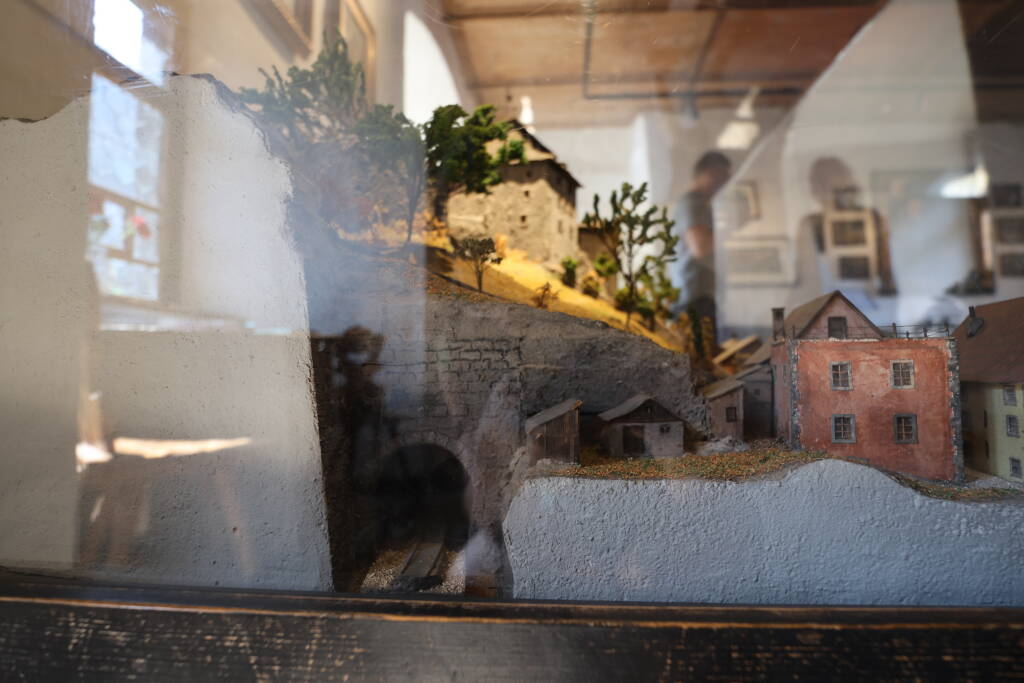
I always thought that a tunnel under a castle is mostly a model railway solution for suboptimal space but here it is in real life.
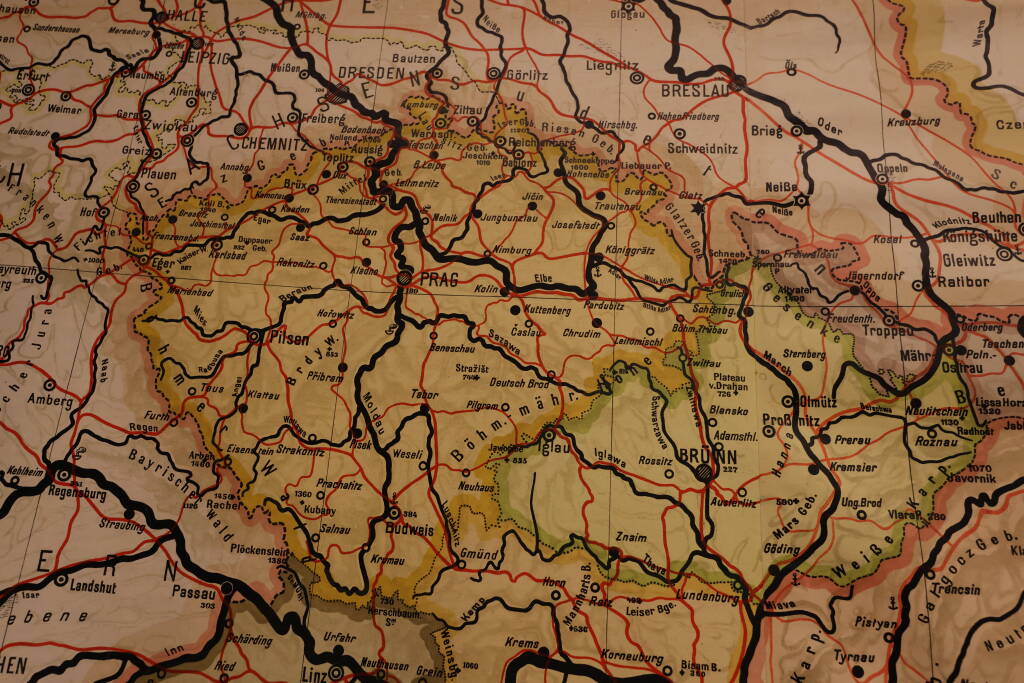
A big wall map. From which time period?
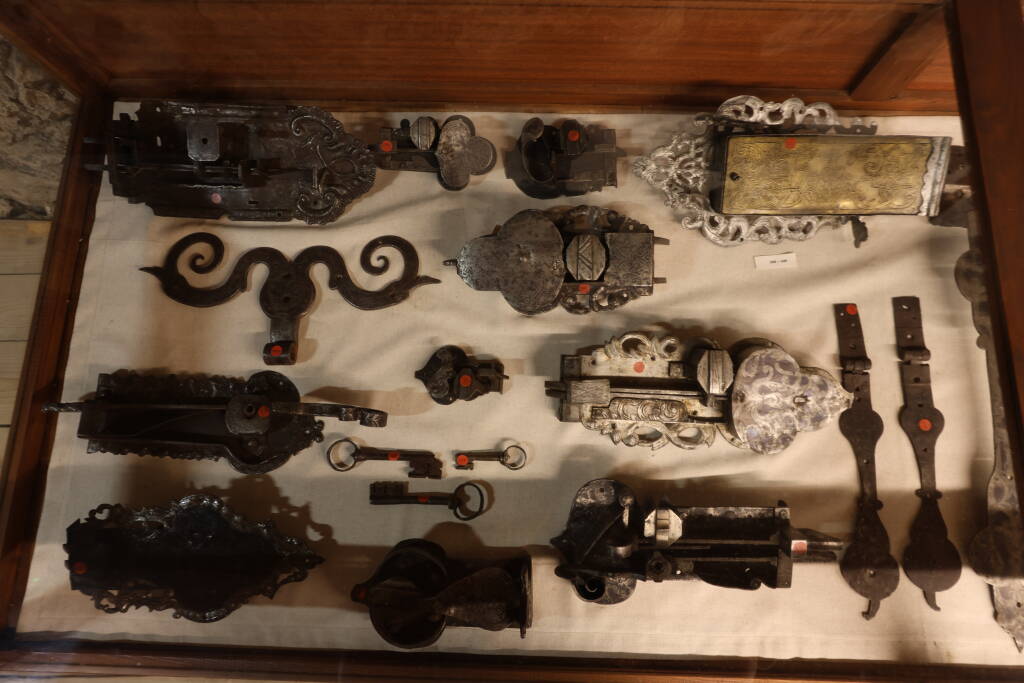
Hello, this is LockPickingLawyer and what I have for you today is a set of some older MasterLock models …
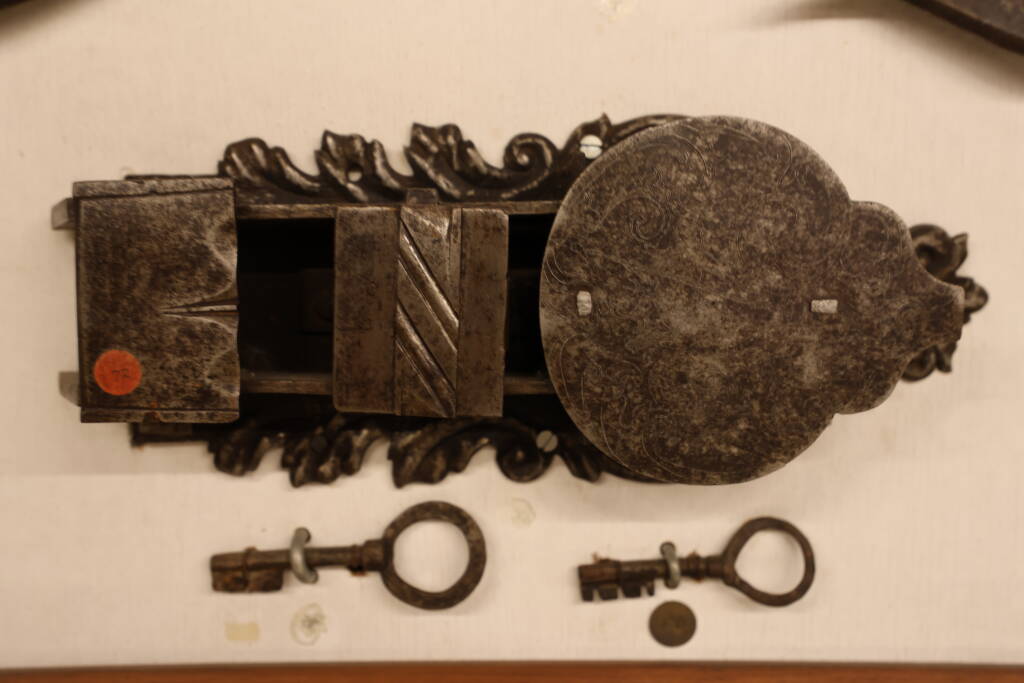
… this one from the fourteen hundreds …
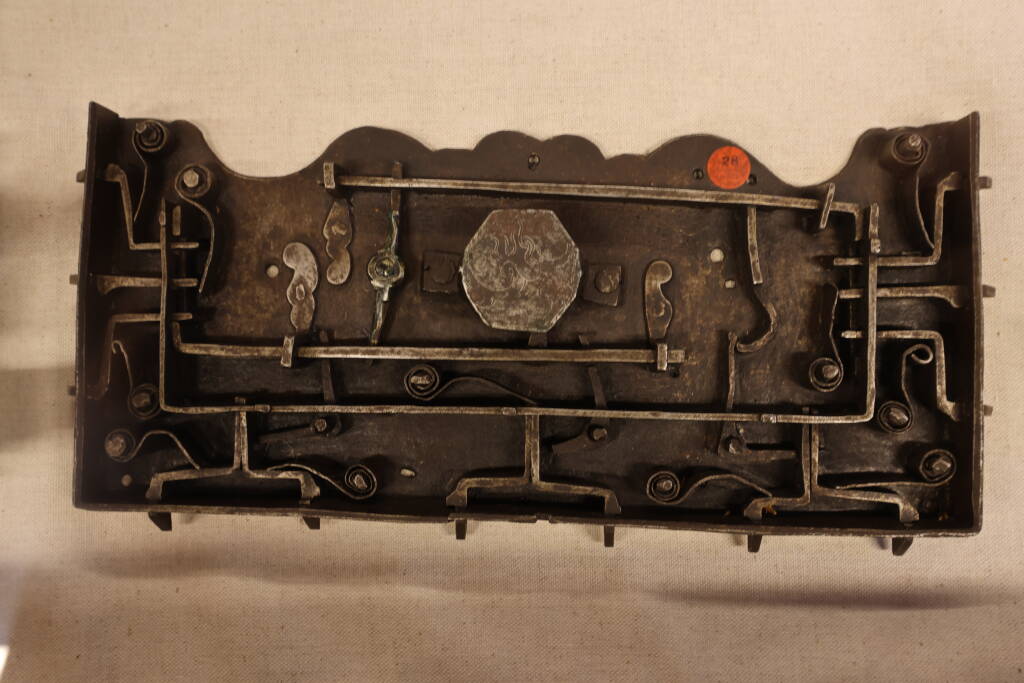
… and as you can see when we gutted it, it's a simple lever mechanism.
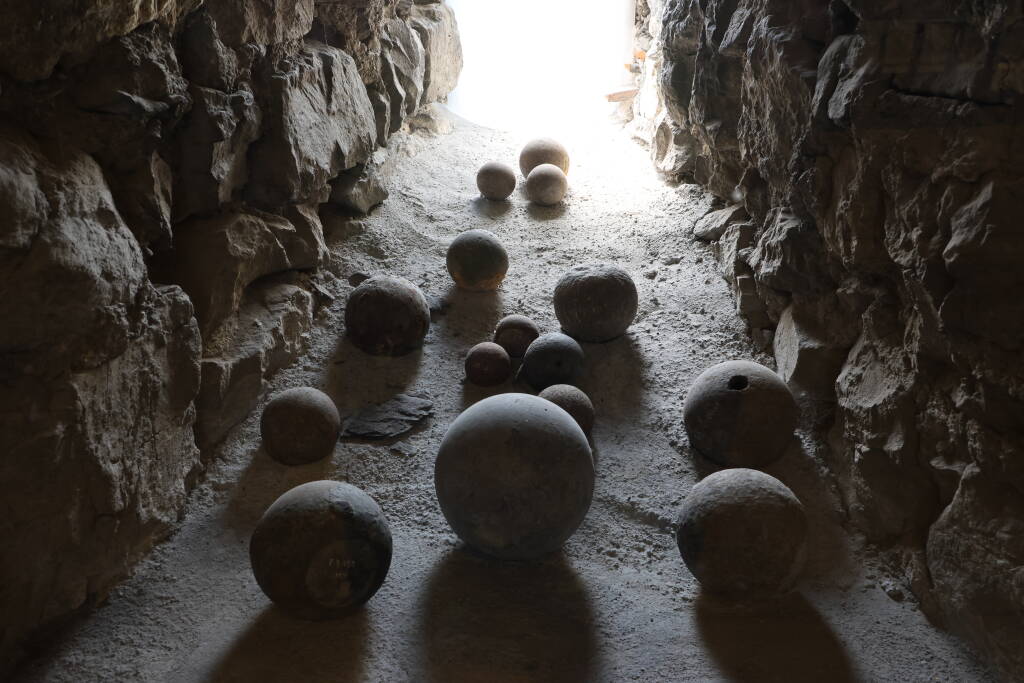
This castle has balls.
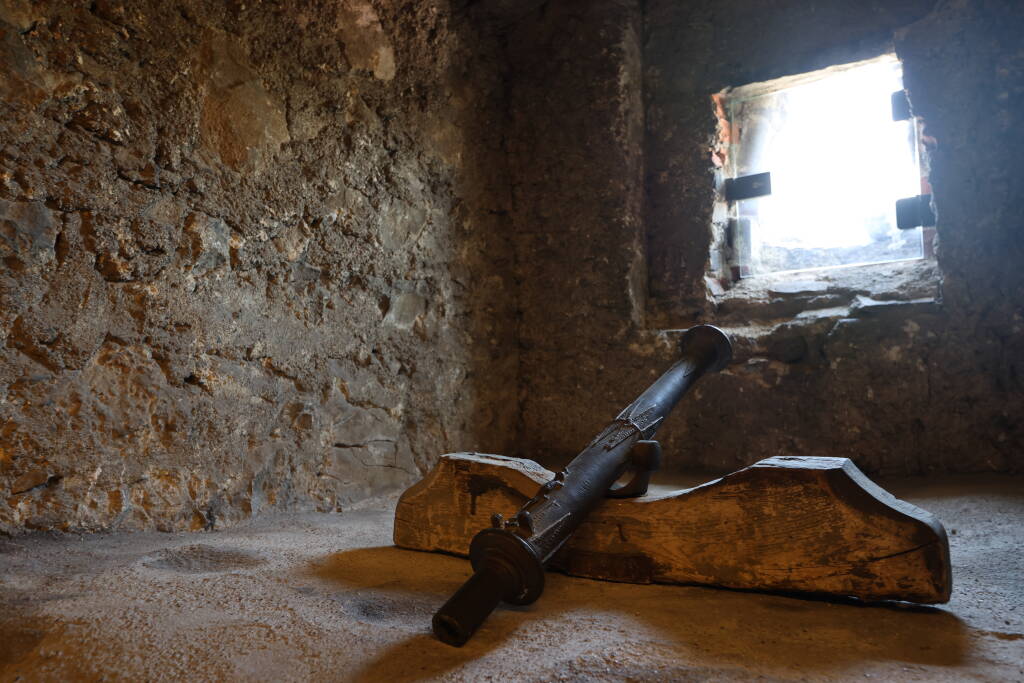
Almost all tower windows are guarded by a gun.
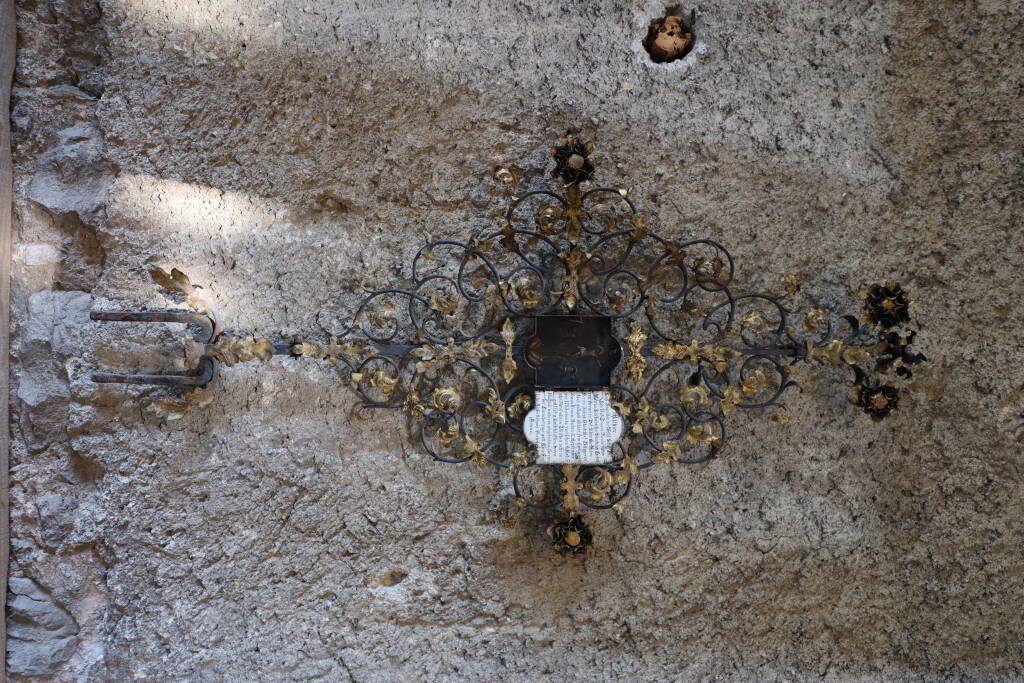
Under the roof, there is a valuable collection of crosses from tips of church towers, and it needs protection.
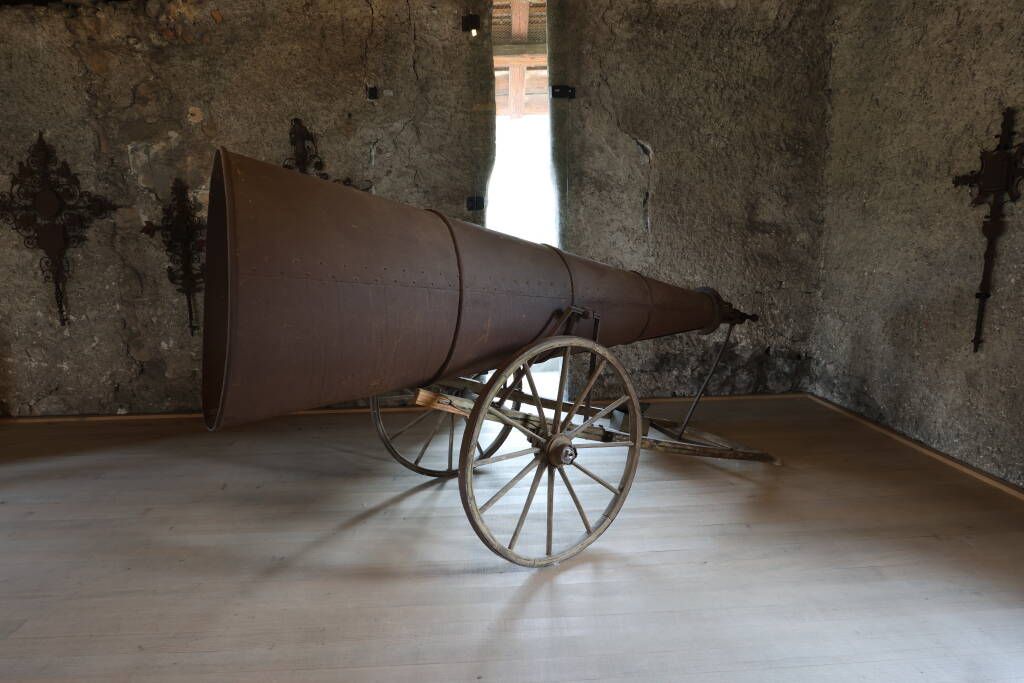
Also an announcement cannon is placed in the top floor of the tower.
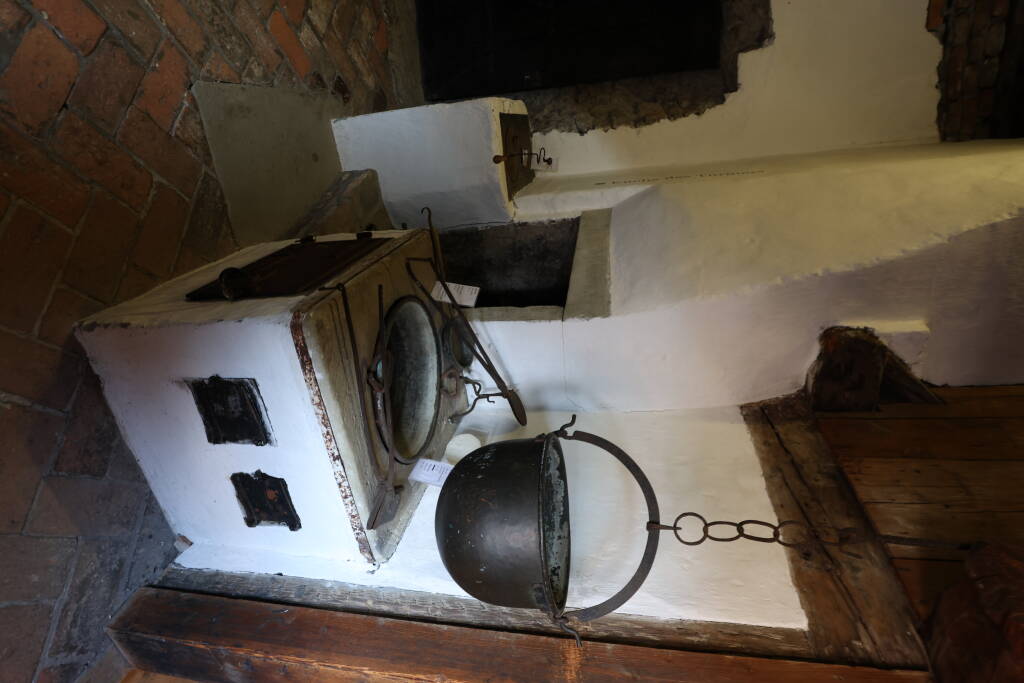
This is an ideal place for MasterChef.
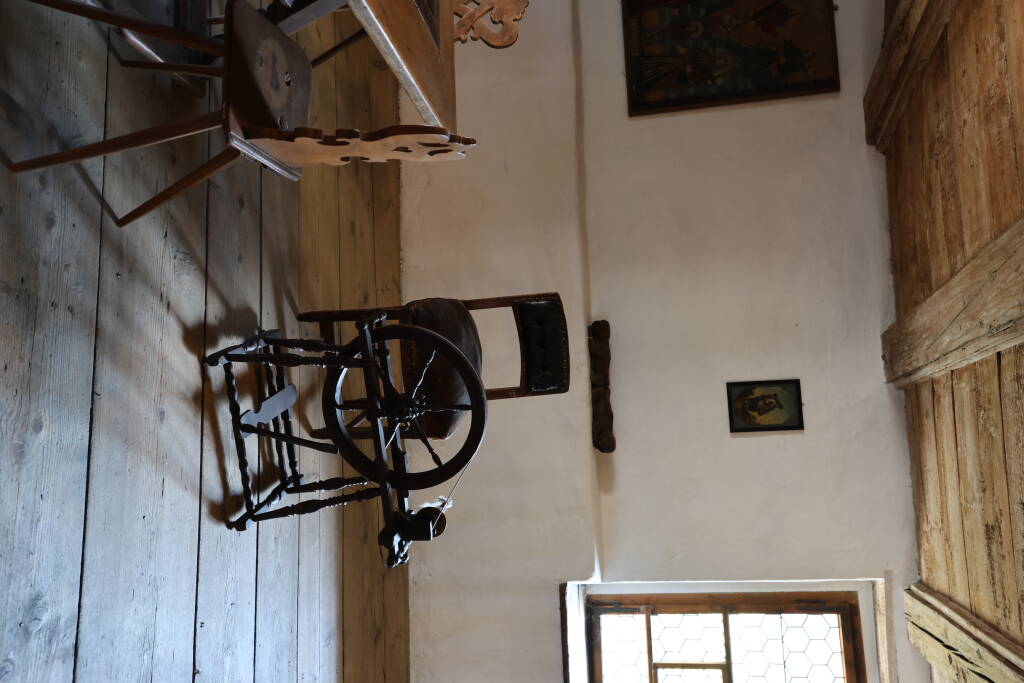
Spinning wheel.
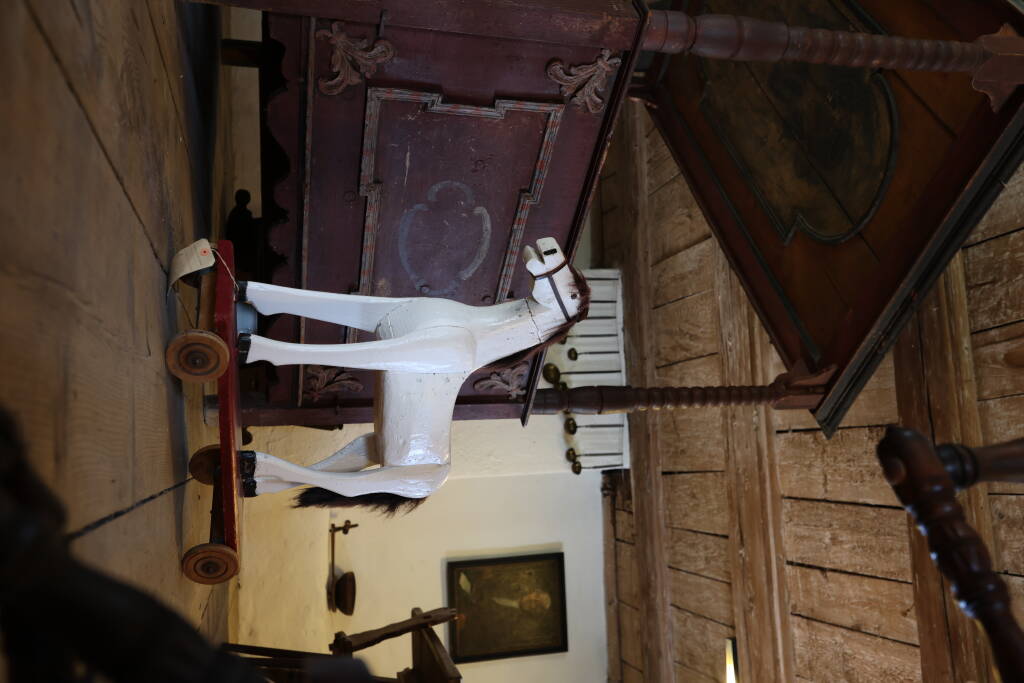
A horse on wheels.
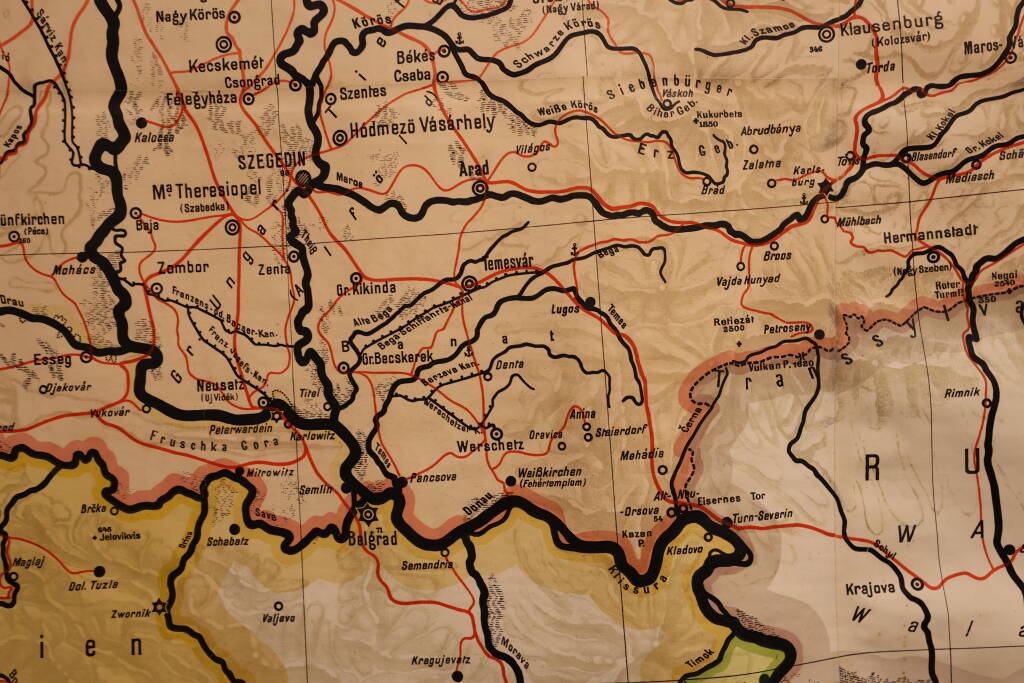
The same wall map. What is Gr. Kikinda?
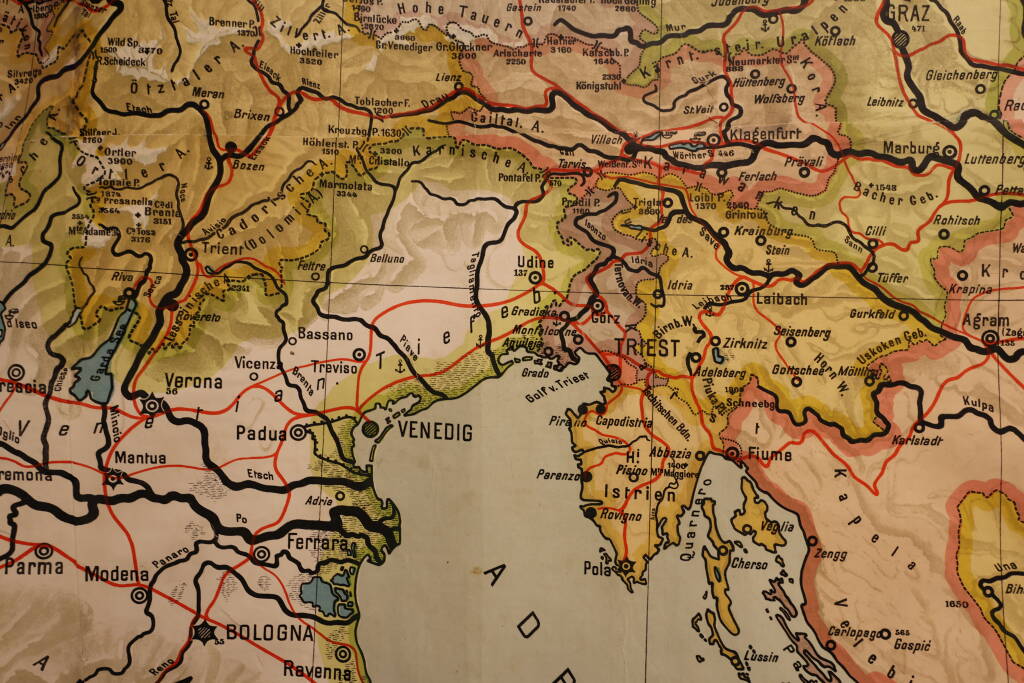
Nova Gorica? Gorizia? Görz!
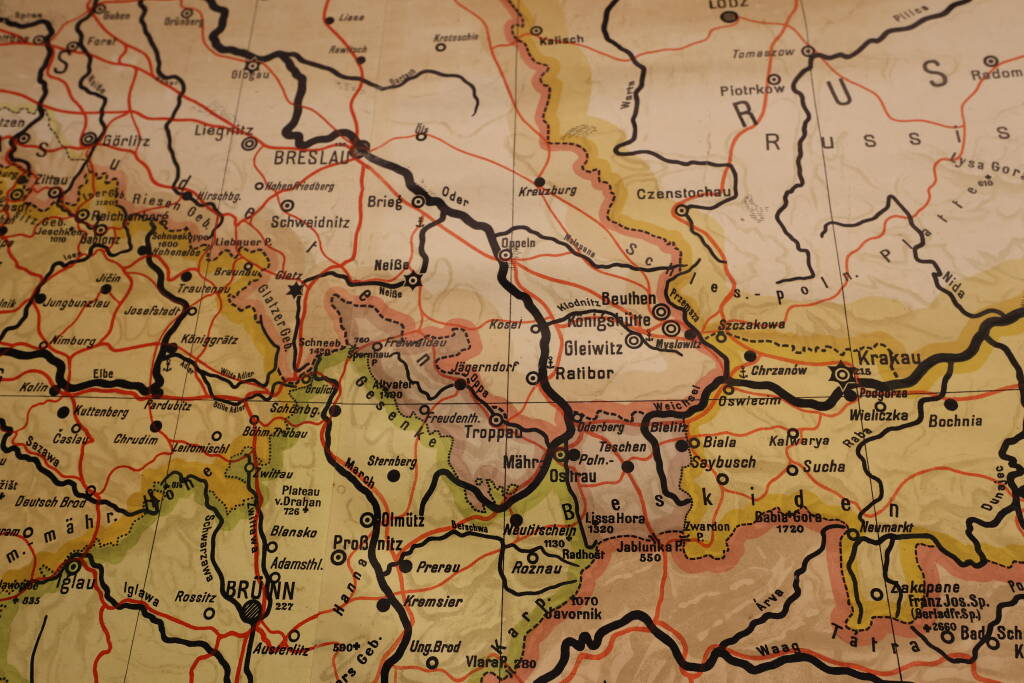
Poland split.
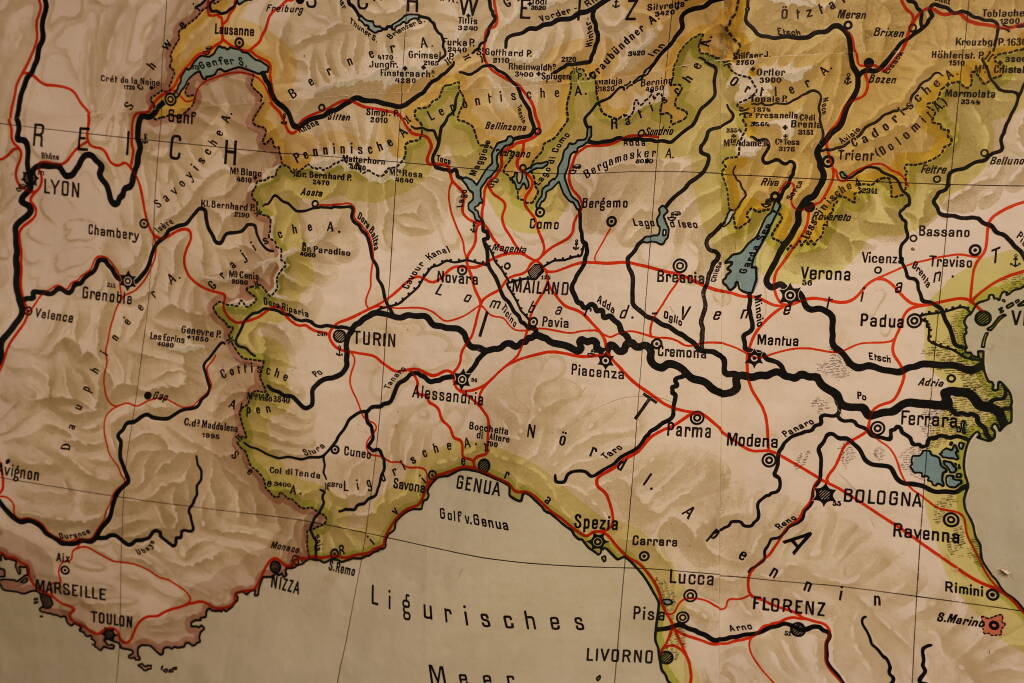
Italy united.
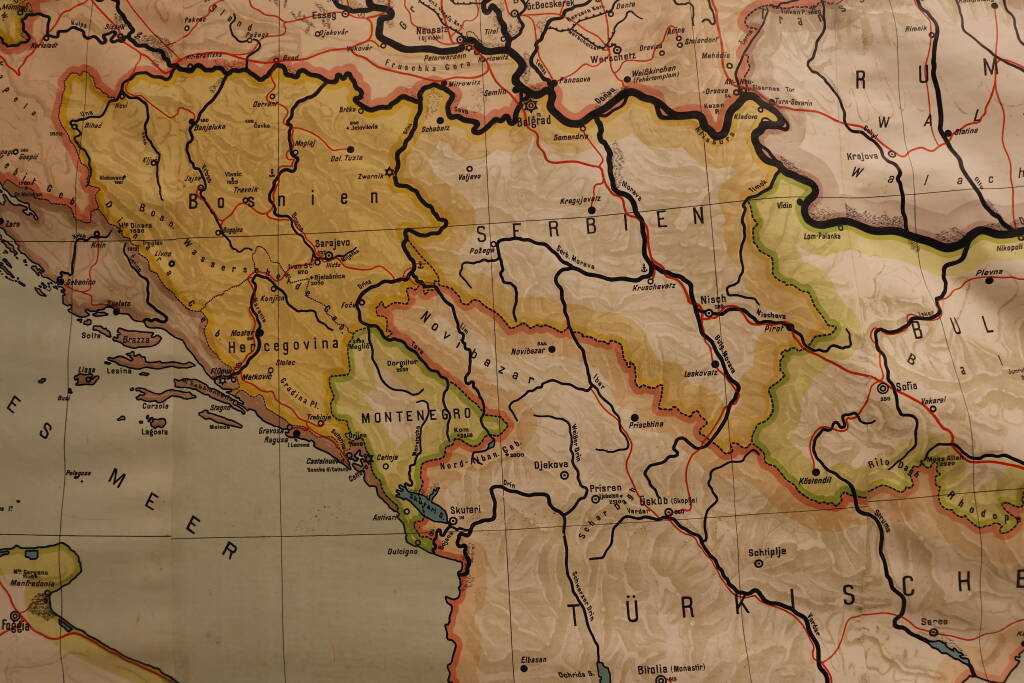
Türkyie in the Balkans.
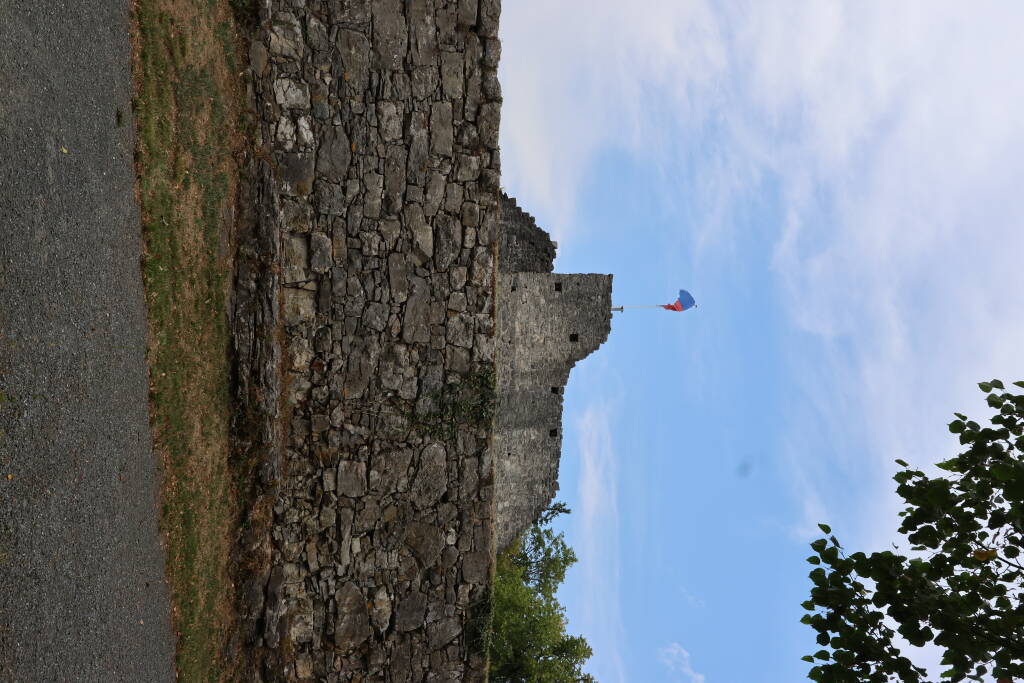
Another castle, this time incomplete.
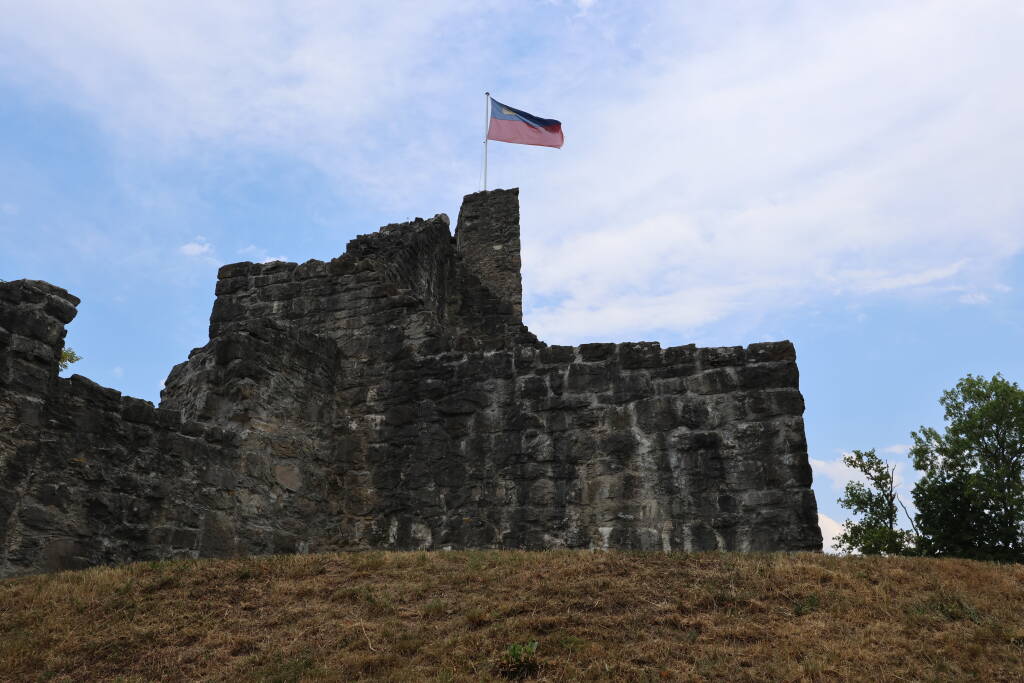
Schellenberg castle was last inhabited in the 1600s.
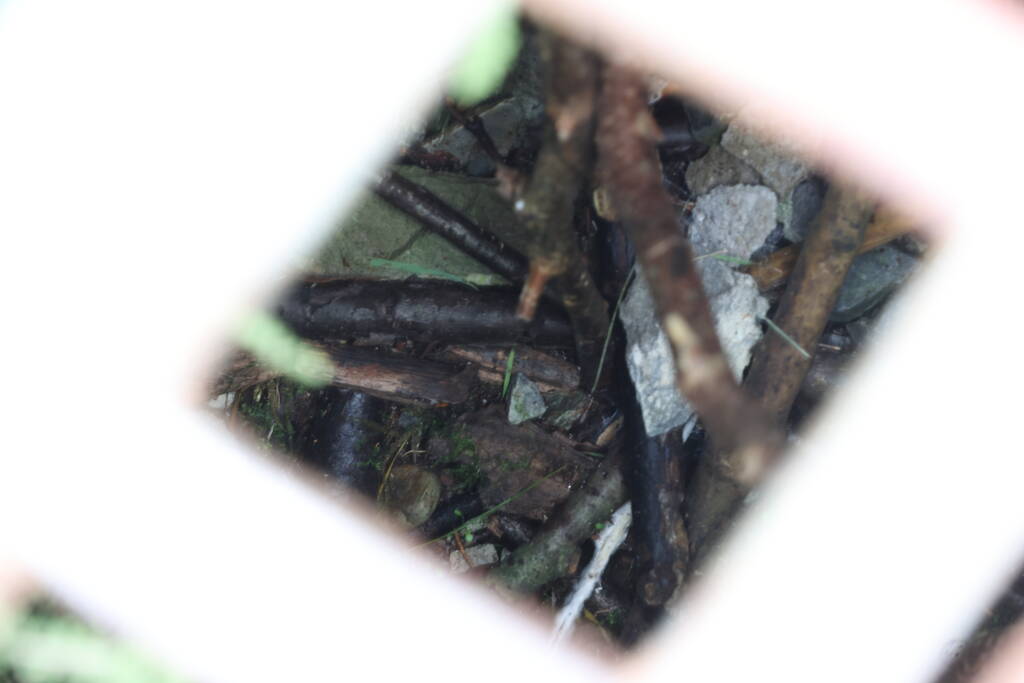
There are sticks and stones in the castle water well.
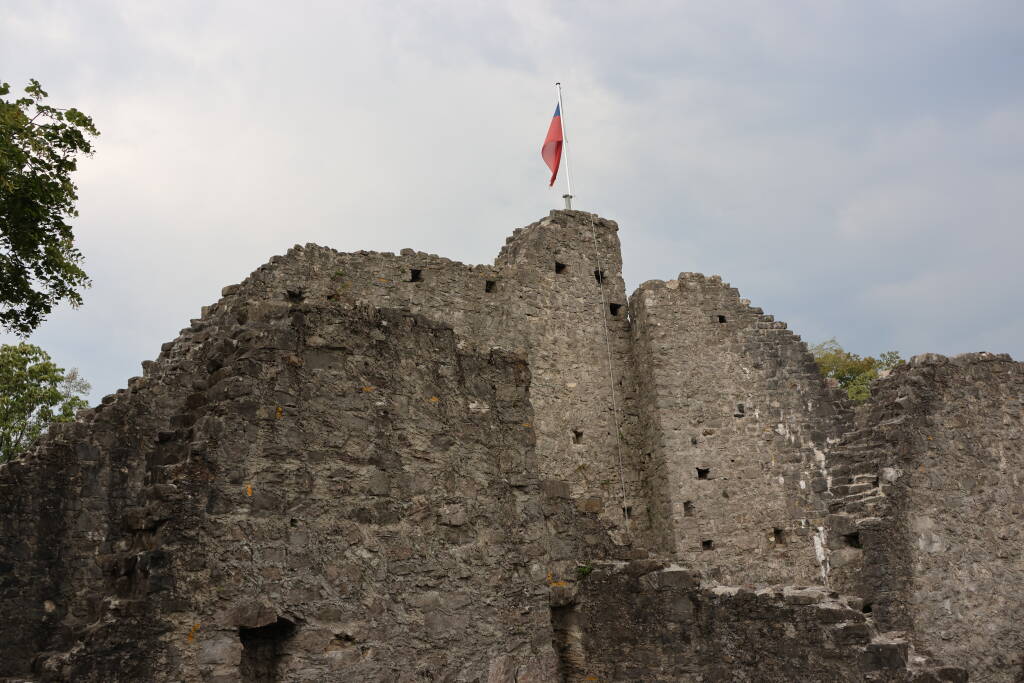
From some perspective, the castle looks larger than it is.
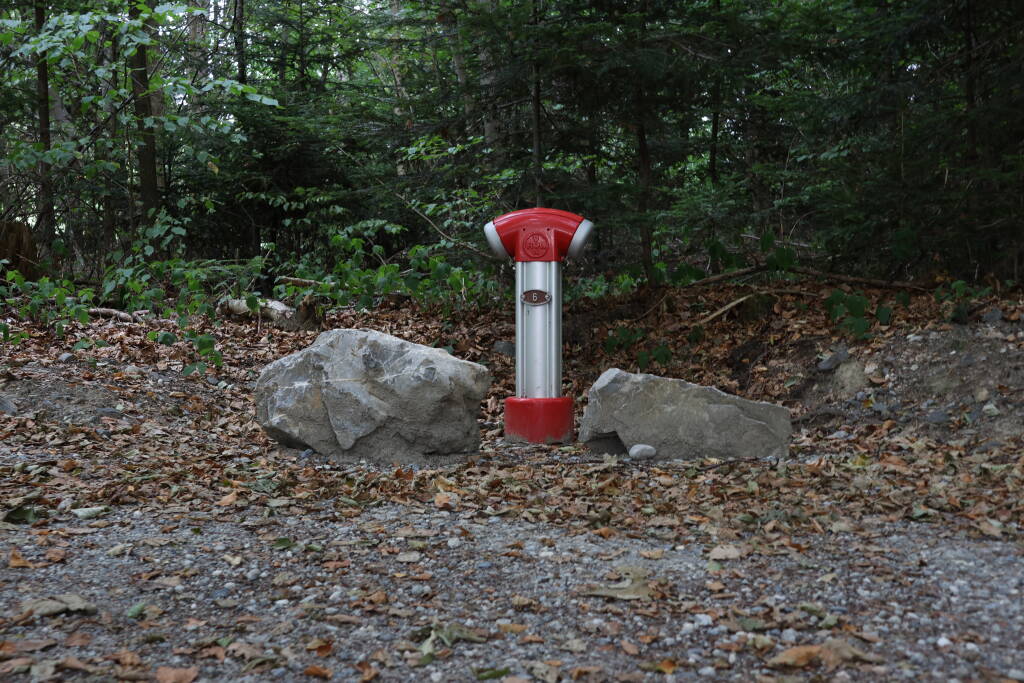
There is a hydrant in the forest, in case of a fire. Clever!
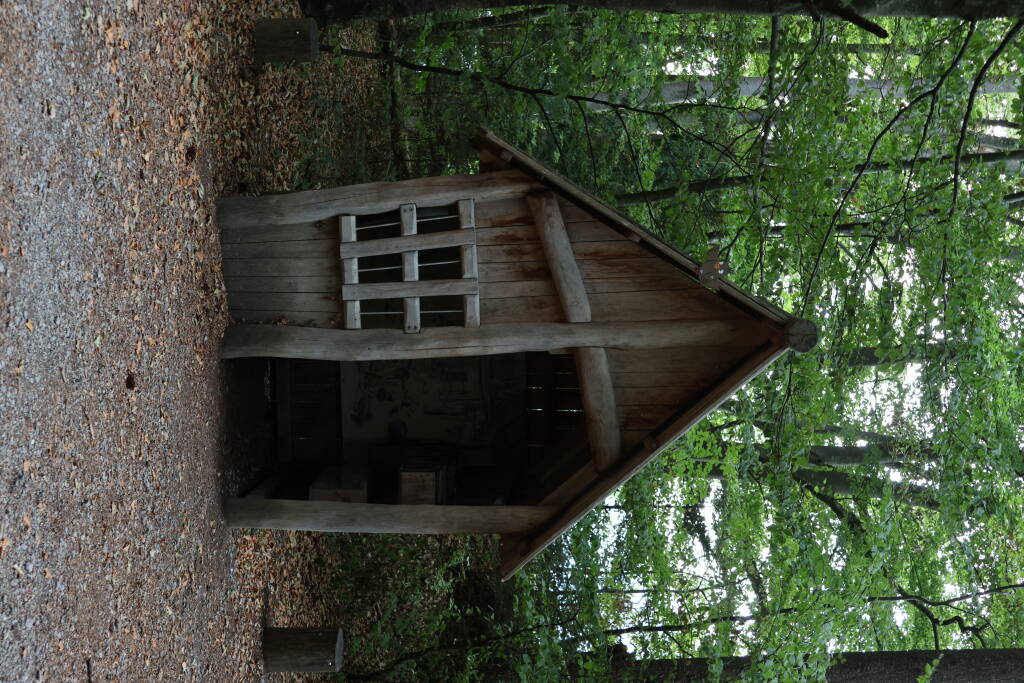
Little house, who lives in you? No mouse in there.
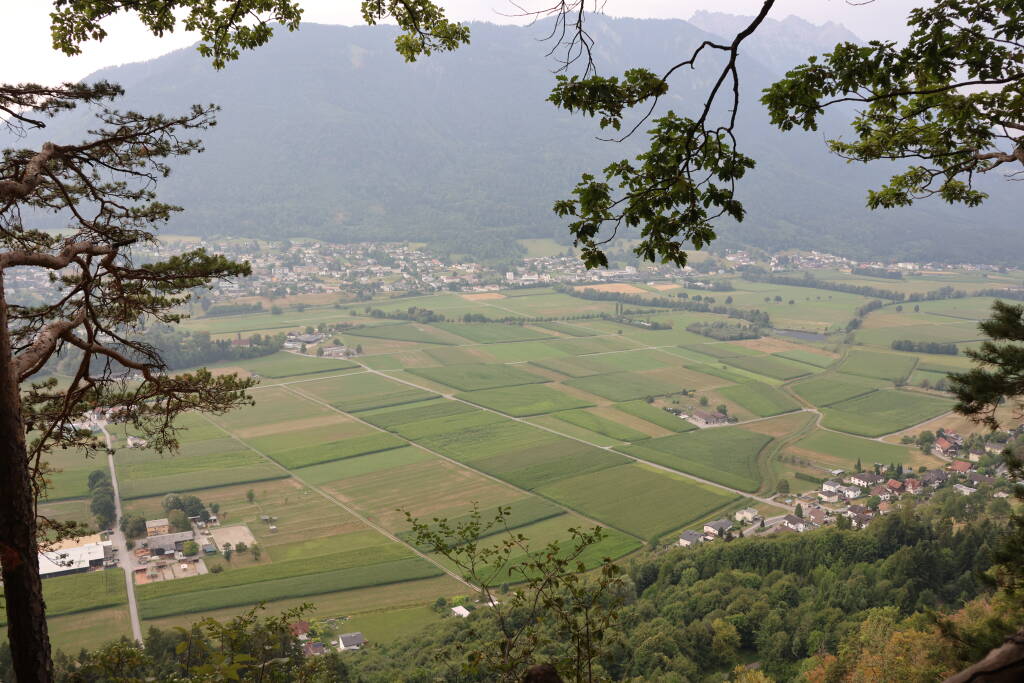
A view. Tisis (A) on the left, Schaanwald (LI) on the right.
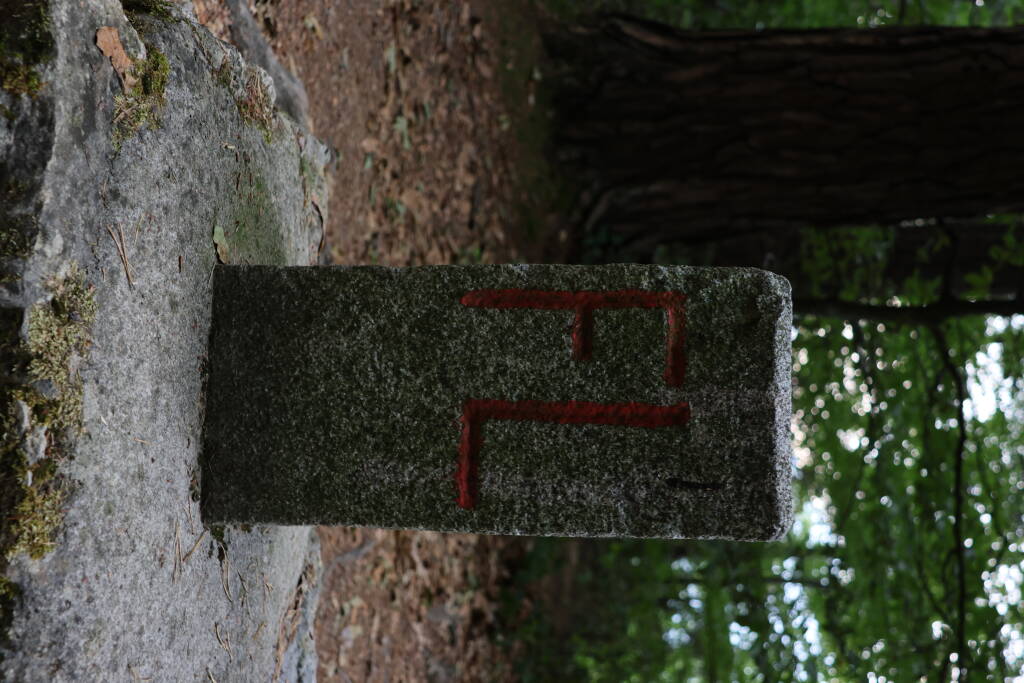
What, are we in Florida?
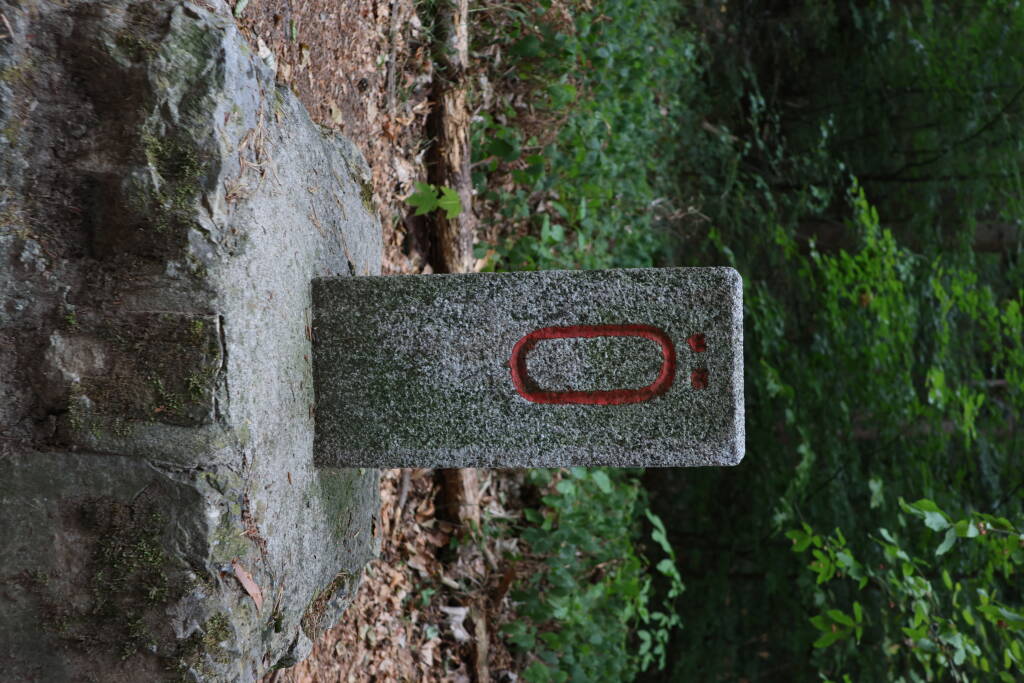
Not at all. This is a border between Austria and Liechtenstein.
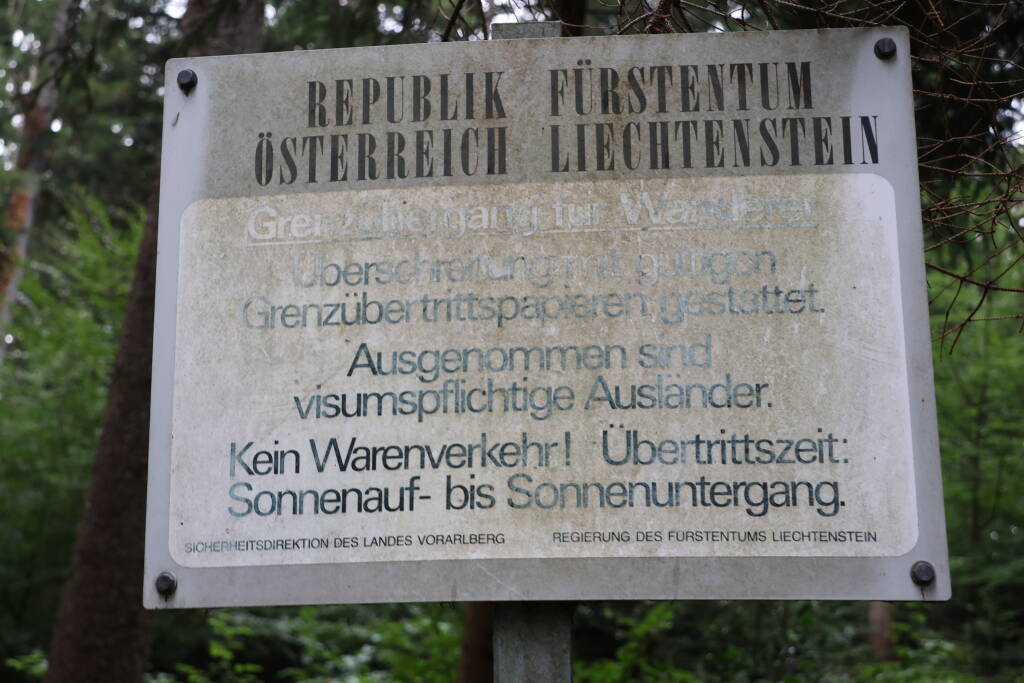
Border crossing is one sign.
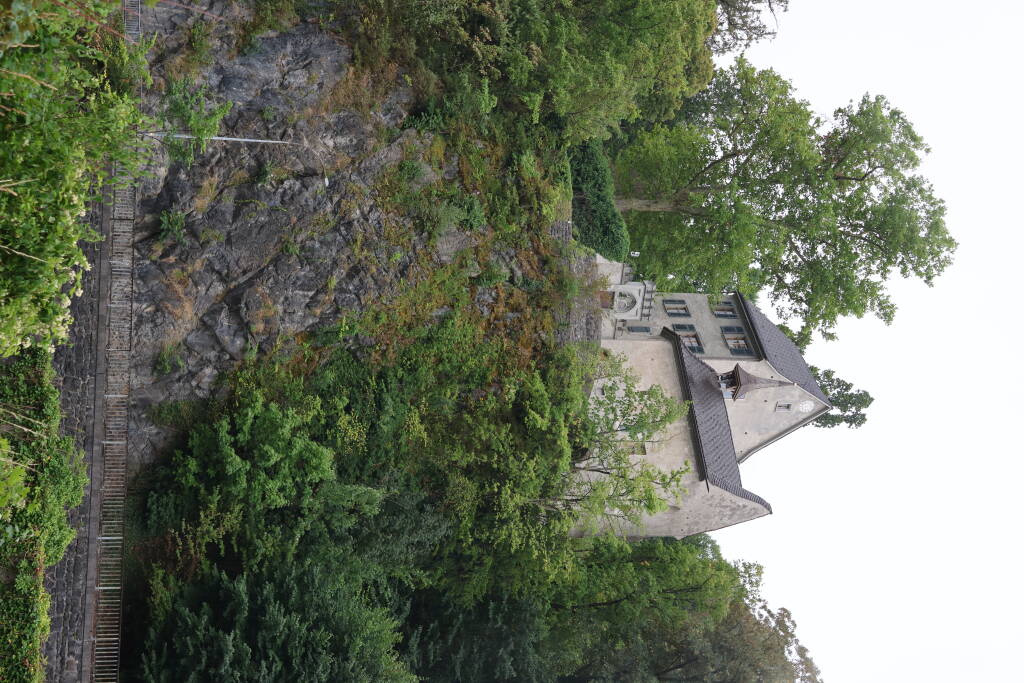
A chapel and a house atop a rock.
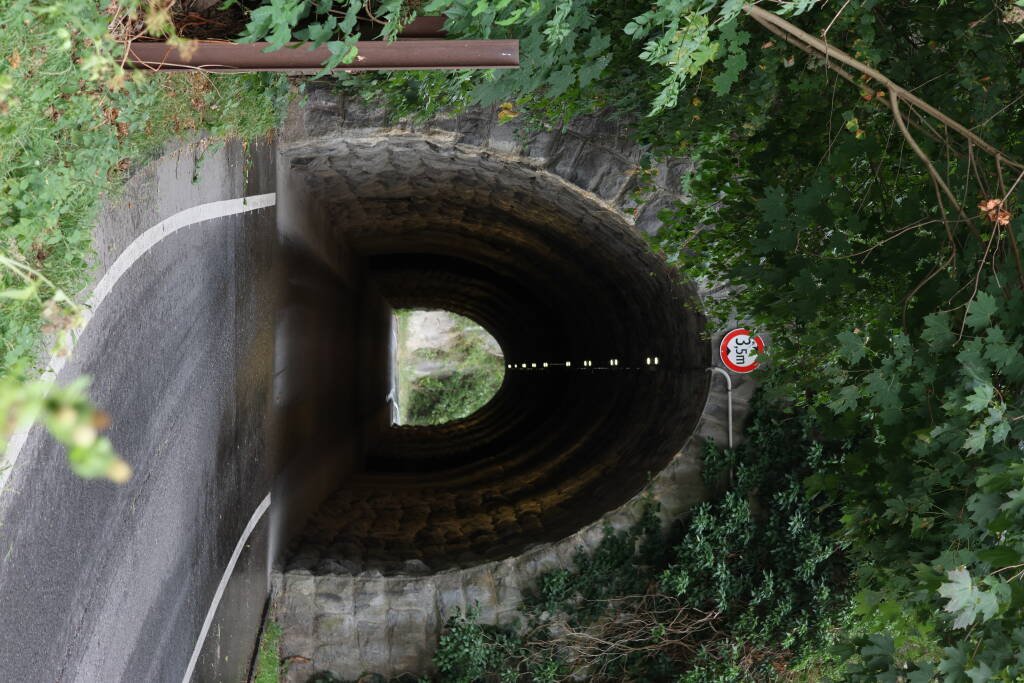
Tunnel, nowadays only for busses.
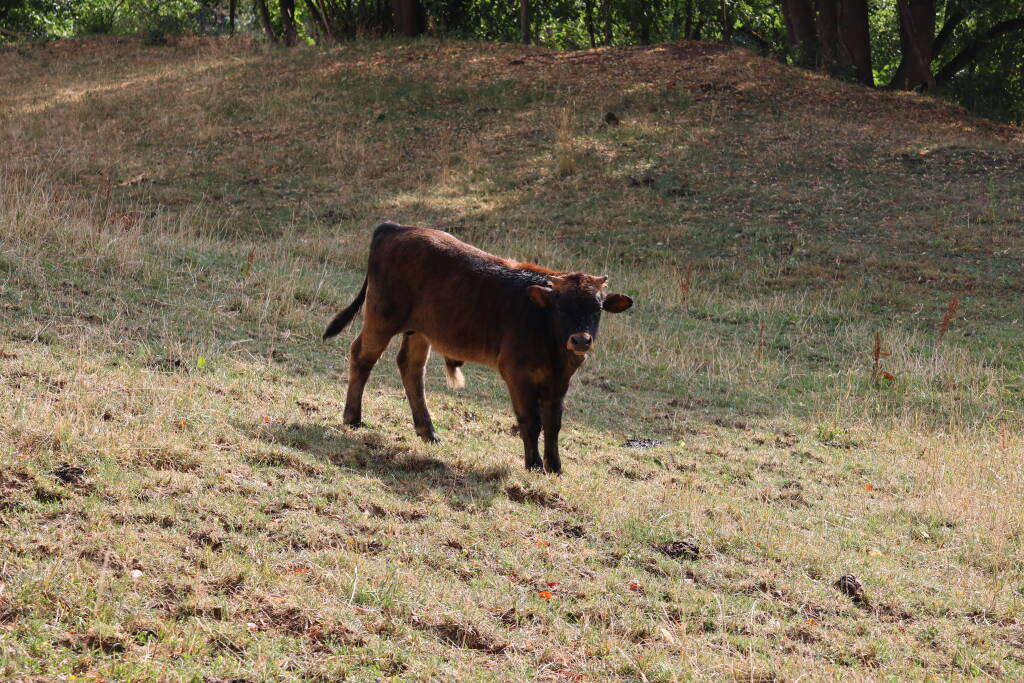
A small bull.
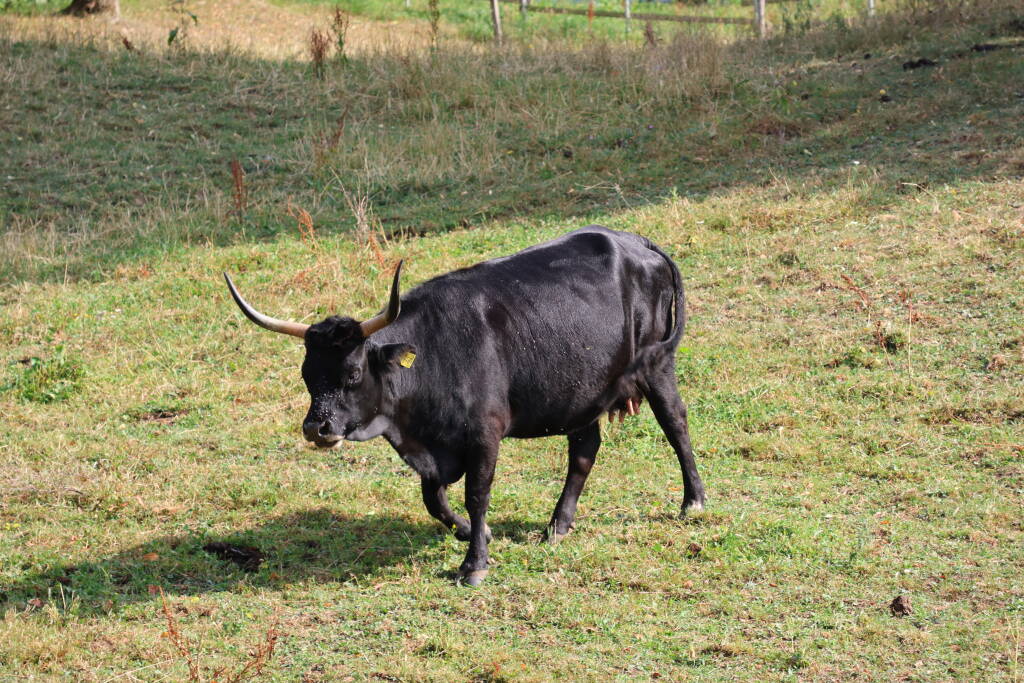
A horny cow.
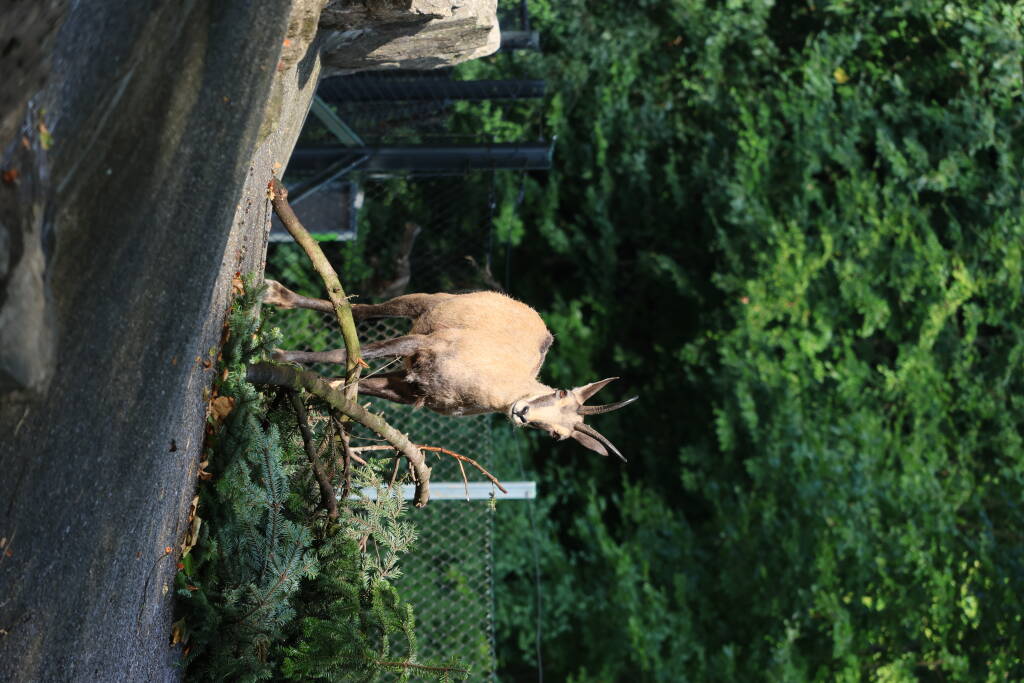
The goat standed still.
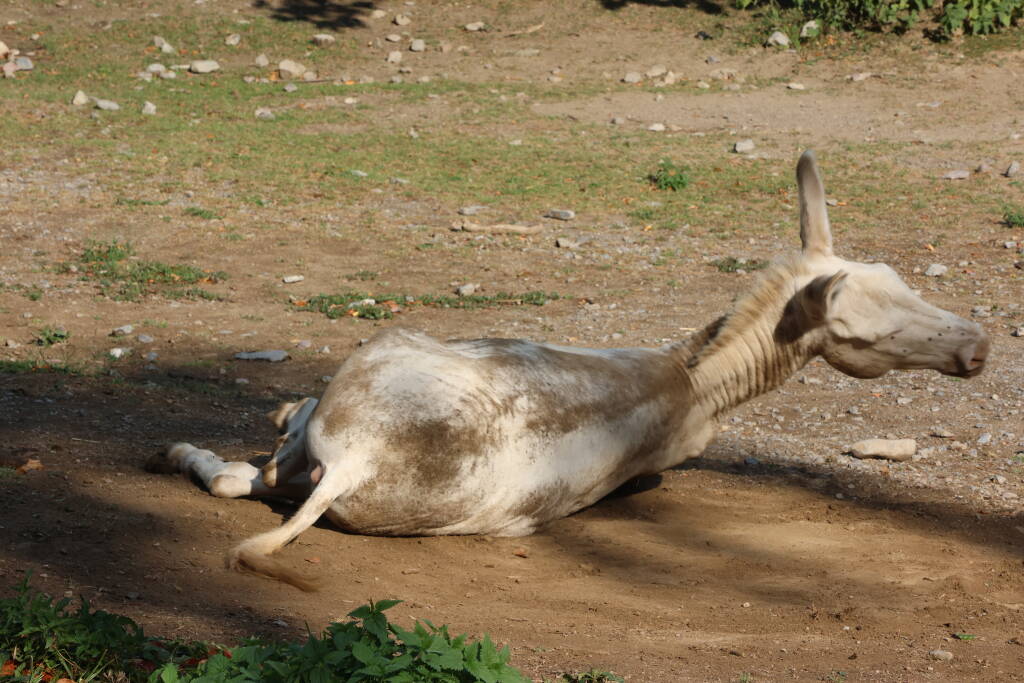
The donkey needed to cover itself by dust.
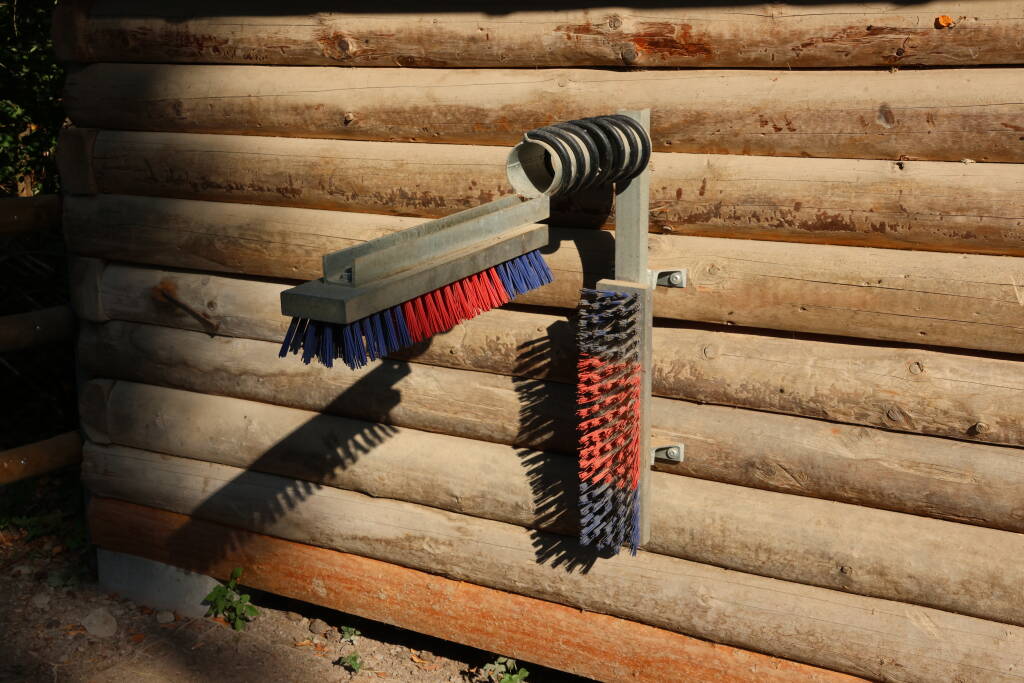
Fortunately they also have a donkey cleaning machine.
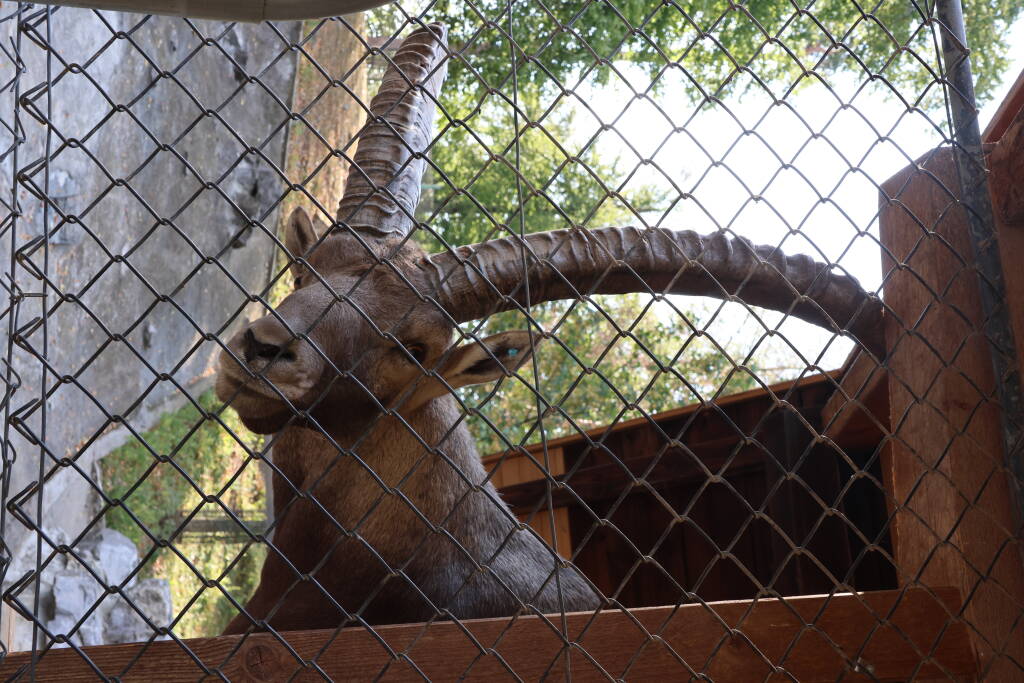
Did anybody say "carrot"?
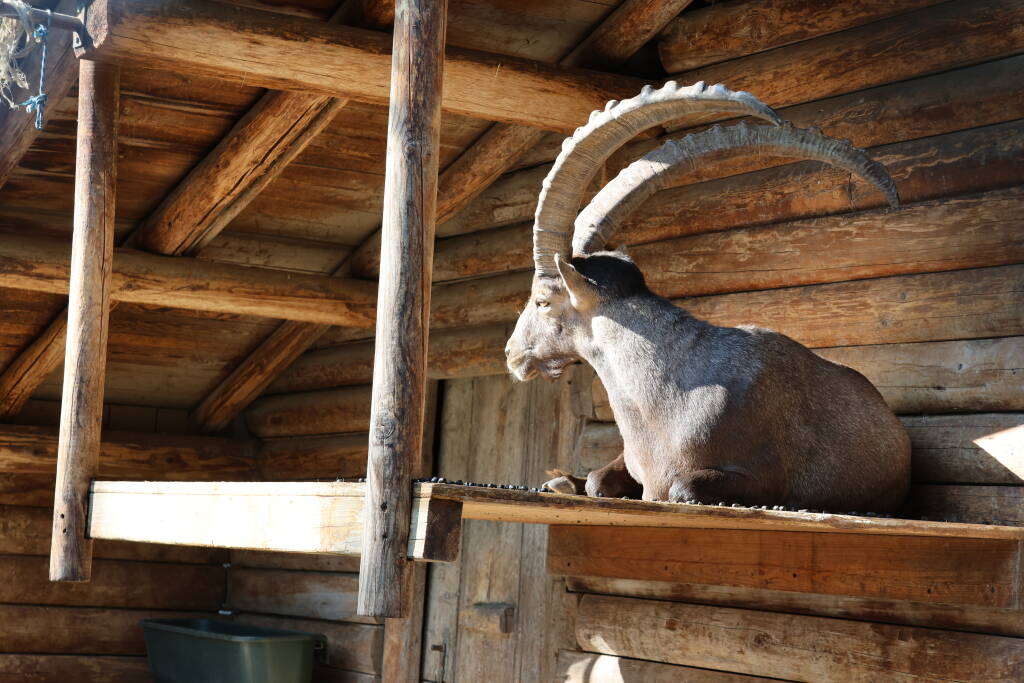
This goat has really long horns.
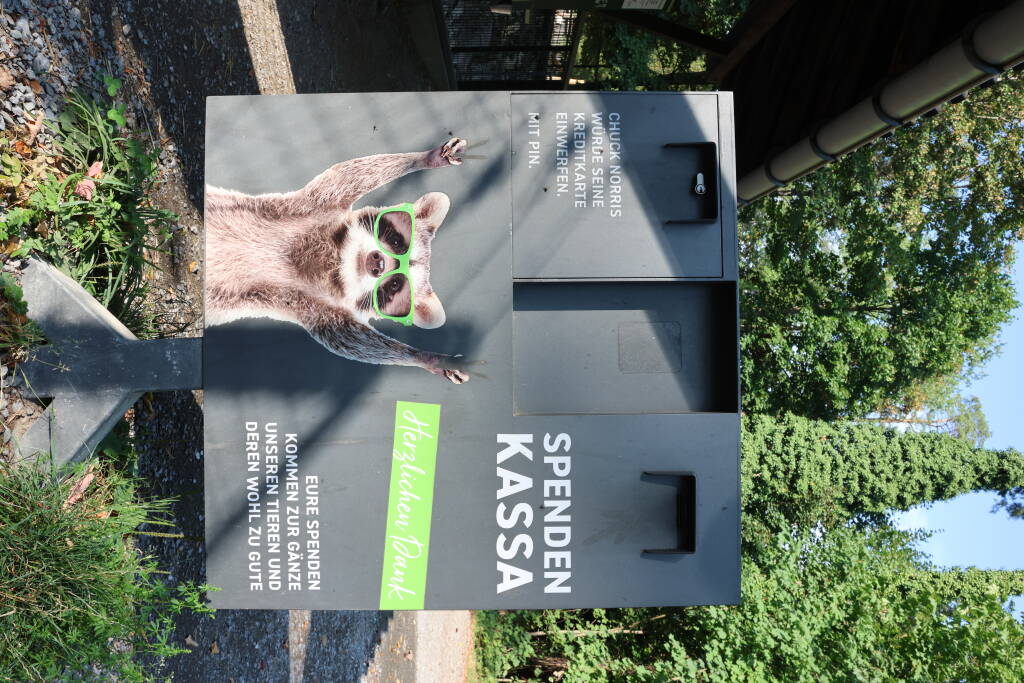
I'm not Chuck Norris, I didn't insert my card as a donation.
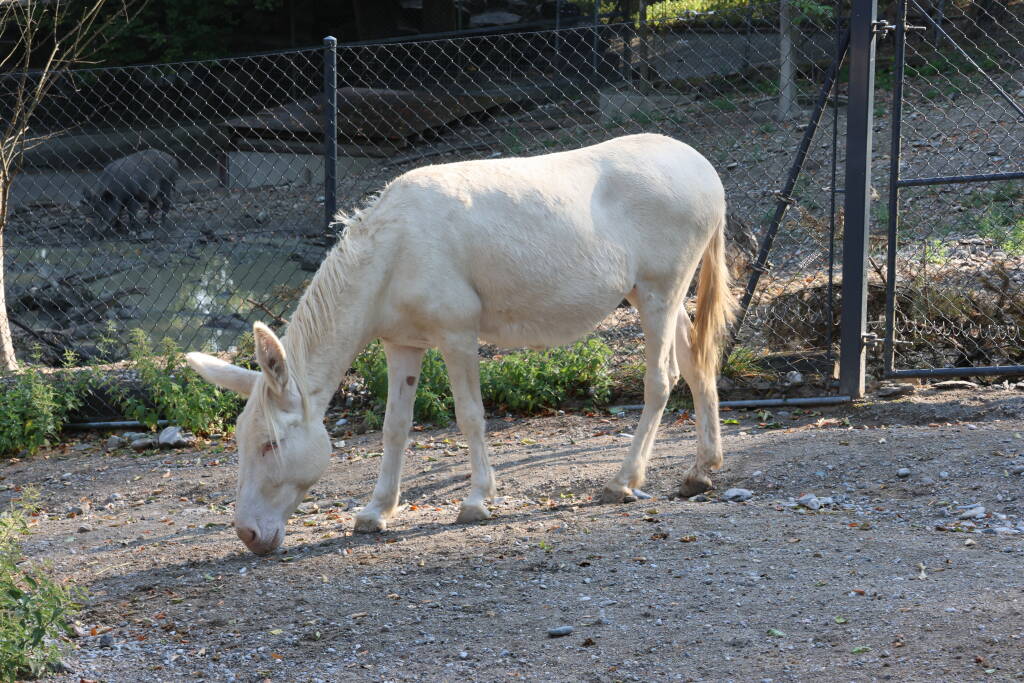
This is how a clean donkey looks like.
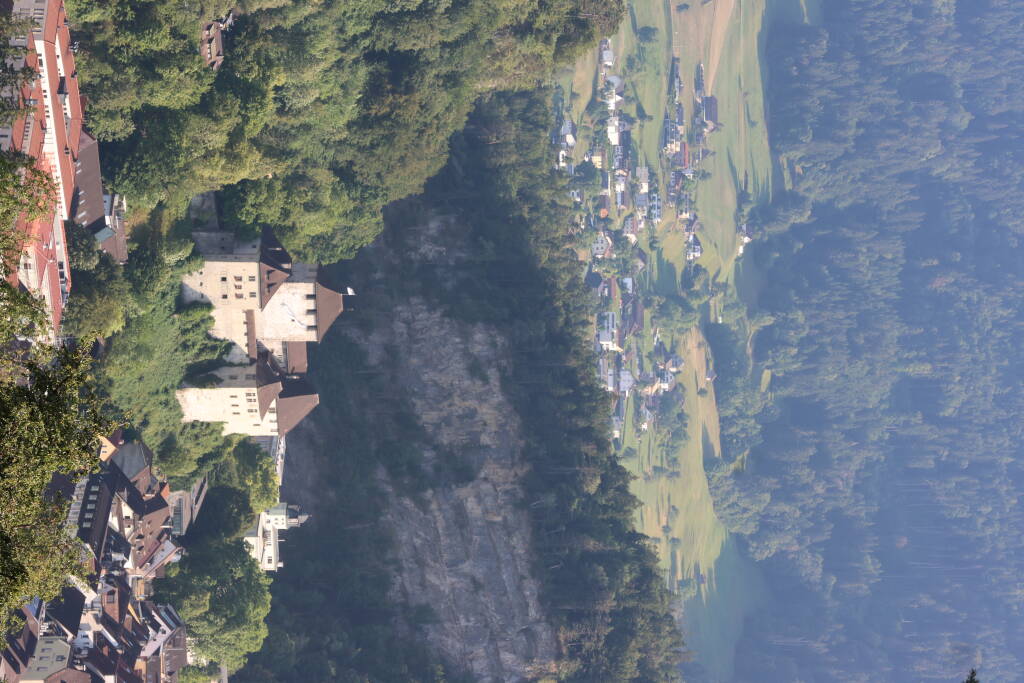
Feldkirch castle again but now from above.
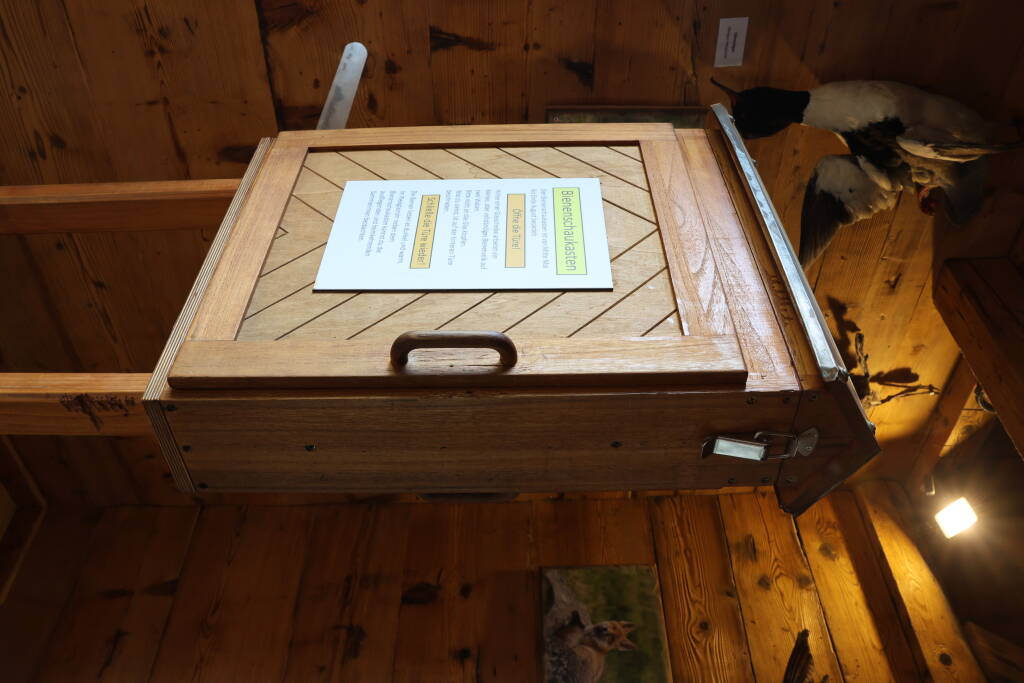
In the zoo-park (open 24/7, no admission) above Feldkirch, there is a small house (open only during day hours) and inside yet another small house which contains a bee hive with plexi so that one can observe bees.
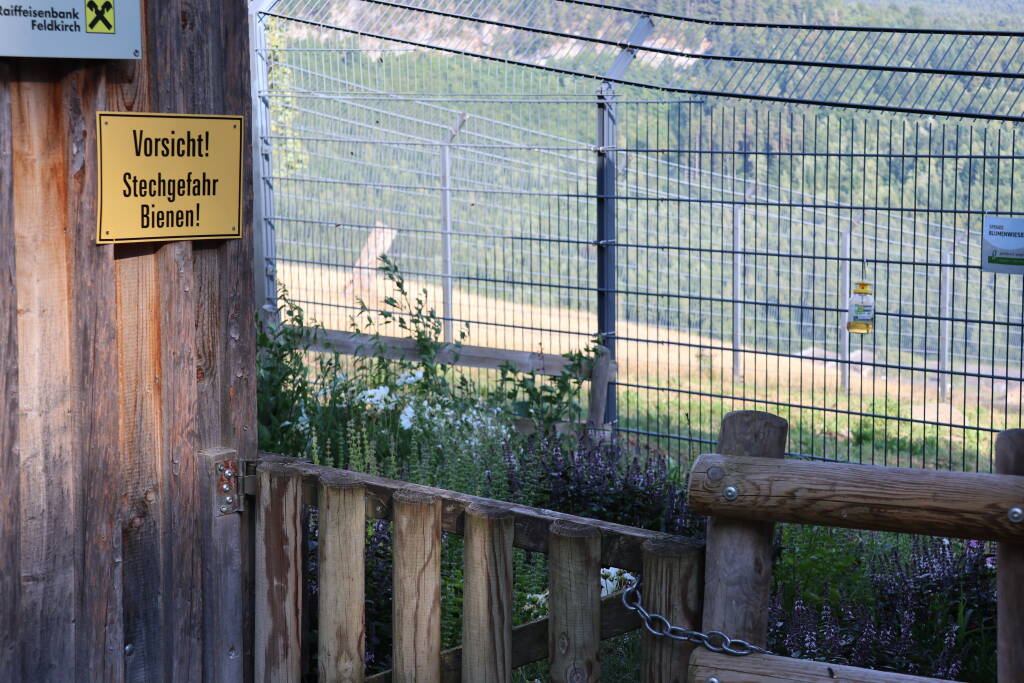
Beware, danger of stinging.
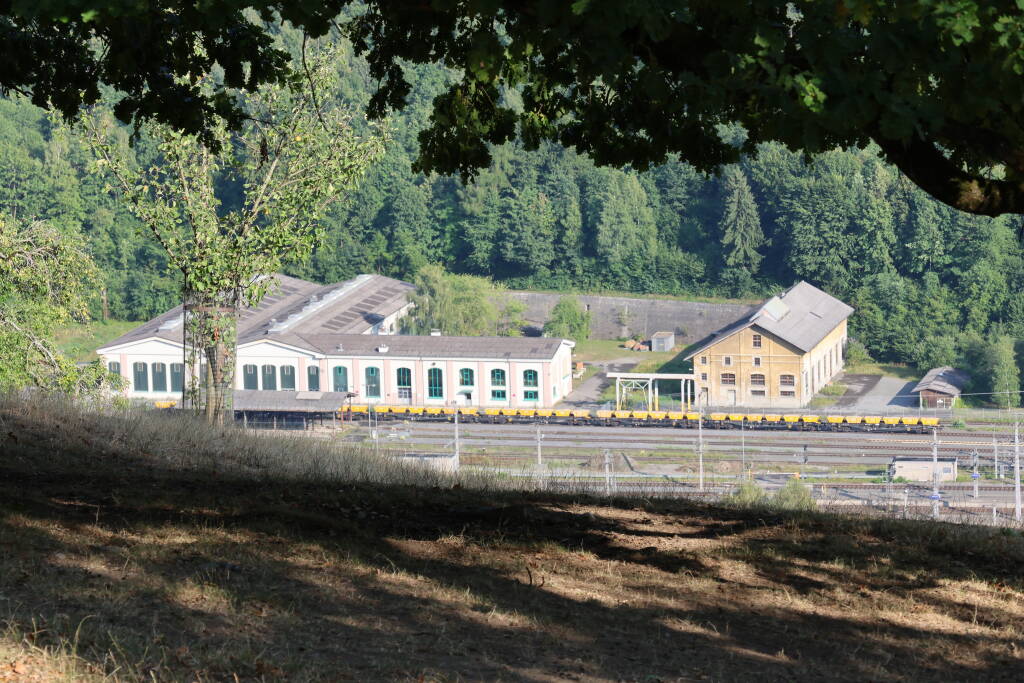
There are some wagons at the freight station.
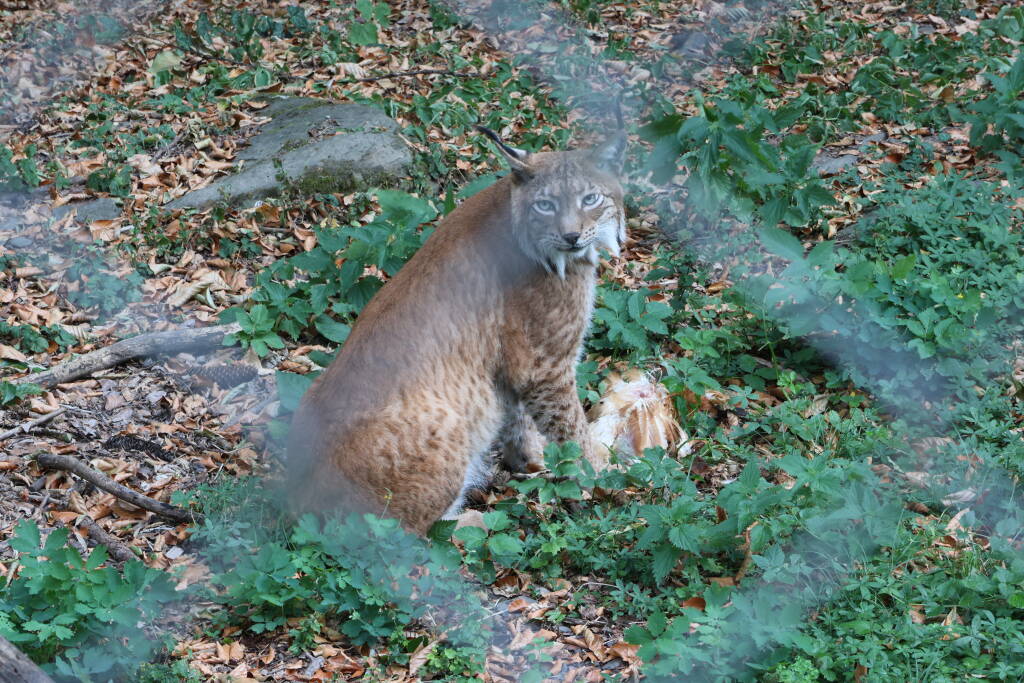
Lynx: I have dinner and you don't!
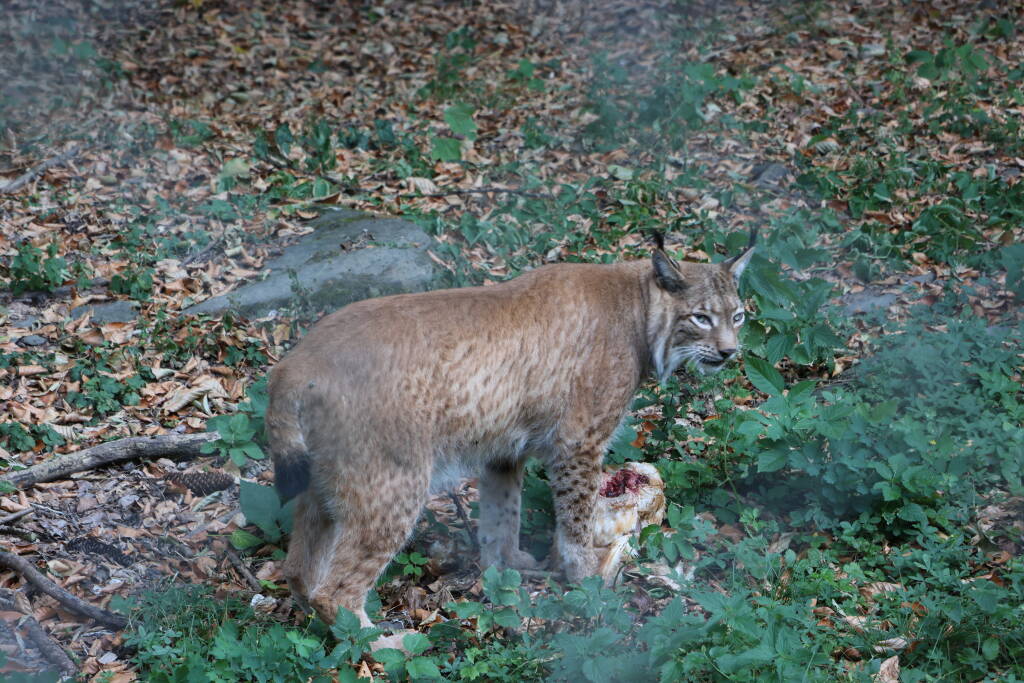
Go away, i'm eating.
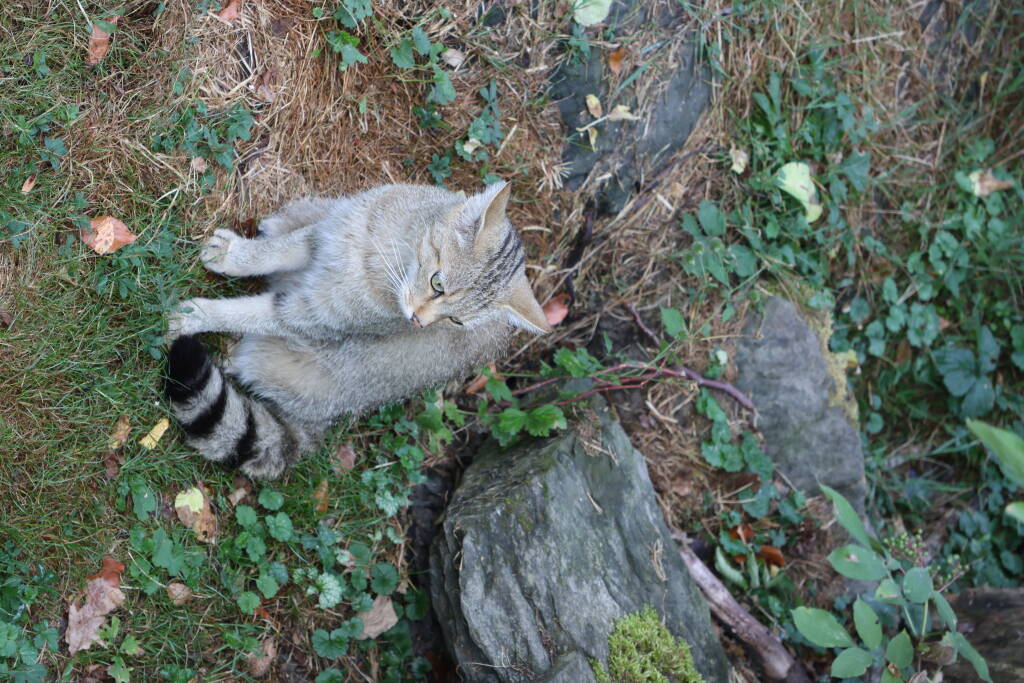
A wild cat, quite tame.
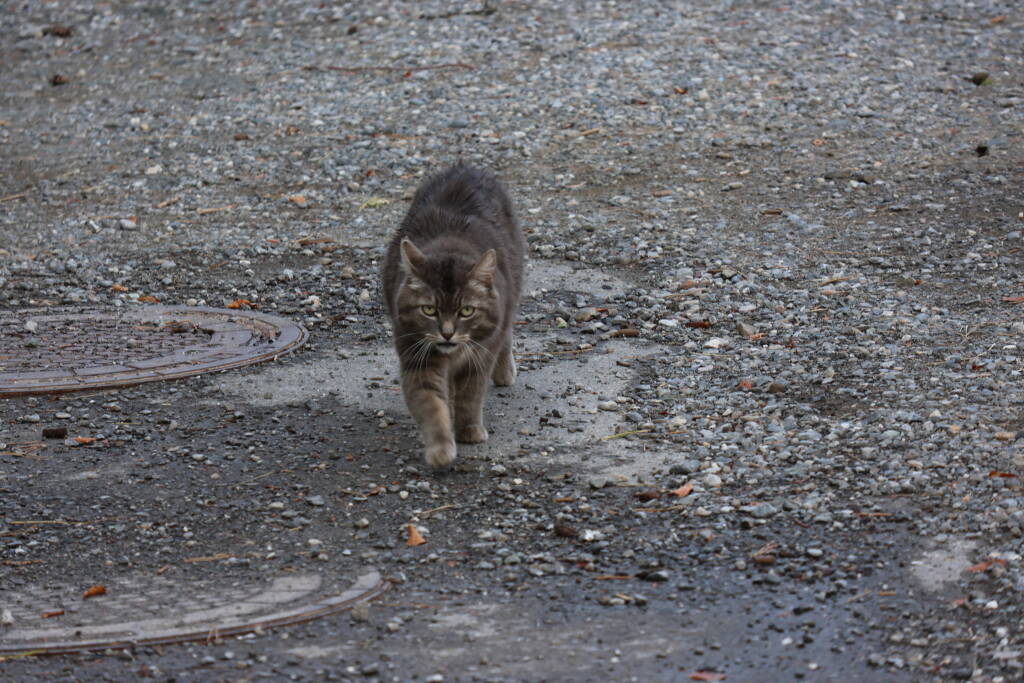
A domesticated cat, stray.
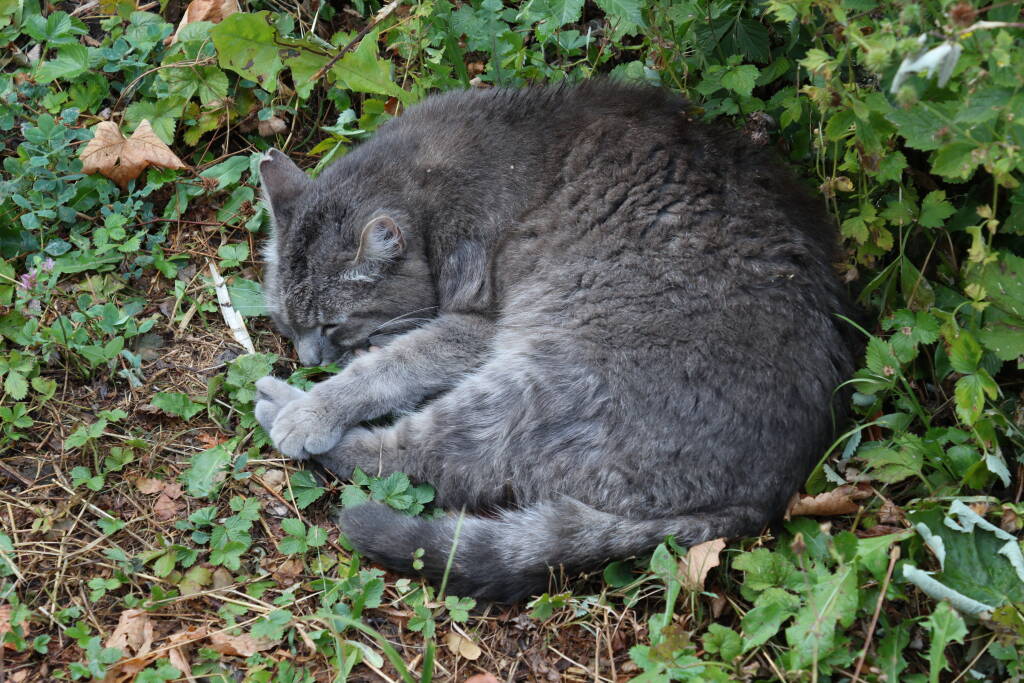
The cat was cuddly but later curled up and slept in the grass.
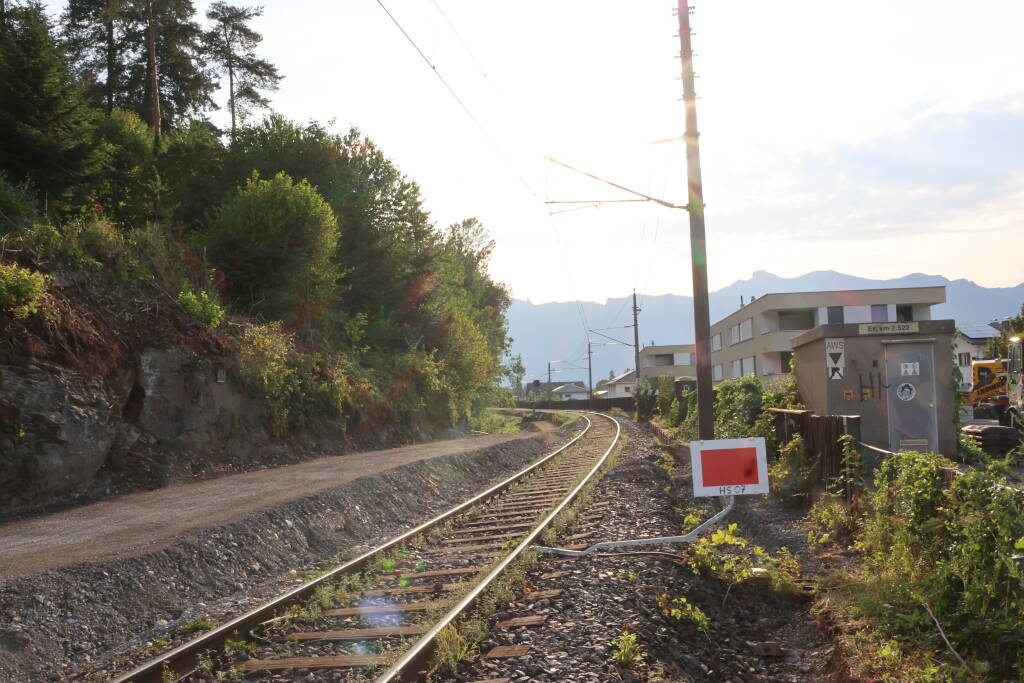
The railway between Feldkirch and Buchs is closed.
Probably signalling is being reconstructed. We remind you that it's closed.
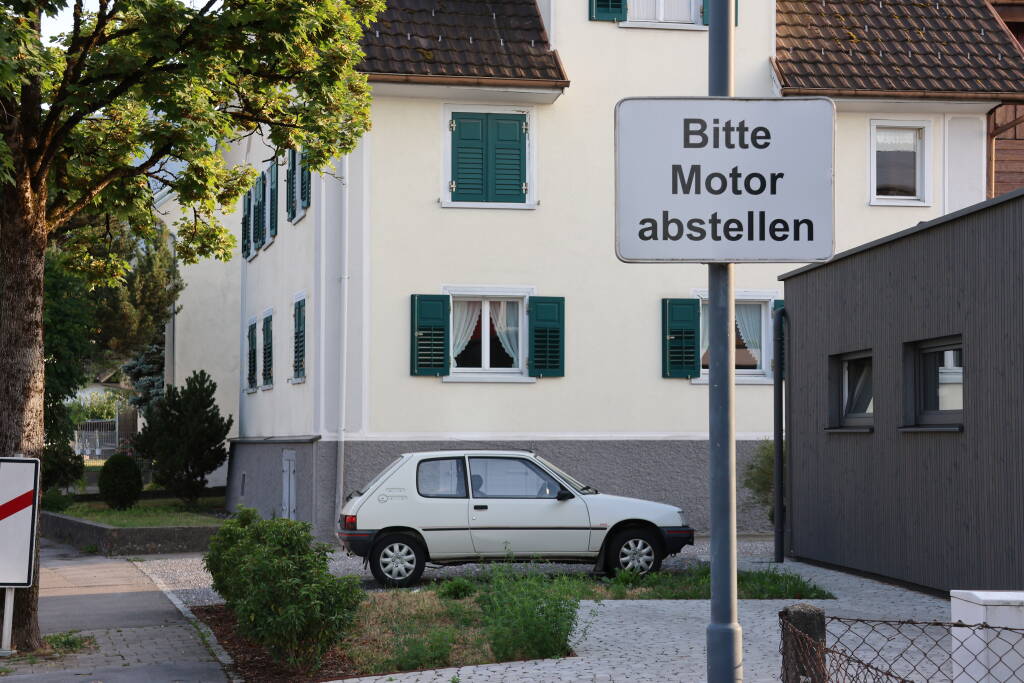
They write that you should drop your engine here, not the whole car.
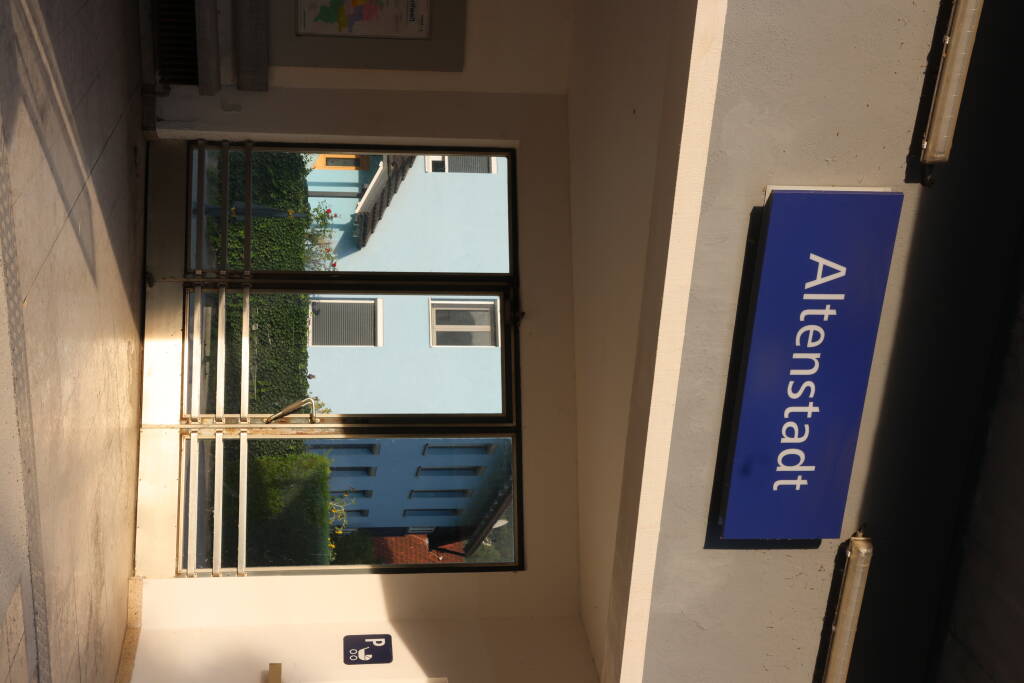
An exit from the train stop.
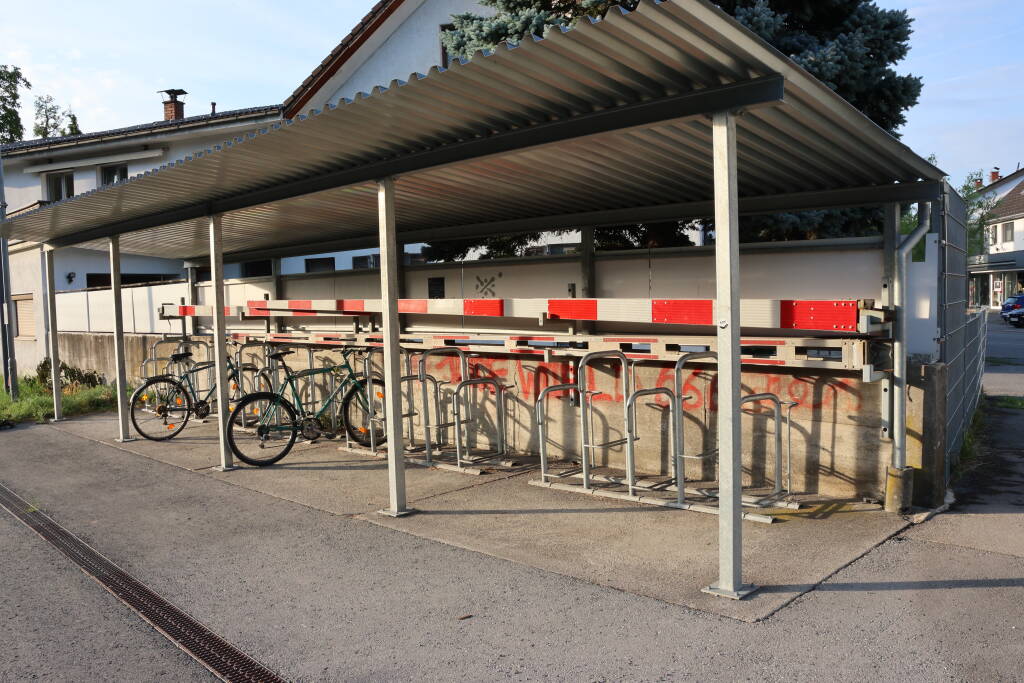
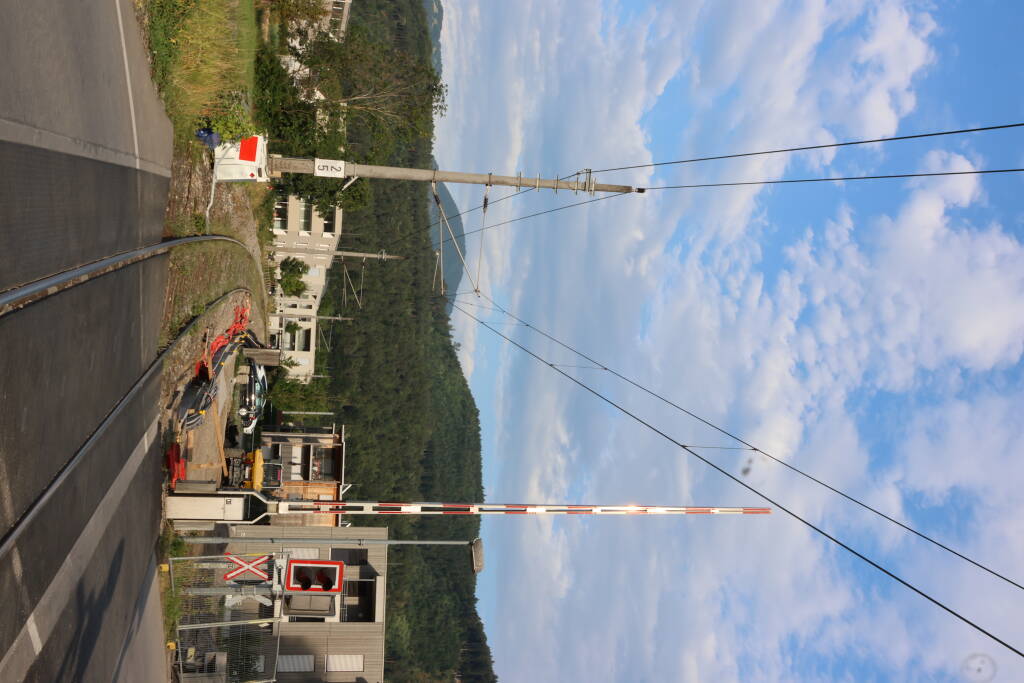
A collection of crossing gates.
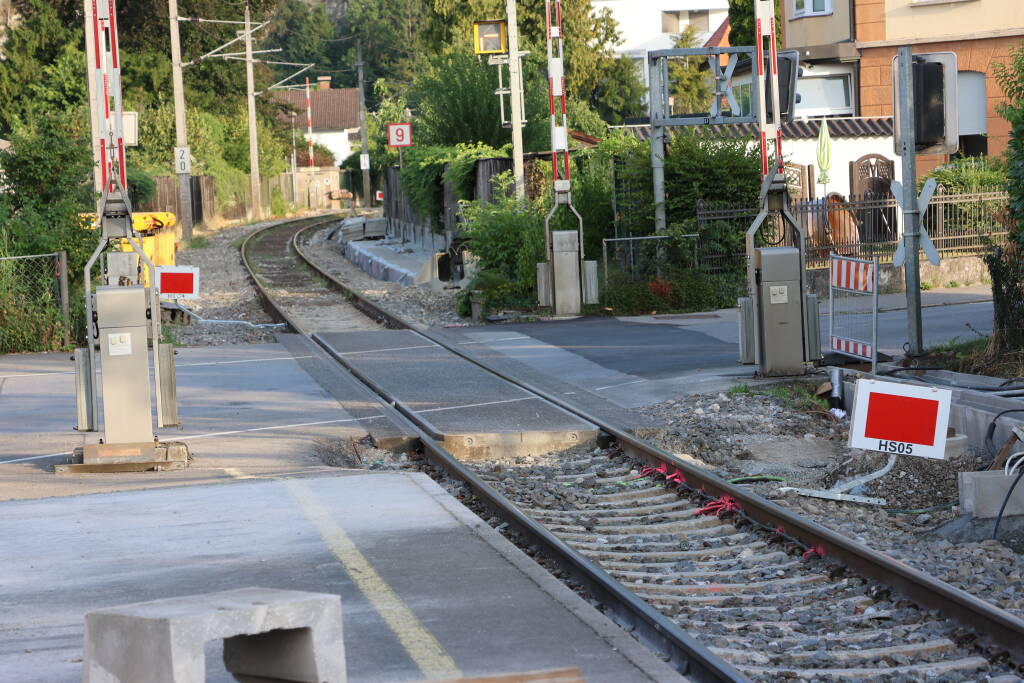
Three more times you should know that this railways is closed.
Sun is setting.
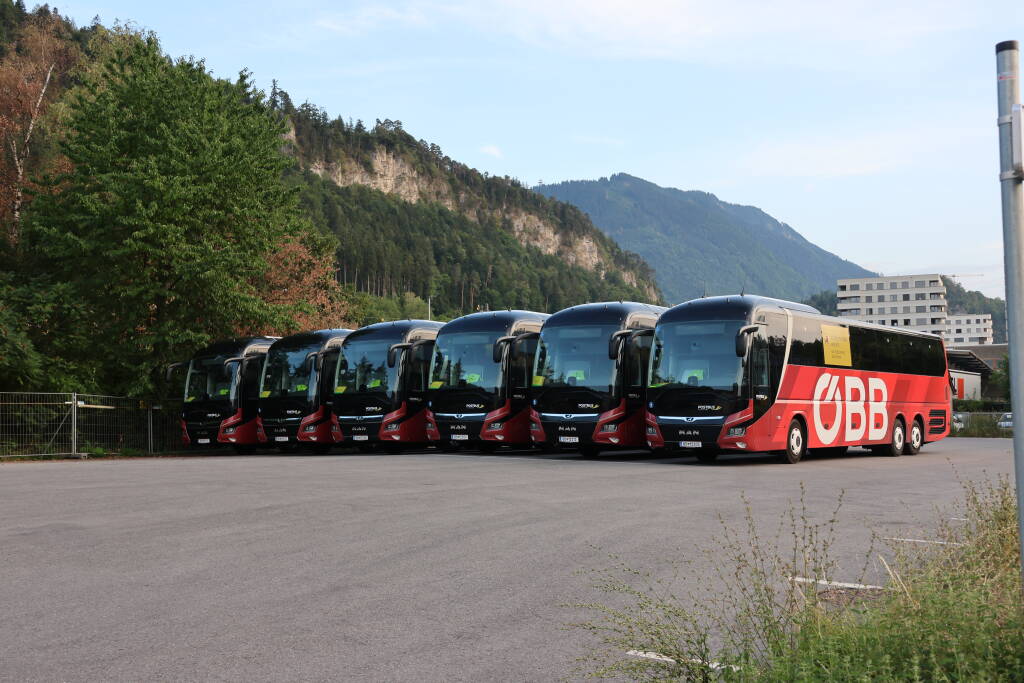
Substitute buses are ready for the next day.
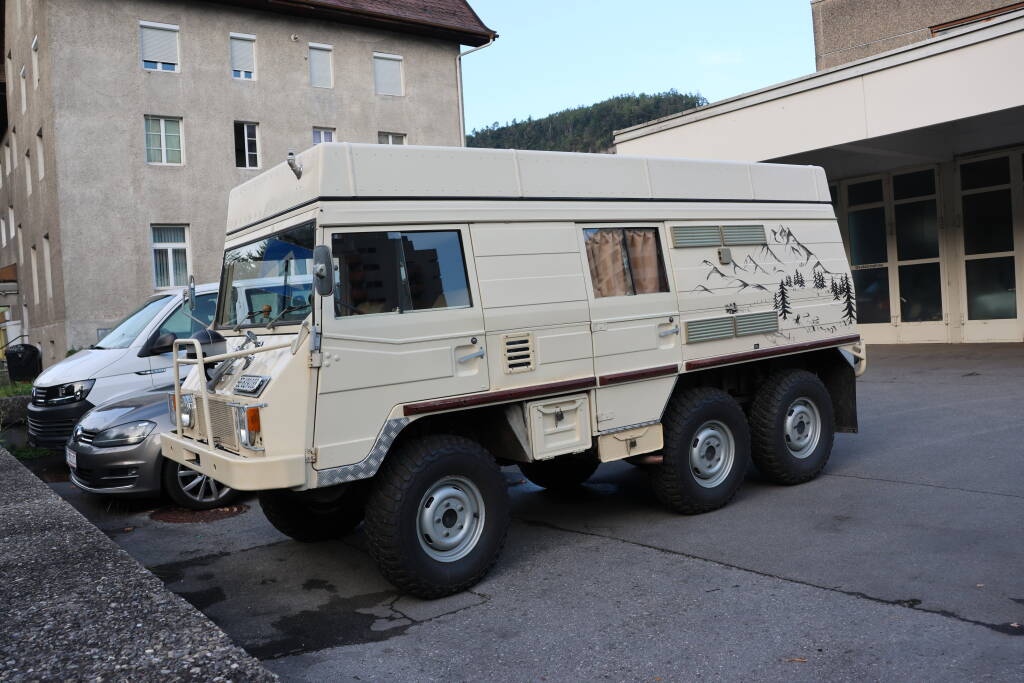
A camper van as well (not mine though).
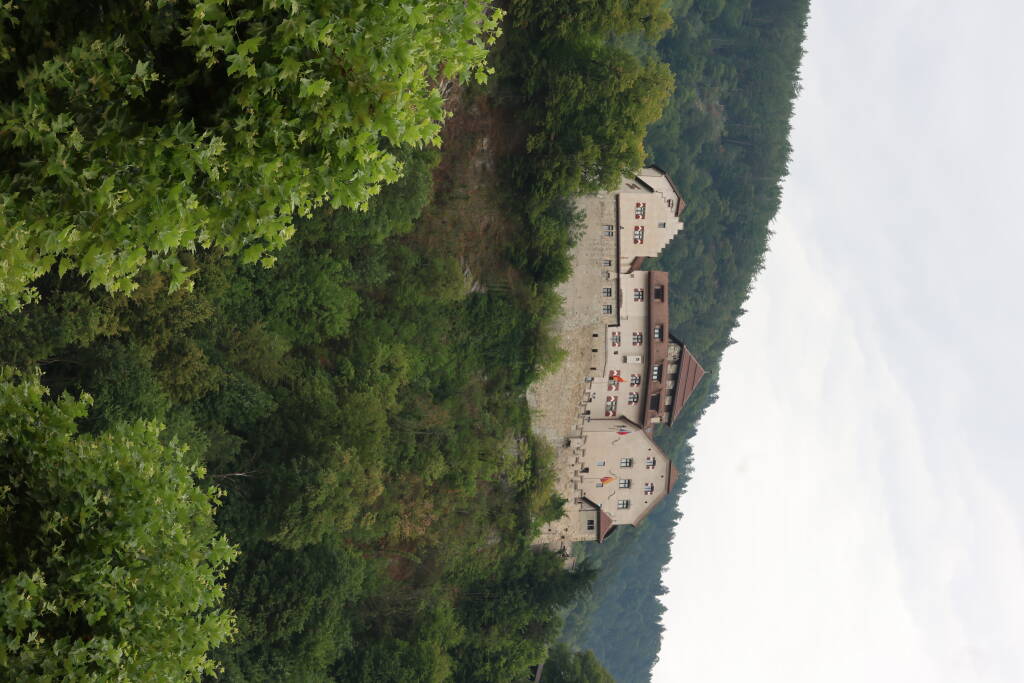
Vaduz Castle, the seat of the Prince of Liechtenstein. Private, not accessible to public.
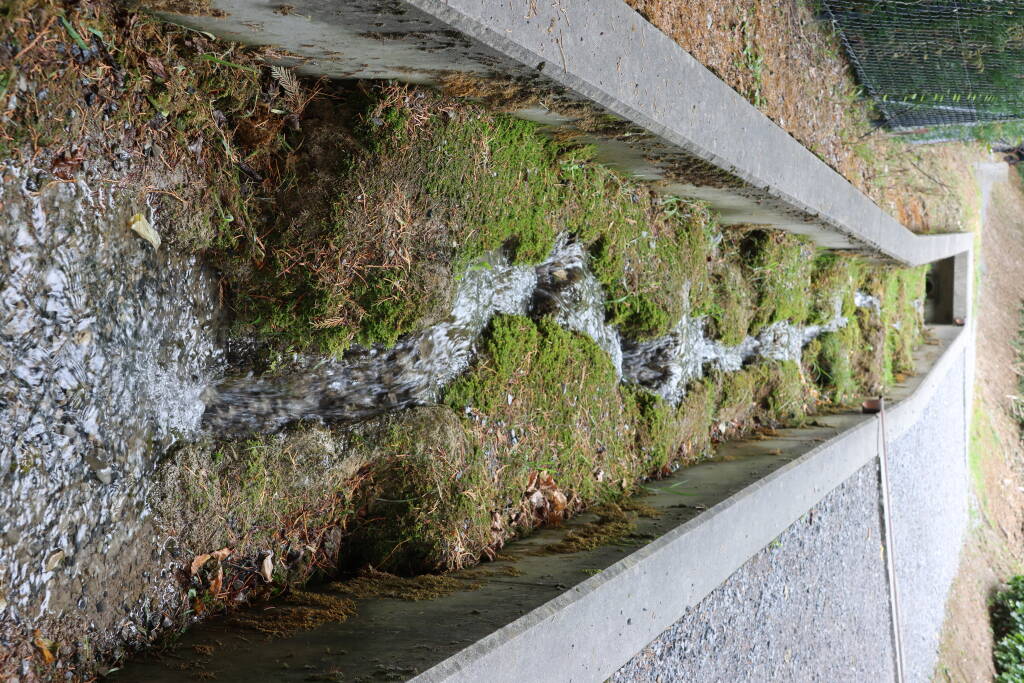
A stream by a path, regulated but still natural.
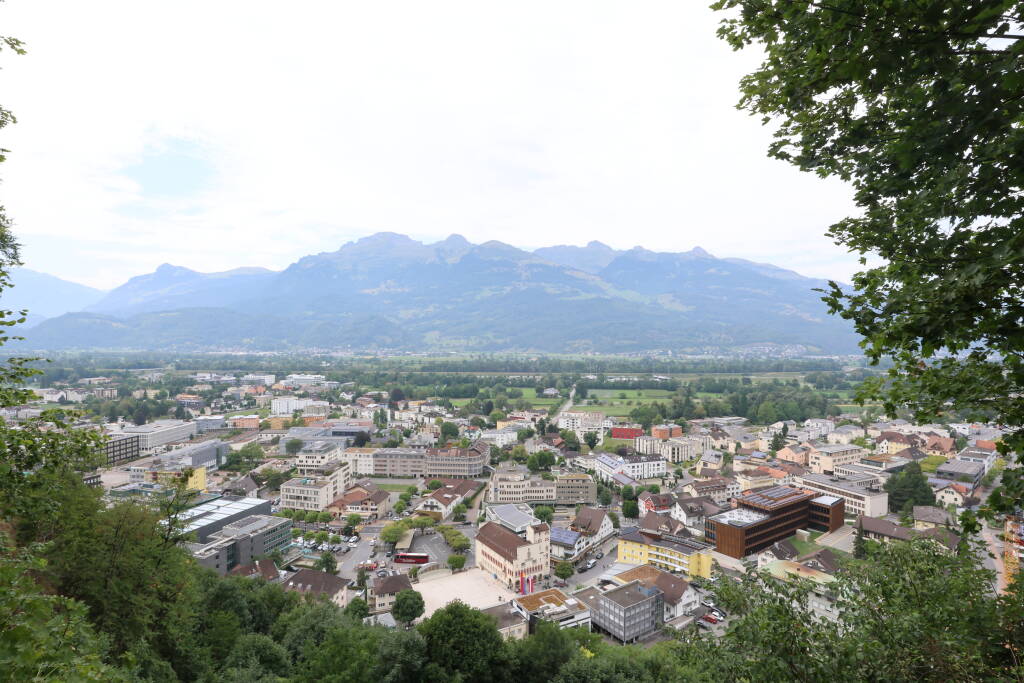
Lookout to Vaduz from the castle, Swiss mountains in background.
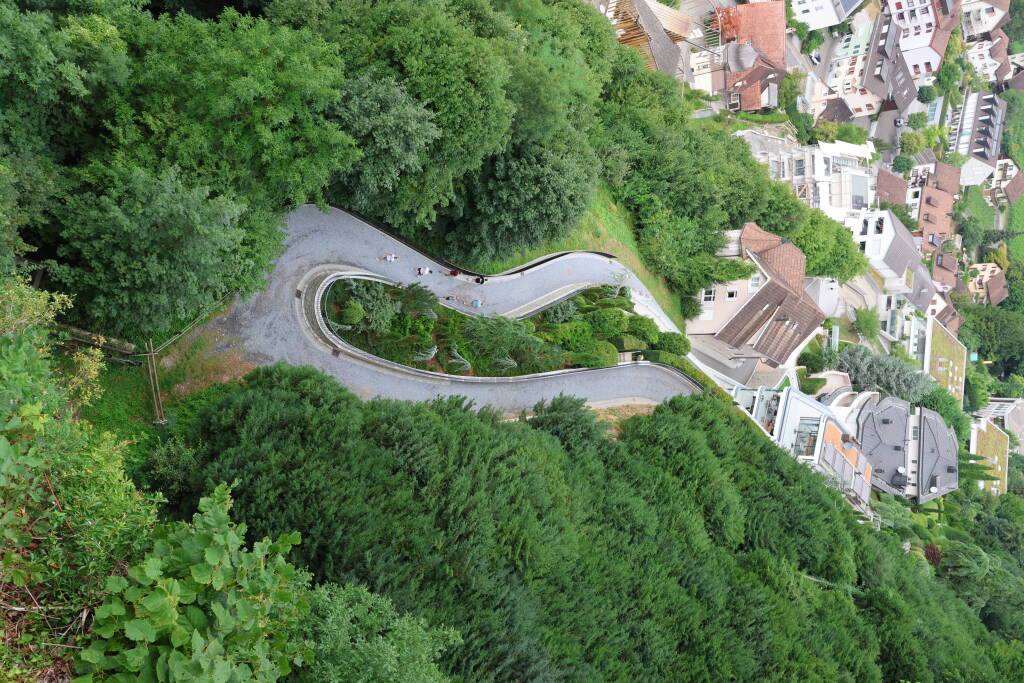
The path to the castle.
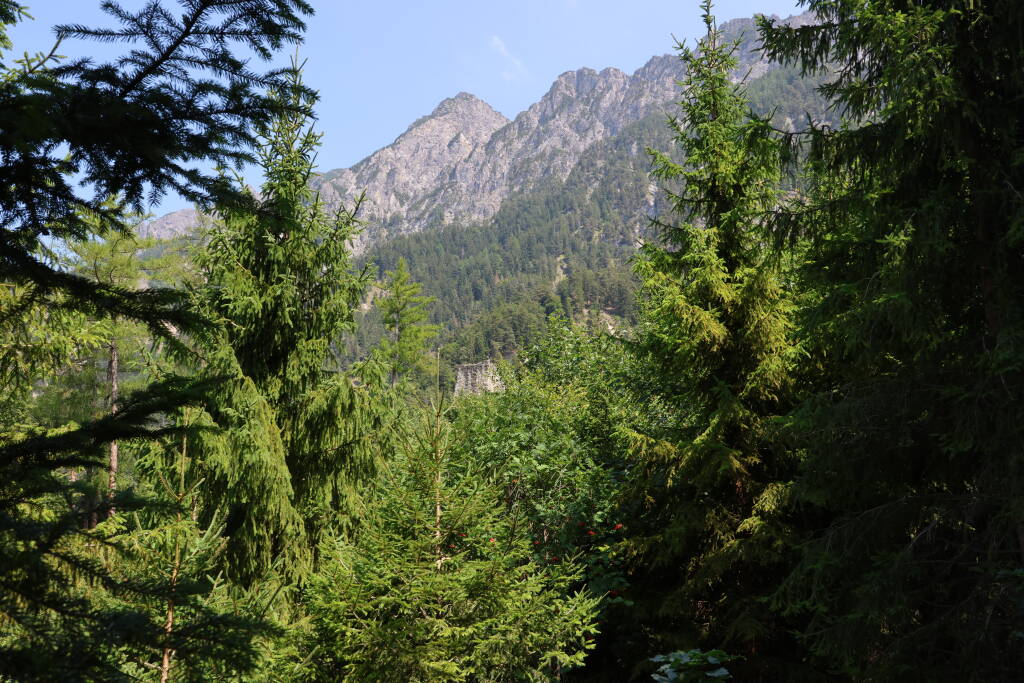
Right in the middle of the forest, you can see a ruin tower.
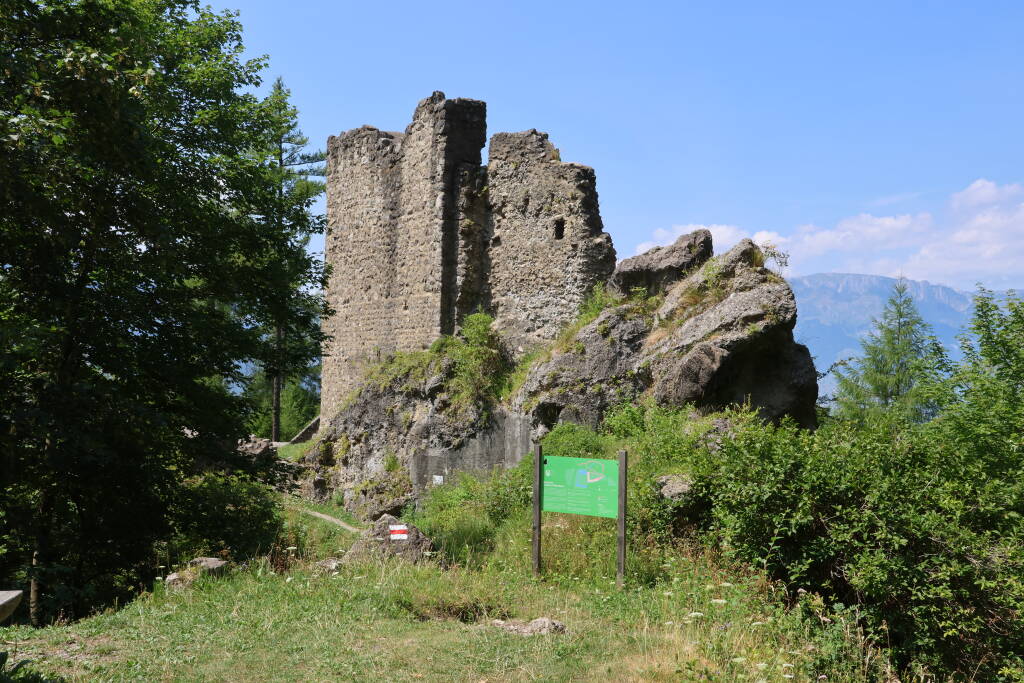
This ruin. Castle abandoned some time in 1300s after it burned down, derelict ever since.
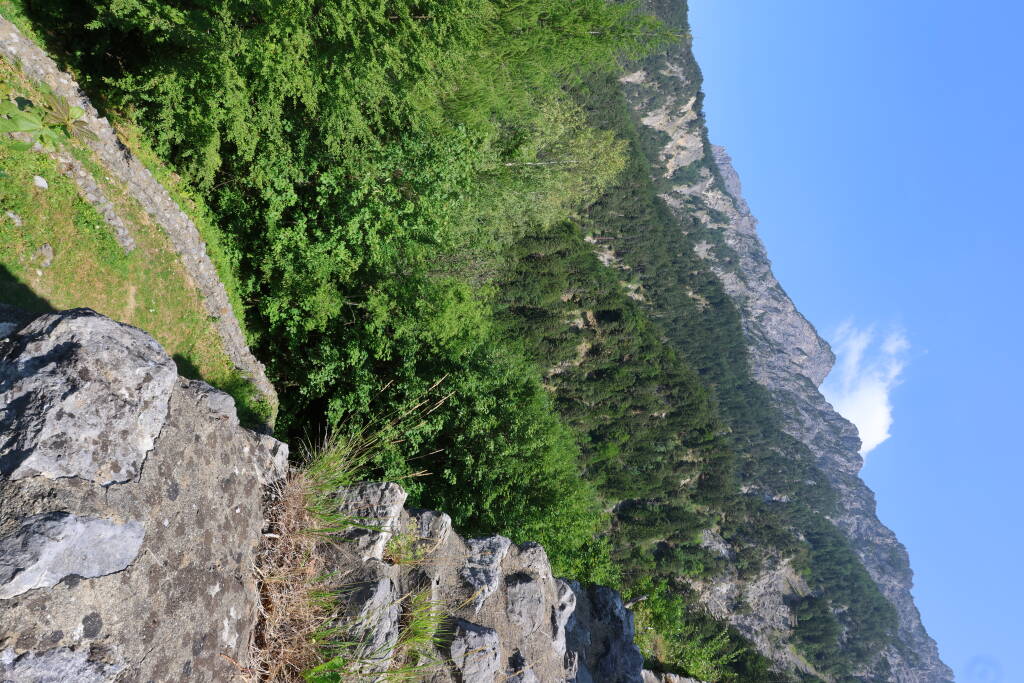
The castle was thoroughly stabilized by a lot of concrete in the 1900s.
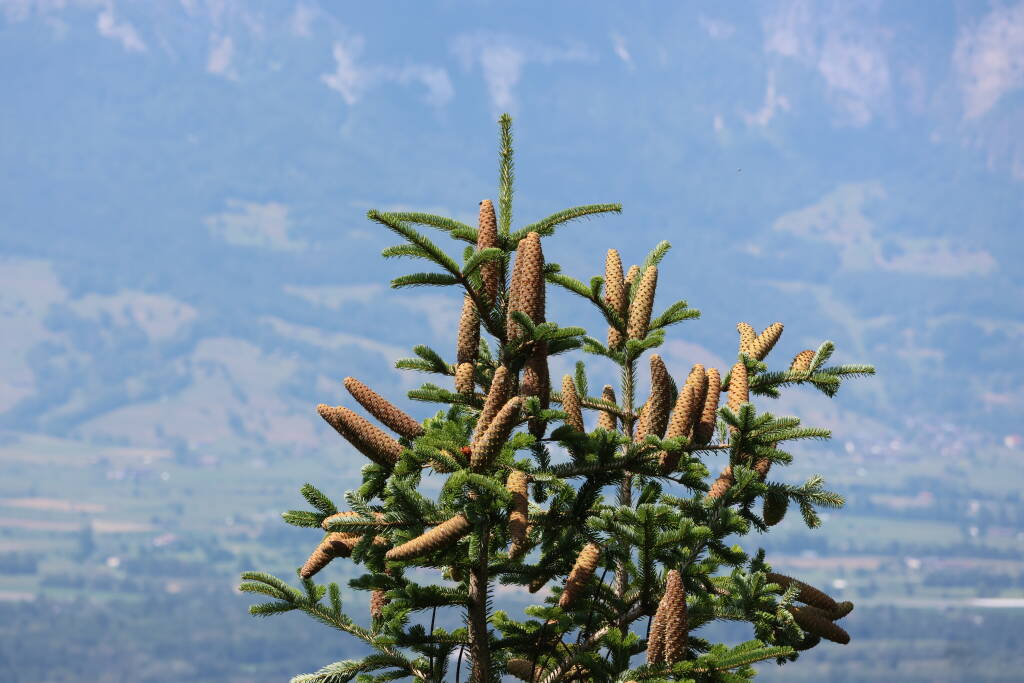
Fir, maybe silver.
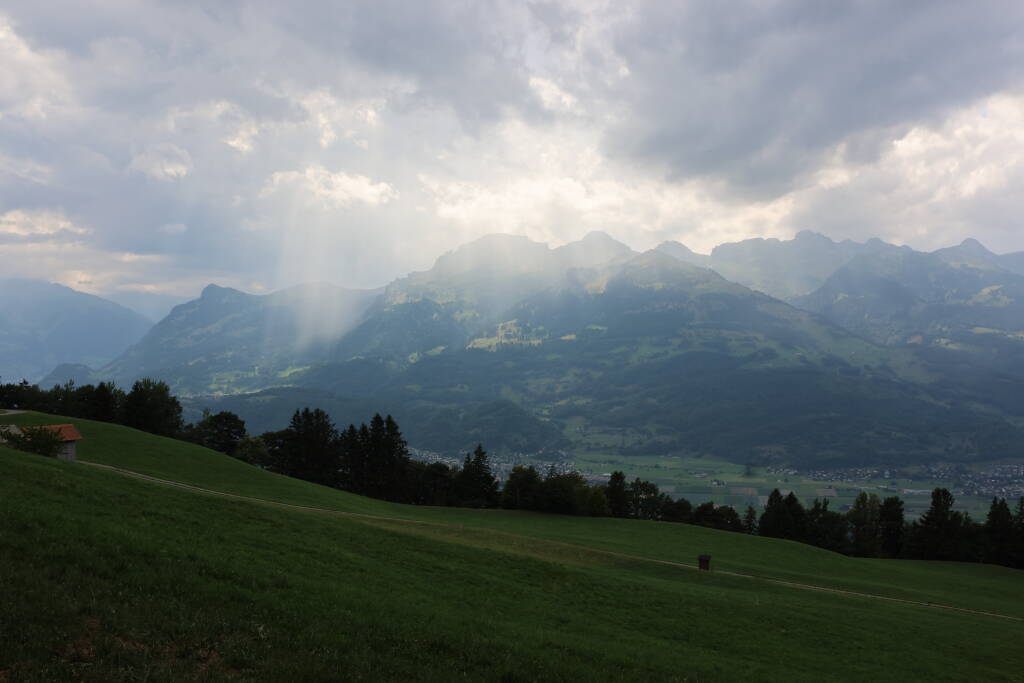
Lookouts.
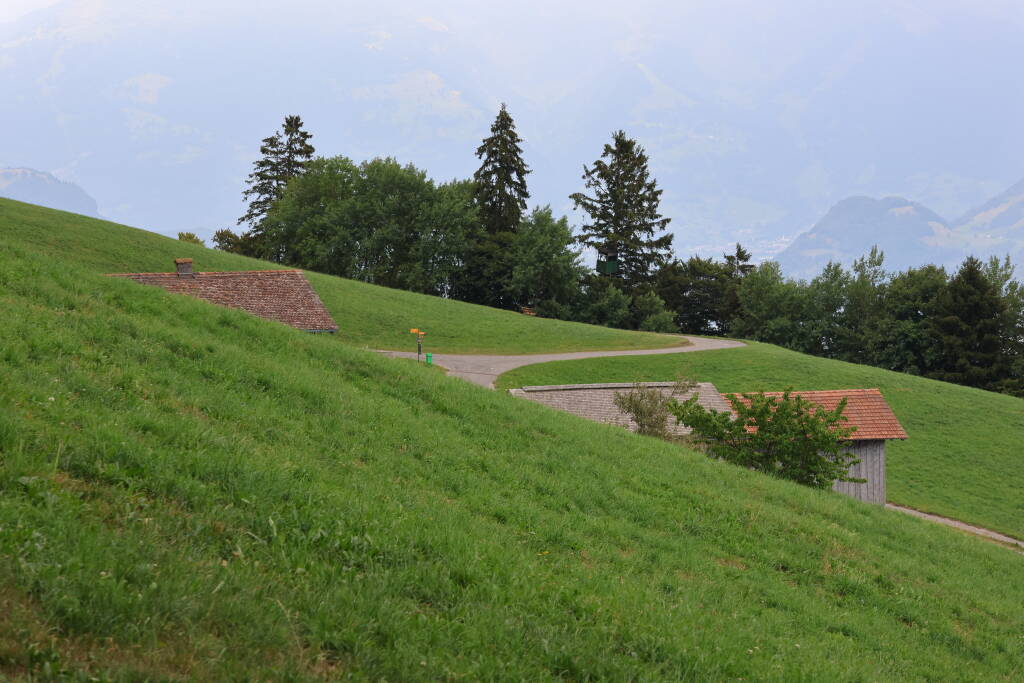
Tourist crossroads. 200 meters of height remaining to a lookout tower.
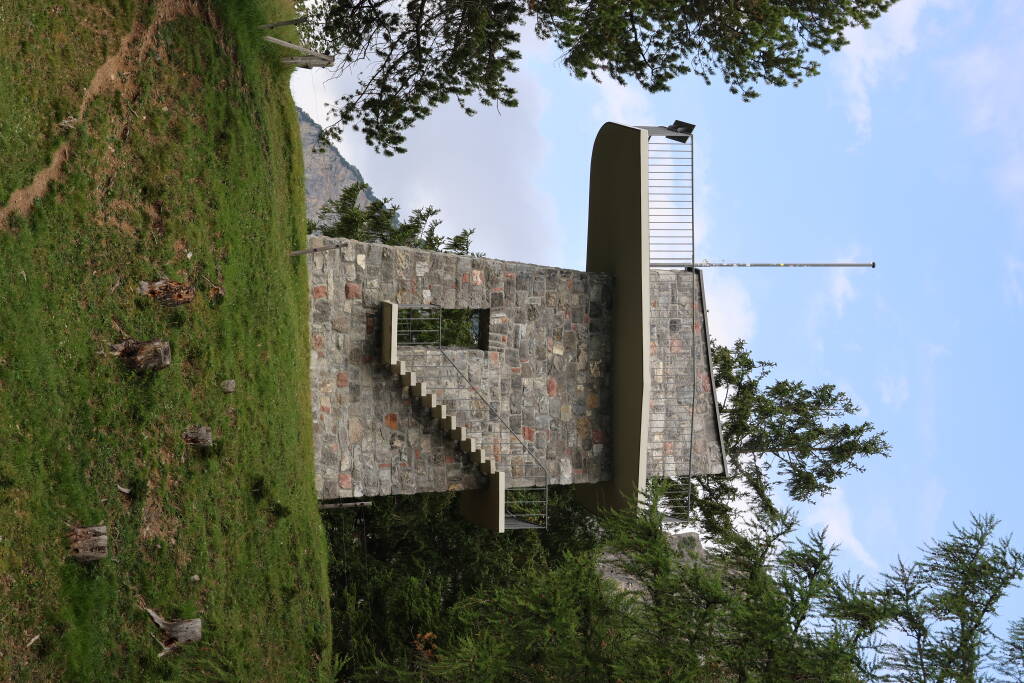
To this lookout tower. It's a bit of a stone wall and some concrete around.
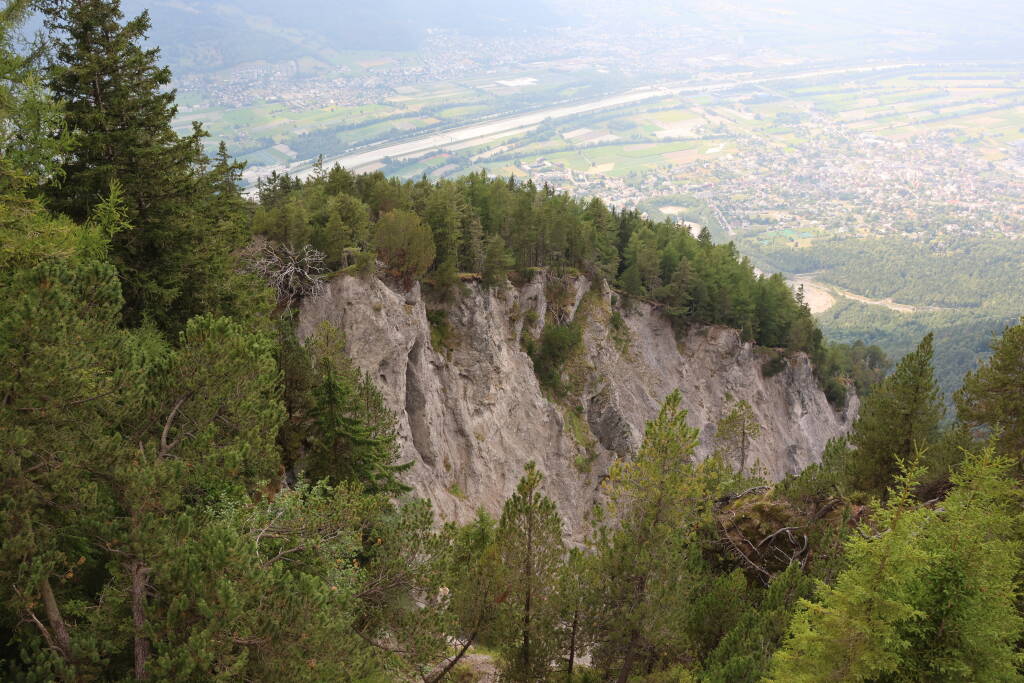
There is a view from the tower.
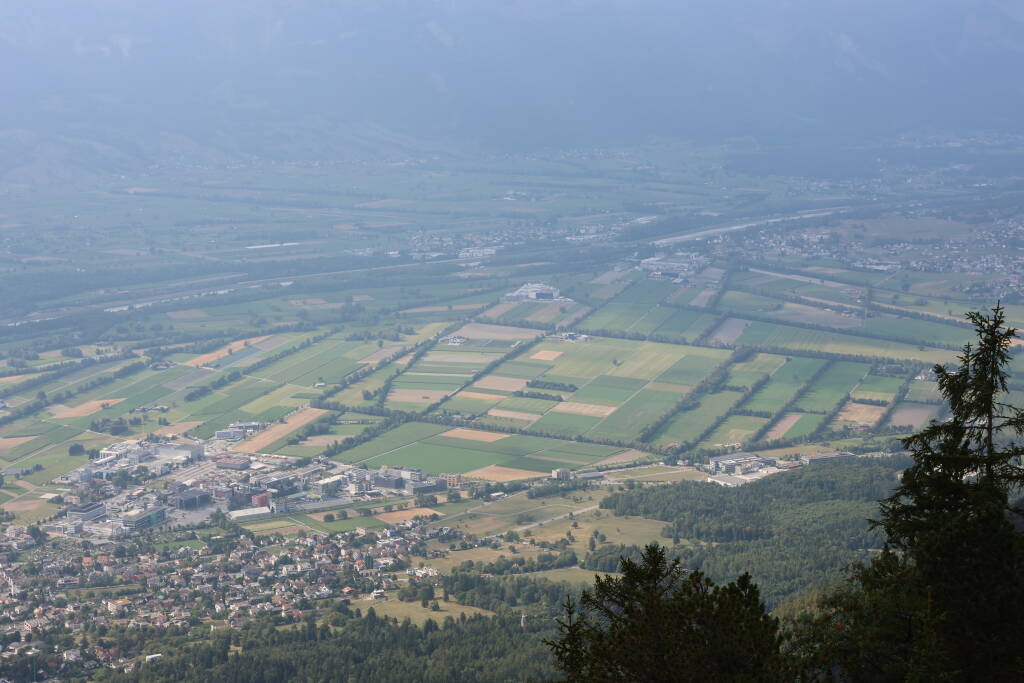
Liechtenstein farming, all at once.
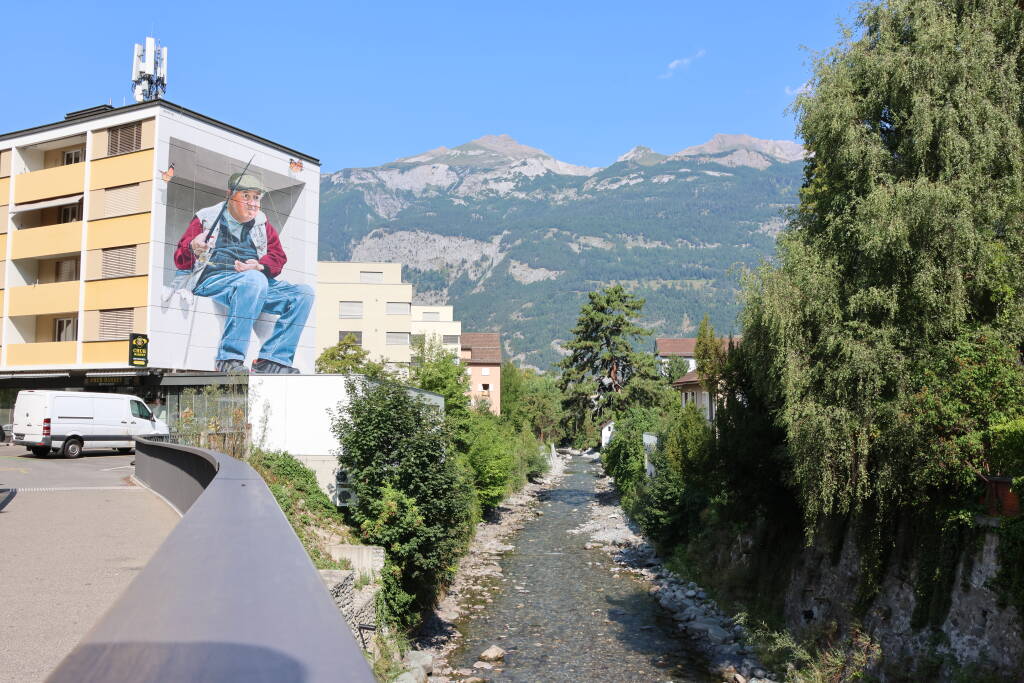
Chur. A painted fisherman watches the river.
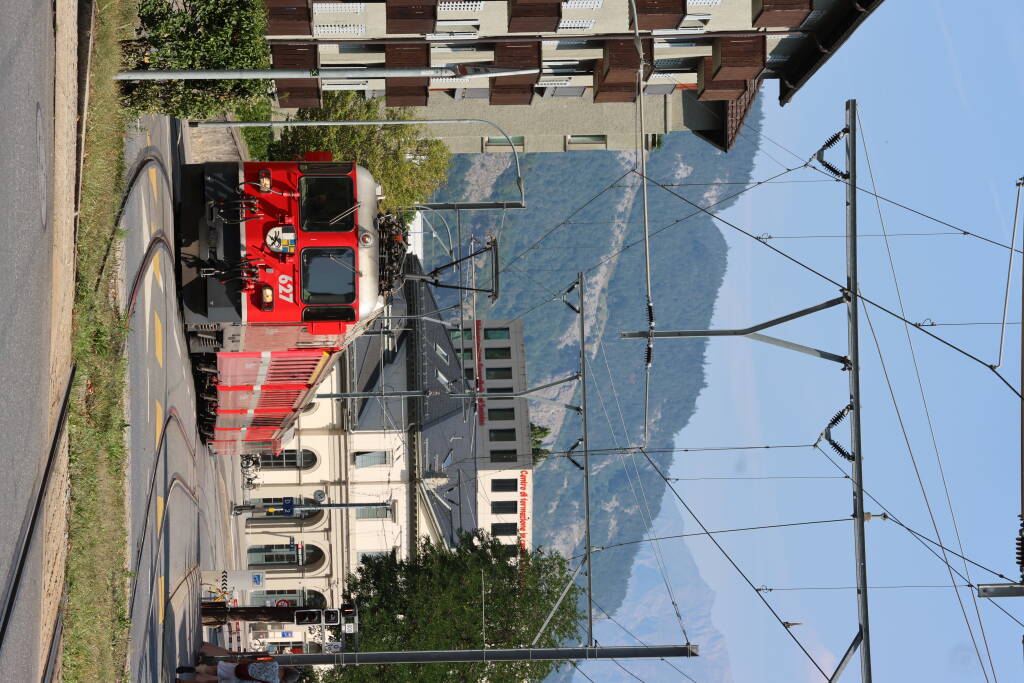
Train to Arosa operated by Rhätische Bahn has just departed from the Chur station. 1000 mm, 11 kV, 16.7 Hz
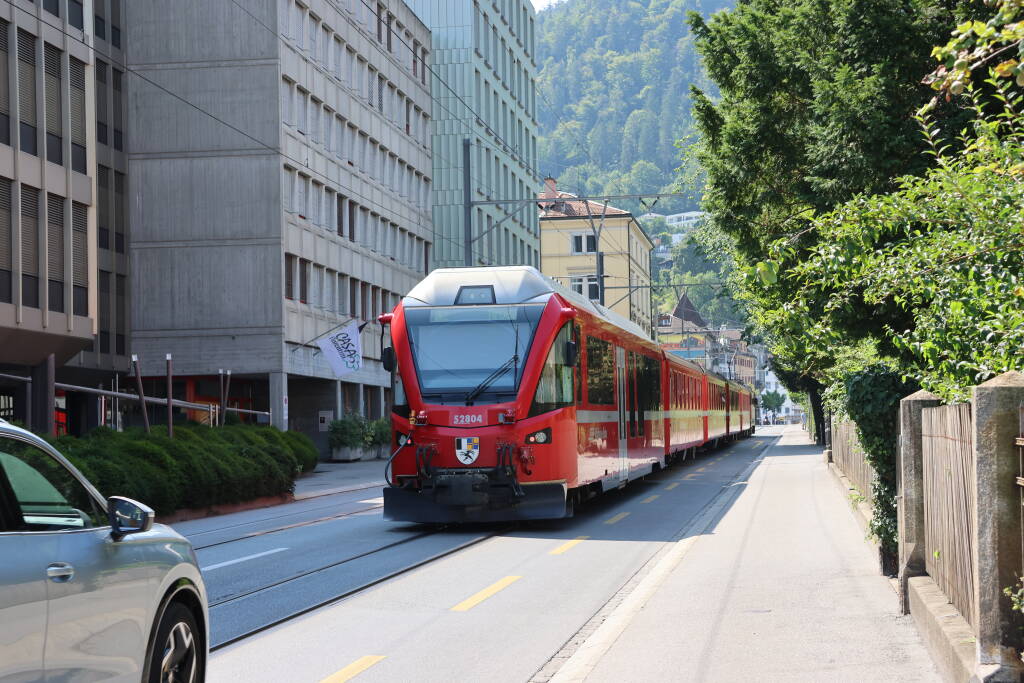
The train rides along the street partly like a tram. It has a rear cab as well so that the engine doesn't need to run around.
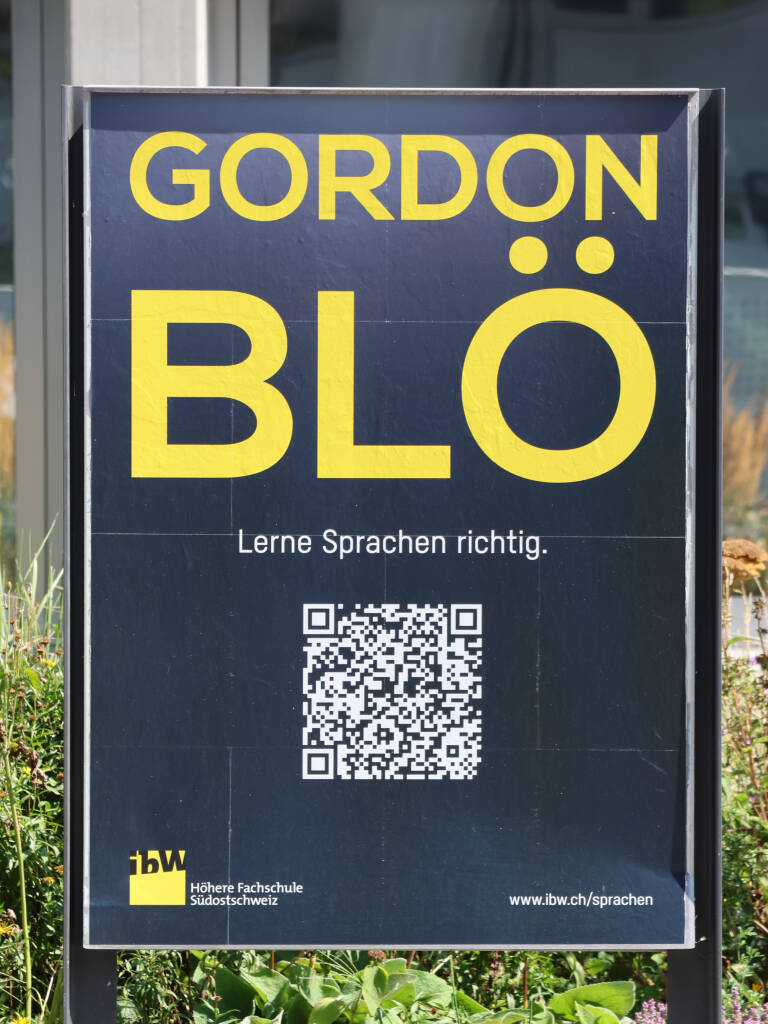
Learn languages right.
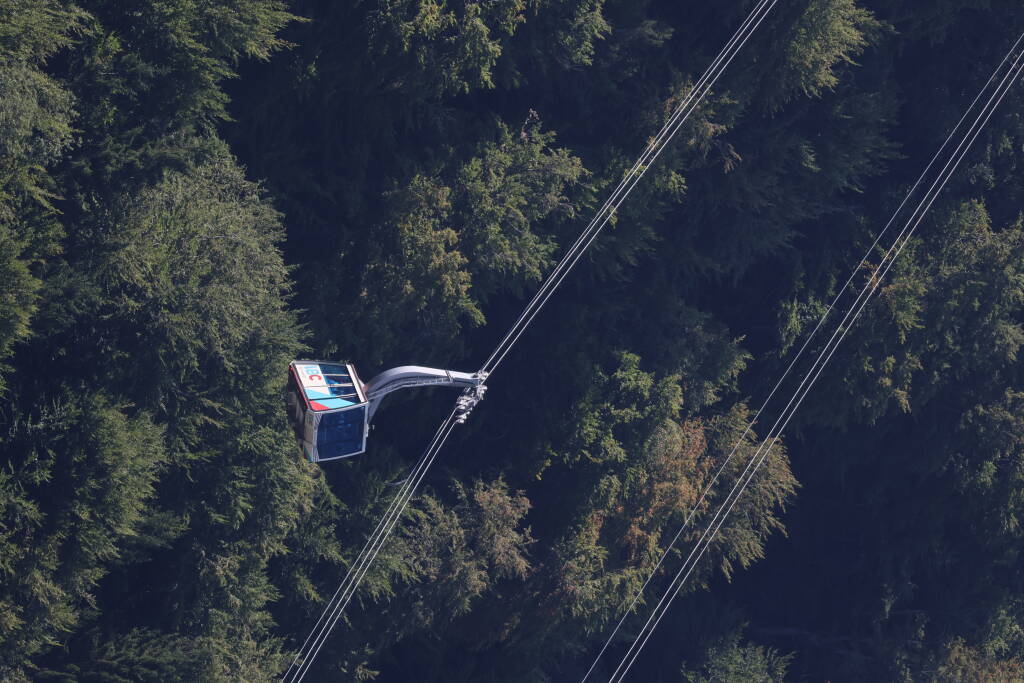
Gondola of Chur-Kanzeli cable car.
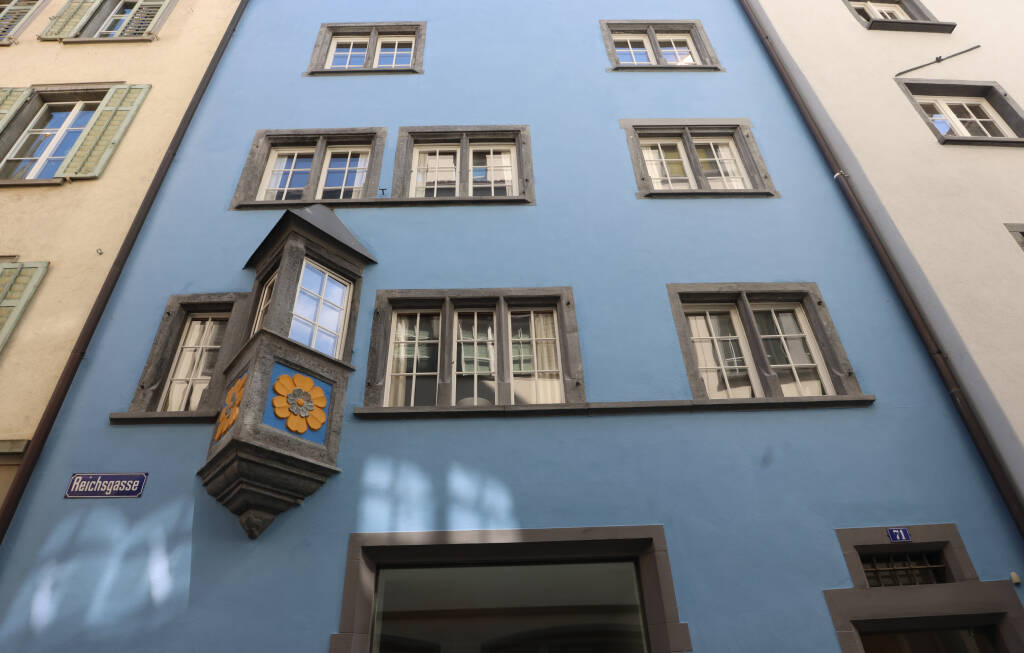
Somebody simply needed a little bay window to see the street better. That would get blocked by contemporary monument preservation officers for sure.
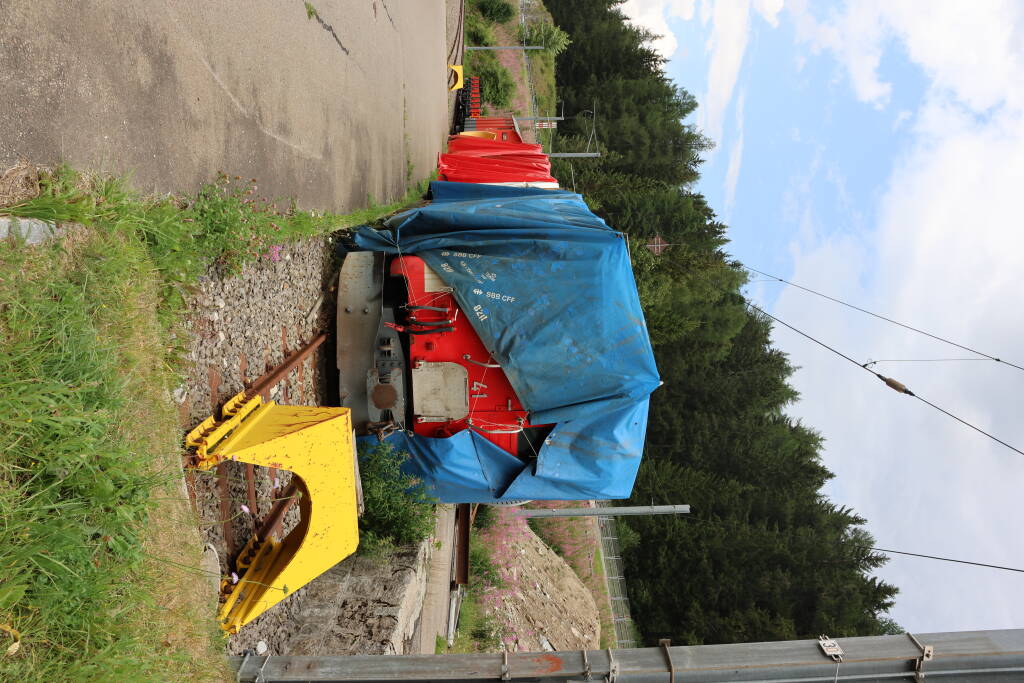
Stored cars useful for winter maintenance of the Matterhorn-Gotthard Bahn (connected to Rhätische Bahn in the station Disentis/Mustér).
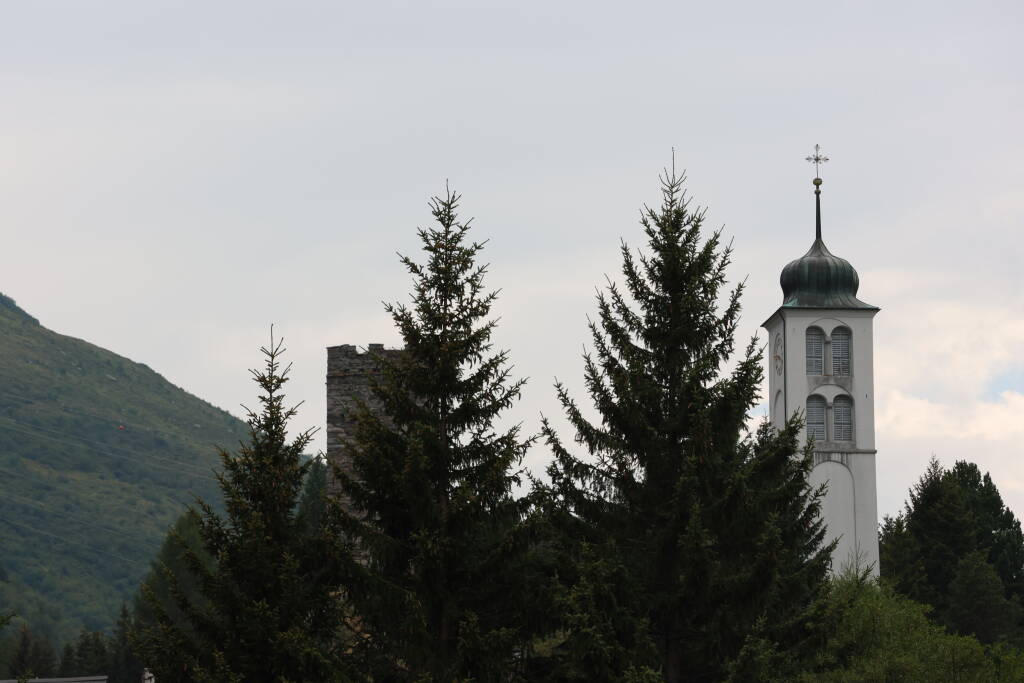
Church and a residence-tower of a former castle.
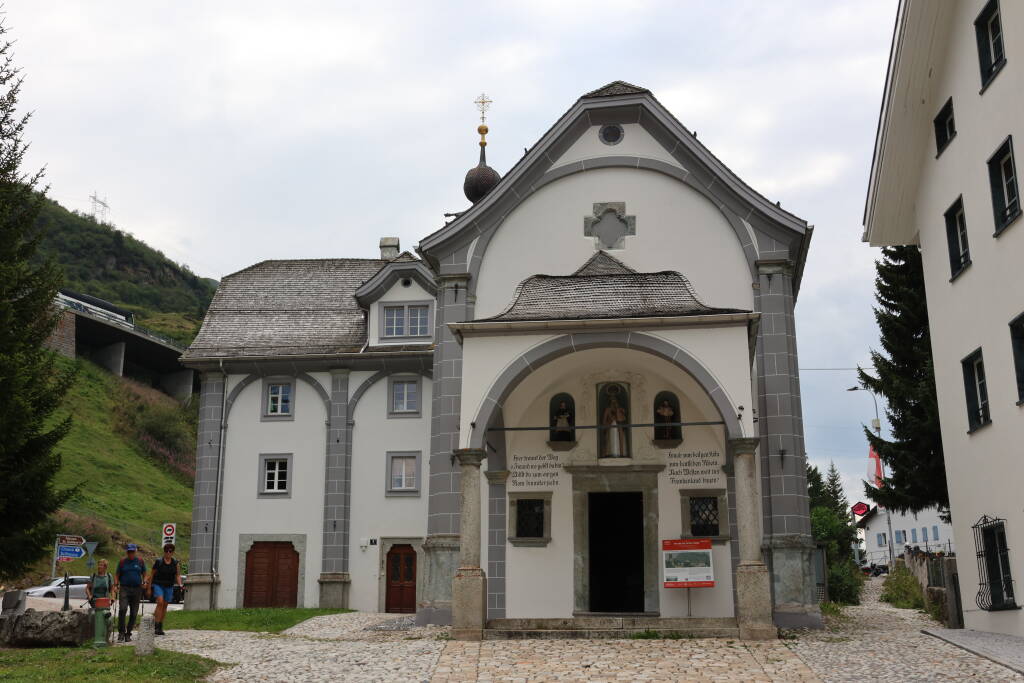
A little church on the hill. The swiss catholic hymnal contains hymns in four languages.
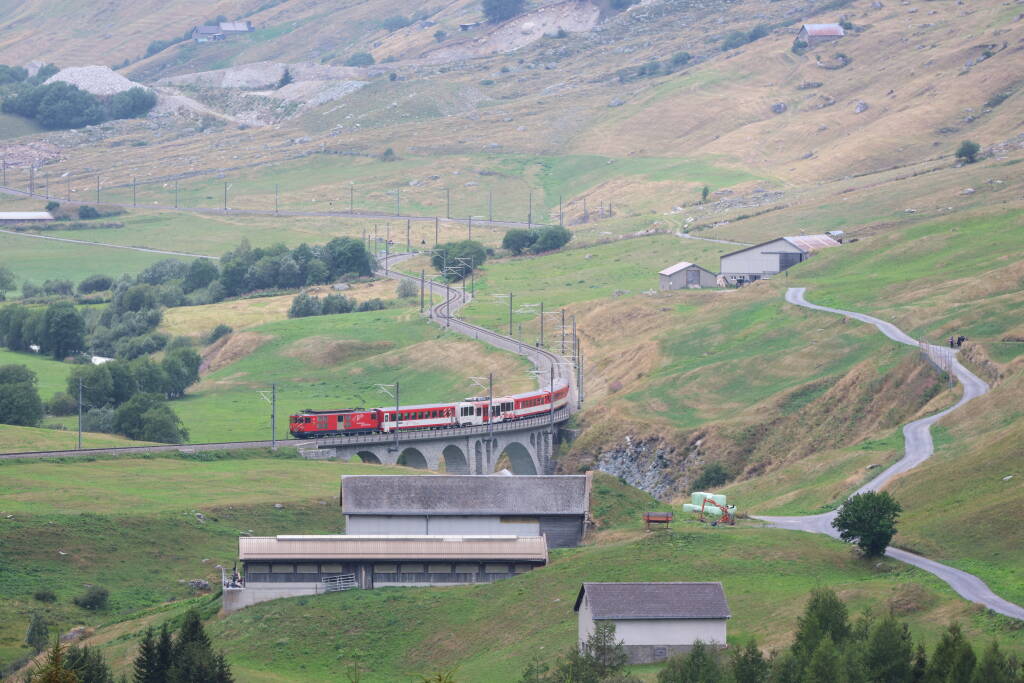
Wavy railway as seen from the tower.
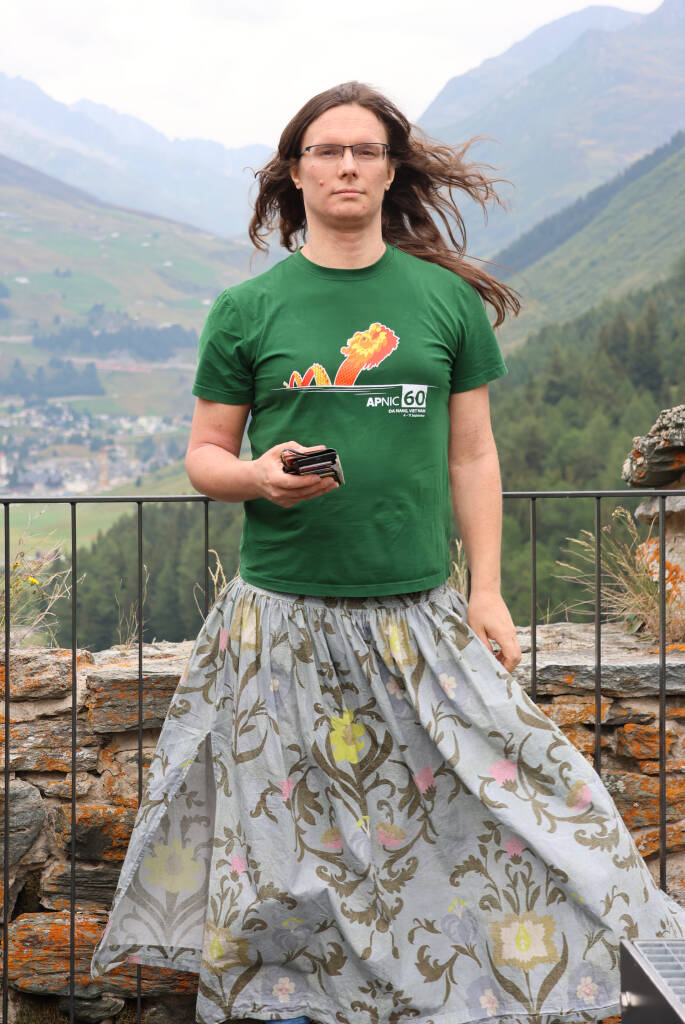
Wind was blowing.
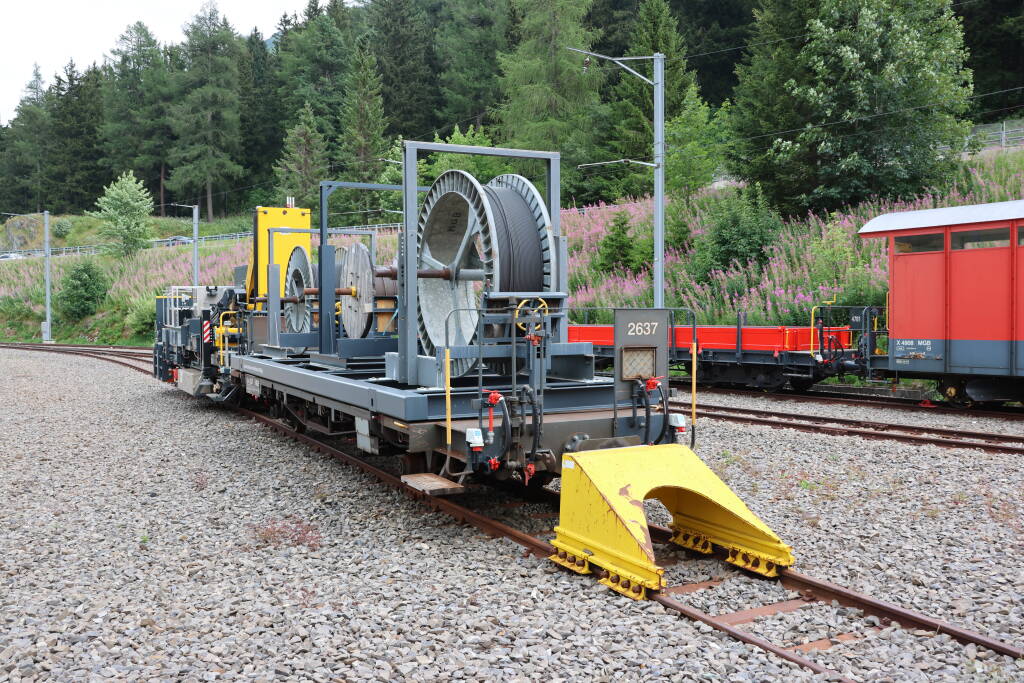
Back to the train station. Train cars and spools.
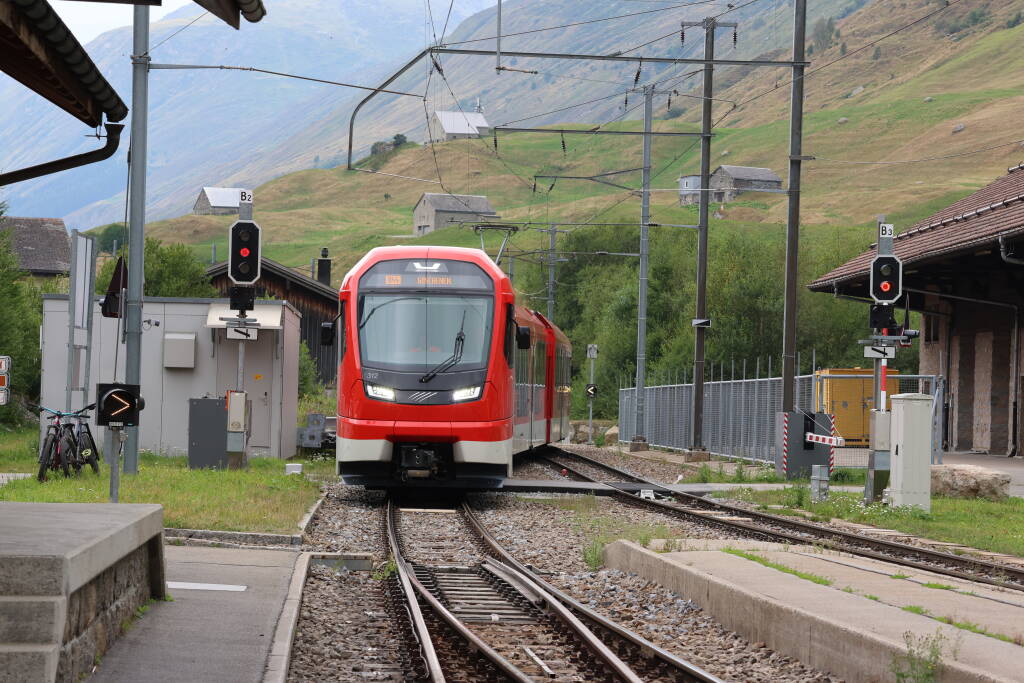
A train to Göschenen is arriving. I'm neither Sam Denby nor Adam Chase. I'm going the other direction.
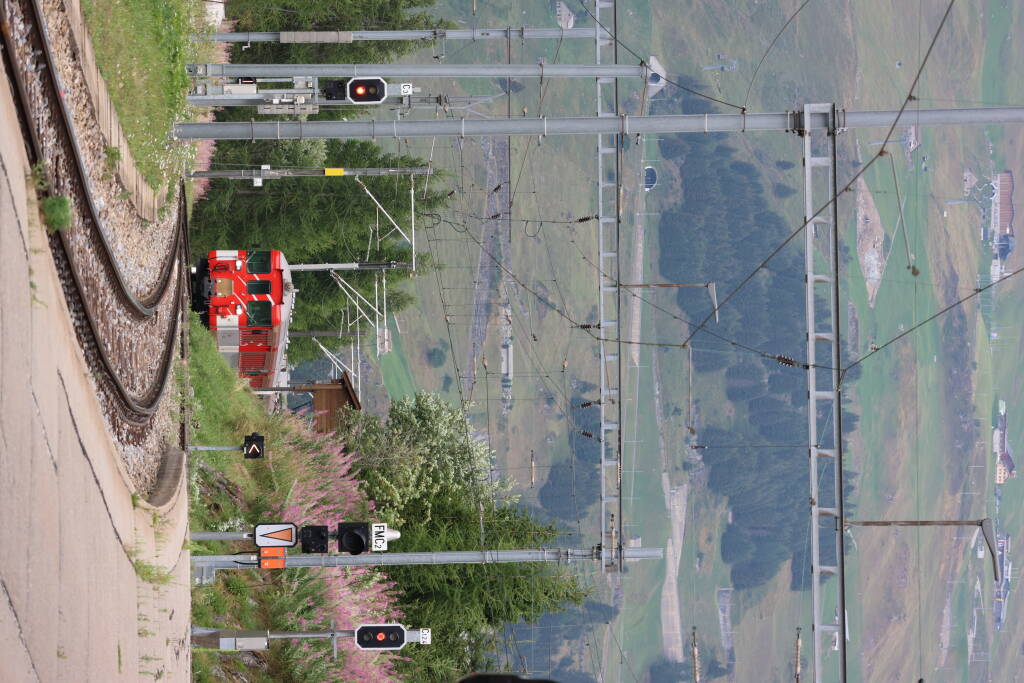
This is mine. Hooray, it has openable windows, which makes it possible to take photos.
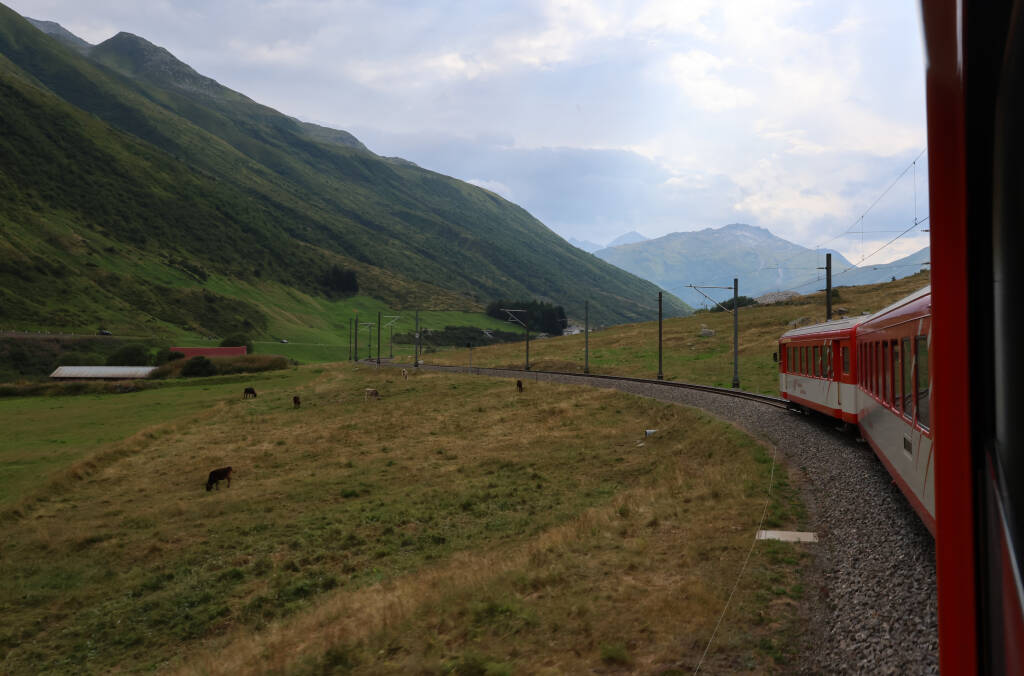
The railway is curving around Alpen mountainsides.
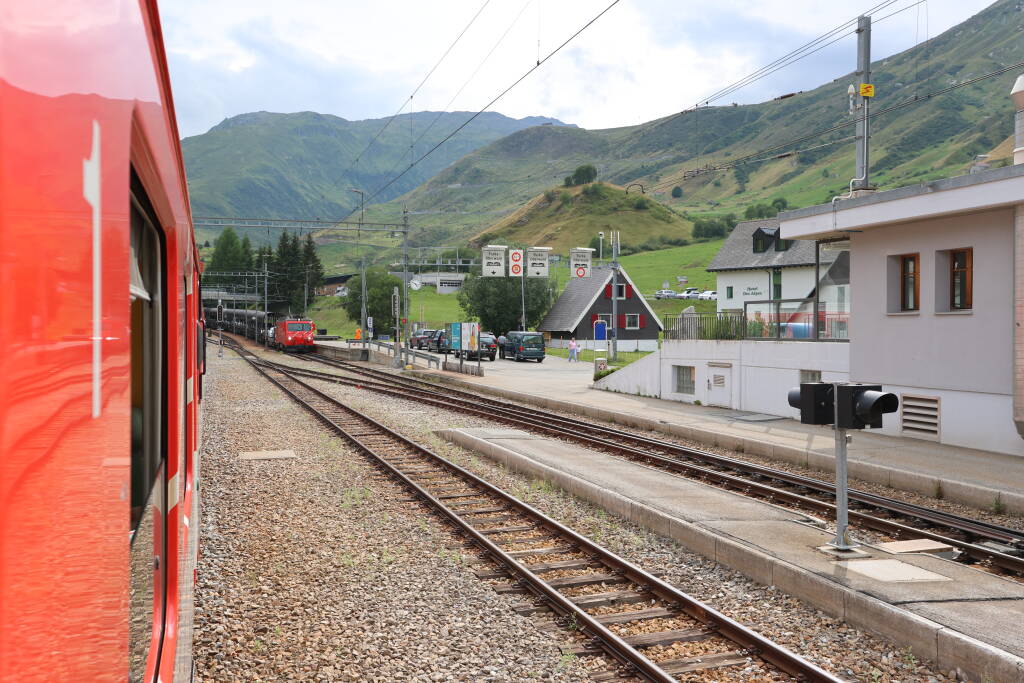
In the Realp station one can load their car on a train to avoid the Furka pass through the base tunnel to Oberwald.
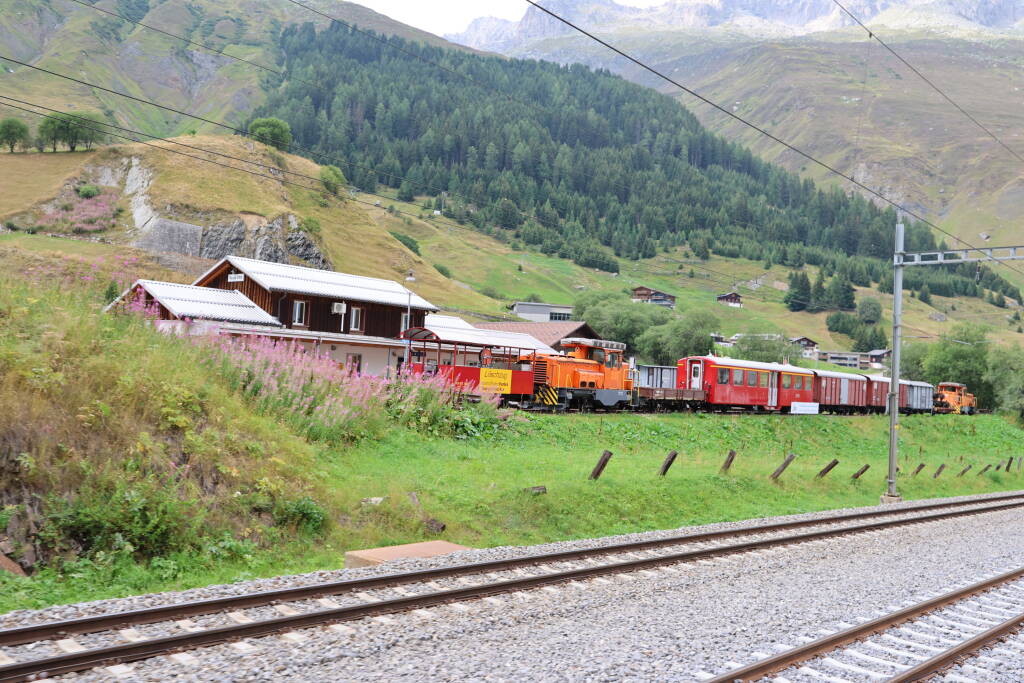
Before the basis tunnel under Furka pass (2429m) was dug out, the railway was wavy and curvy, with a summit tunnel in 2160m height, which is 1874m long. Nowadays is this stretch used as a heritage line.
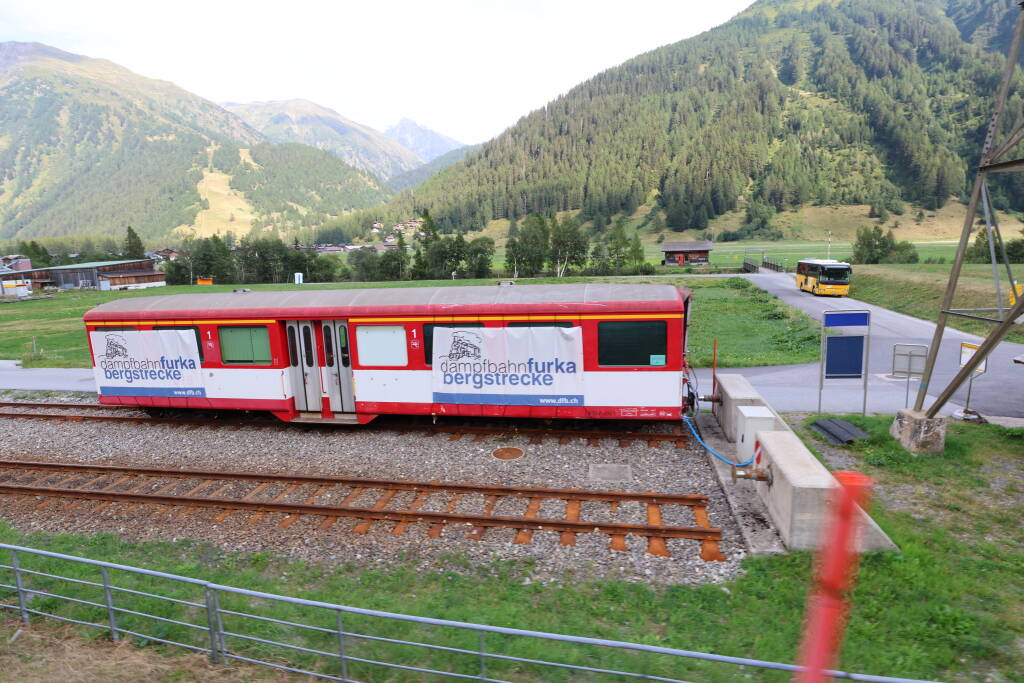
A parked wagon of the heritage steam railway over the Furka pass. The basis tunnel is single-track but 15km long, therefore it has two sidings for train passing – which are commonly used.
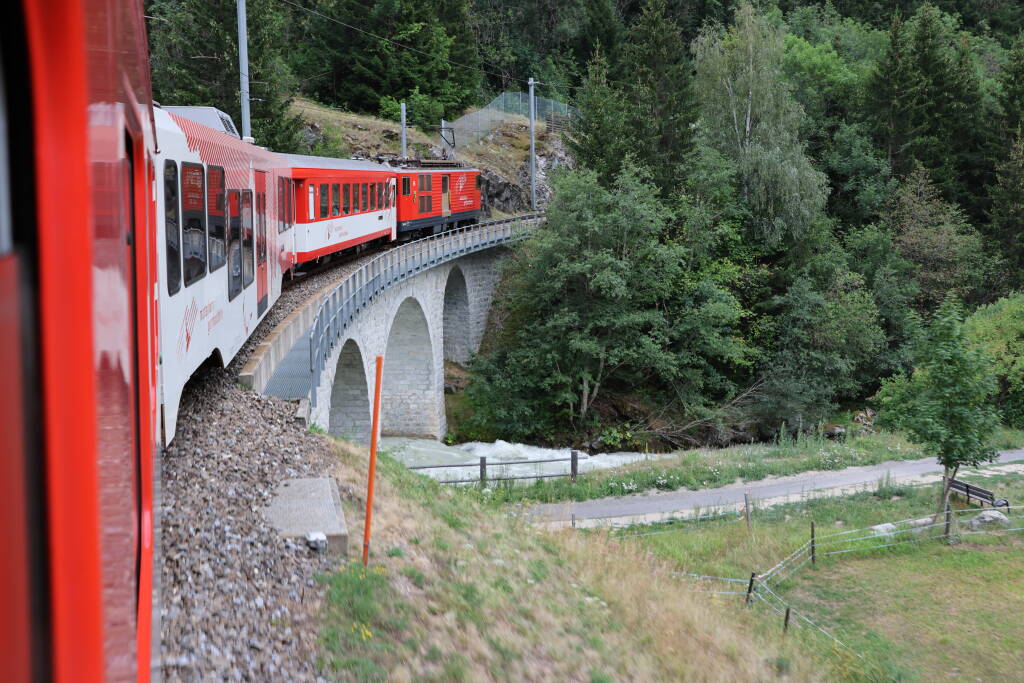
Train, stone bridge, wild creek, nothing more to desire.
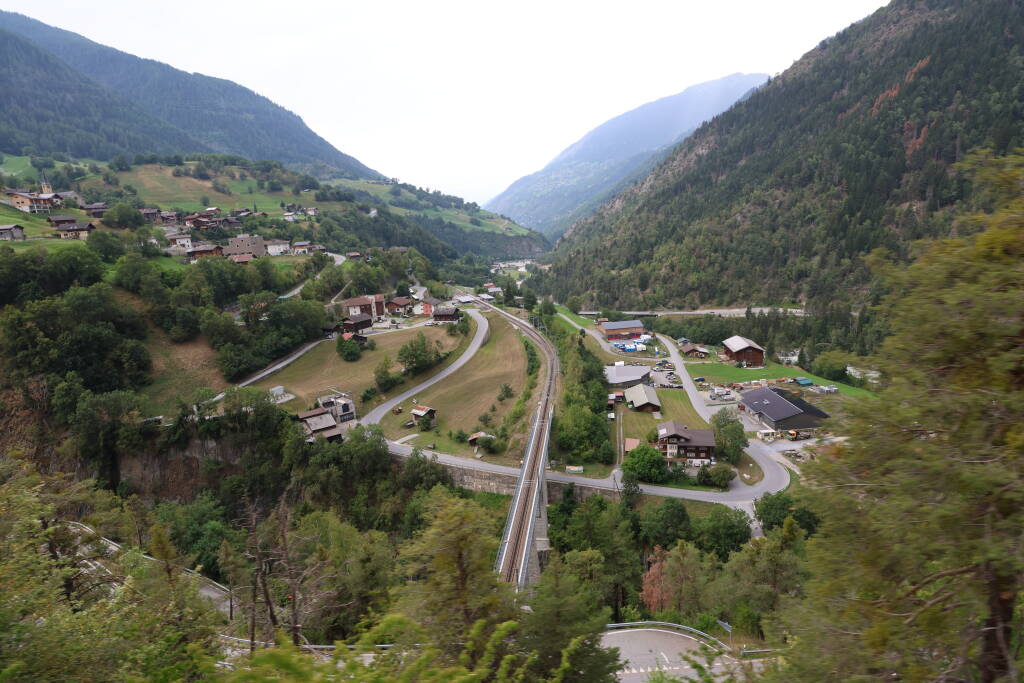
Grengiols. Down there we'll be in a while.
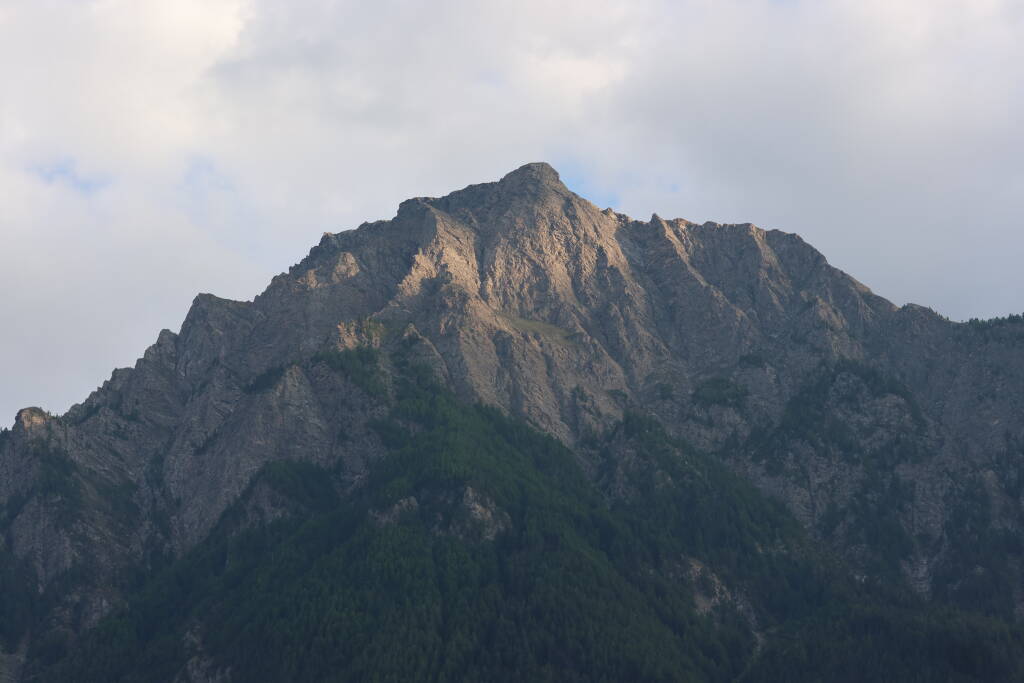
Mountains nearby Brig are dragging me up there.
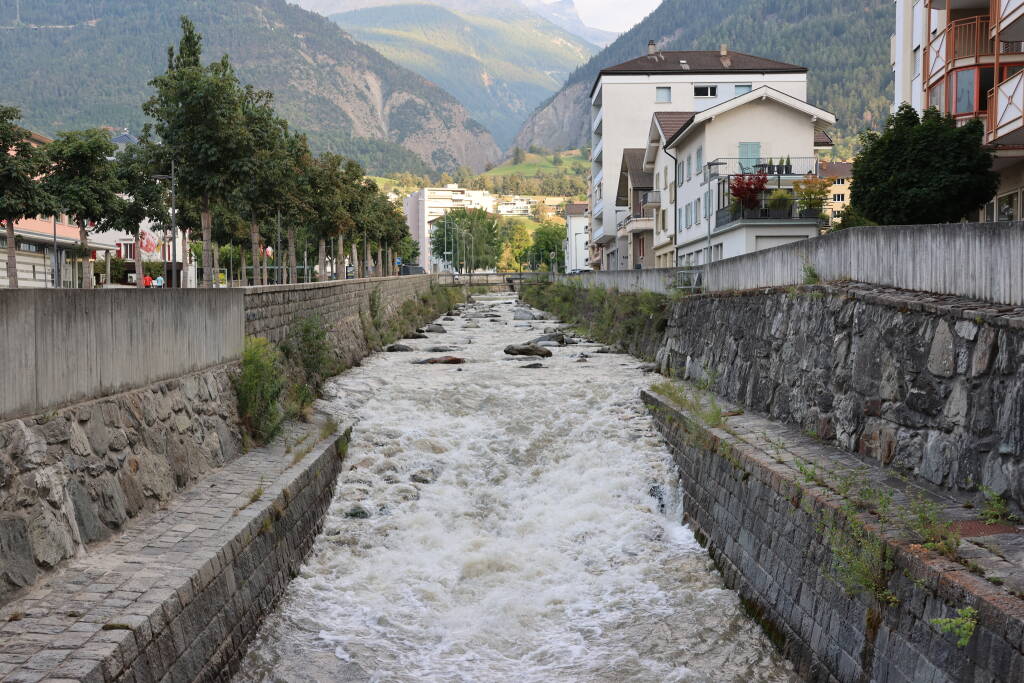
River Saltina flowing through Brig.
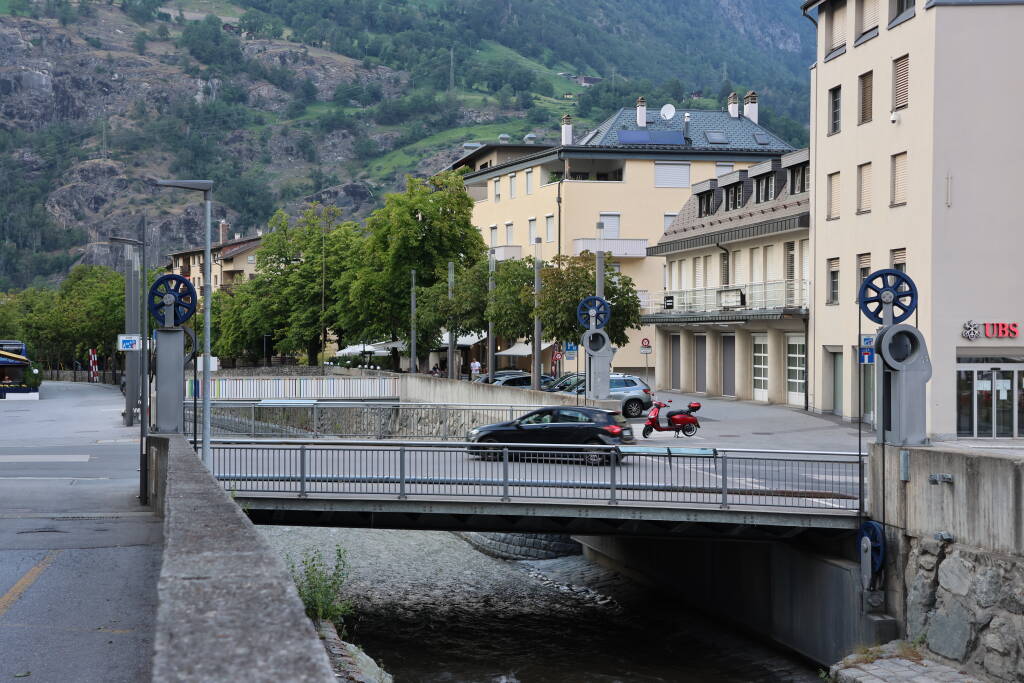
Self-drawing bridge. When water is too high, it flows into underground tanks which then, by a pulley system, raise the bridge by about meter and half.
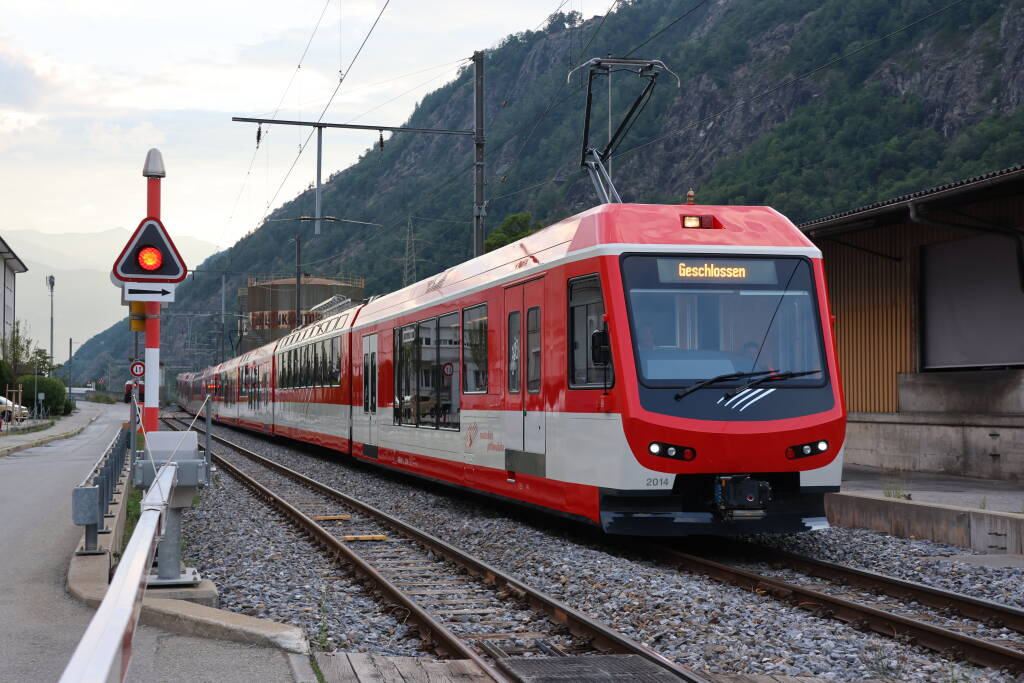
Most common destination of local trains in the evening. (Geschlossen = closed)
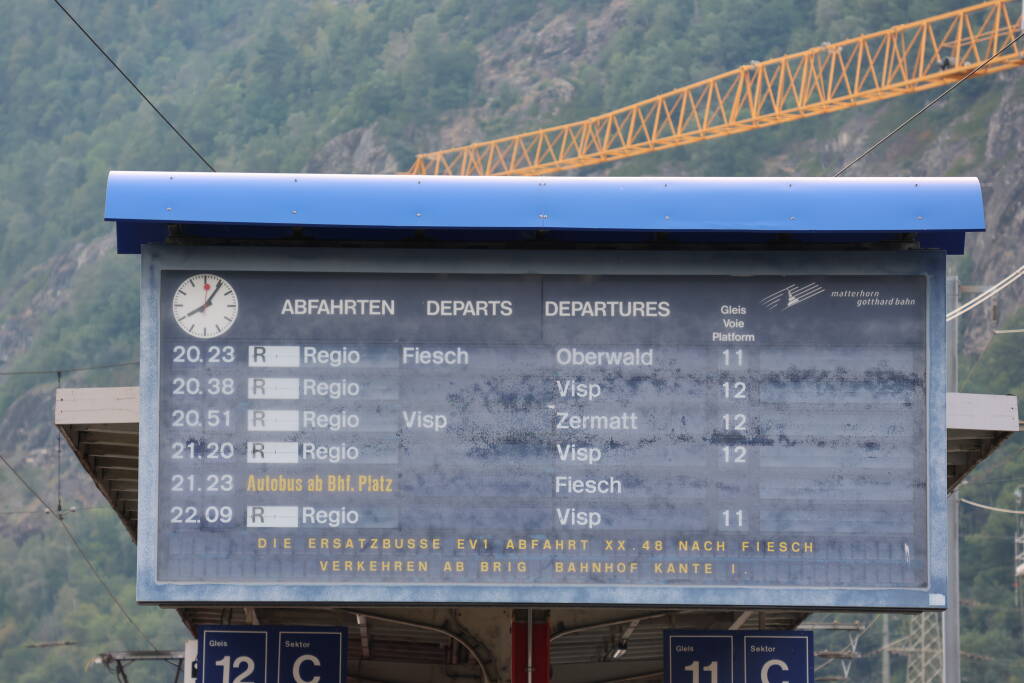
The station of Matterhorn-Gotthard Bahn in Brig is separate from SBB nd its main information panel is historical, split-flap, made probably by Solari di Udine. Behind me, the railway continues to Andermatt.
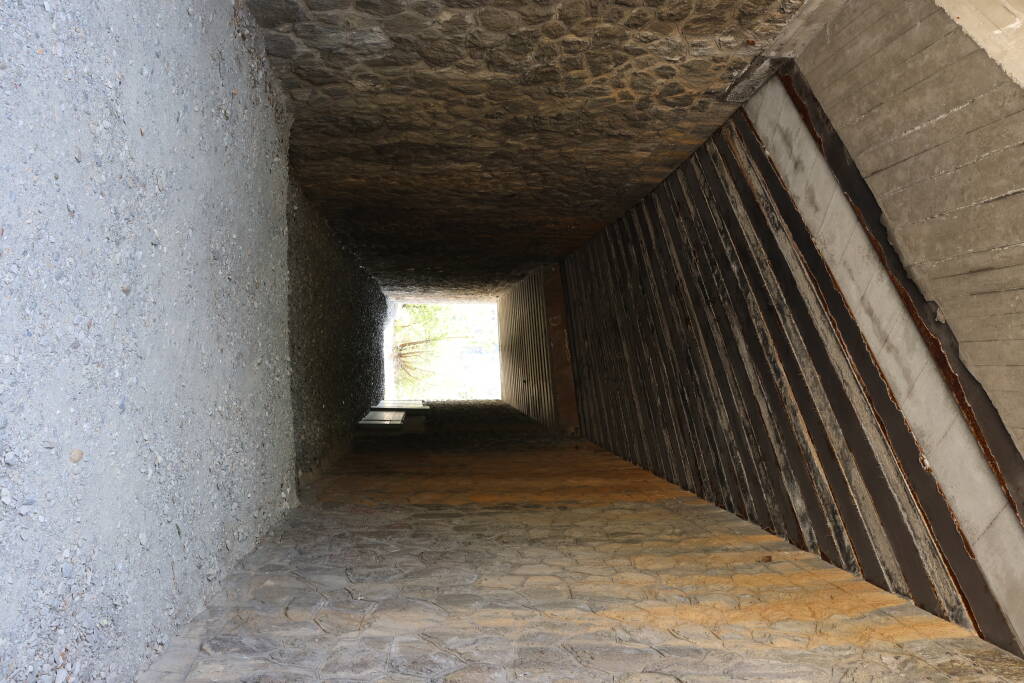
Originally the railway to Andermatt went from Brig station to north-west, crossed under the SBB station here …
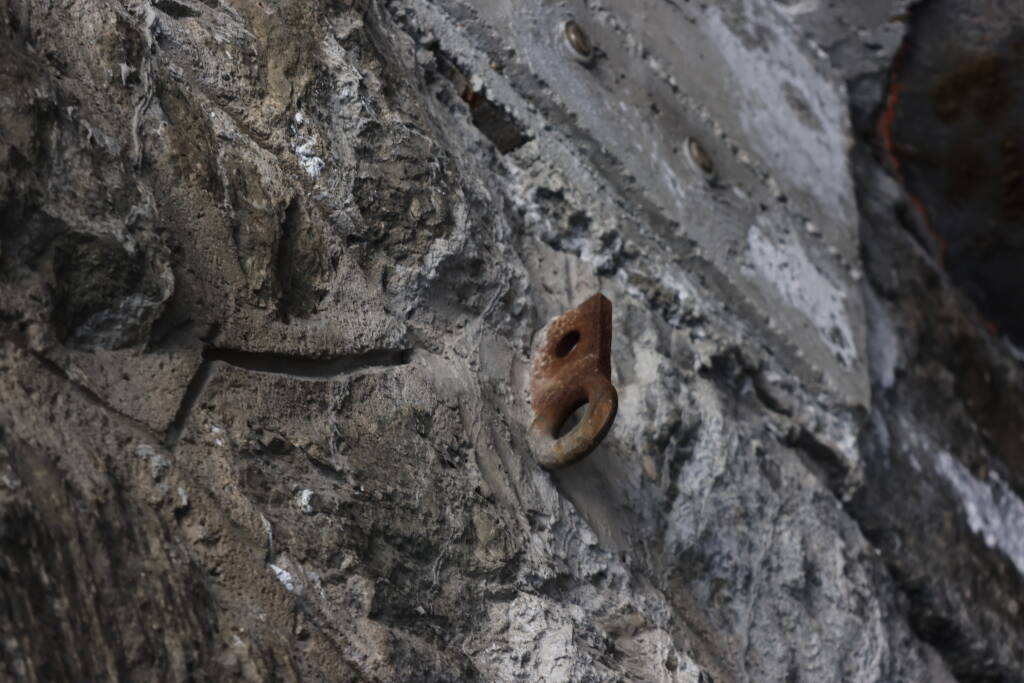
… remnants of the catenary can be still found in the walls …
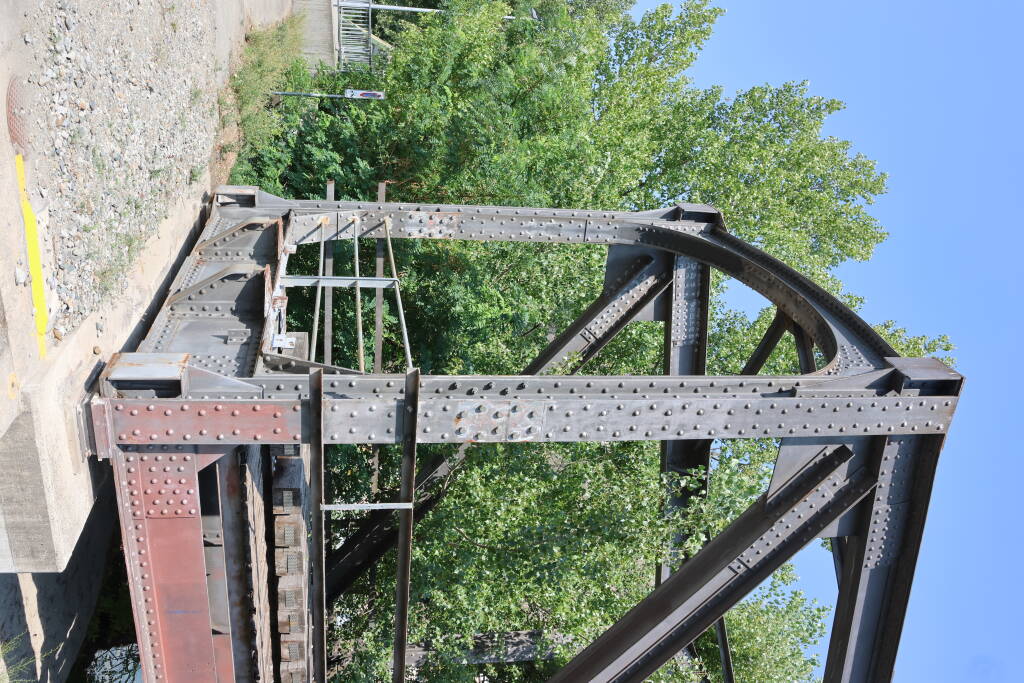
… and over this bridge crossed the Rhône river.
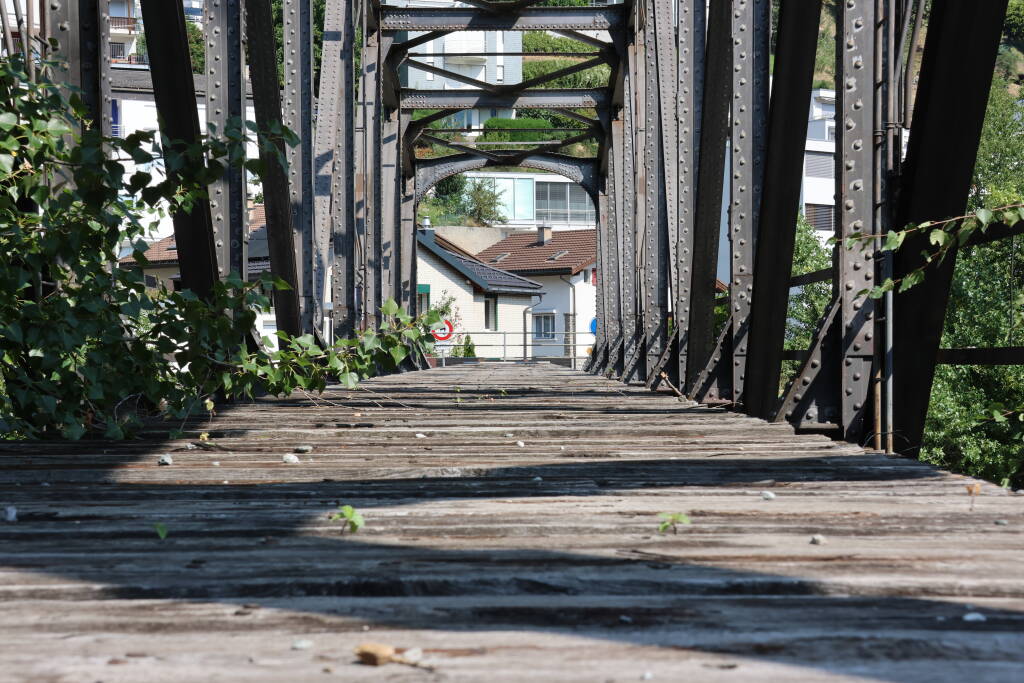
The bridge has no rails.
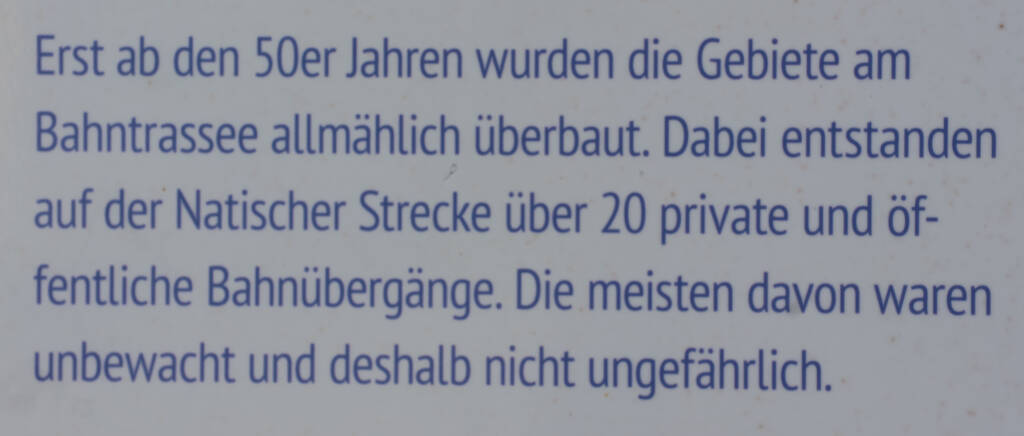
Since the 1950s, people were building around the railway, which added more than 20 crossings with no signalization, and therefore not really safe. (Literally translated, they "weren't not dangerous".)
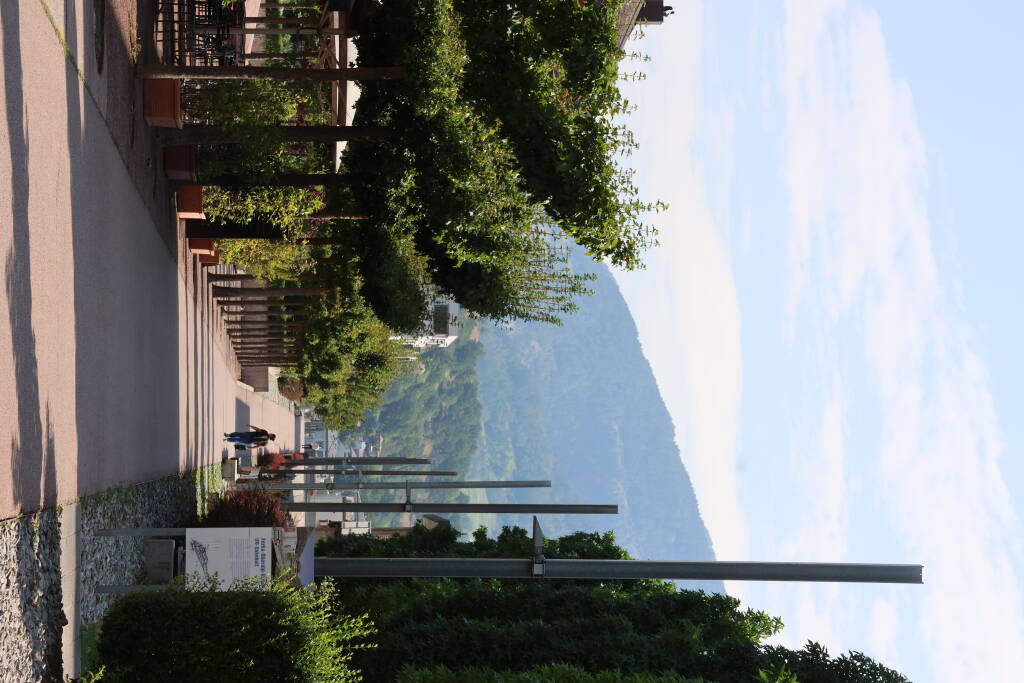
In place of the former railway is now pedestrian and cycling route through the Naters town. On the left, there is the former local station, now a café. Catenary poles are now serving for street lighting. A steep slope to the bridge is visible in the background.
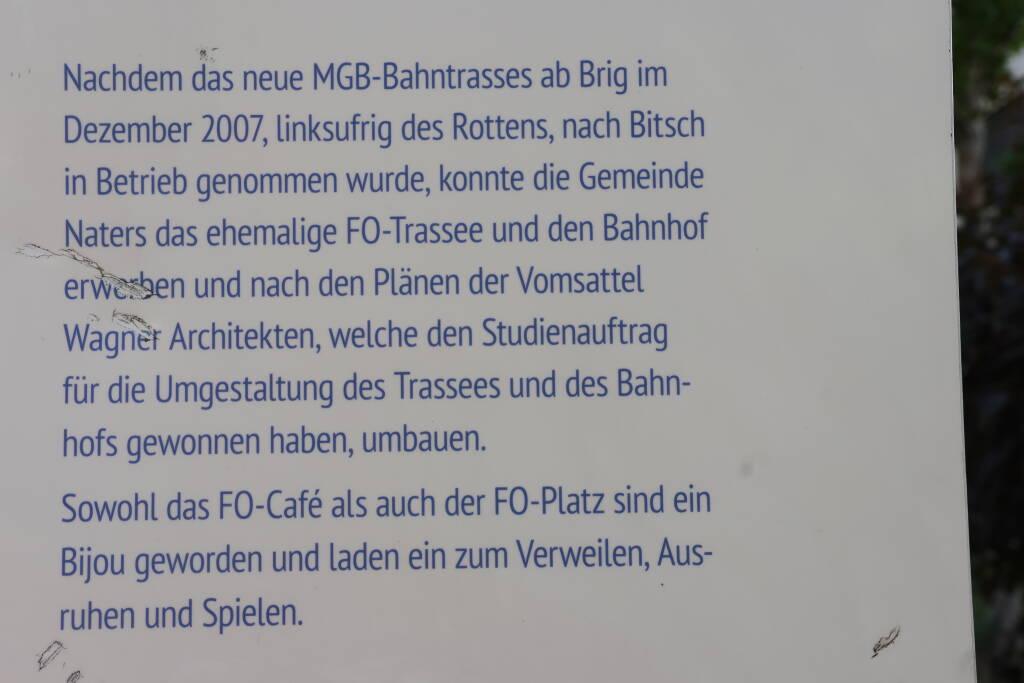
After the tracks were relocated in 2007, the original route underwent a rebuild planned by Vomsattel Wagner Architekten.
The interesting thing here is though that the writer of the text precisely moved the verb to the very end of the first paragraph, while in the second paragraph they got tired and put the separable prefix just after the verb, not even at the end of the sentence.
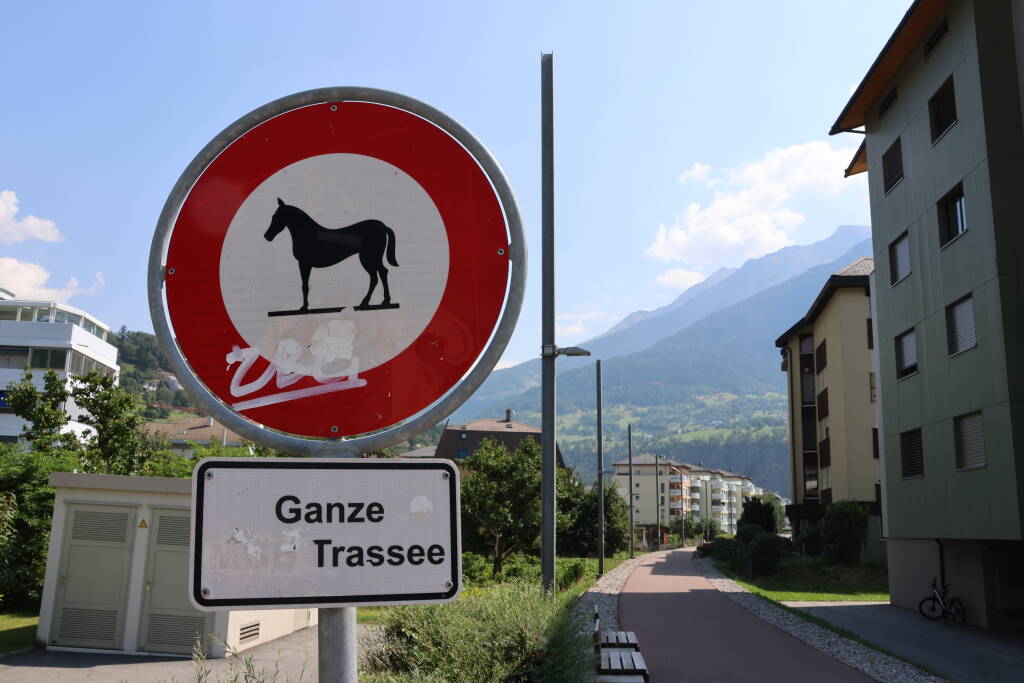
You may not ride a horse along the former tracks. It's not clear though whether the ban applies also to chess knights.
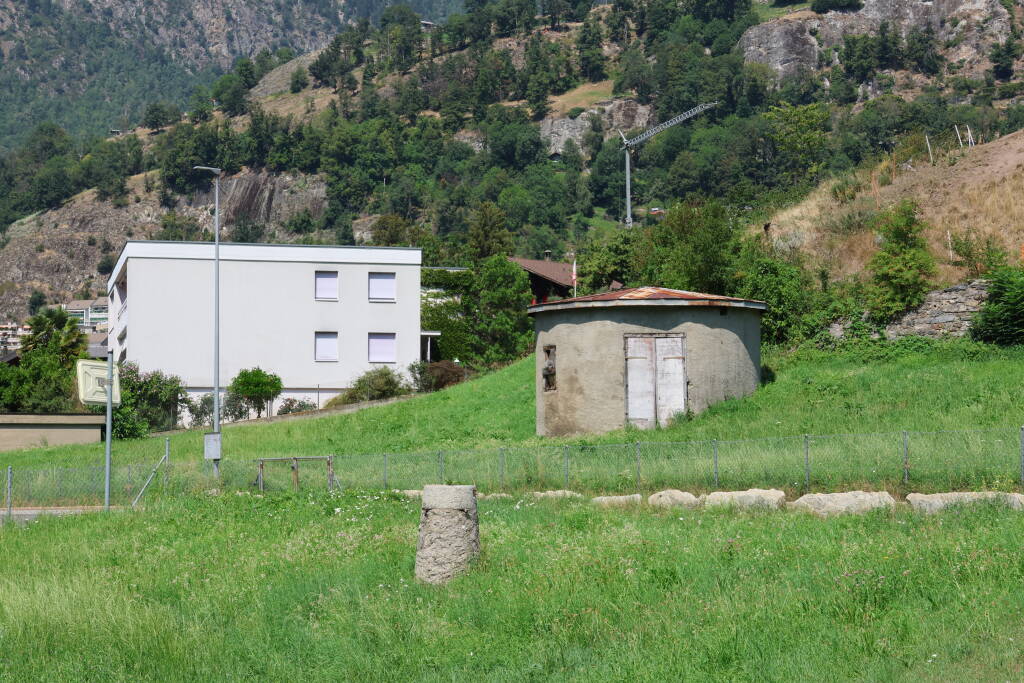
An unassuming round building and a little item (how would you call the round thing in foreground?) were vital to precisely measure the position of Simplon tunnel at the beginning of the 20th century. The tunnel portal is at the other bank of Rhôna.
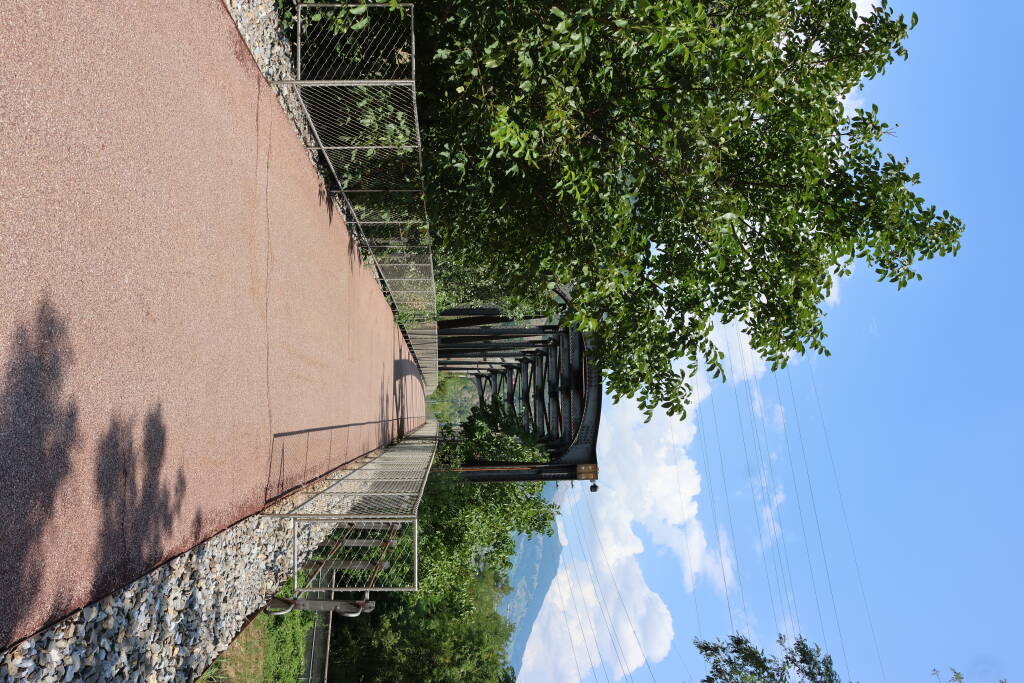
After leaving Naters, the former railway crosses Massa (hereditary of Rhôna) and two hydroelectric power plant outlets.
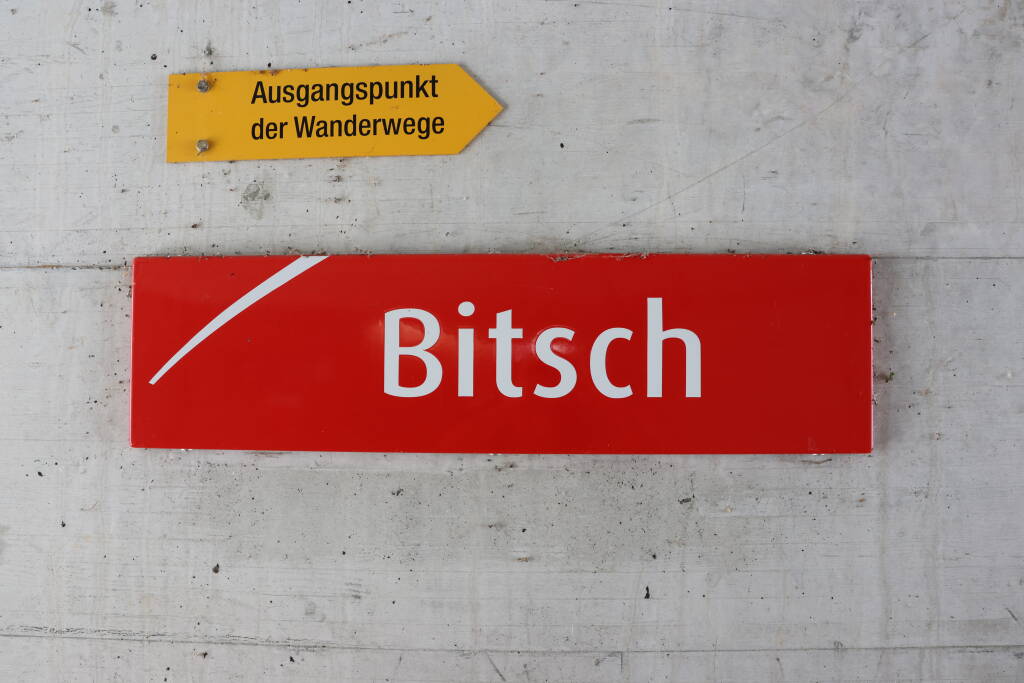
Before reaching Bitsch station, the relocated section ends, and I may return to Brig now.
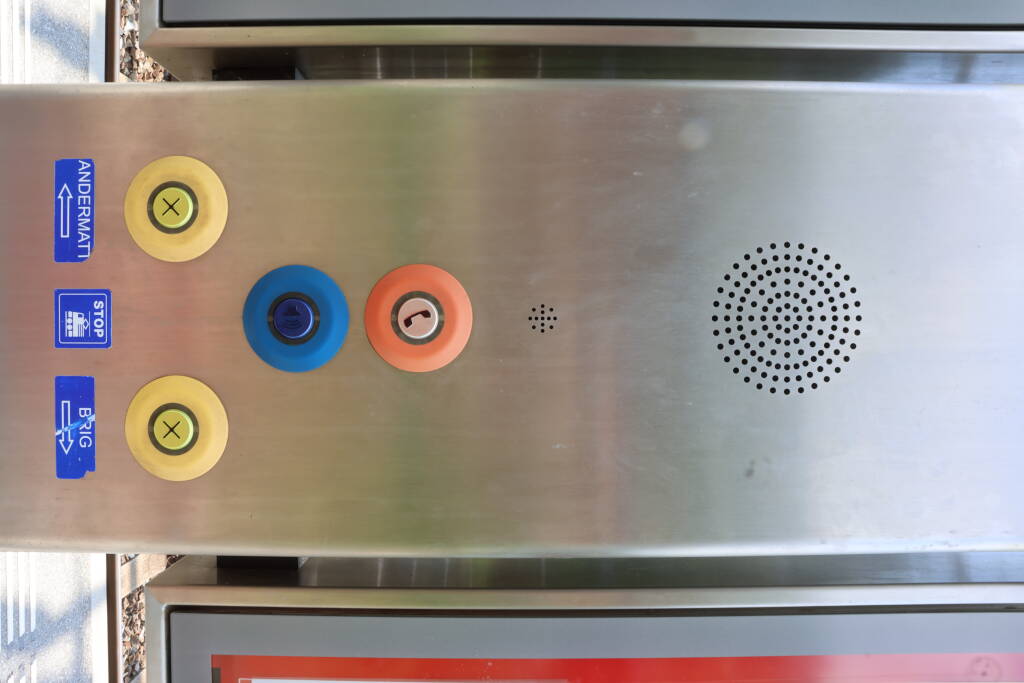
I have to request the stop though. The request must be given several minuts in advance, so that the train has enough time to actually stop here.
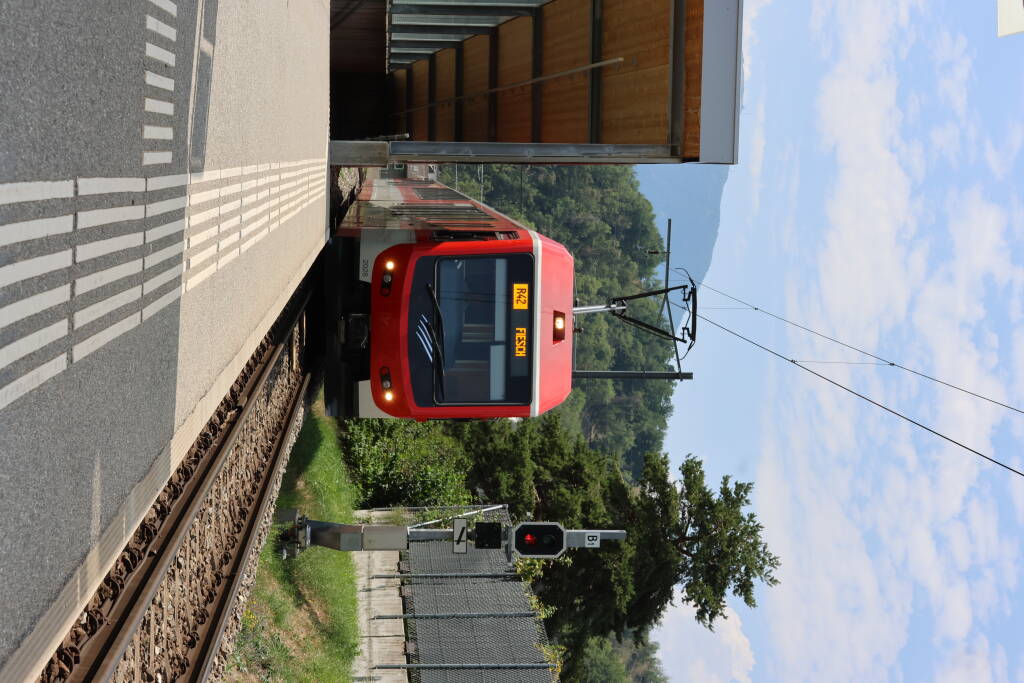
First a train in the opposite direction, to Fiesch.
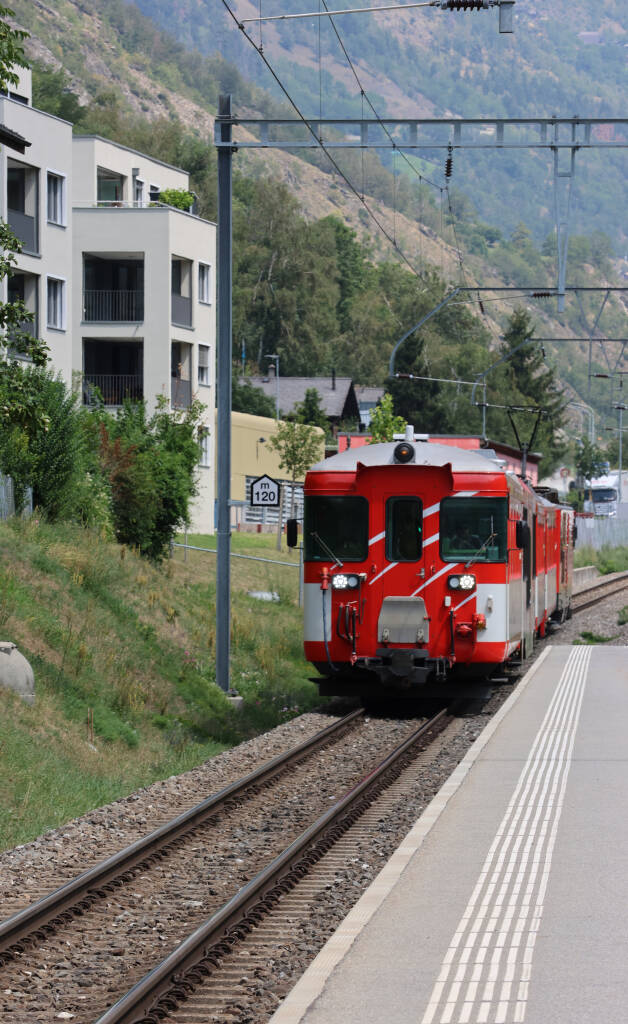
And finally my train.
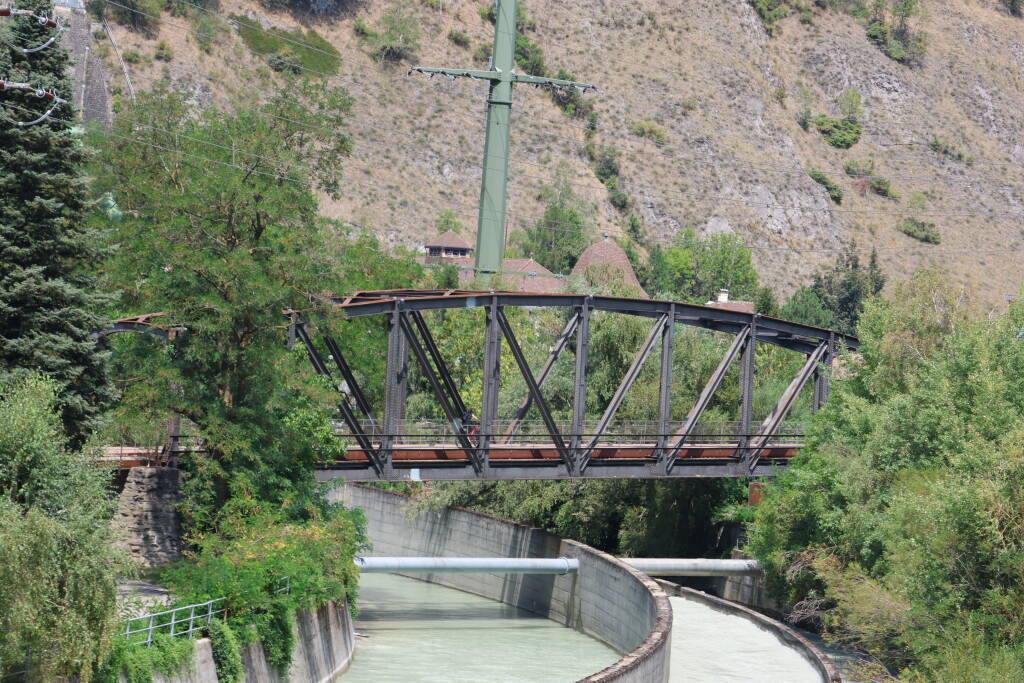
This most was on one of the previous photos, bearing the tracks originally. Water state hints that one of the power plants produces electricity at its full capacity.
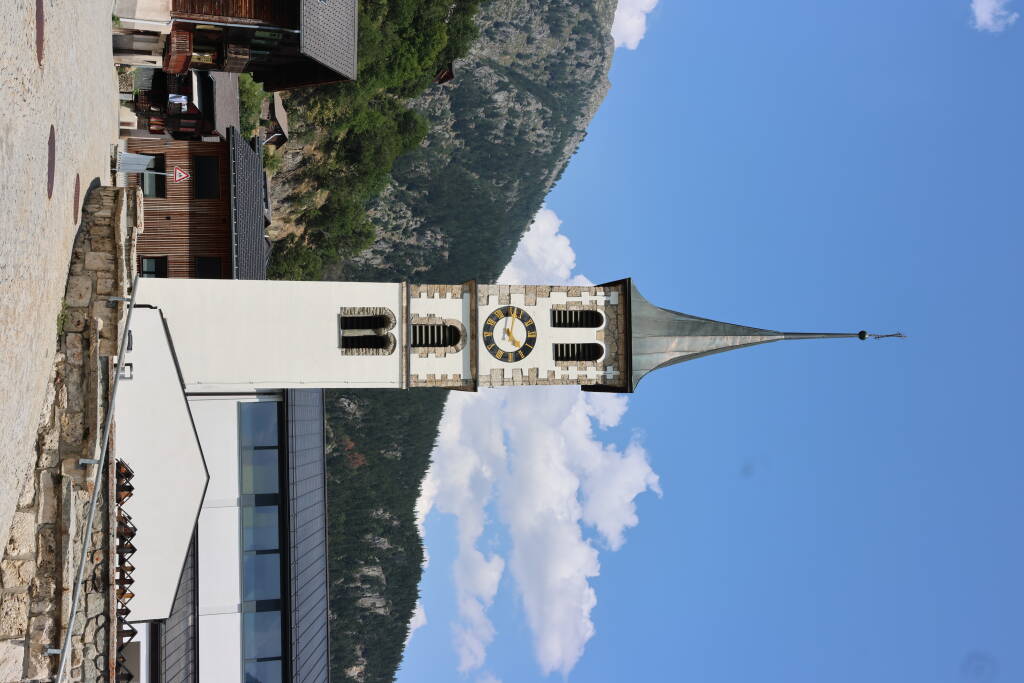
Church of Jakob the Saint in Mund. The tower is historical but the rest of the church looks quite modern.
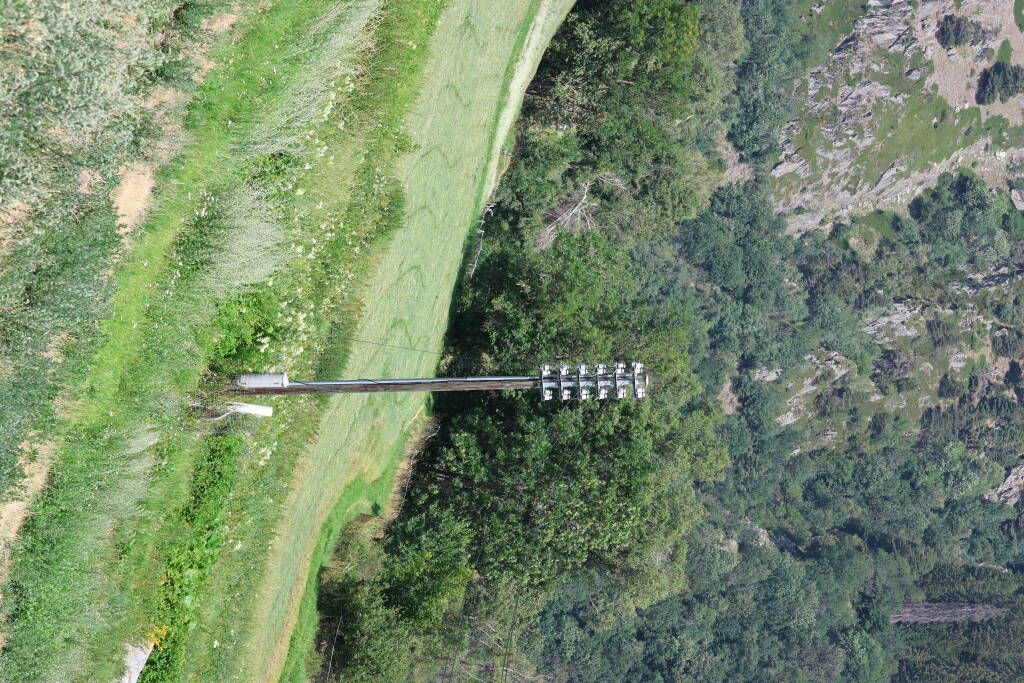
A lone telephone pole. It's not falling. The slope is steep.
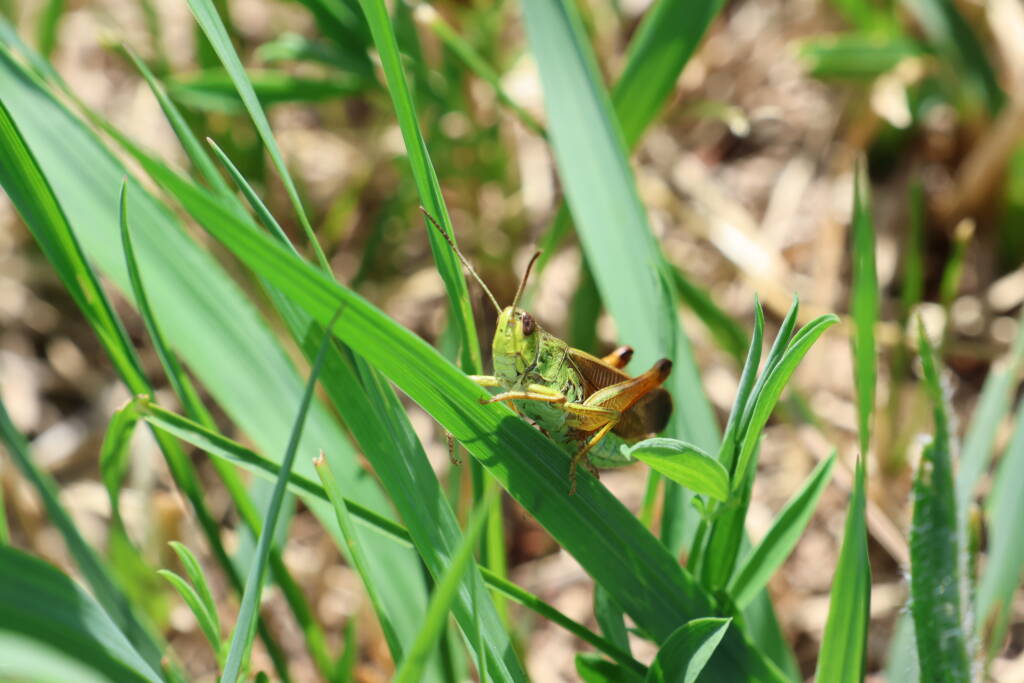
Cricket and grass.
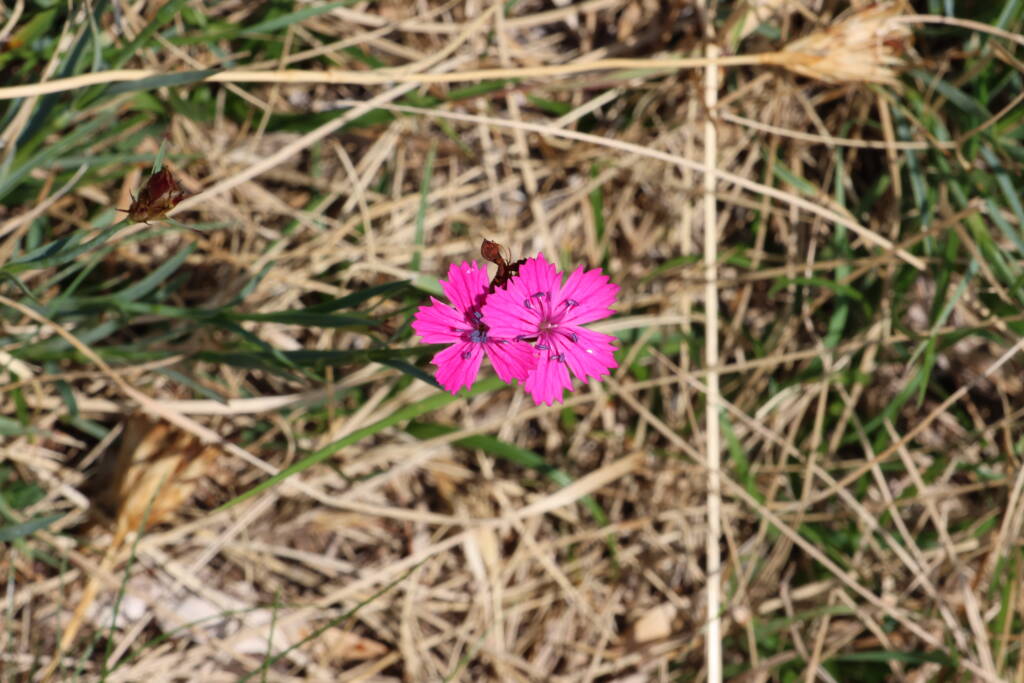
I have no idea what this flower is but Plantnet claims it to be Carthusian pink.
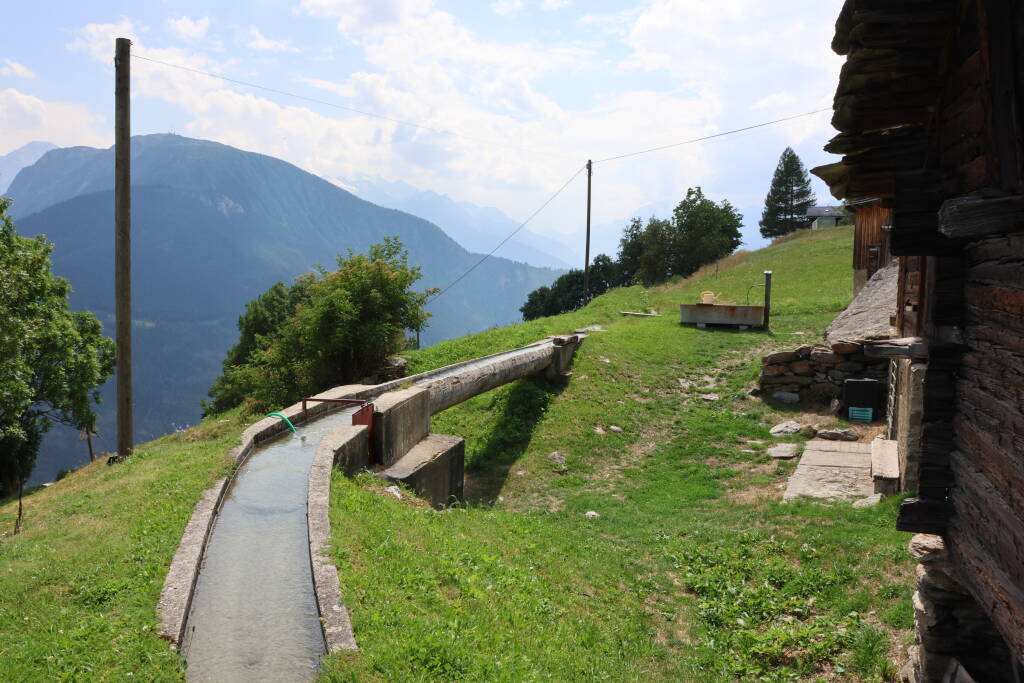
There are little water channels all over the hillside in Mund.
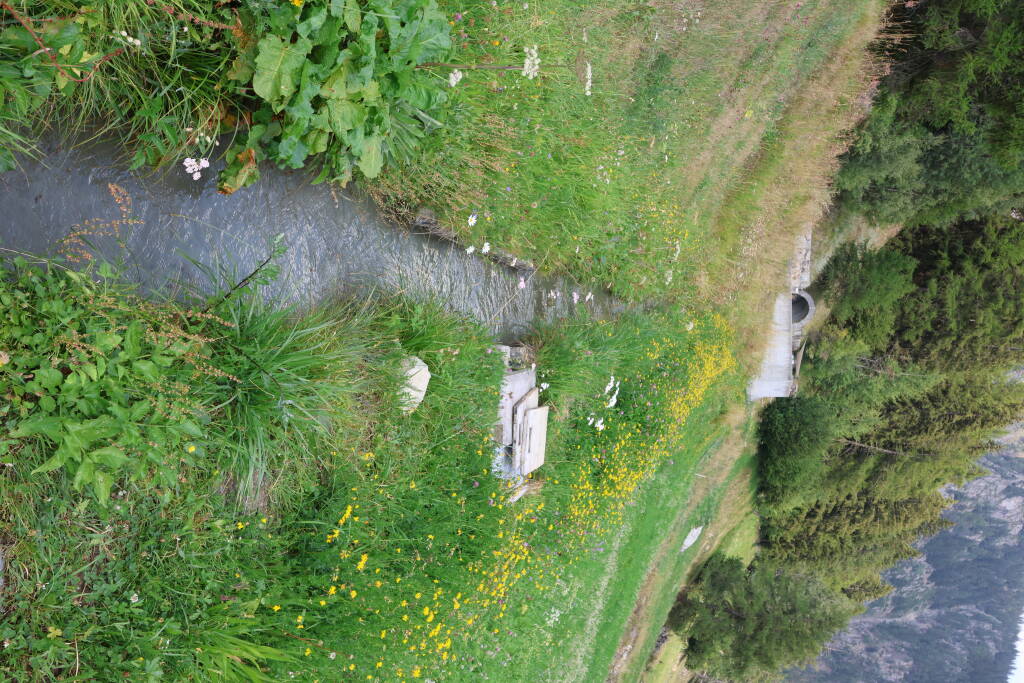
I'm heading to where the channels begin. What is that in the background?
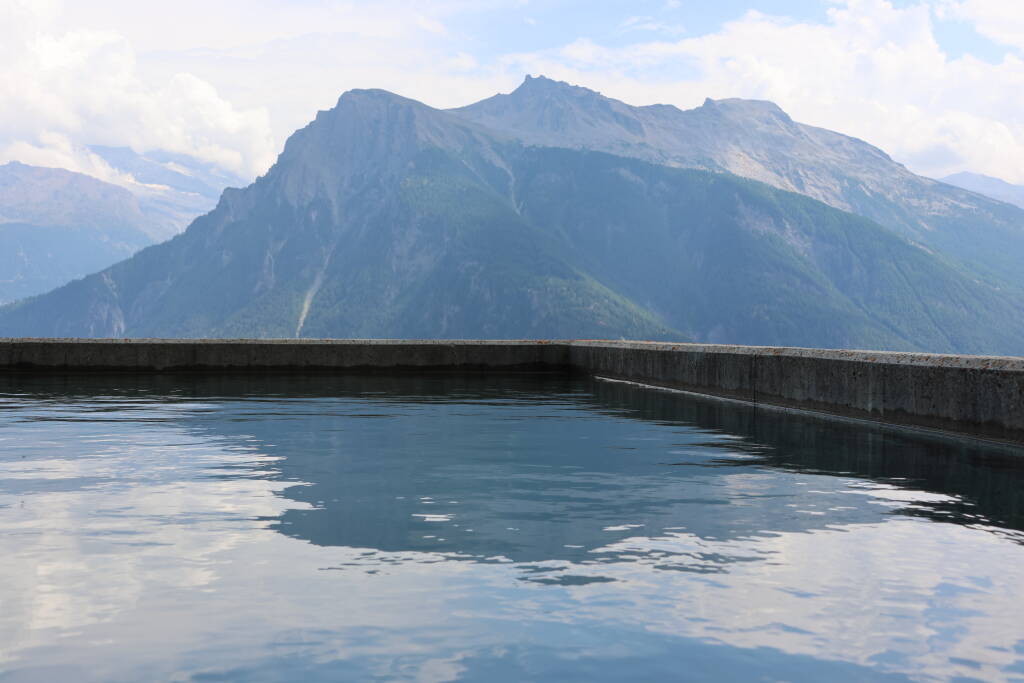
Buffer water reservoir.
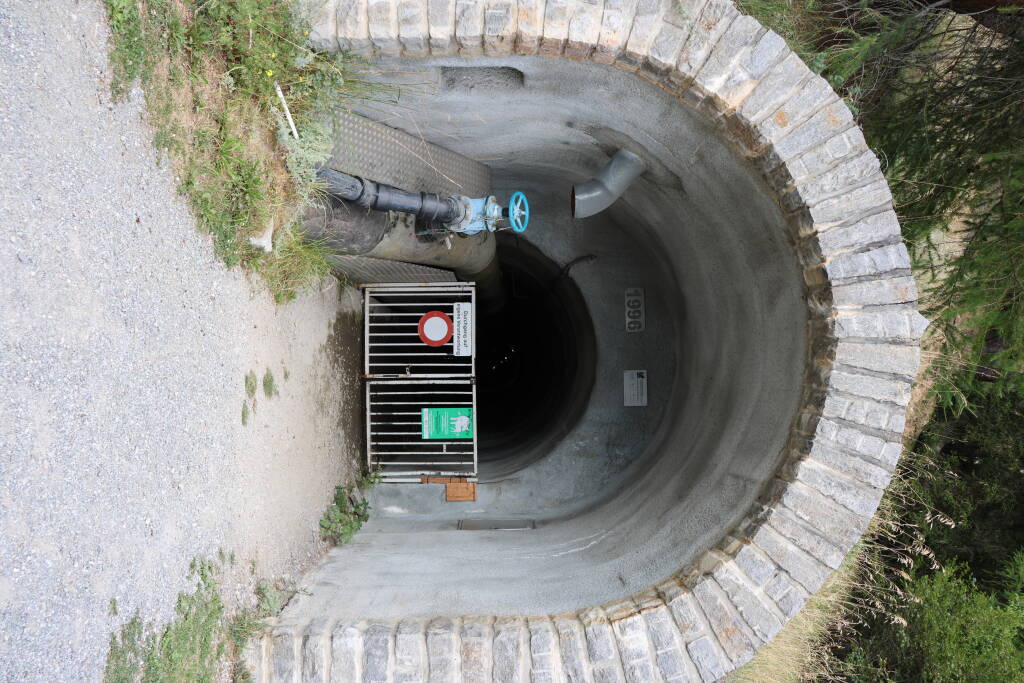
A small tunnel is a little over a kilometer long and it is lit inside. It bring water (both potable and technical) from Gredetschtal.
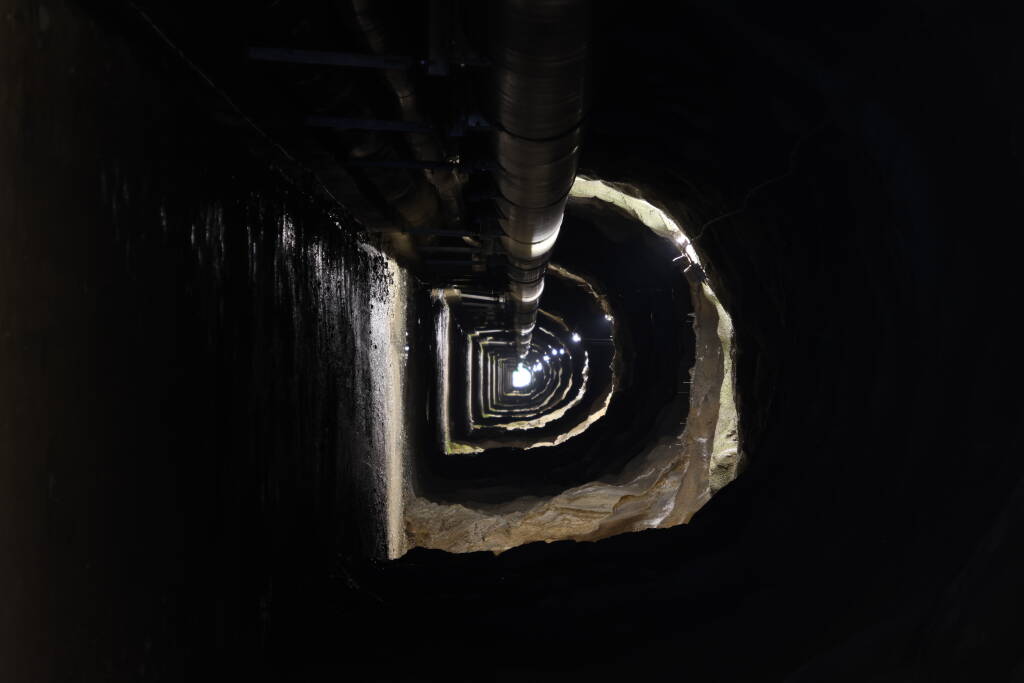
In the tunnel, there are pipes on the side and it's otherwise freely and legally walkable.
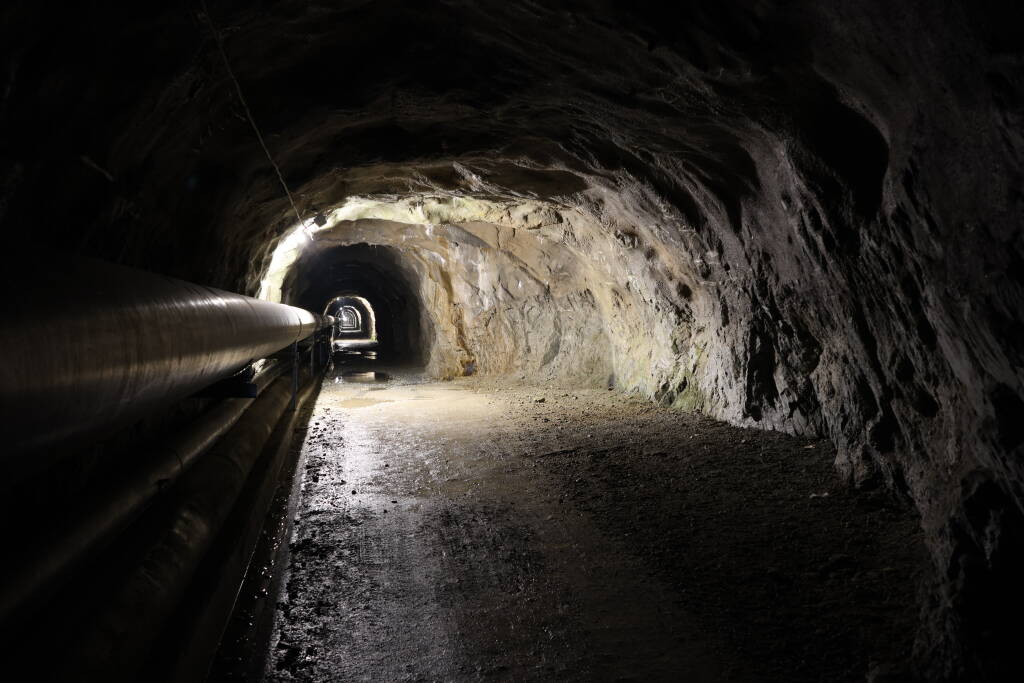
I even found a passing point. But also the ceiling leaks water at some places. It was nicely cold in the tunnel but I didn't have time to walk its full length. Maybe next time.
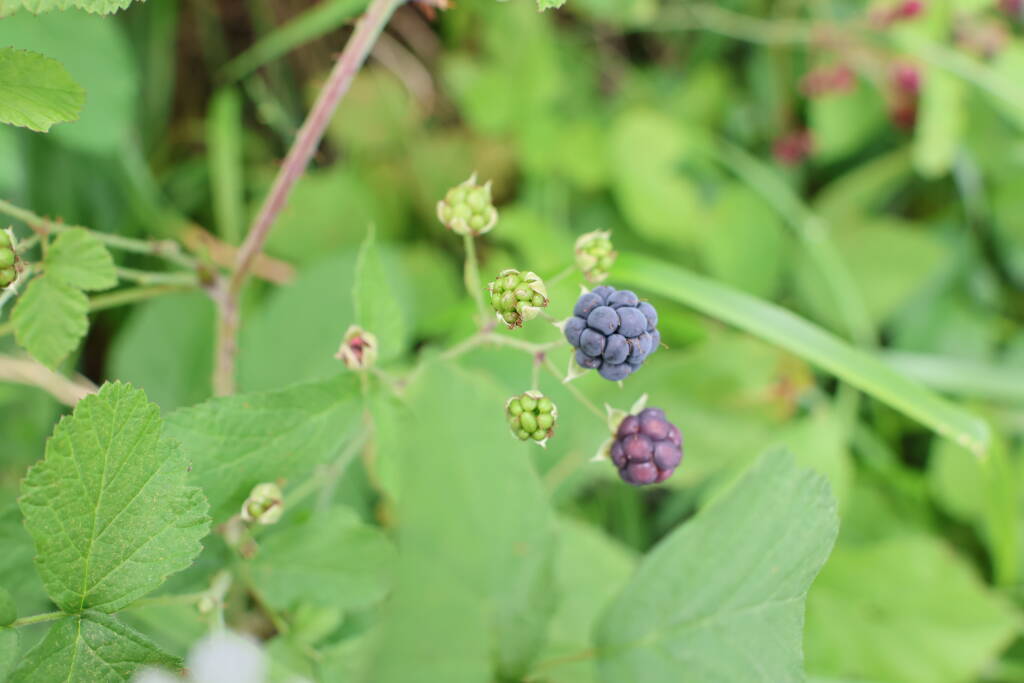
Blackberries on the hillside.
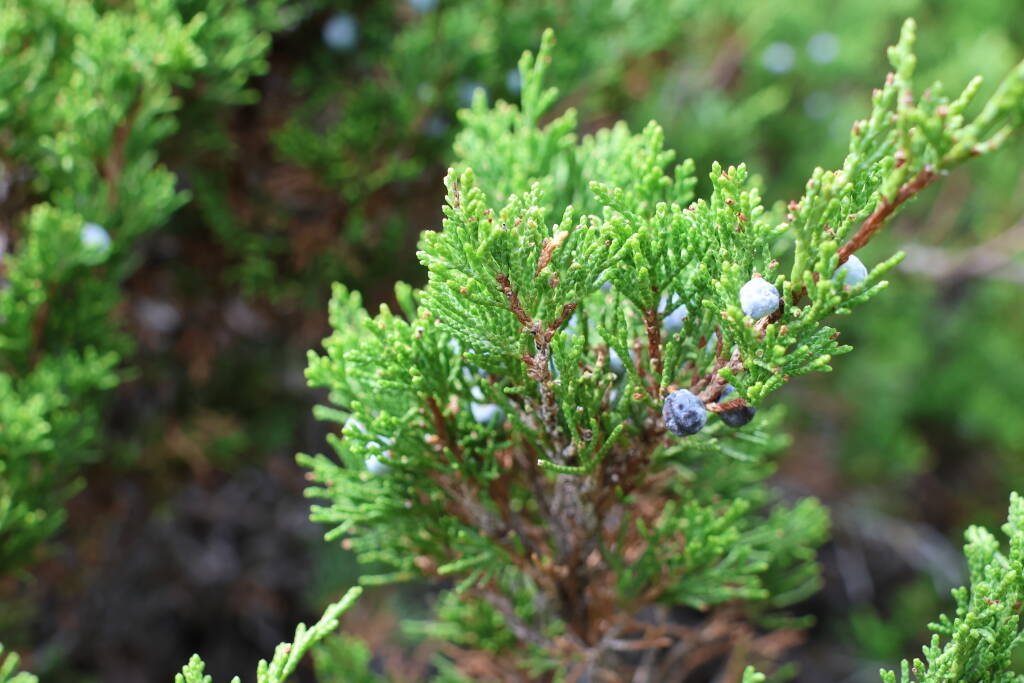
Juniper aka Savin.
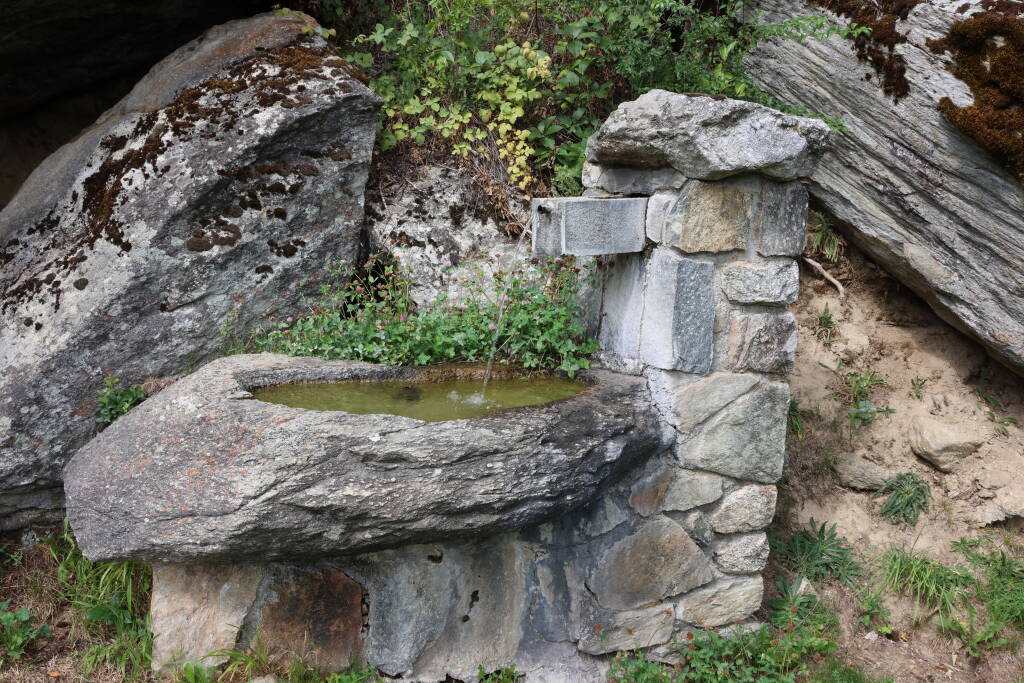
Holy water spring.
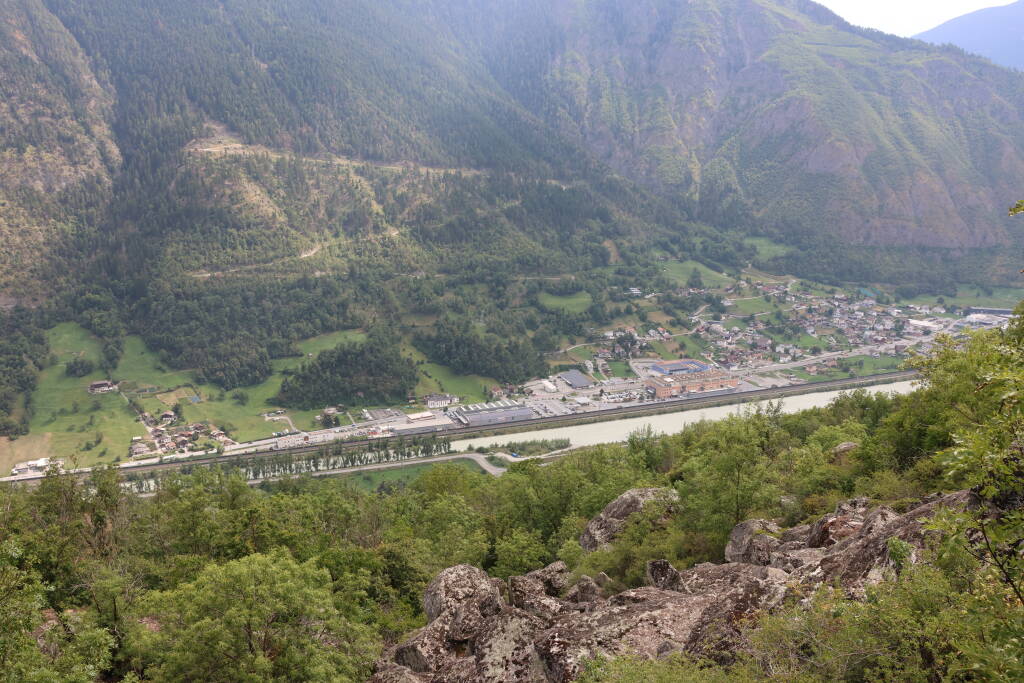
Lookout to the Rhôna valley.
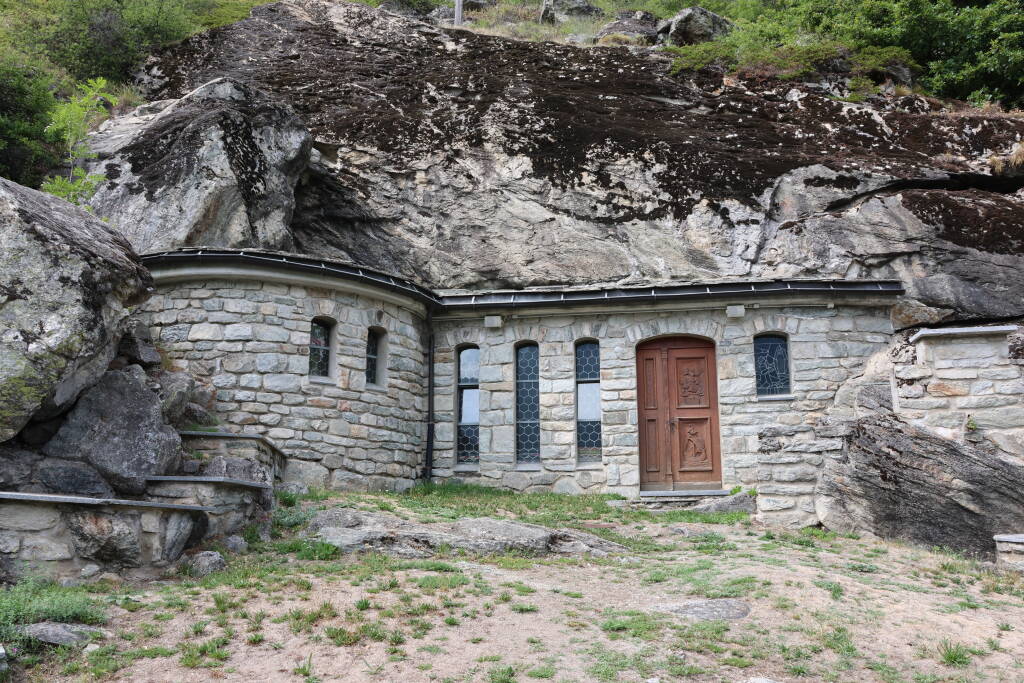
A chapel carved in the rock.
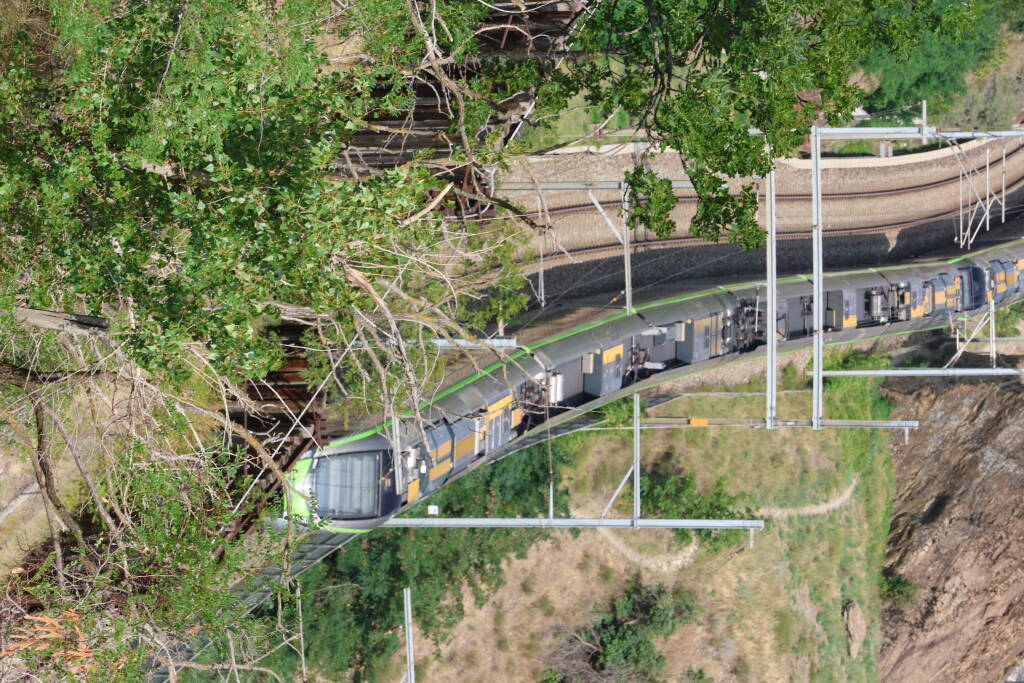
I wanted to take a photo of this train but I was too slow. It's a regional train on the original railway from Brig to Bern through Lötschberg tunnel. The railway climbs long slopes to enter a 4km tunnel above Hohtenn, and then after Goppenstein, the 14 km long Lötschberg tunnel. The new railway instead uses the routing of the Lausanne railway, crosses Rhône just after Visp and enters the 34.5km Lötschberg base tunnel. This old railway is therefore not much in use.
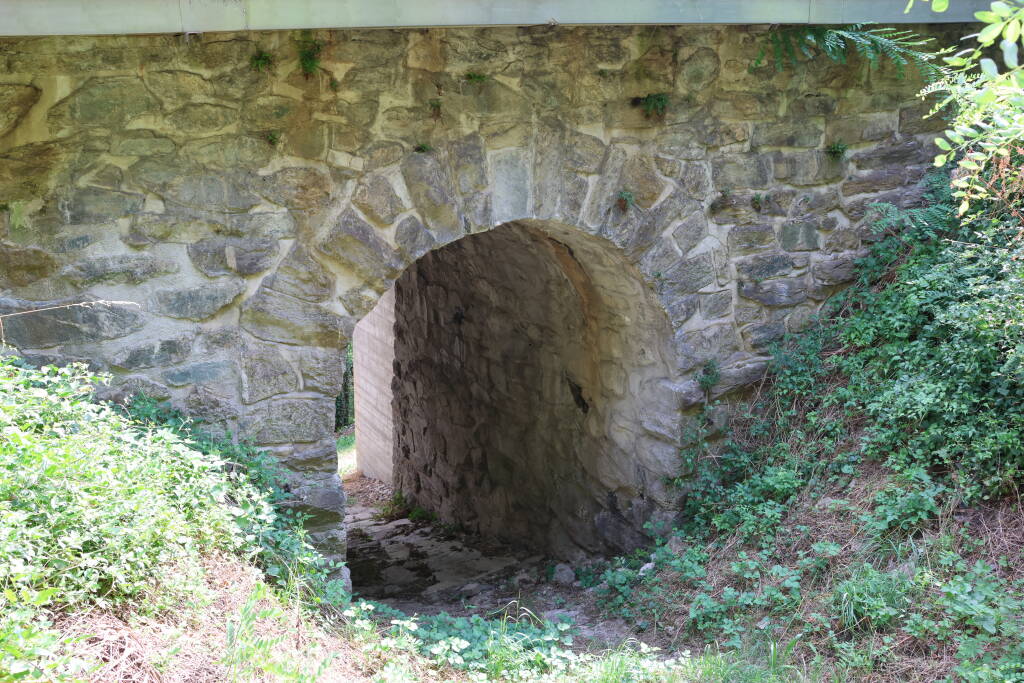
Underpass.
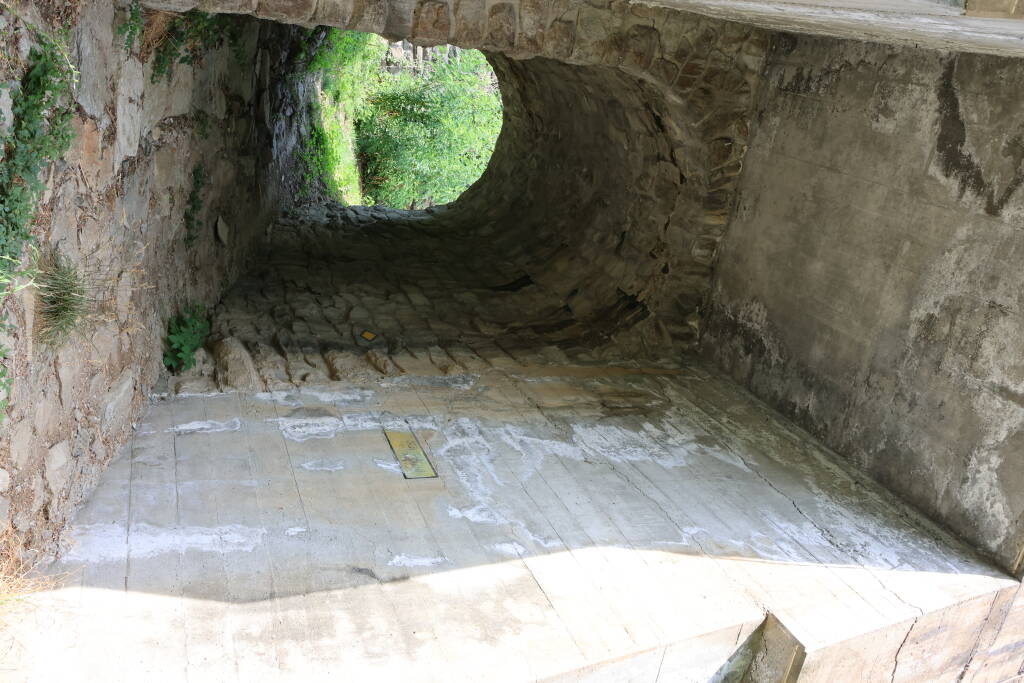
The railway was originally single-track and they didn't bother much with adding the second track.
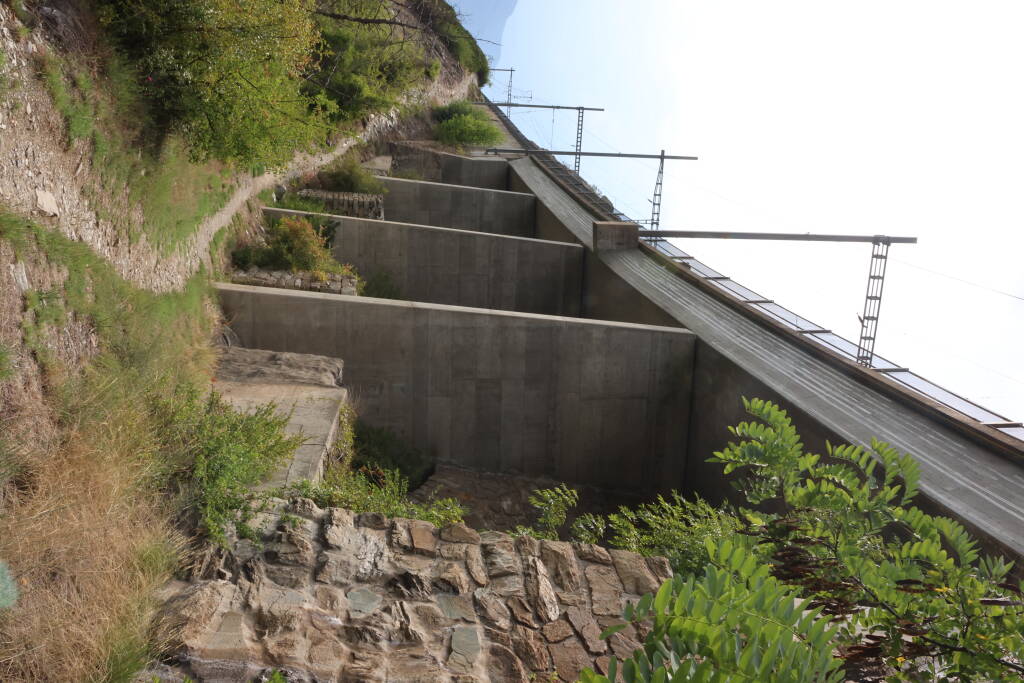
This would be totally banned by czech heritage officials.
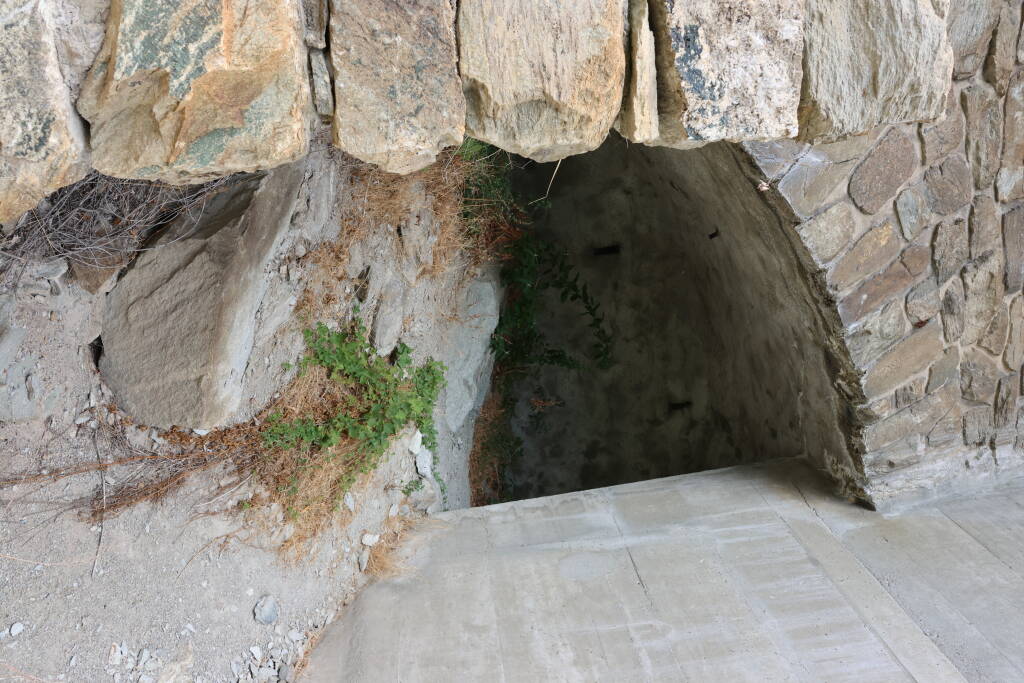
A pillar built just in the middle of the arch of the old bridge? Really?! SBB CFF, FFS!!
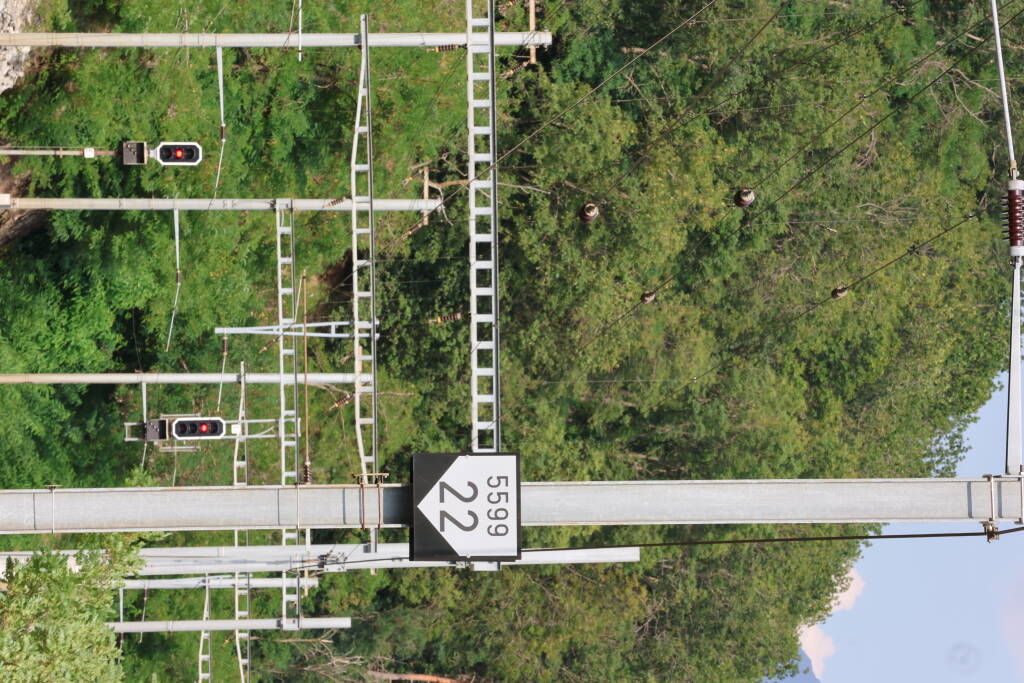
The slope is really steep and long.
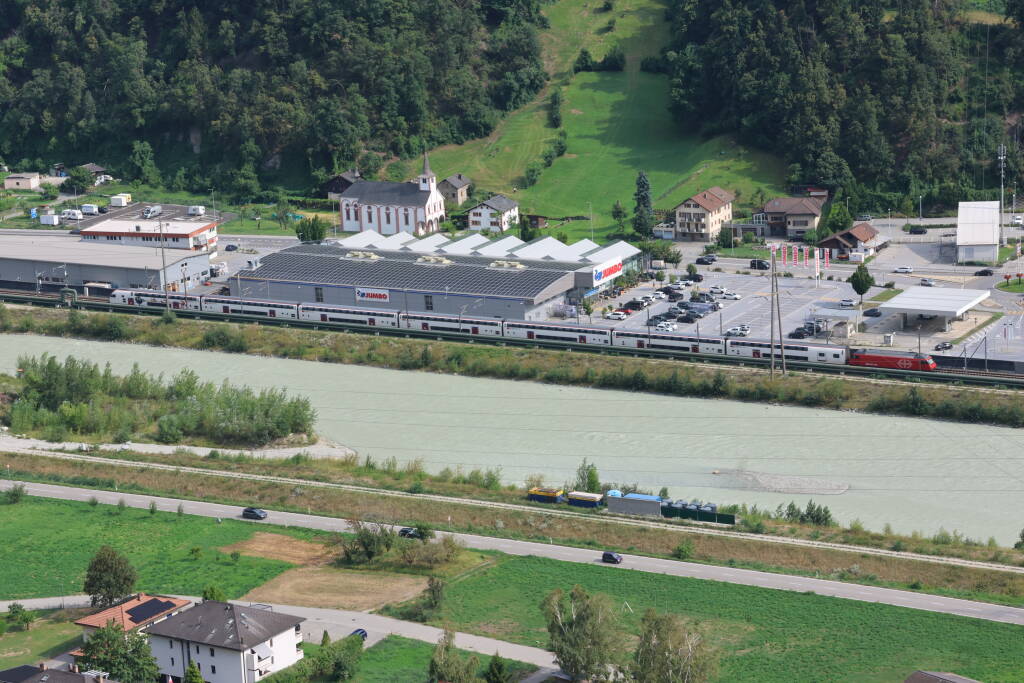
All relevant trains nowadays ride the valley railway, by the river.
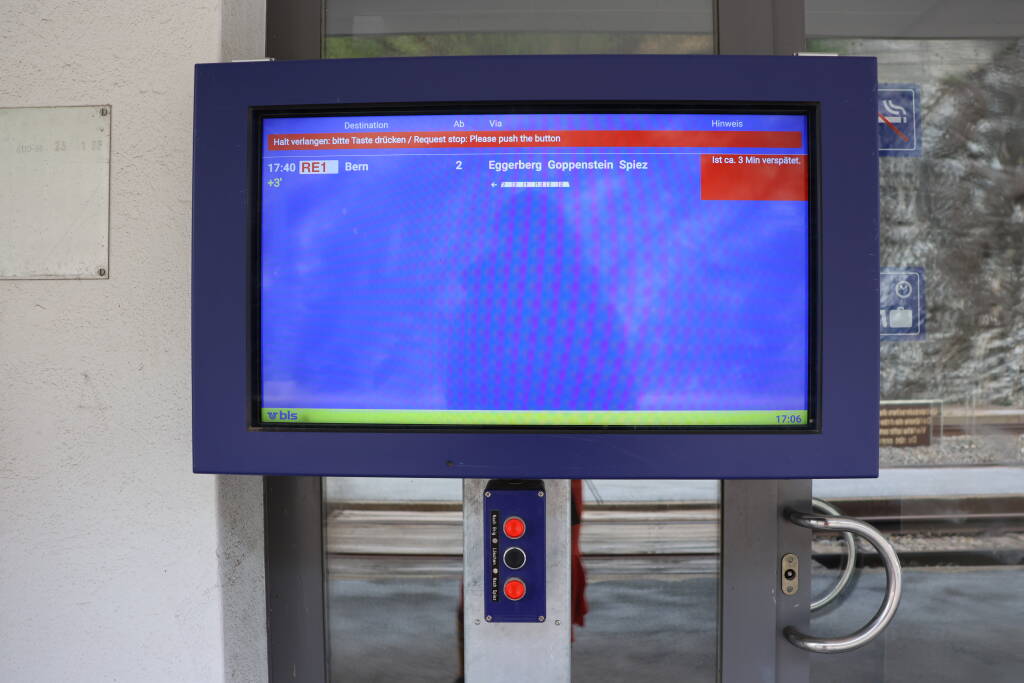
The Lalden station is also a request stop. In a while, the last train of today will come. Considering that it's Monday …
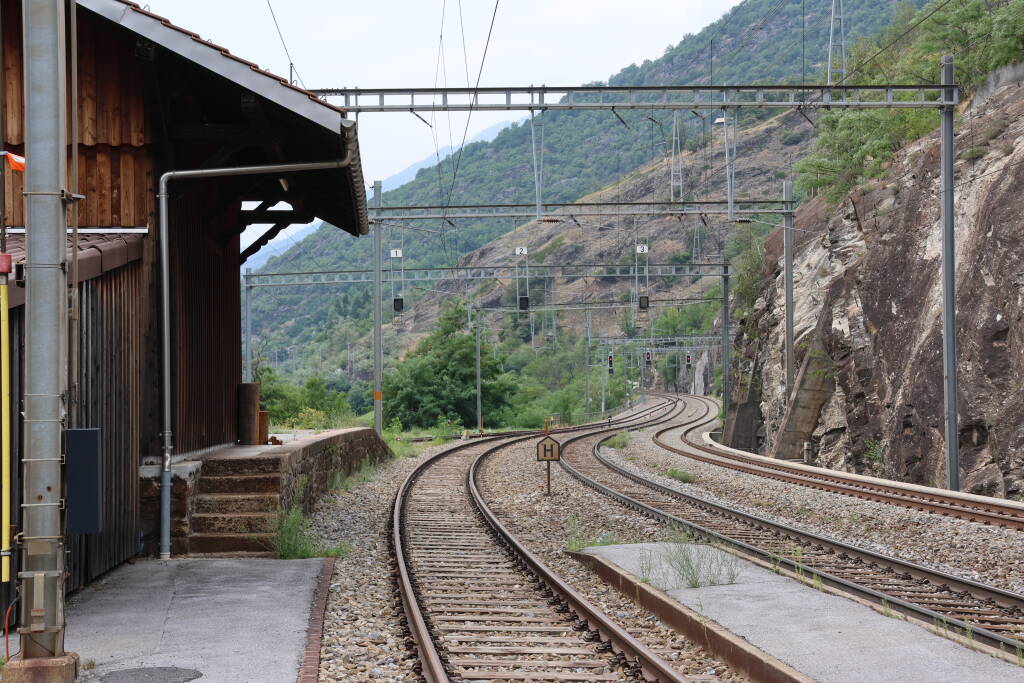
The station pleasantly smelled as wooden sleepers but it was otherwise totally deserted.
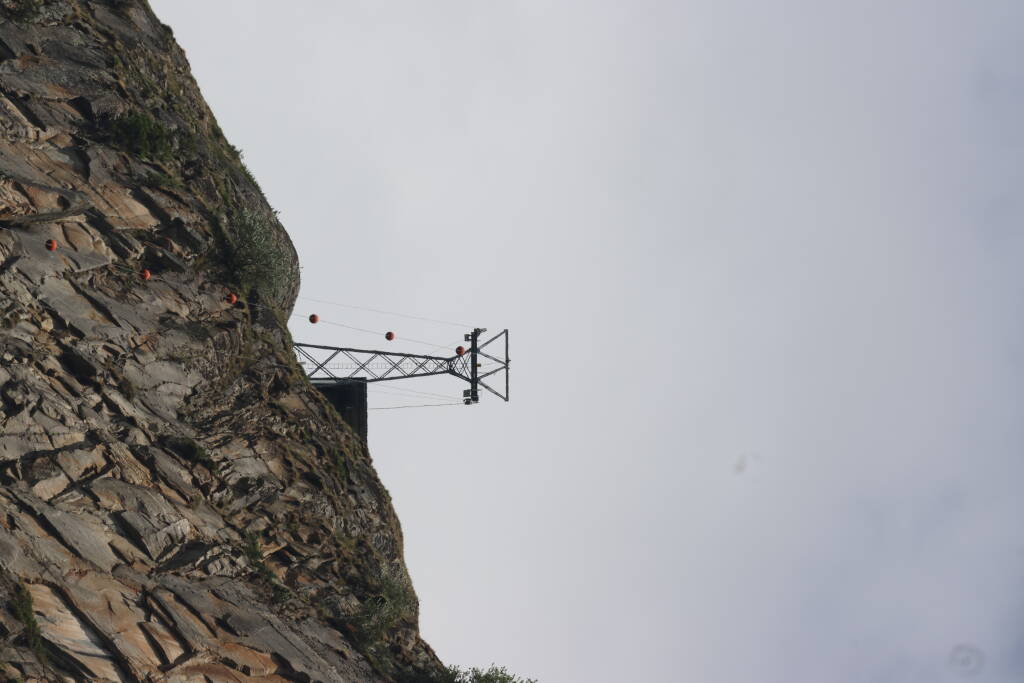
Next day, I boarded a train to Zermatt but got off the train in Sankt Niklaus. This is a second support of a private cable car to Sparren.
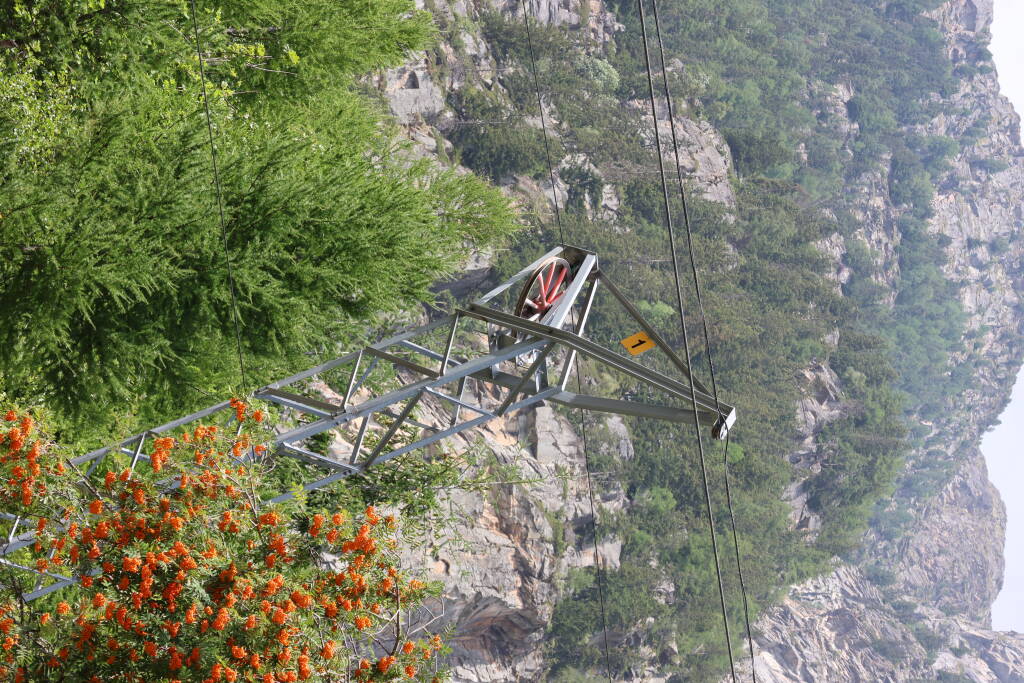
This is the first support. The photo is straight, the support is weird.
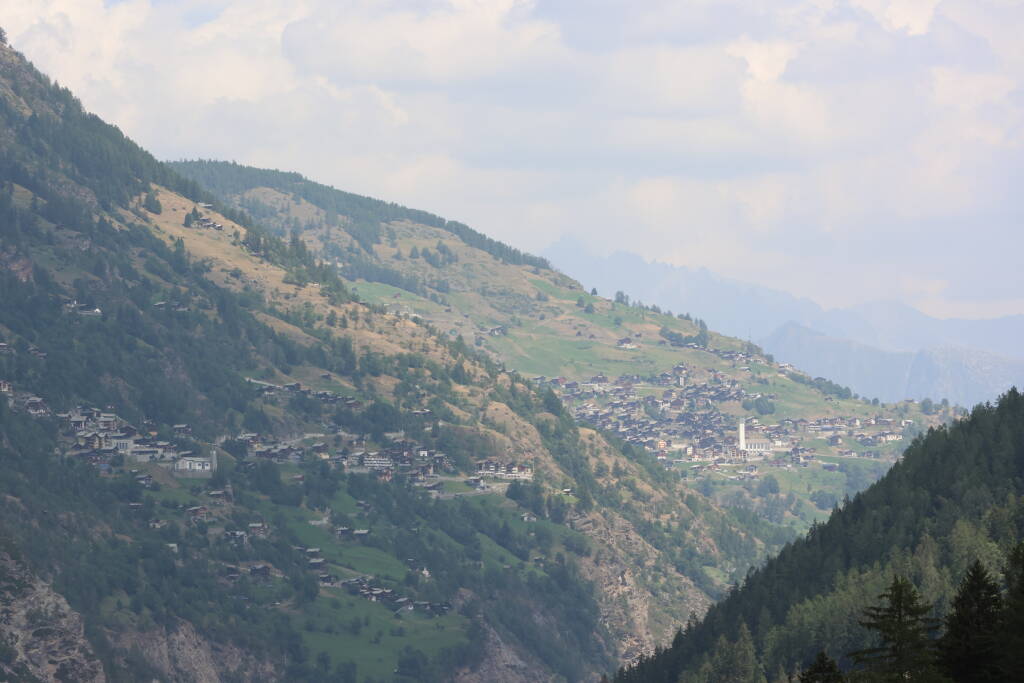
Village view. On the left side above the gorge, there is Embd. In the background Törbel with church of Theodor the saint.
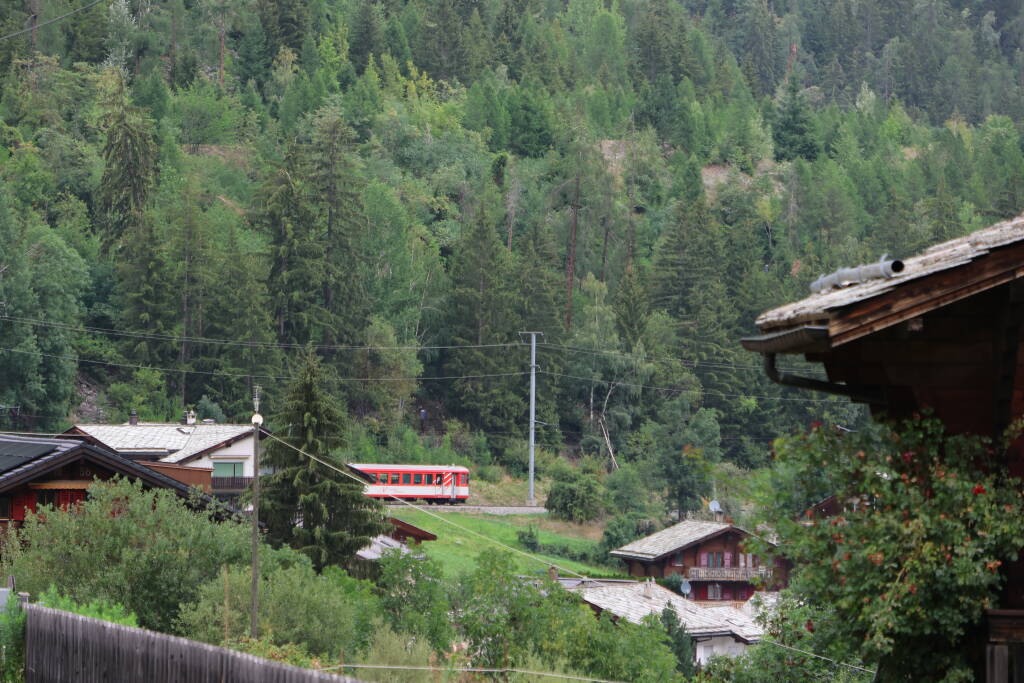
Peek-a-train!
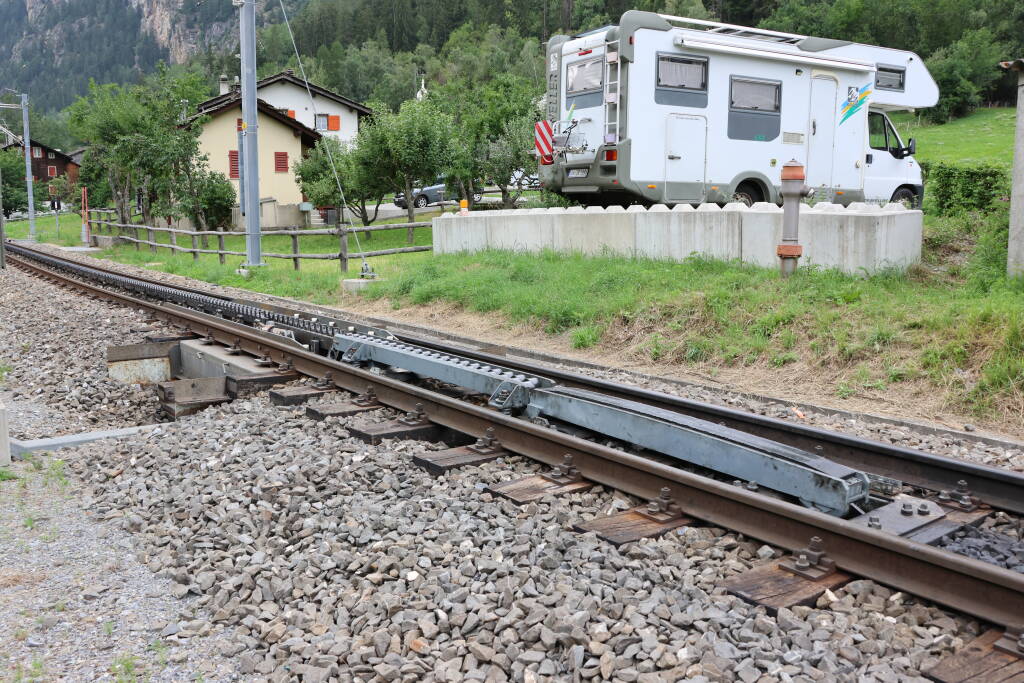
Beginning of the rack.
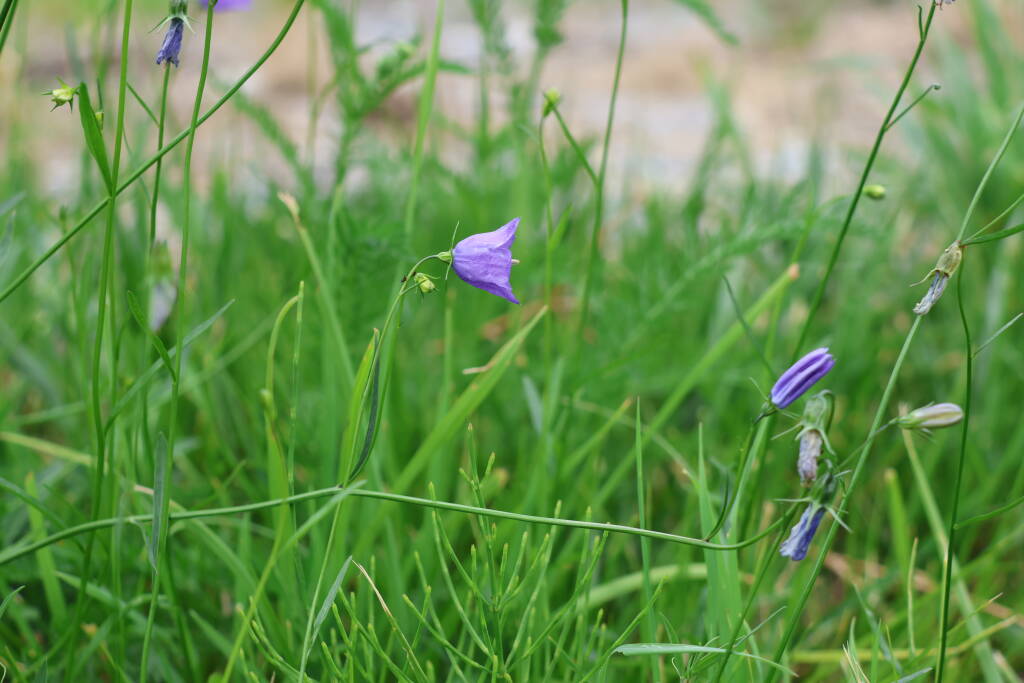
Bellflower.
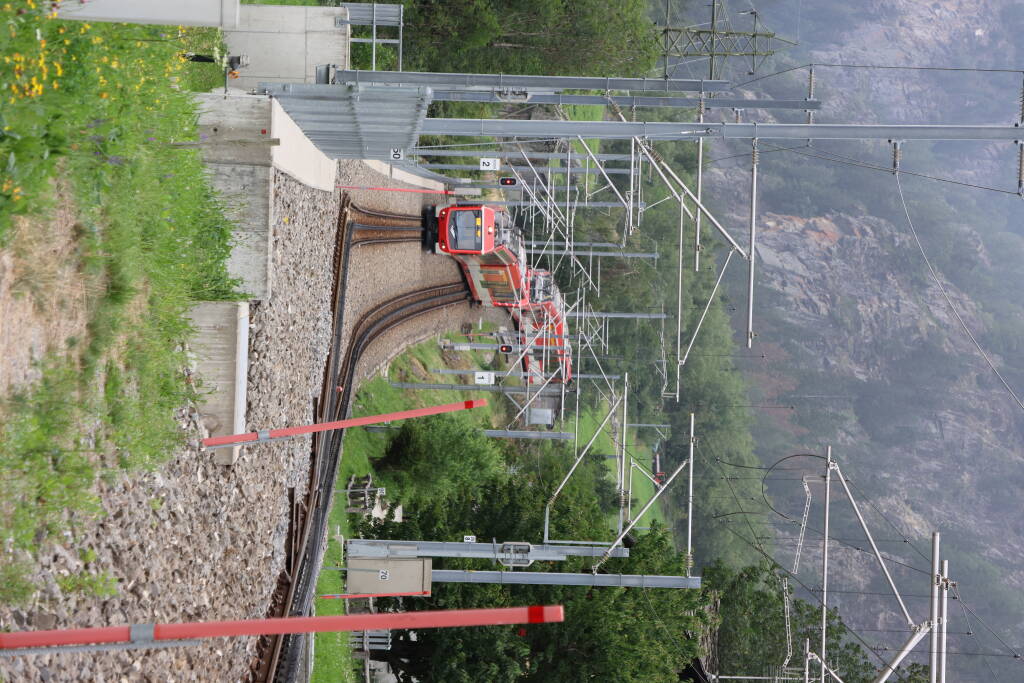
Train from Zermatt is waving into the siding.
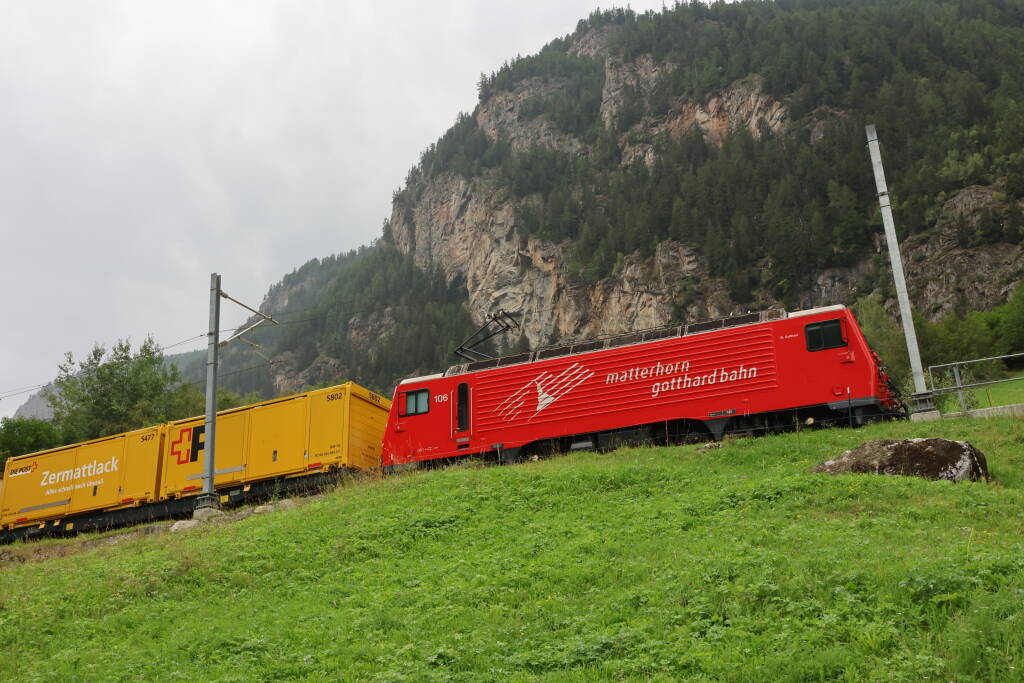
Almost failed to take this. A freight train!
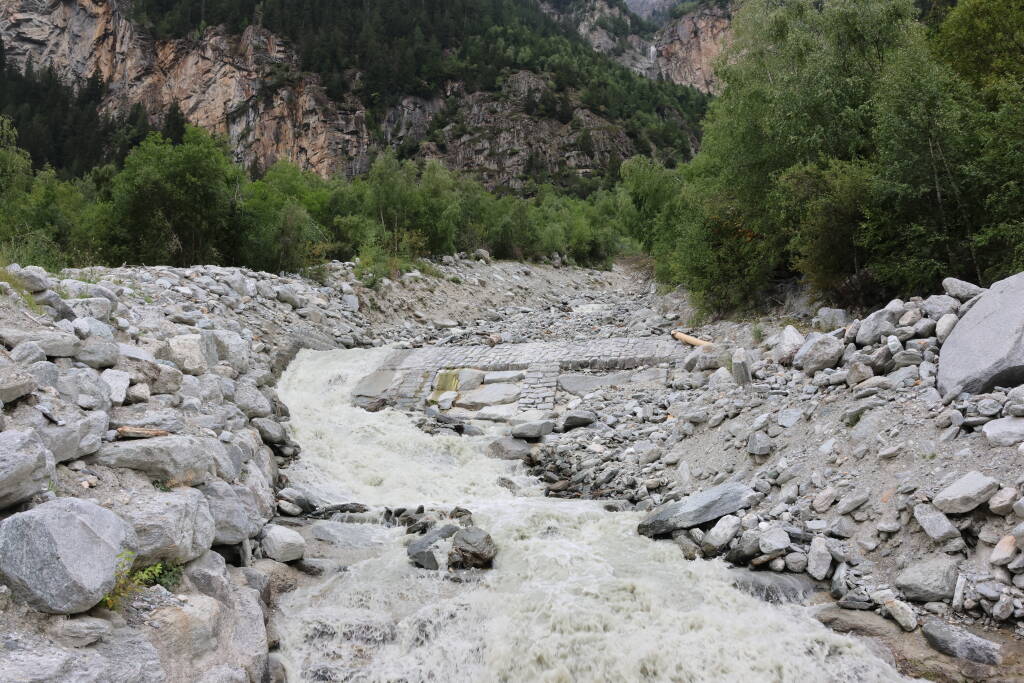
A creek but not an ordinary one. Just in the middle of the photo, there is the a tunnel roof.
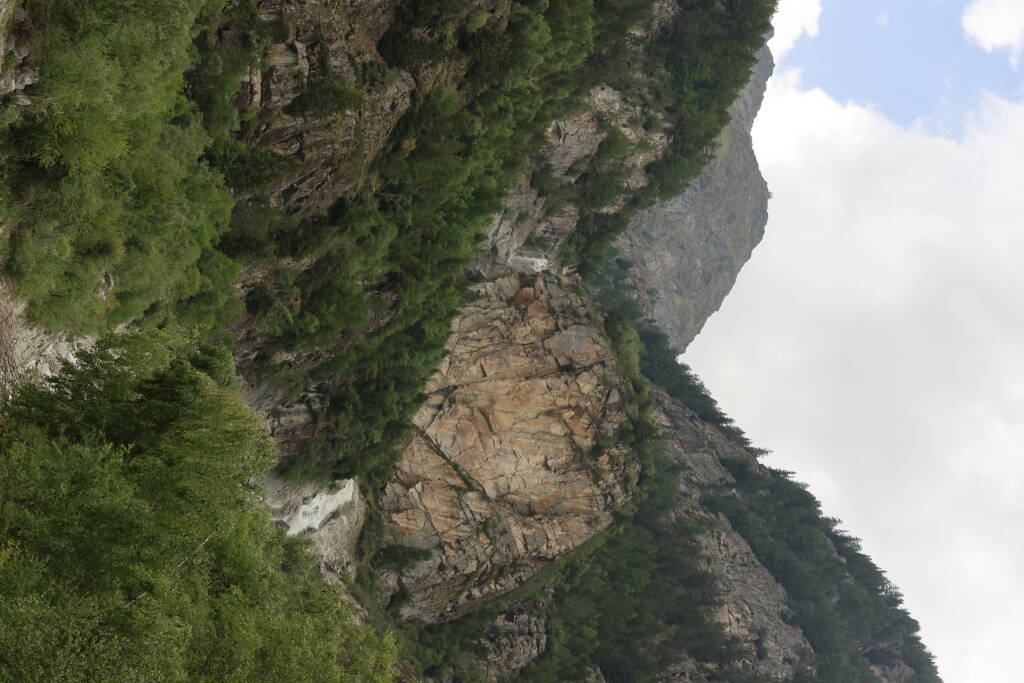
The creek waterfalls down the mountains, as every creek here.
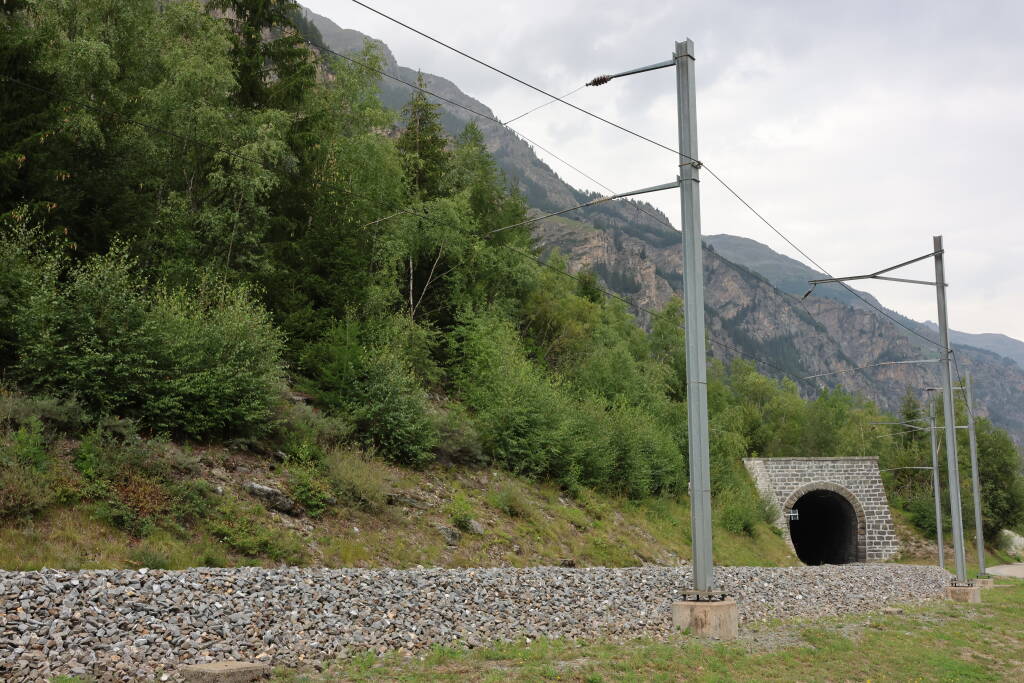
This tunnel goes under the creek.
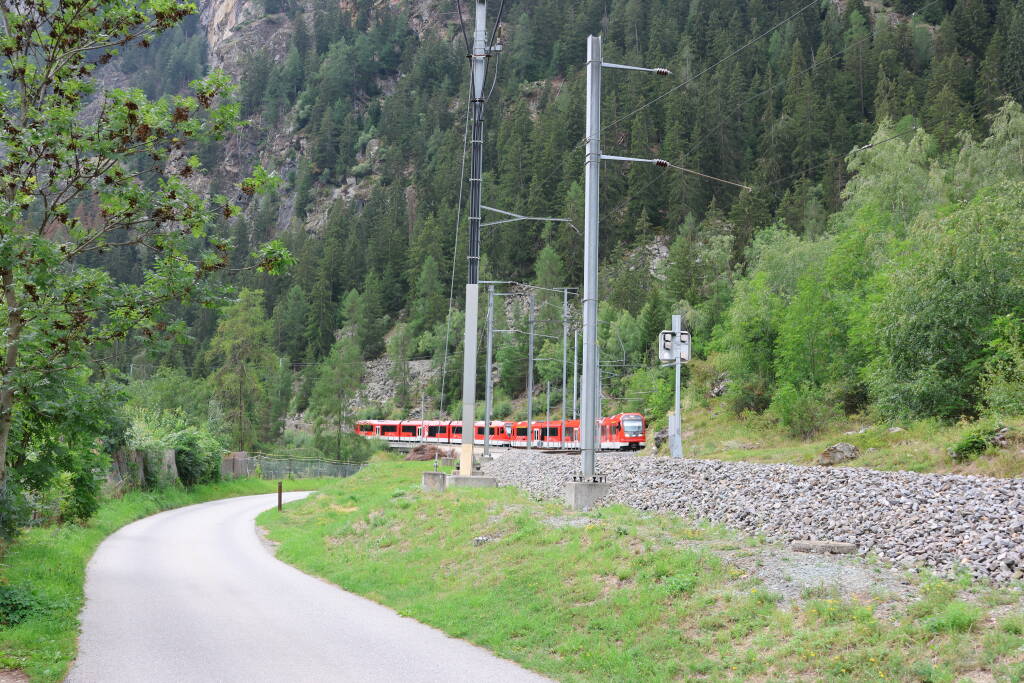
This train will enter the tunnel.
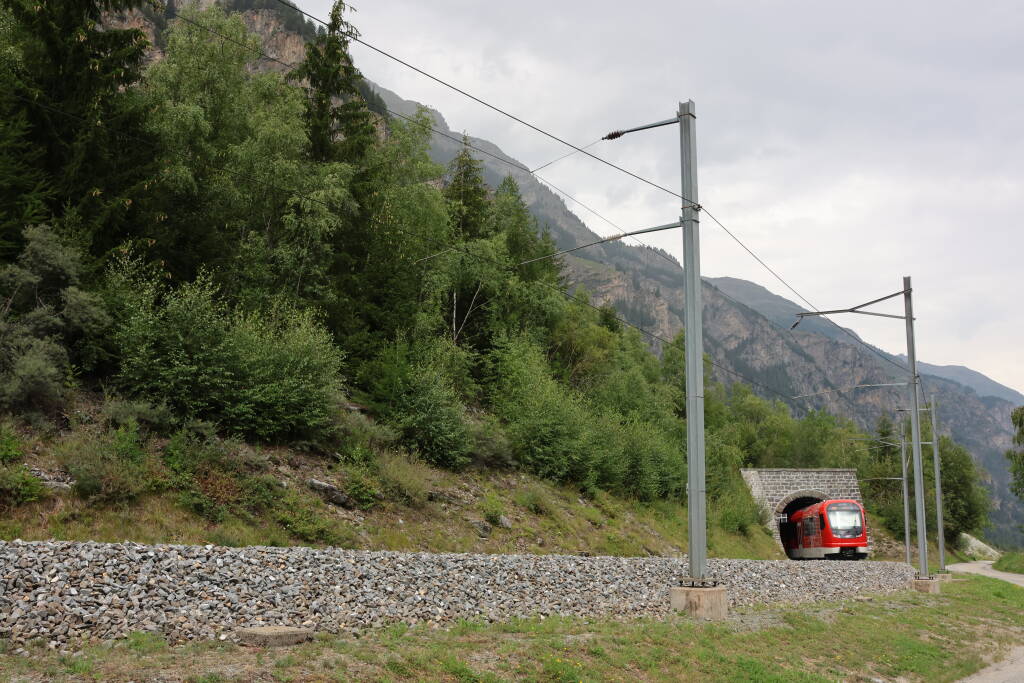
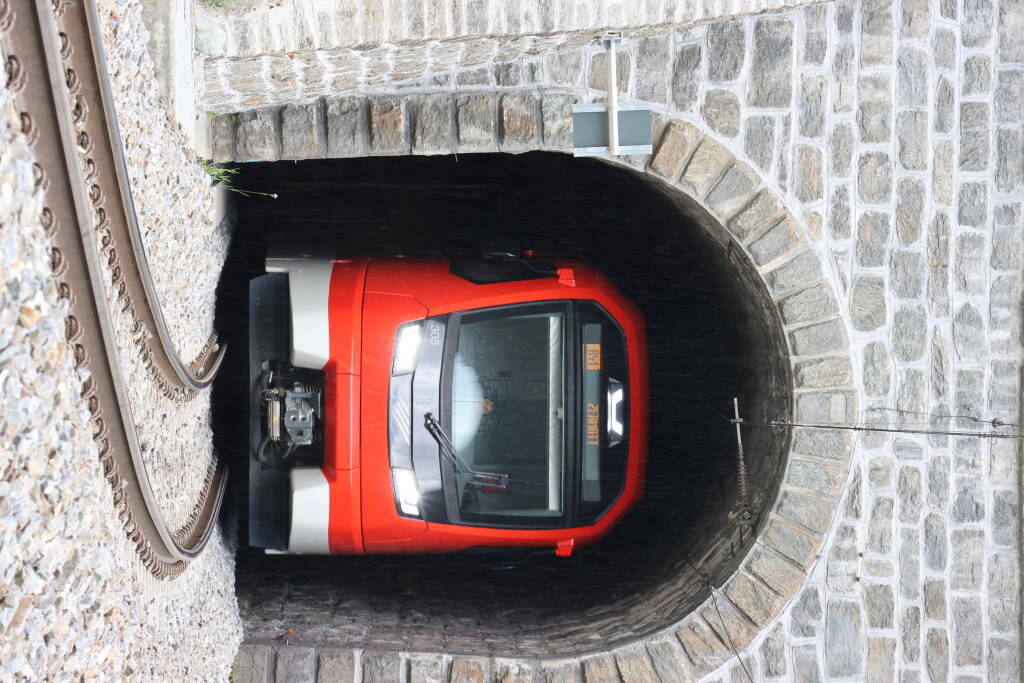
A train in a tunnel under a creek. Also there is the other end of that rack … literally inside the tunnel.
Let's also wait for the train uphill. I should have taken a ladder with me though.
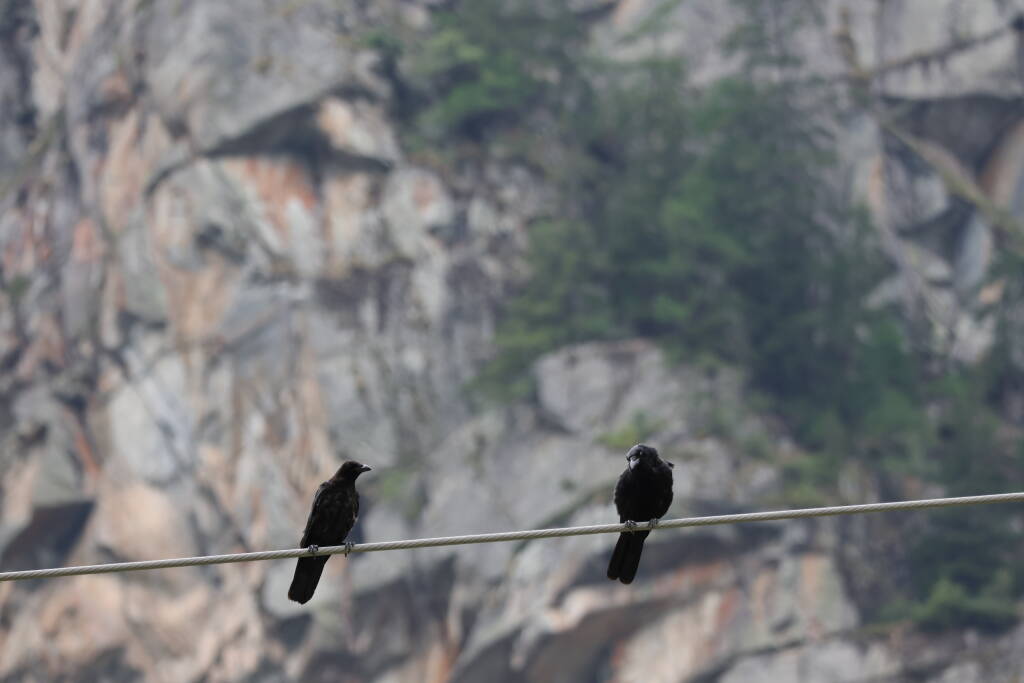
There were two ravens, they sat on a wire …
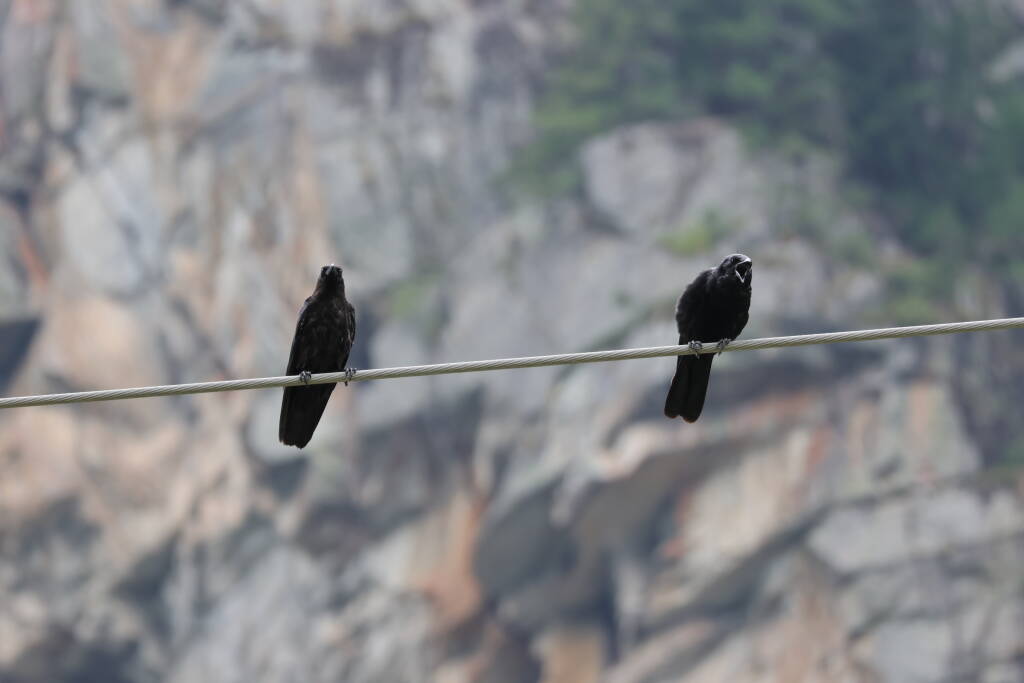
… where shall we our breakfast take?
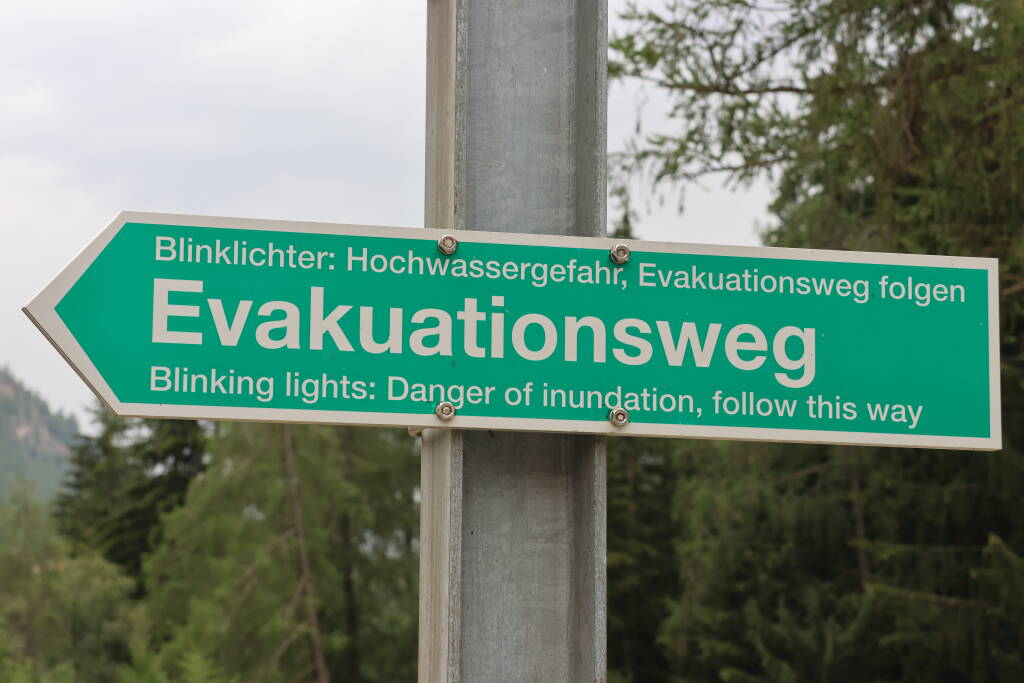
The Herbriggen station is in a flood-risk area. If the light is blinking, run away.
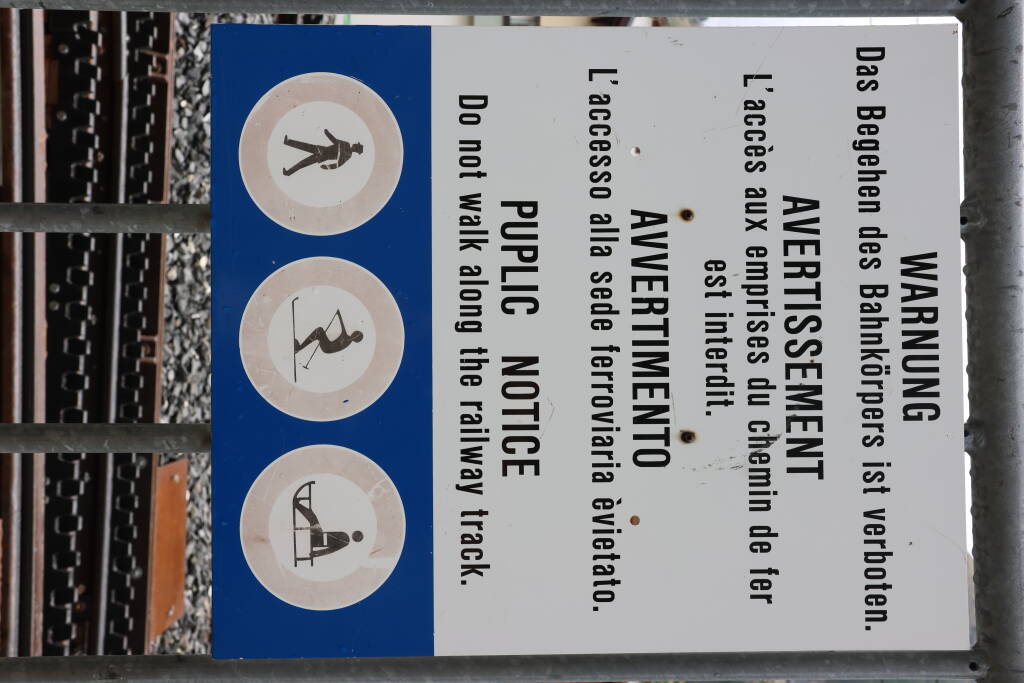
Do not step on the tracks, and don't ski or toboggan down the tracks. That almost seems that somebody tried that.
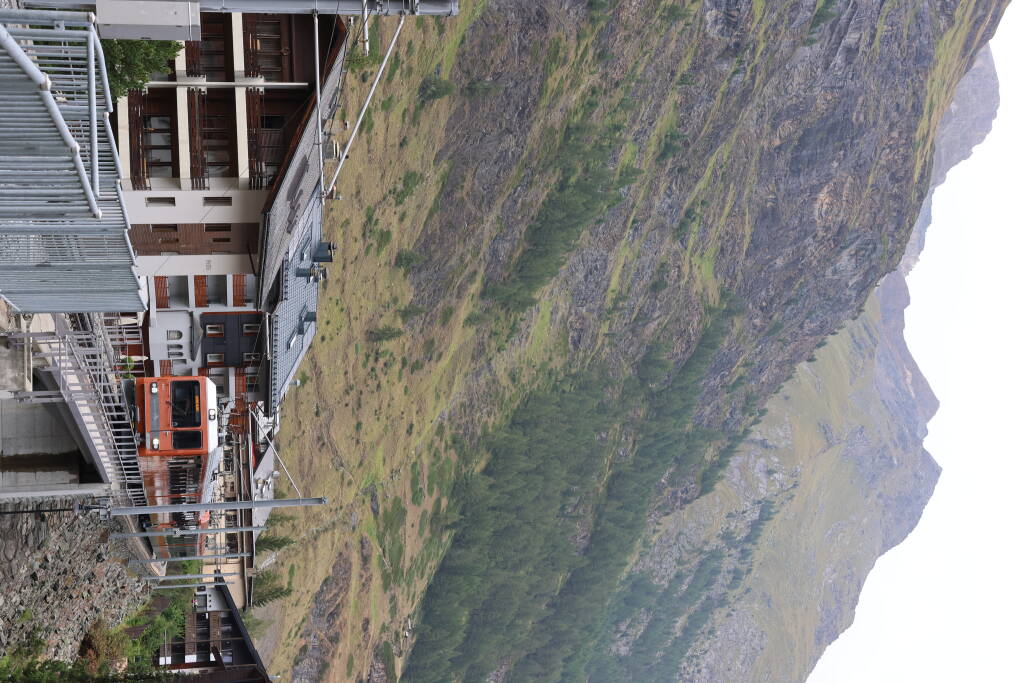
Rack railway to Gornergrat. Notice the double catenary (doublenary?) – this railway uses three-phase AC, 725 V 50 Hz.
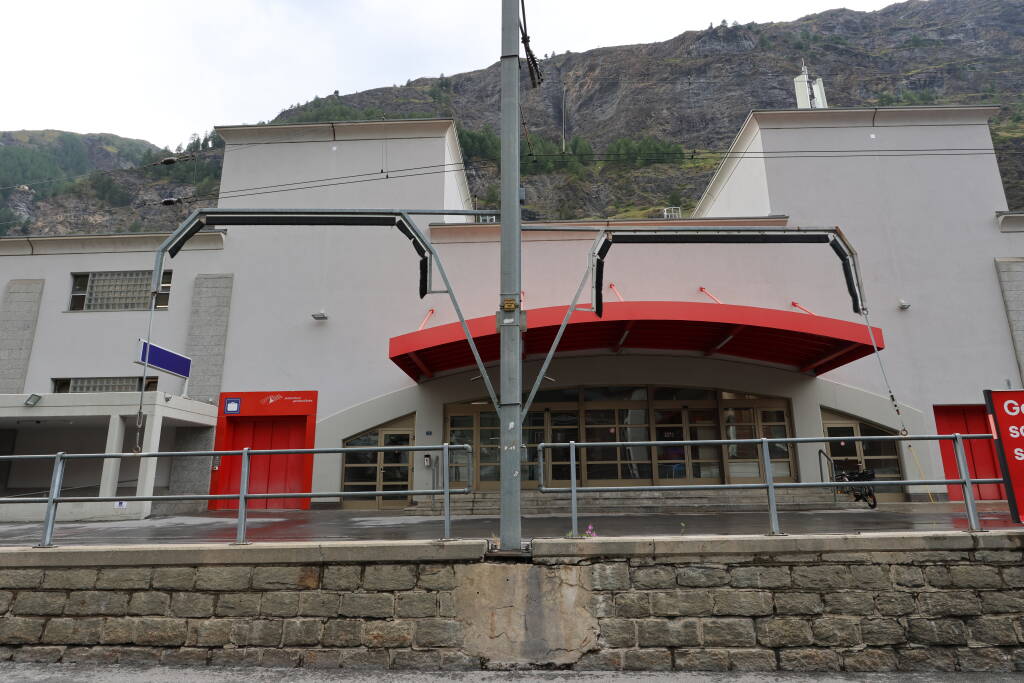
Freight ramp in Zermatt and shape checkers for the loaded wagons.
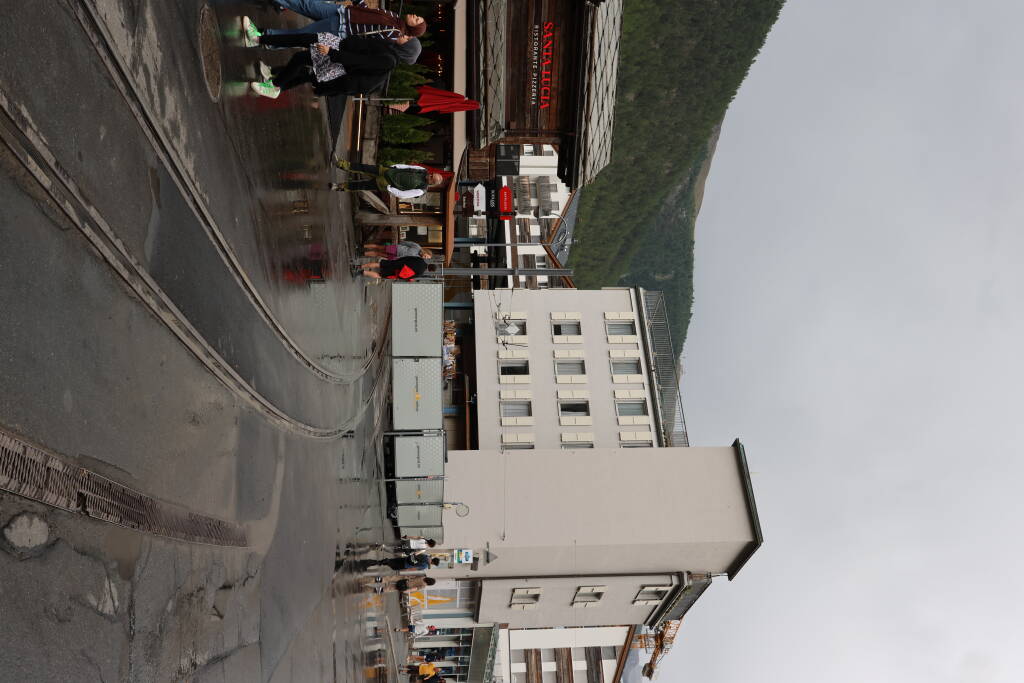
The Gornergrat mountain railway is connected to the Visp railway but with no catenary. Probably they are using this track to move freight cars between the lines.
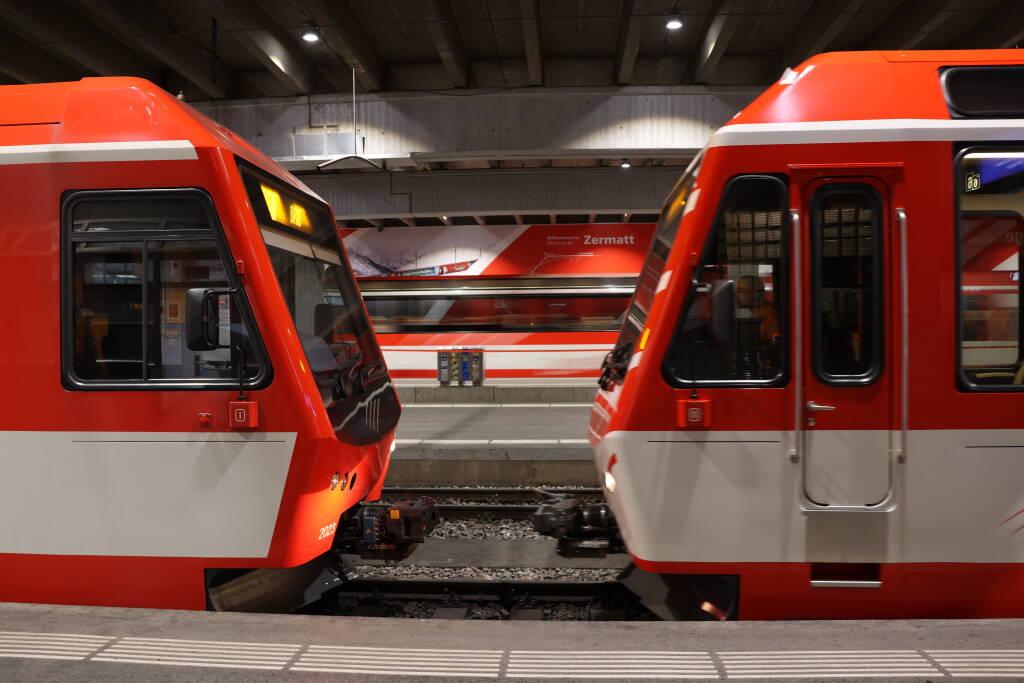
Coupling in the Zermatt station.
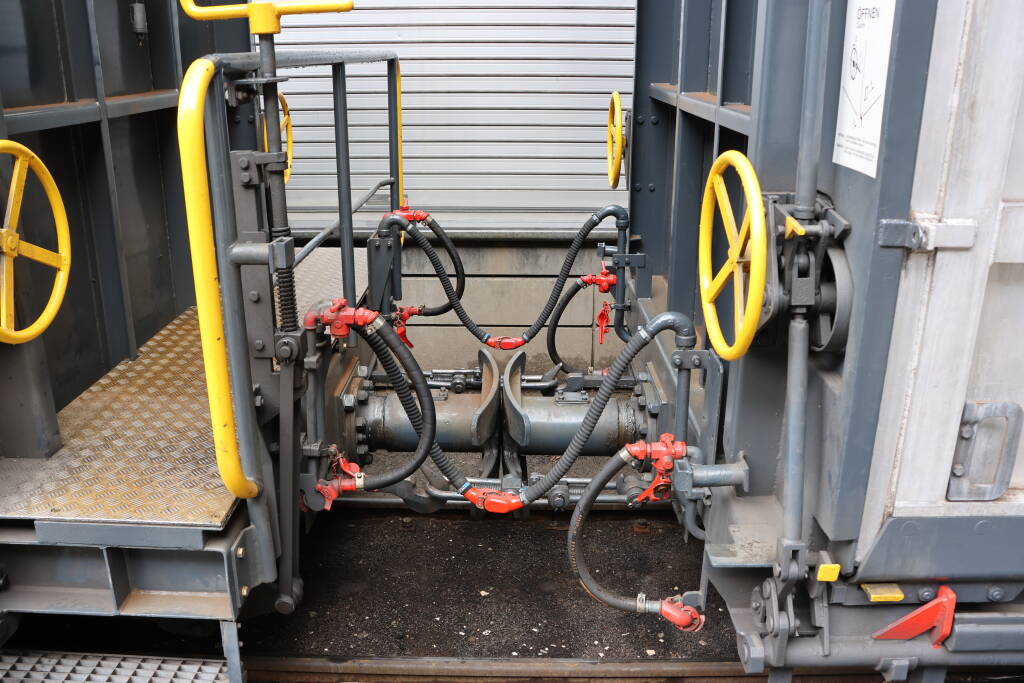
Freight train being prepared for departure downhill. Notice that the wagons have one bumper (instead of two), two screw-and-hook couplings (instead of one), and a vacuum brake (instead of compressed air brake).
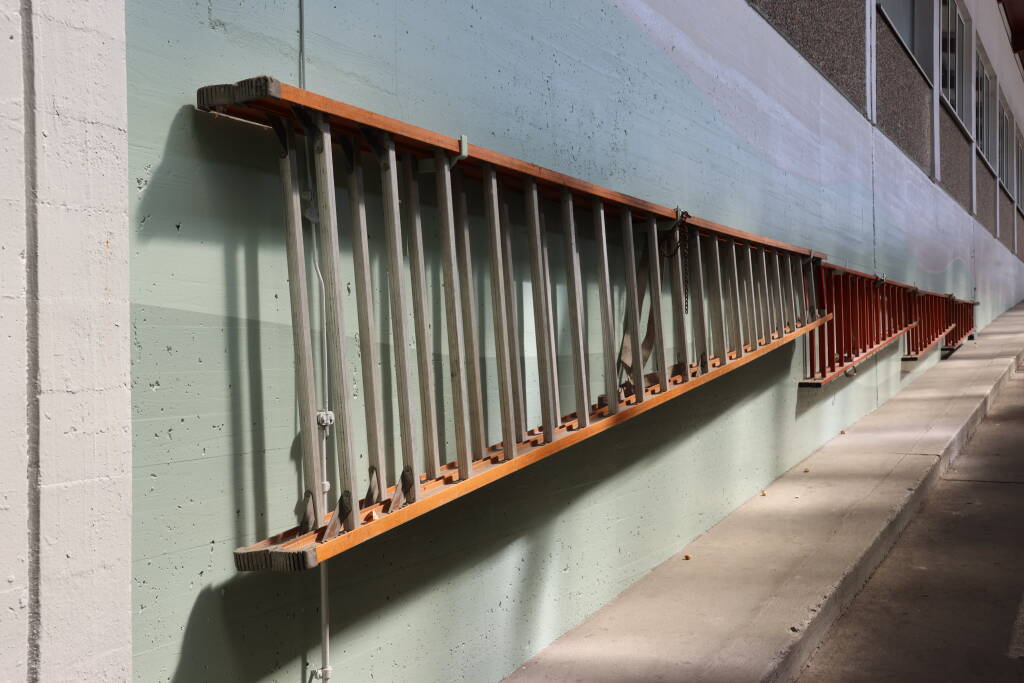
On Wednesday I continued my journey, and when getting off the train in Ulm, I found this collection of ladders. Obviously for trainspotters …
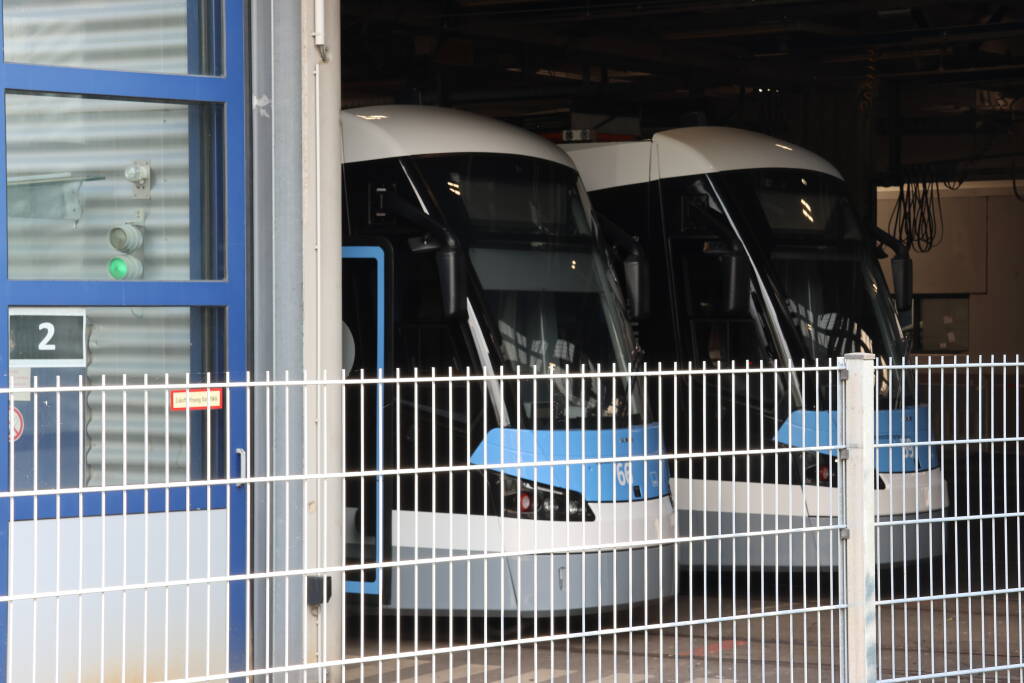
When you go tram-spotting but all of them are in the depot.
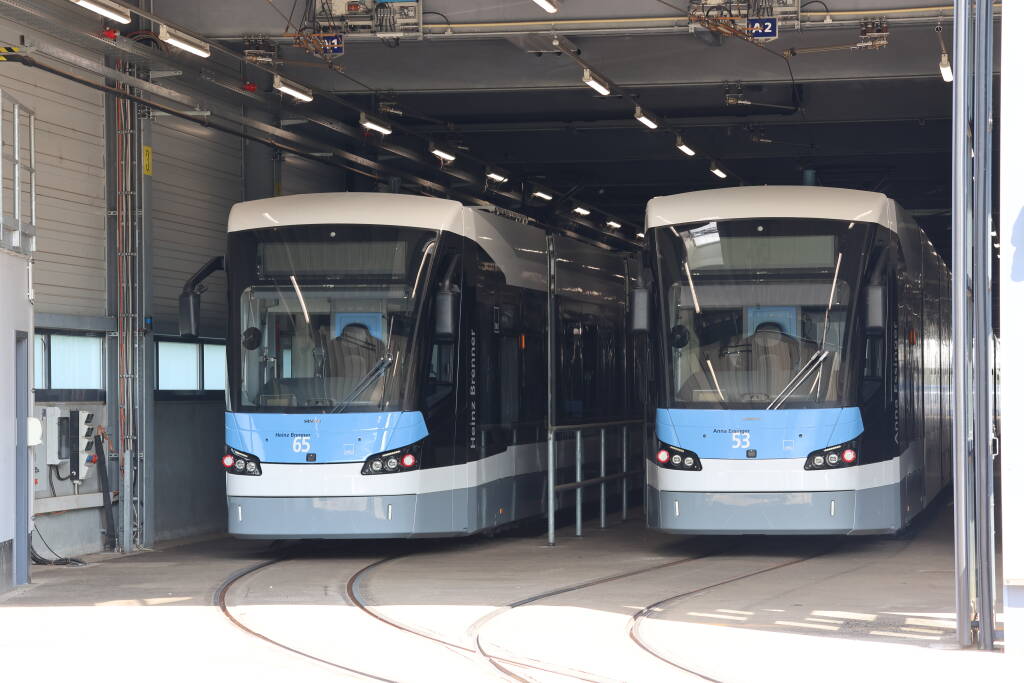
Literally all of these. No tram since beginning of August.
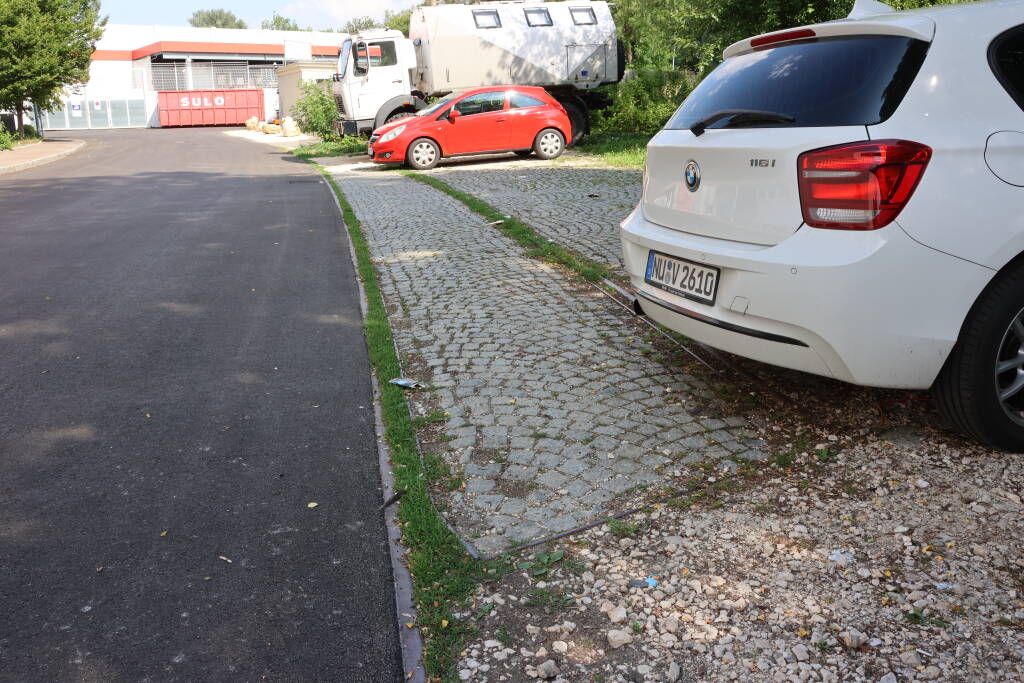
Before I get back to why the trams don't run, here is a piece of a freight siding just behind the tram depot.
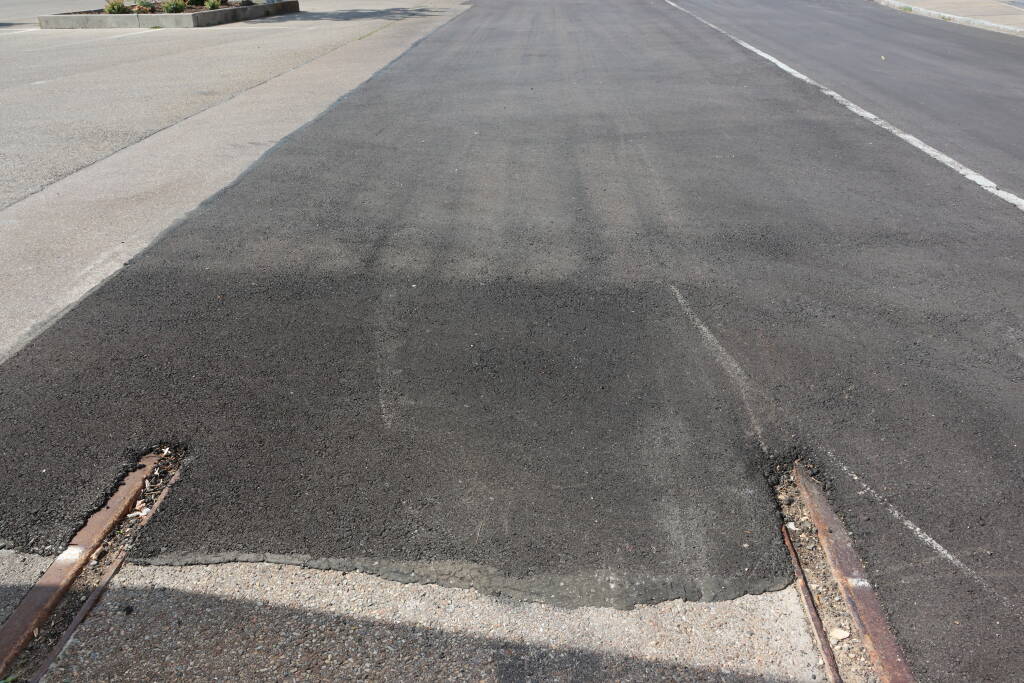
Tracks randomly end in pavement …
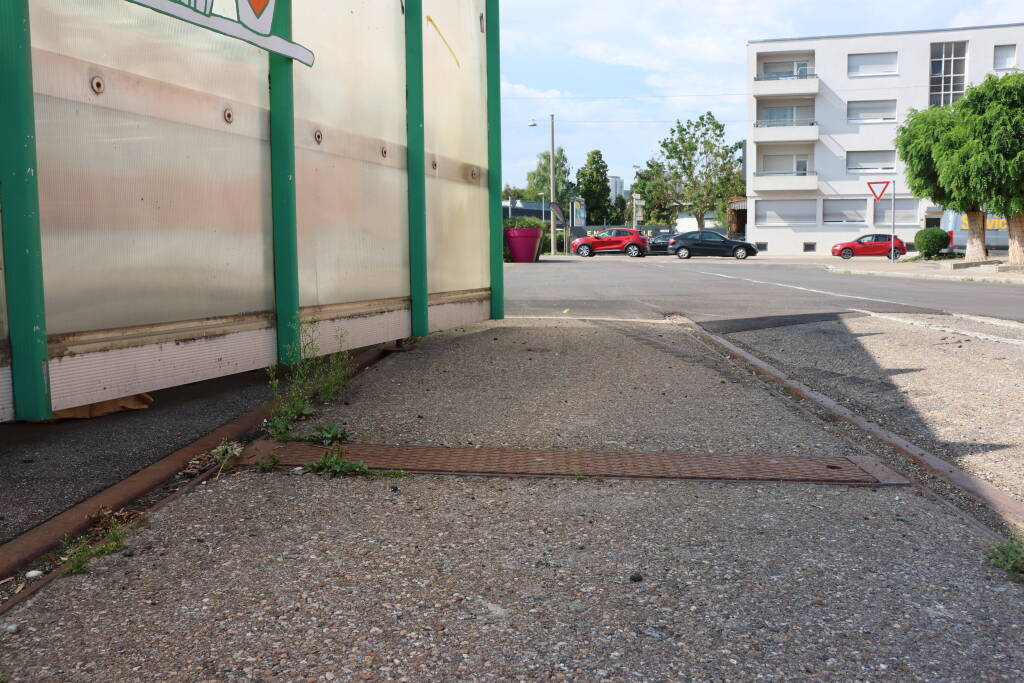
… or in a shopping cart shed.
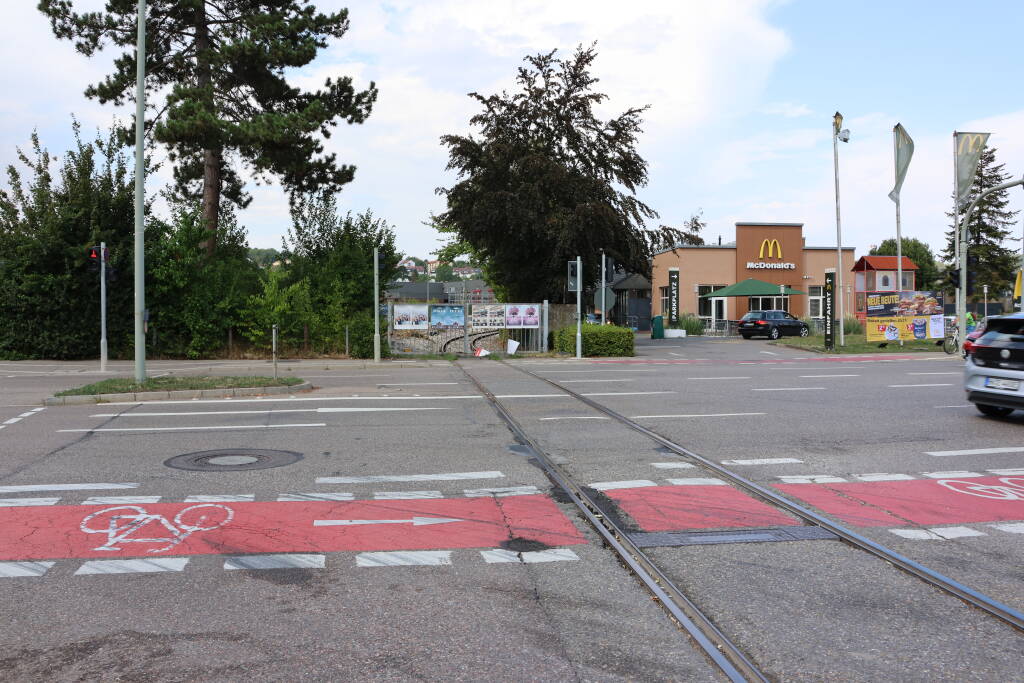
This part of the siding is probably still used.
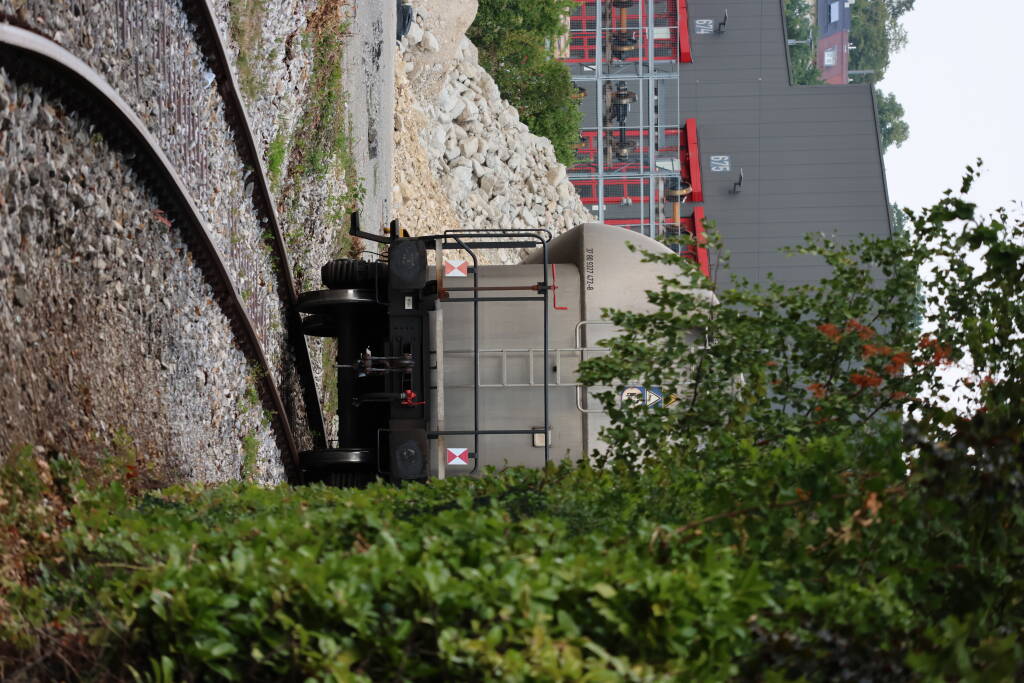
A sneaky freight car behind the bushes.
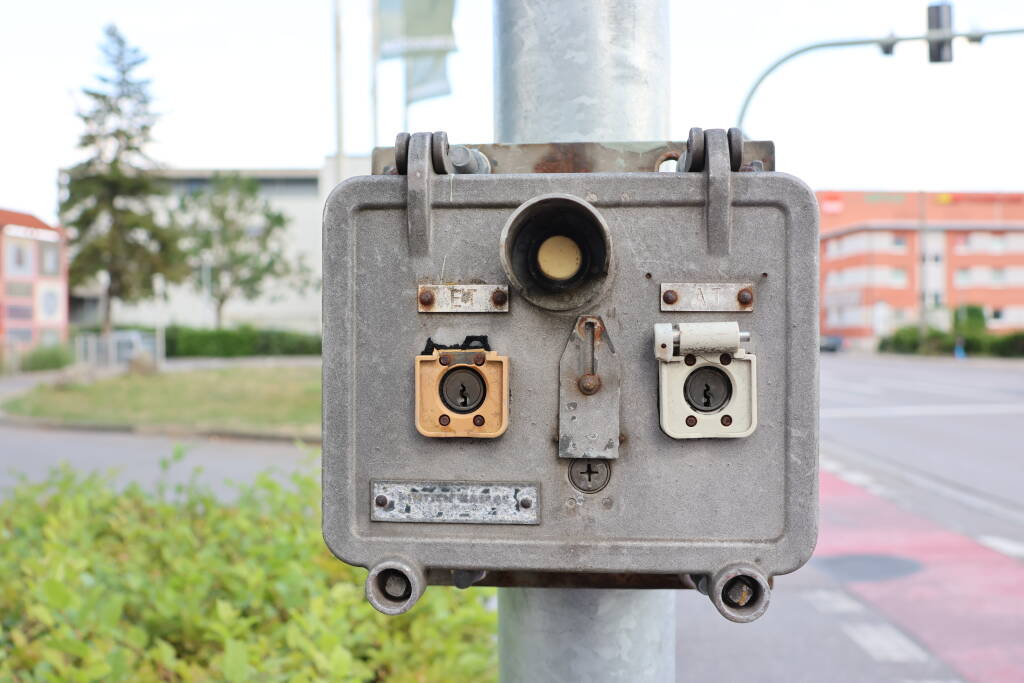
Manual control panel of the signalled crossing. I don't have the key.
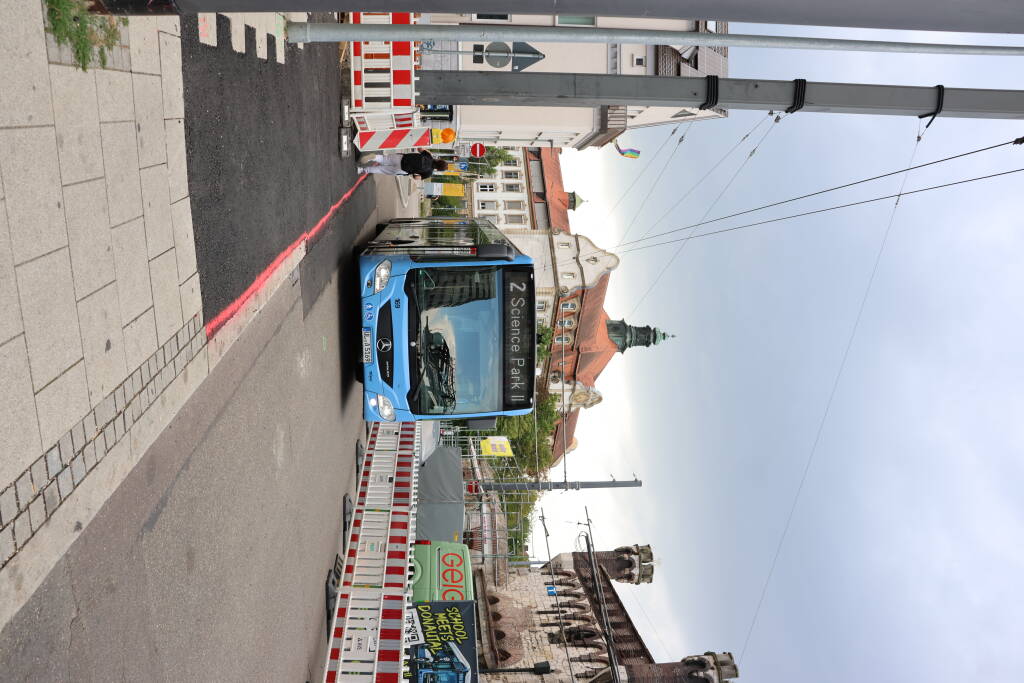
Substitute bus transport for tramways.
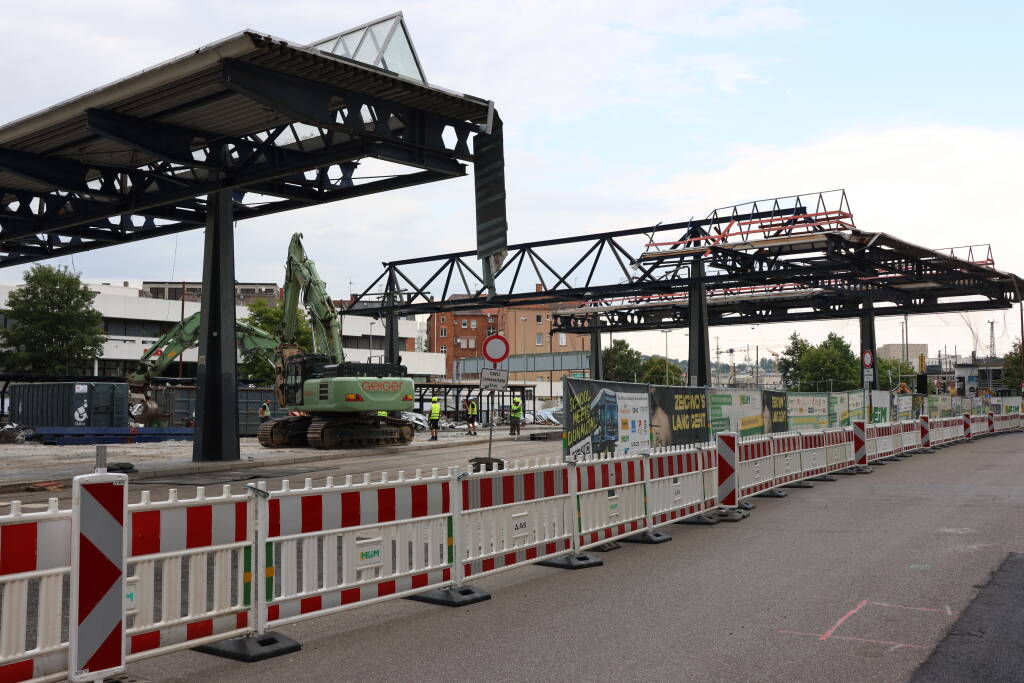
This construction is in reconstruction.
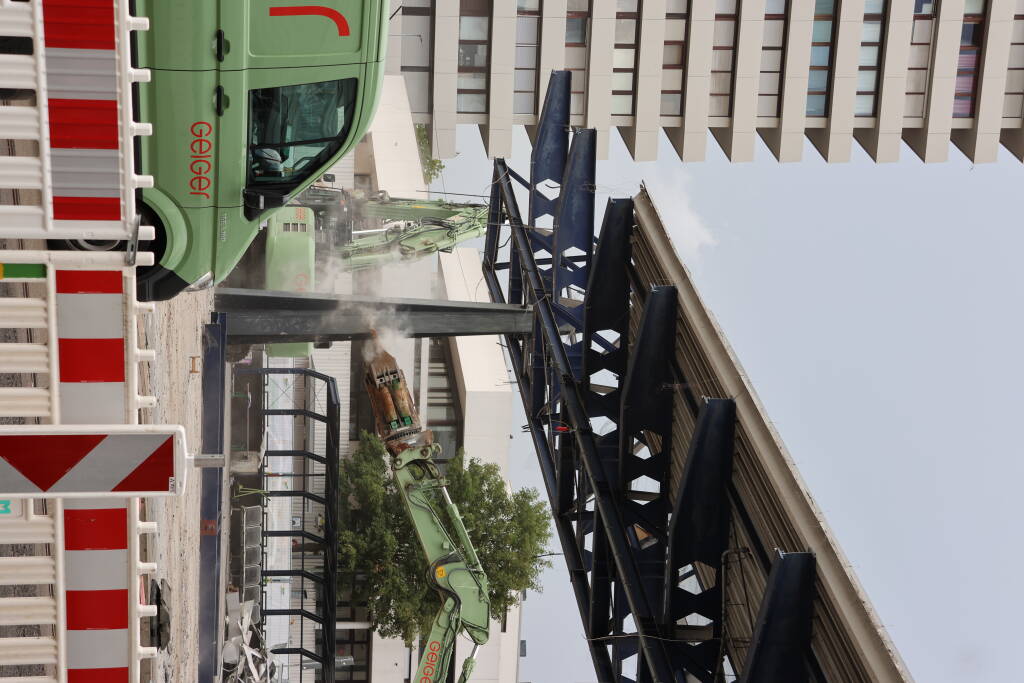
Or more precisely, in deconstruction.
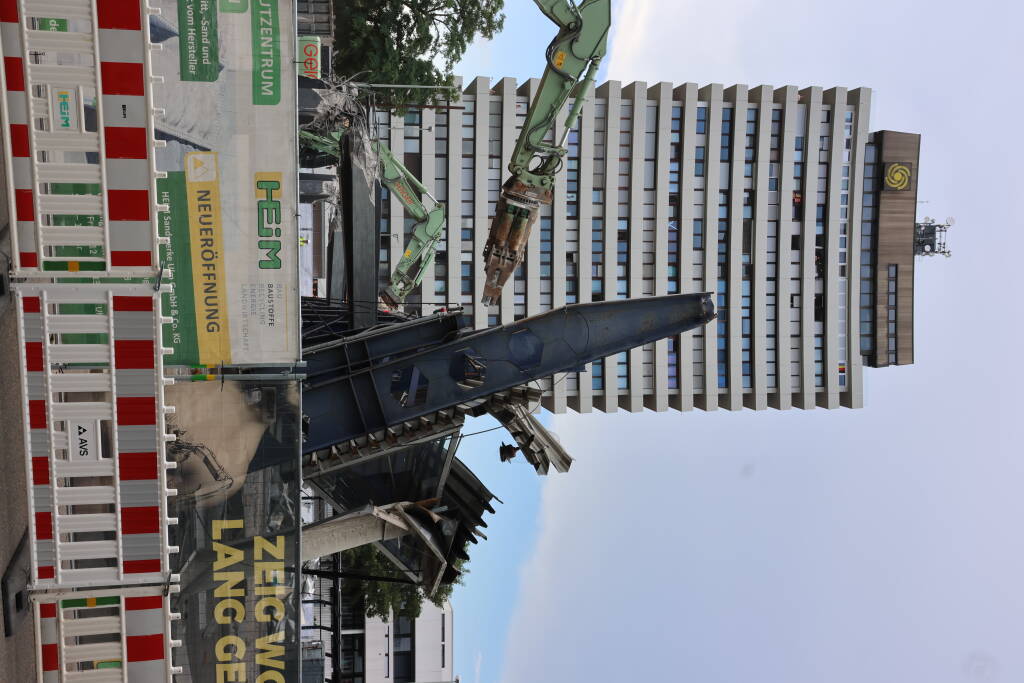
Now the roof is down. Nice!
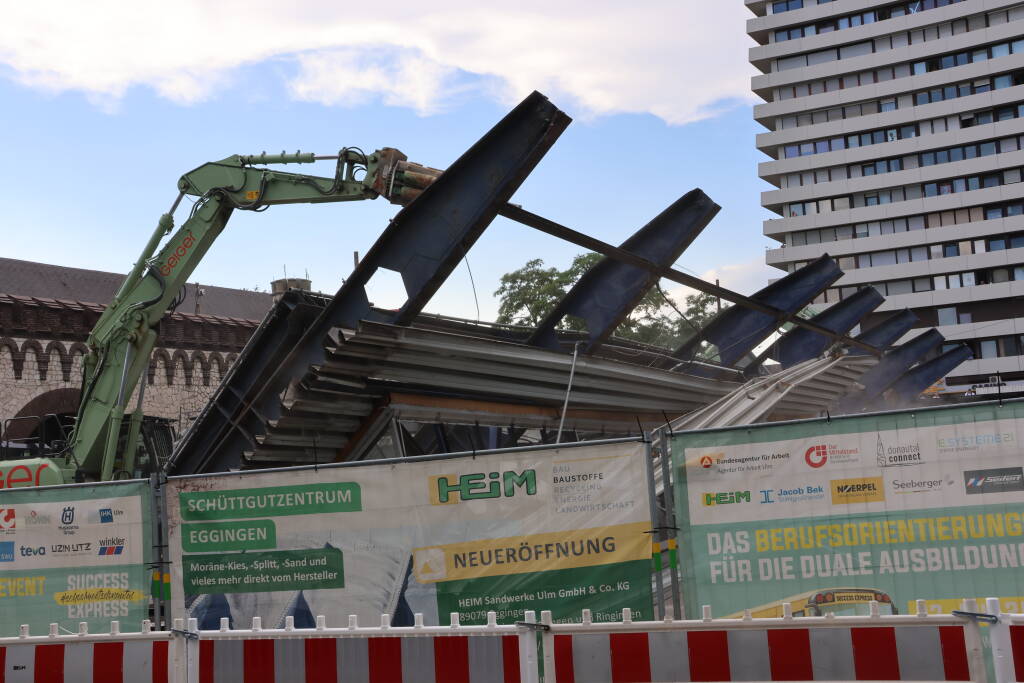
Topple it properly.
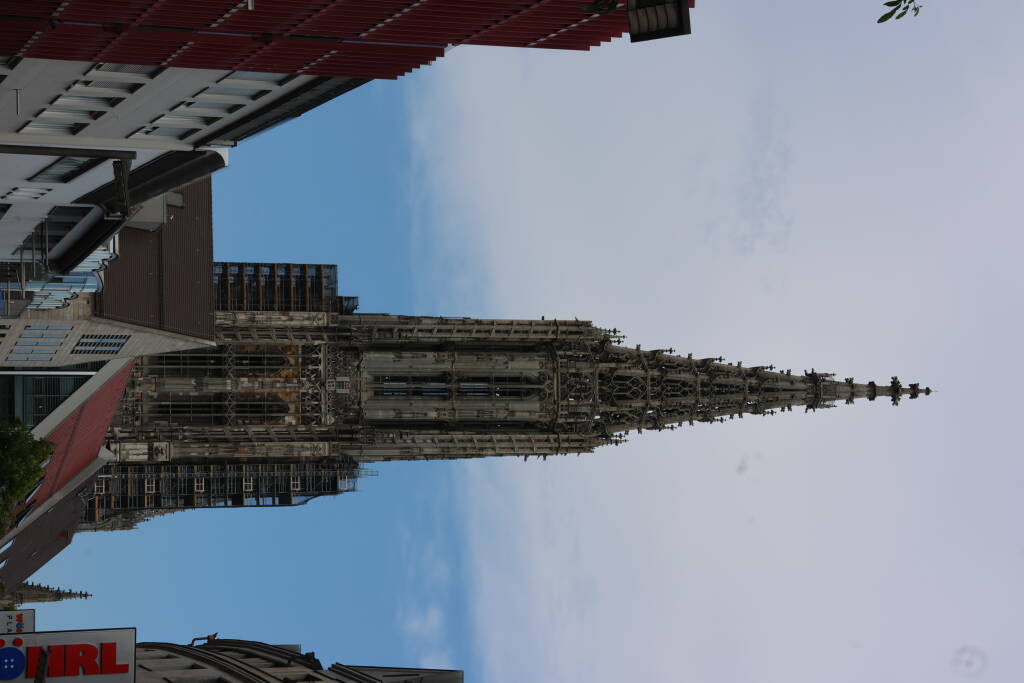
The cathedral is not in deconstruction.
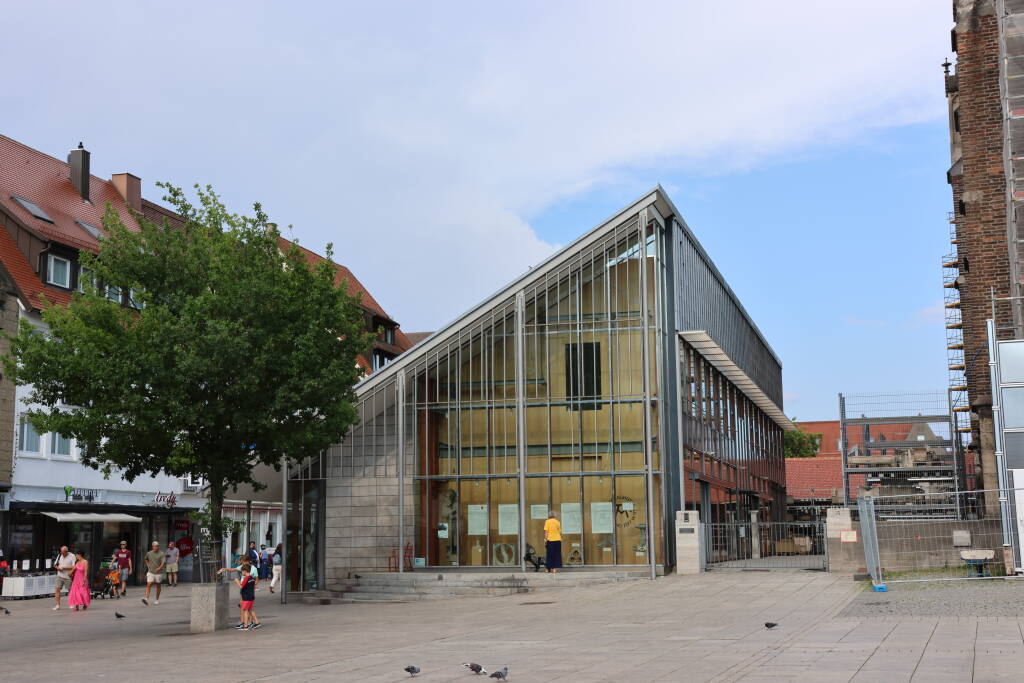
Not only that, these buildings belong to the stonemasons.
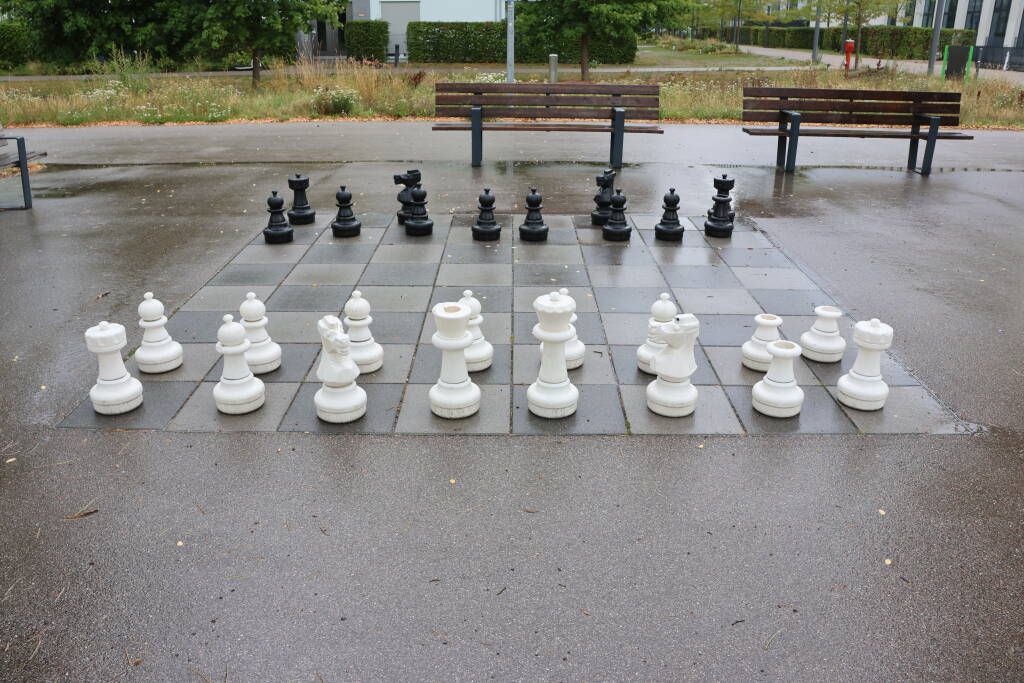
München. Chess.
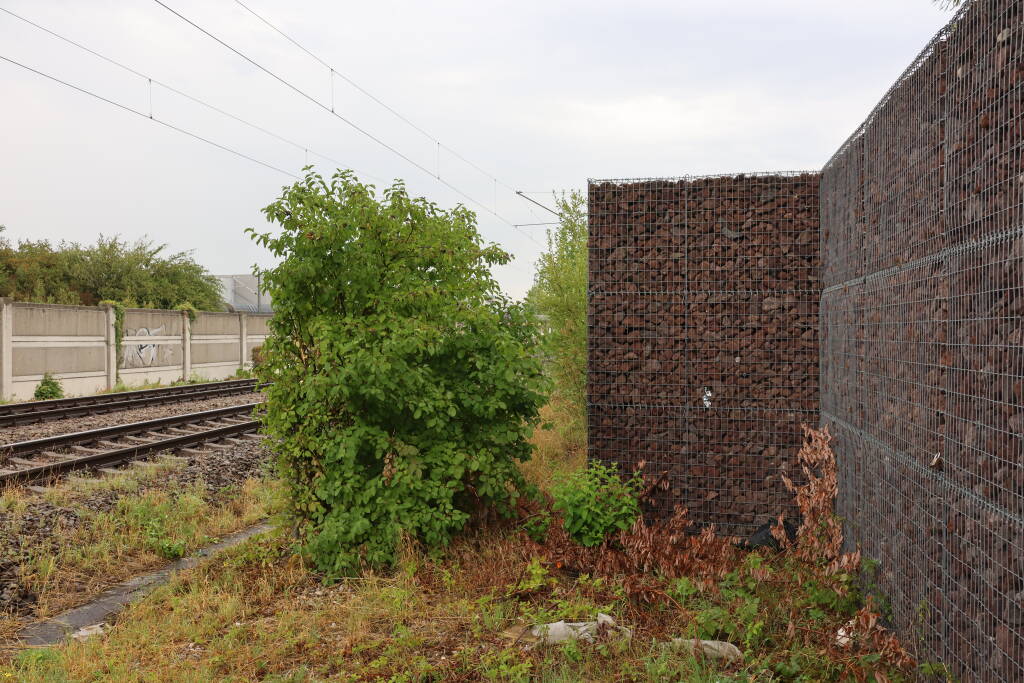
München, Oberwiesenfeld. Here a branch was branching off the main track.
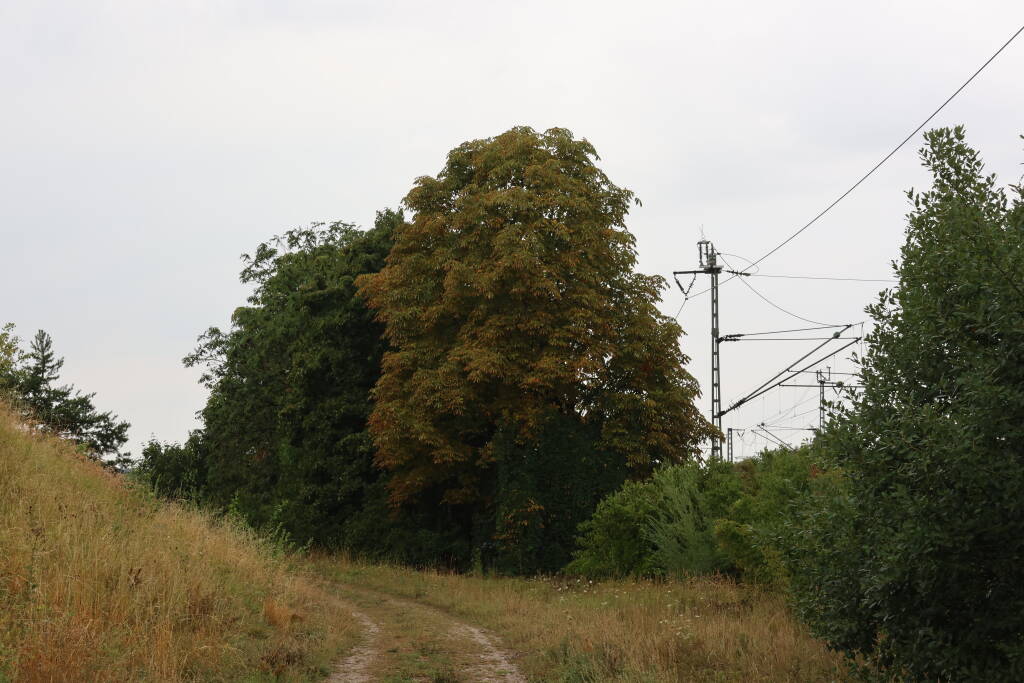
There is only a footpath here, instead of a branch.
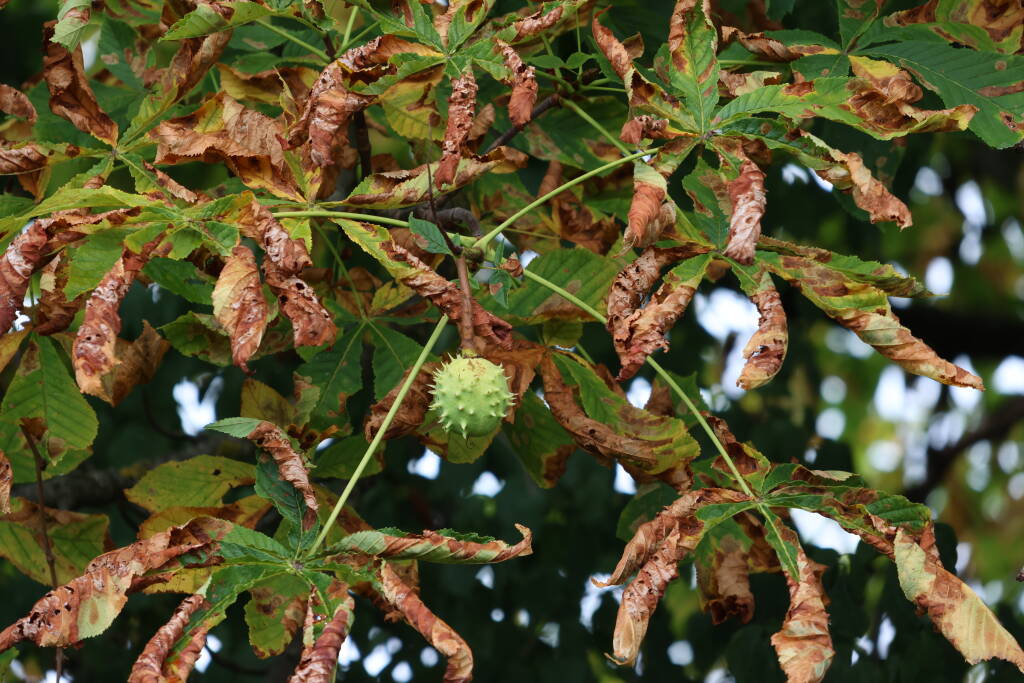
Horse chestnuts are almost ripe.
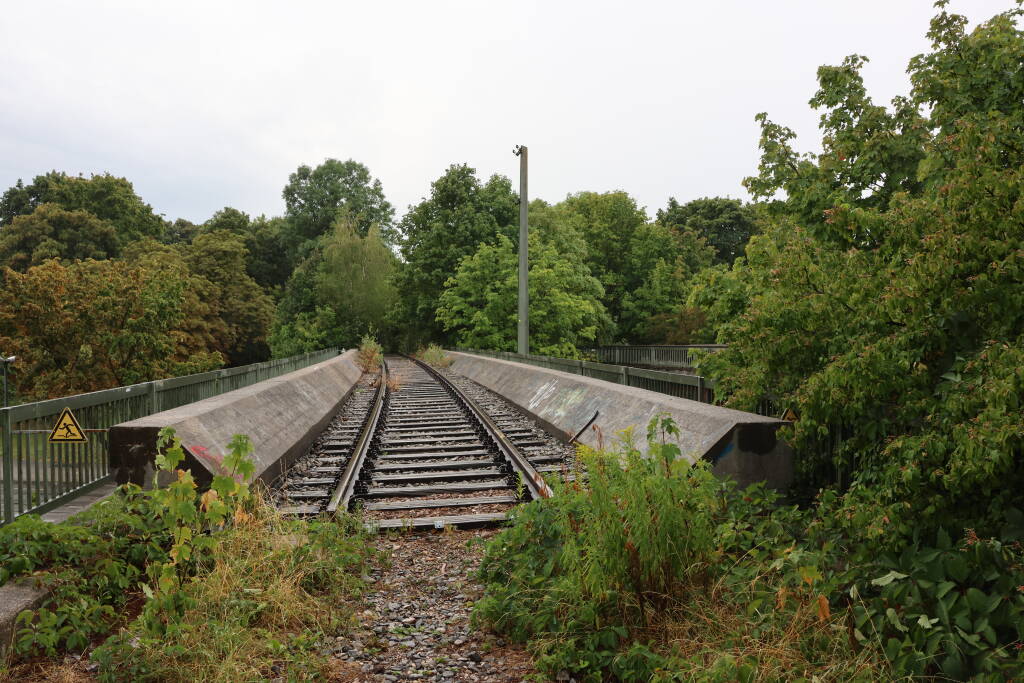
The path, after traversing some bushes, continues over a bridge. Here the rails still exist and on the right, there is another bridge.
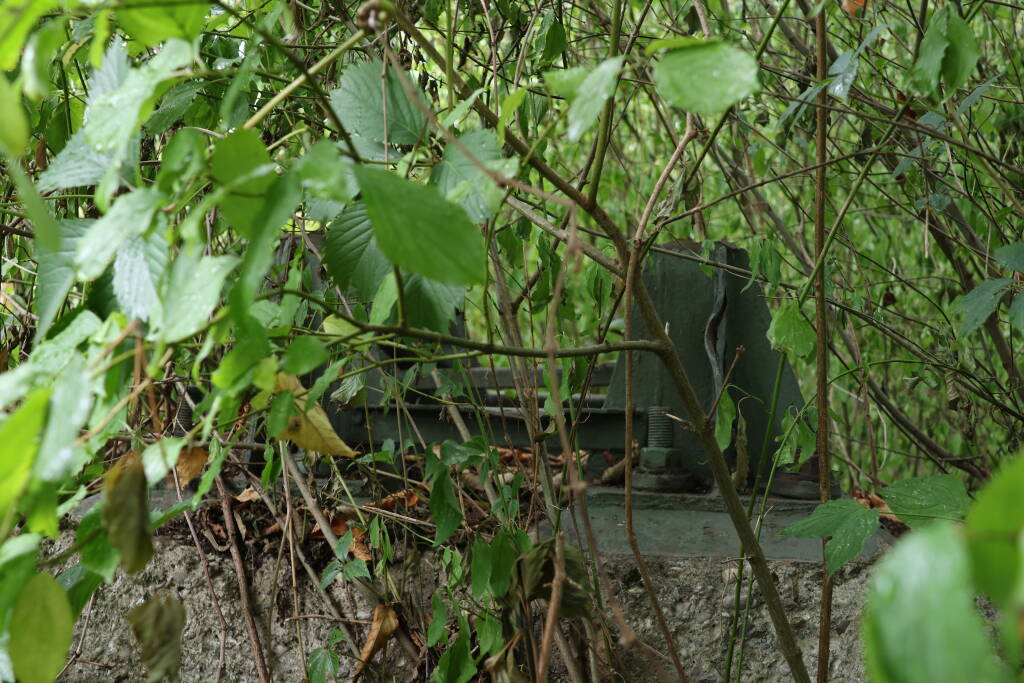
In the bush, there is also a catenary support foot.
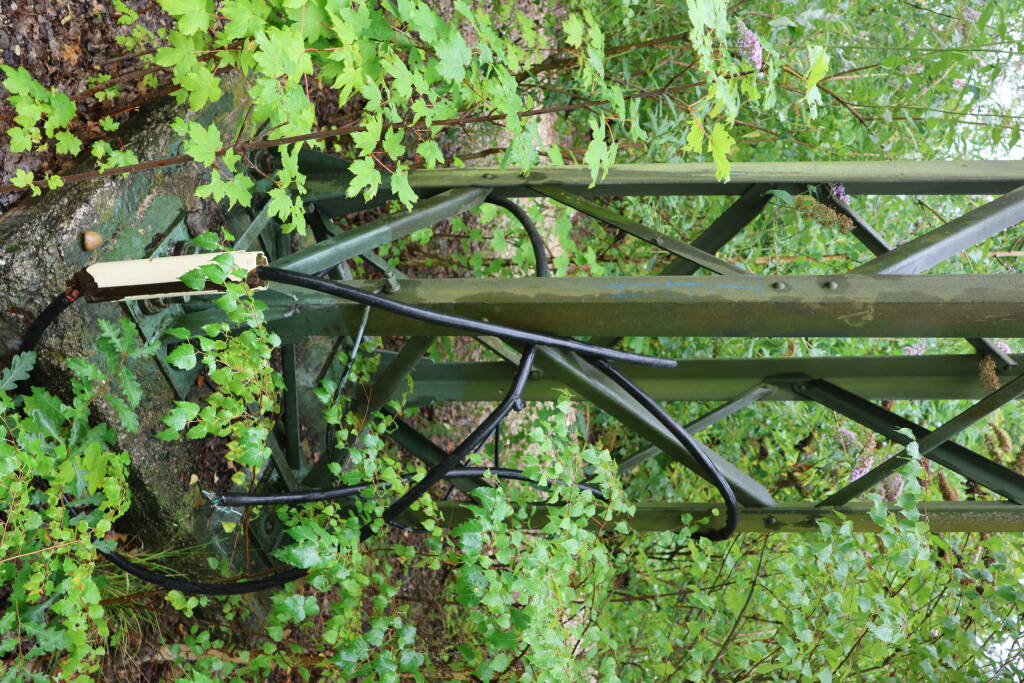
Between the bridges, there are also some old cables.
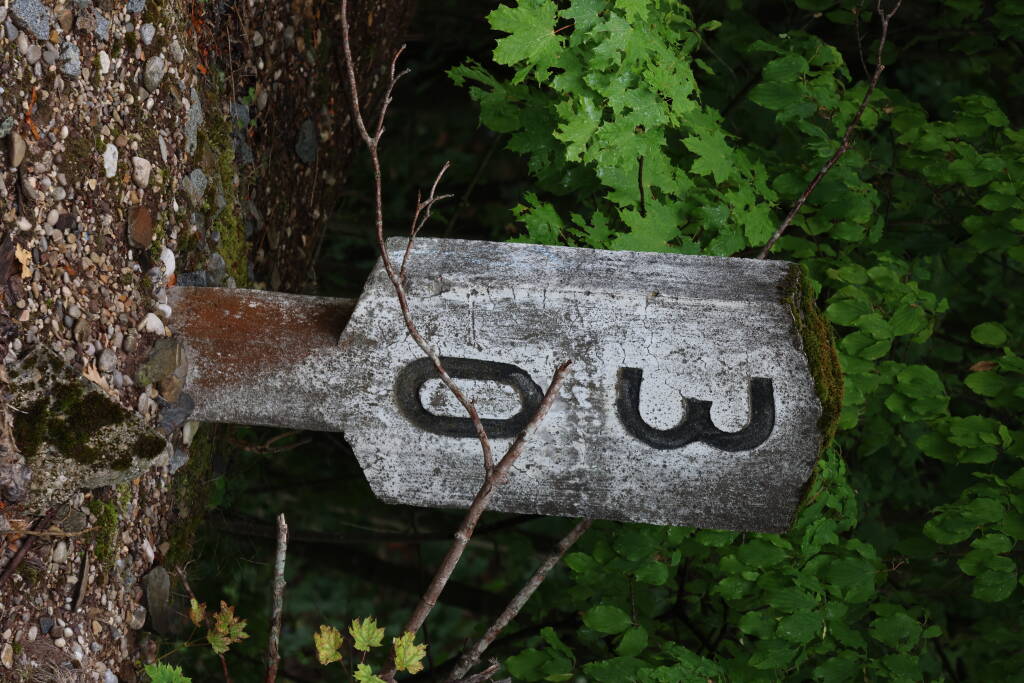
Concrete hectometer sign.
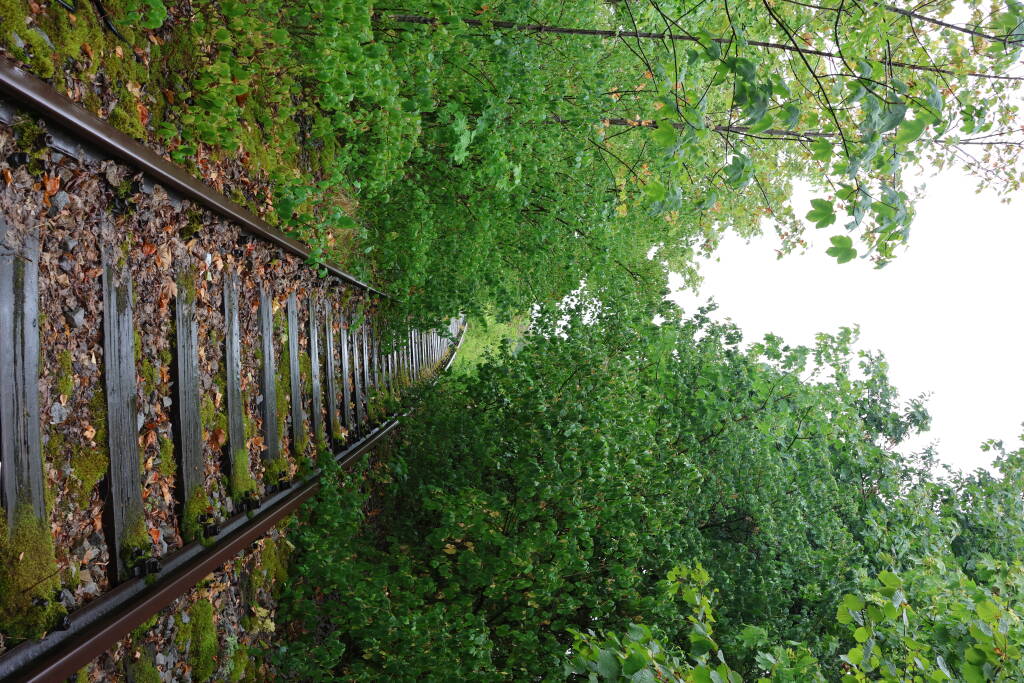
The western branch heading to Moosach is still partially there. Nobody was building here new homes and offices.
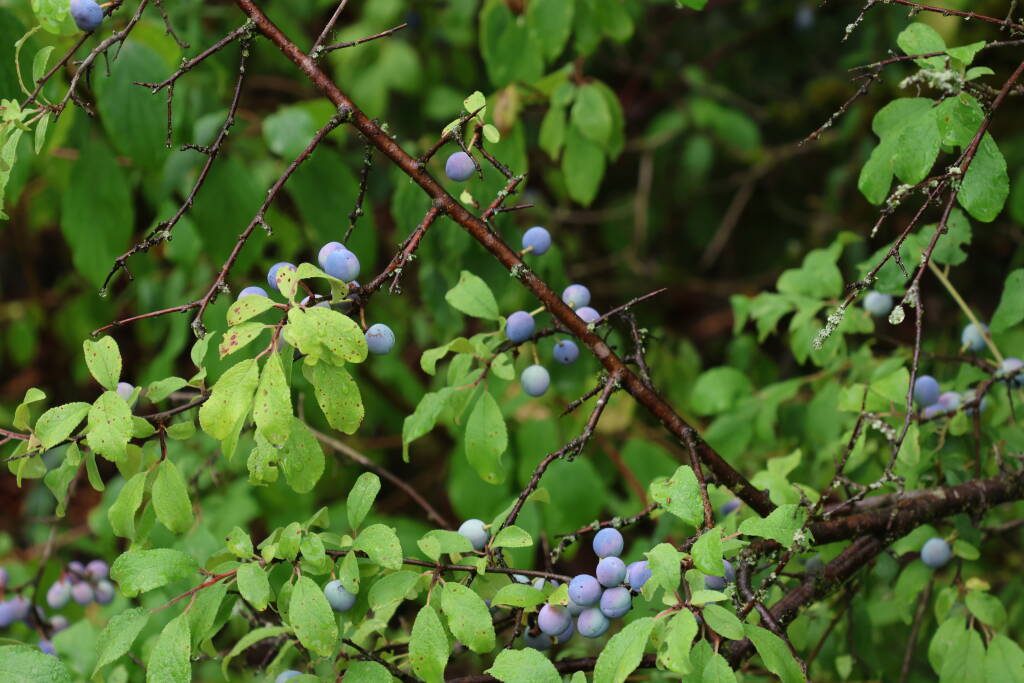
Blackthorn, unripe. But there was a ripe one just nearby.
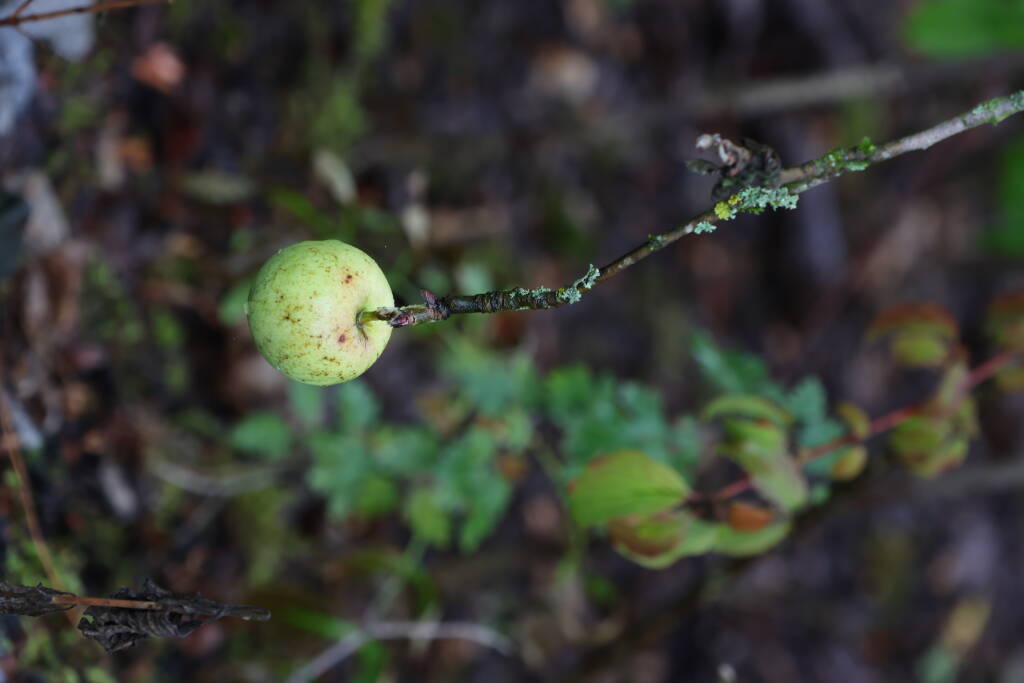
The only apple on a feral apple tree.
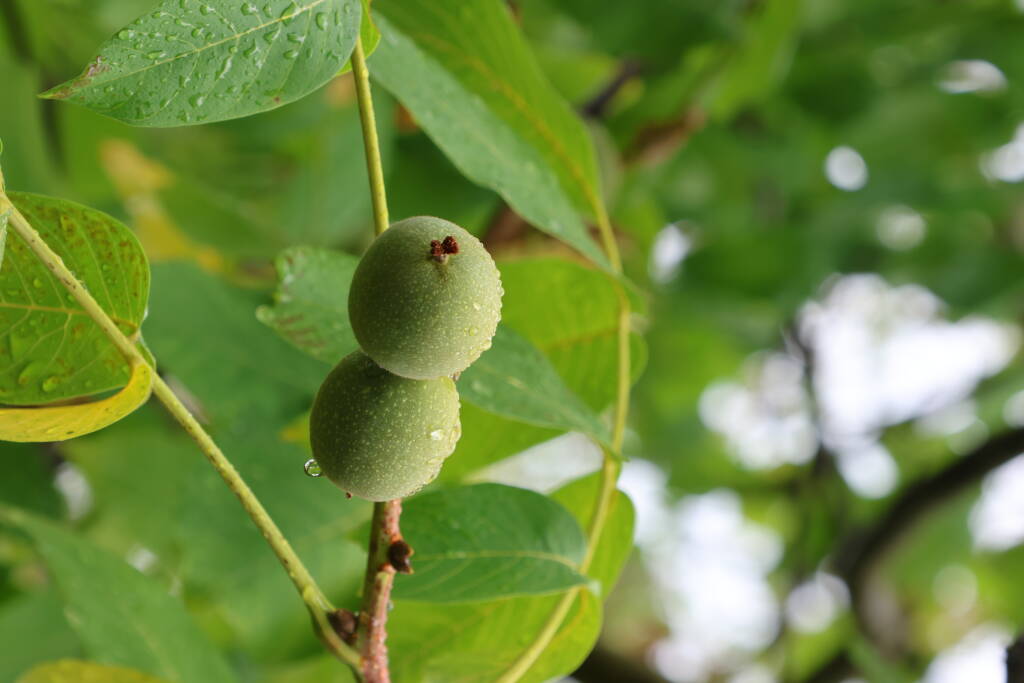
Ripening walnuts. Inbetween rains.
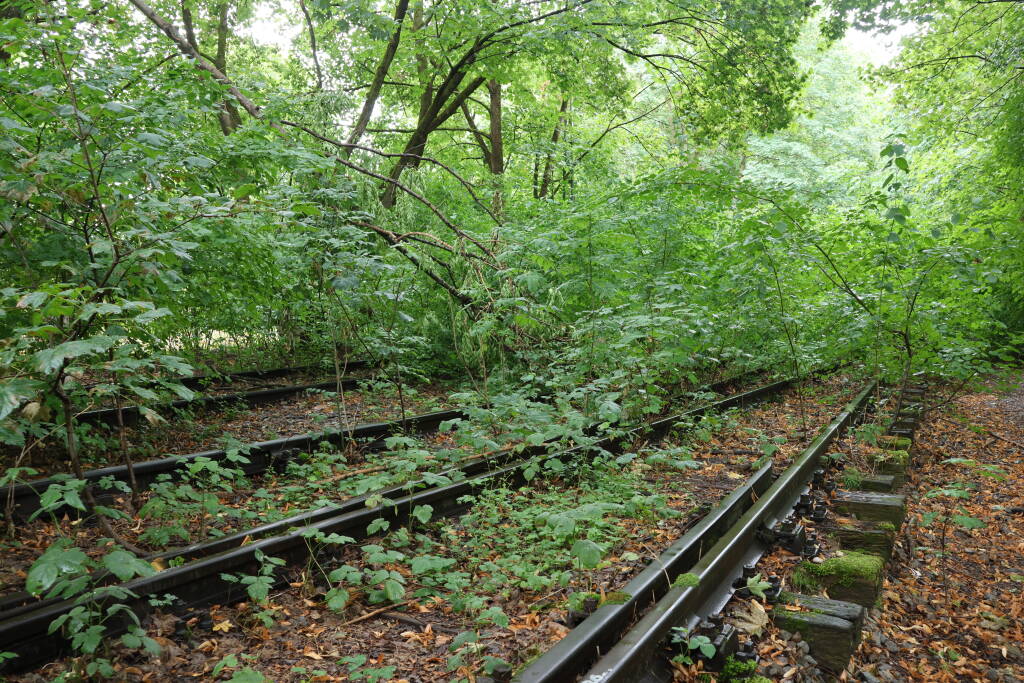
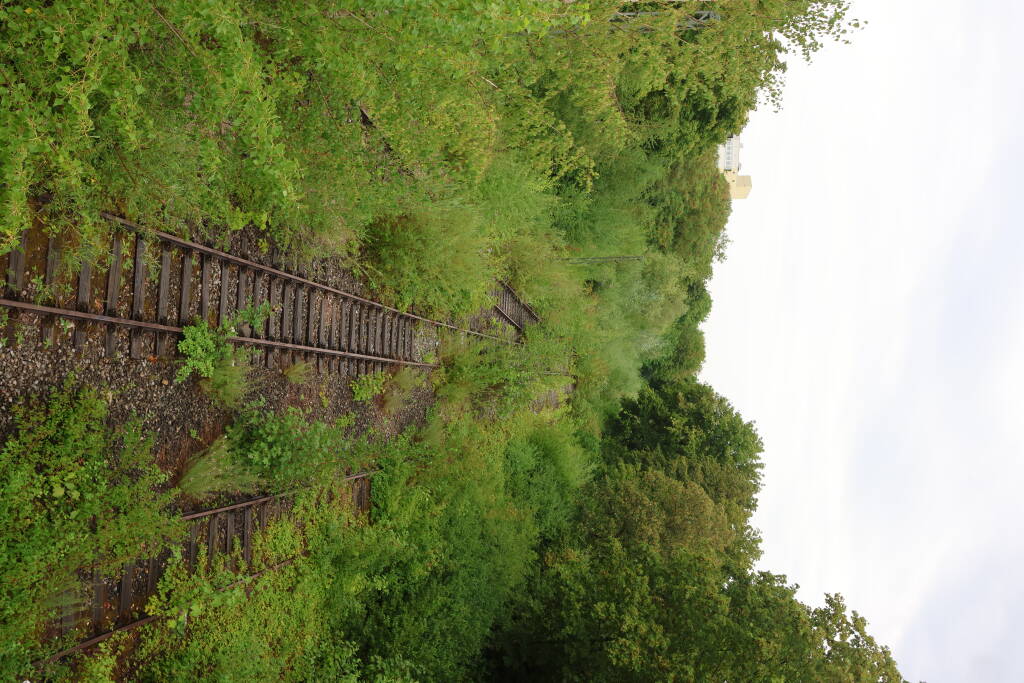
Northern switches of München Olympiastadion station
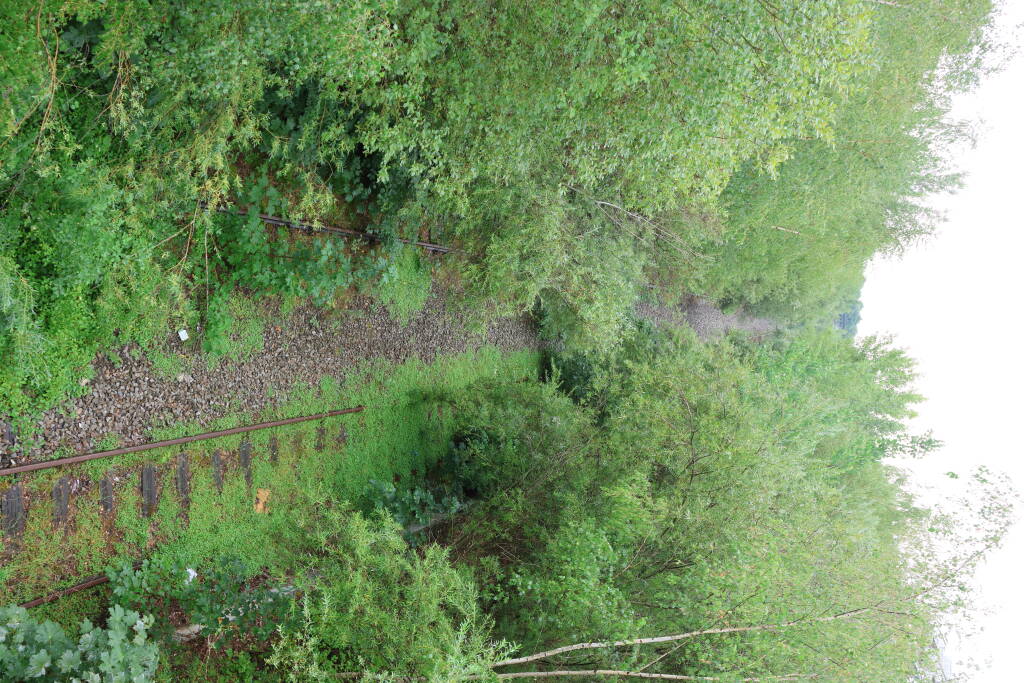
All tracks and platforms are still here.
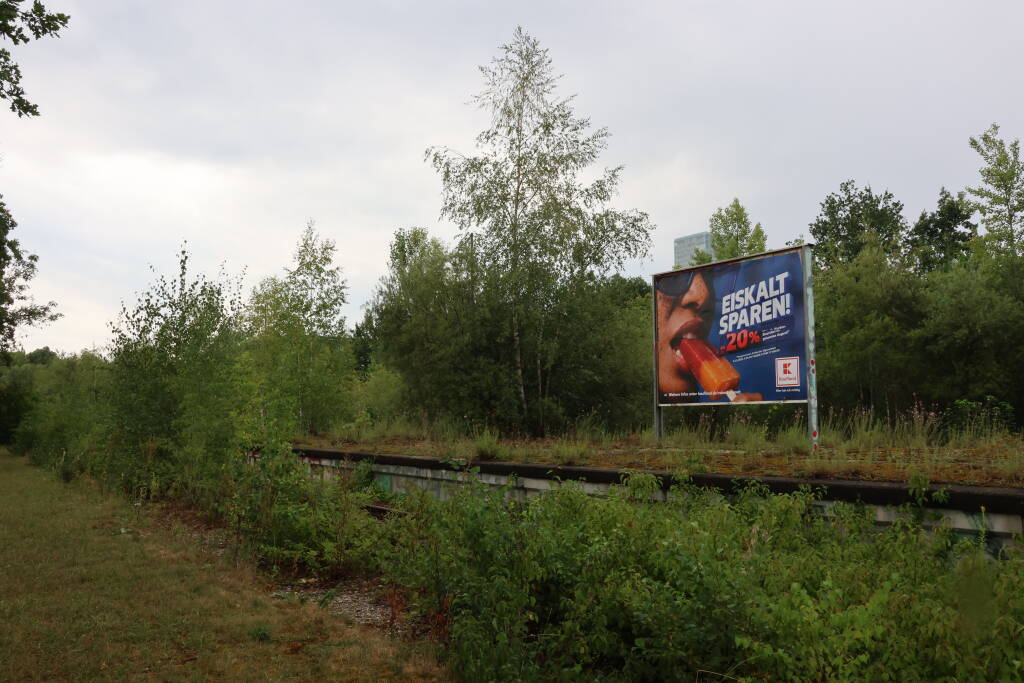
This place on the platform is visible from the highway, and therefore a billboard stands here. It is not historical but the whole station is a heritage site together with the rest of the olympic village.
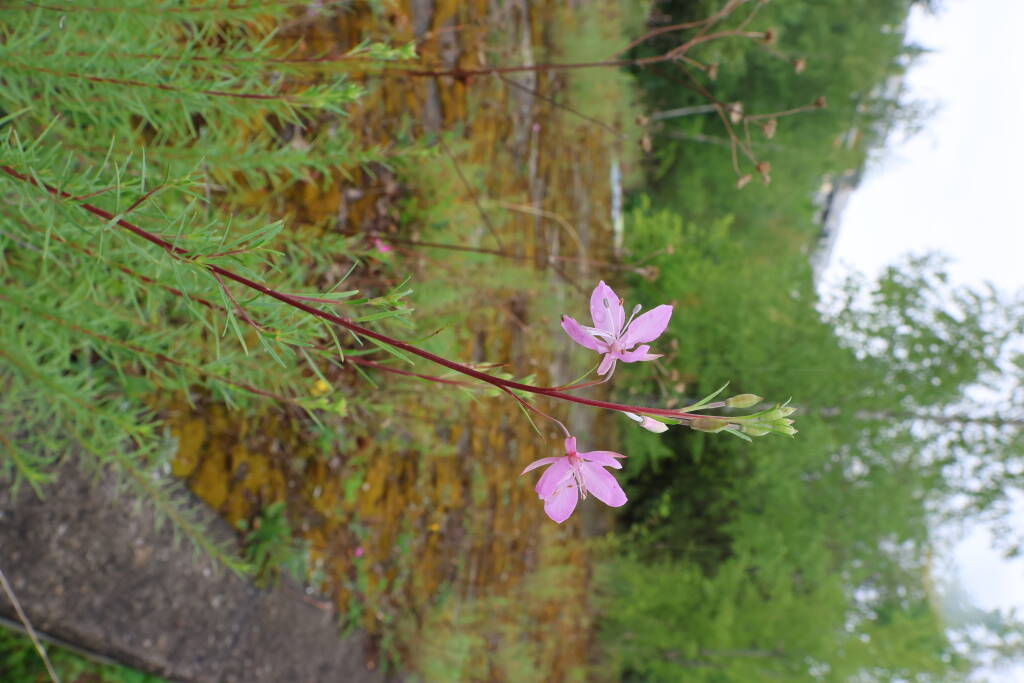
Plantnet claims that this is a fireweed.
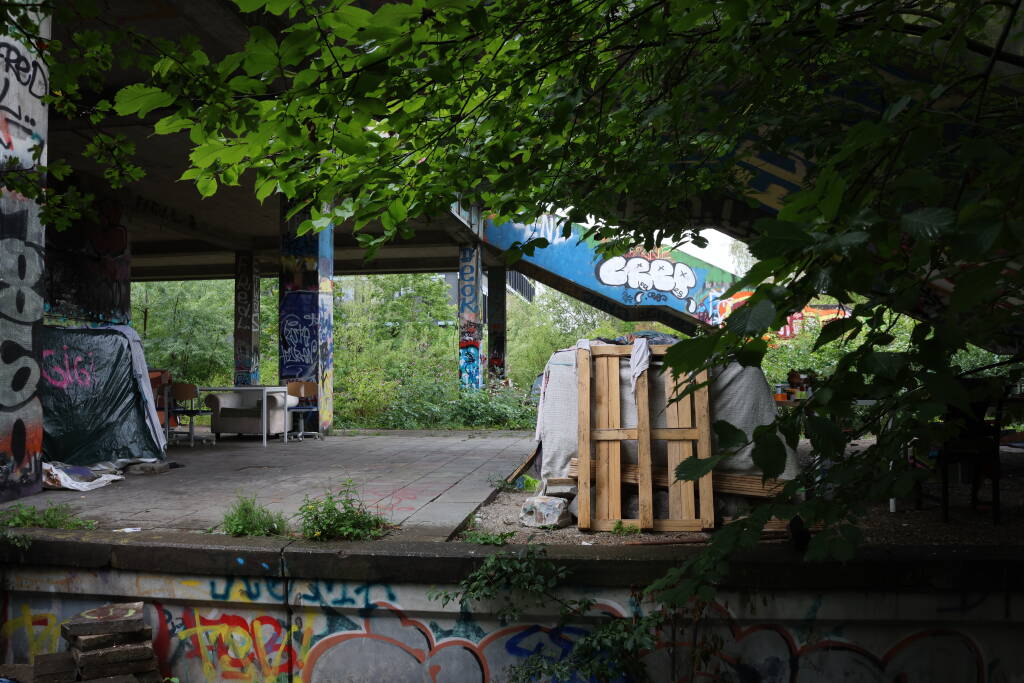
Ad: An apartment for rent, maisonette, three rooms, 1000 m². Ideal for lovers of both nature and industrial environment.
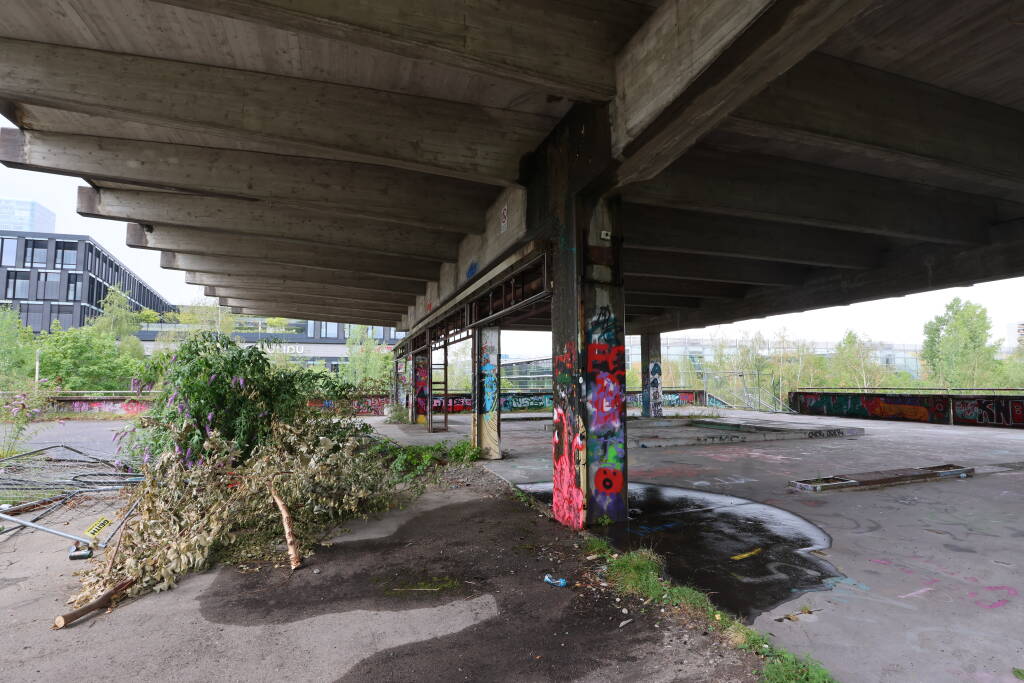
The upper side is not inhabited but it's fenced off with a warning about falling through.
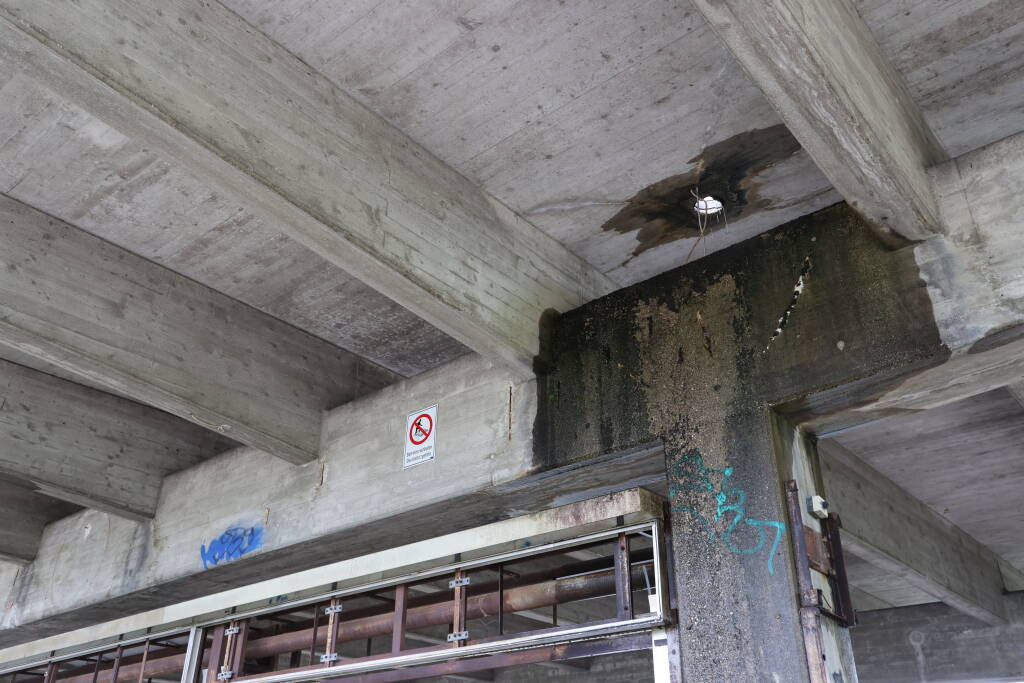
The roof is not in its best shape. Is a gutter pipe missing here?
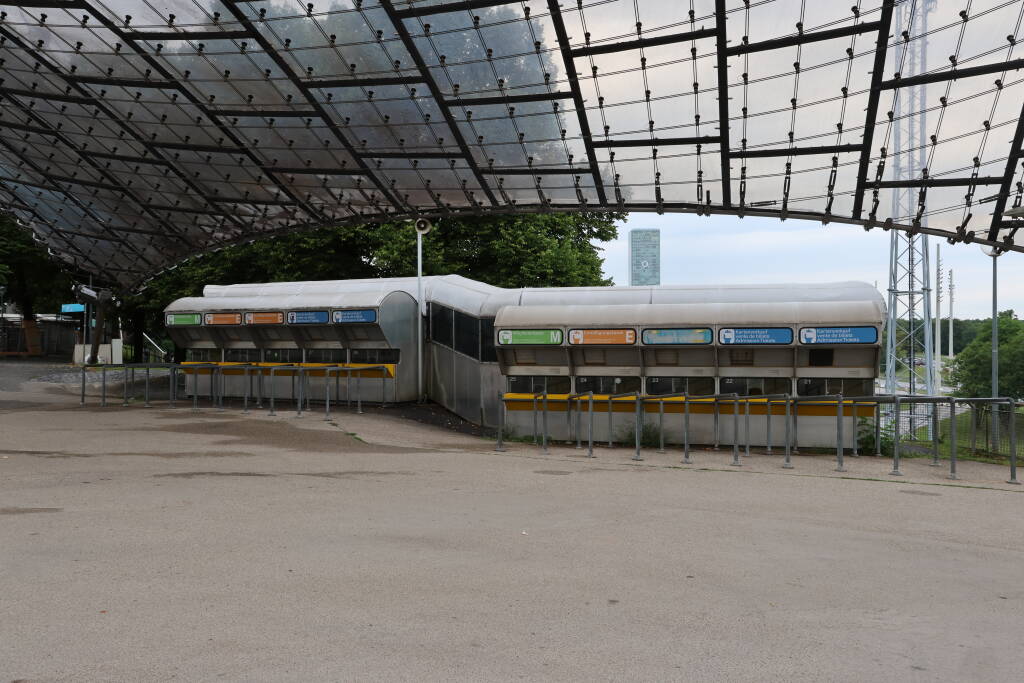
Ticket kiosks in front of the stadium. It must have been really busy here.
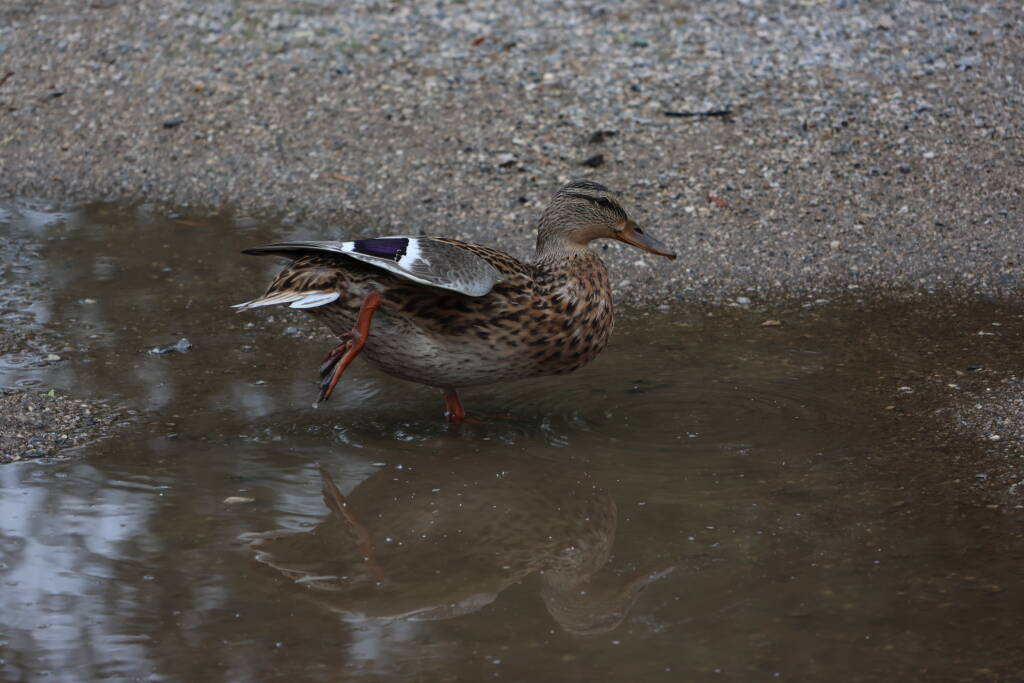
Duck in an olympic puddle.
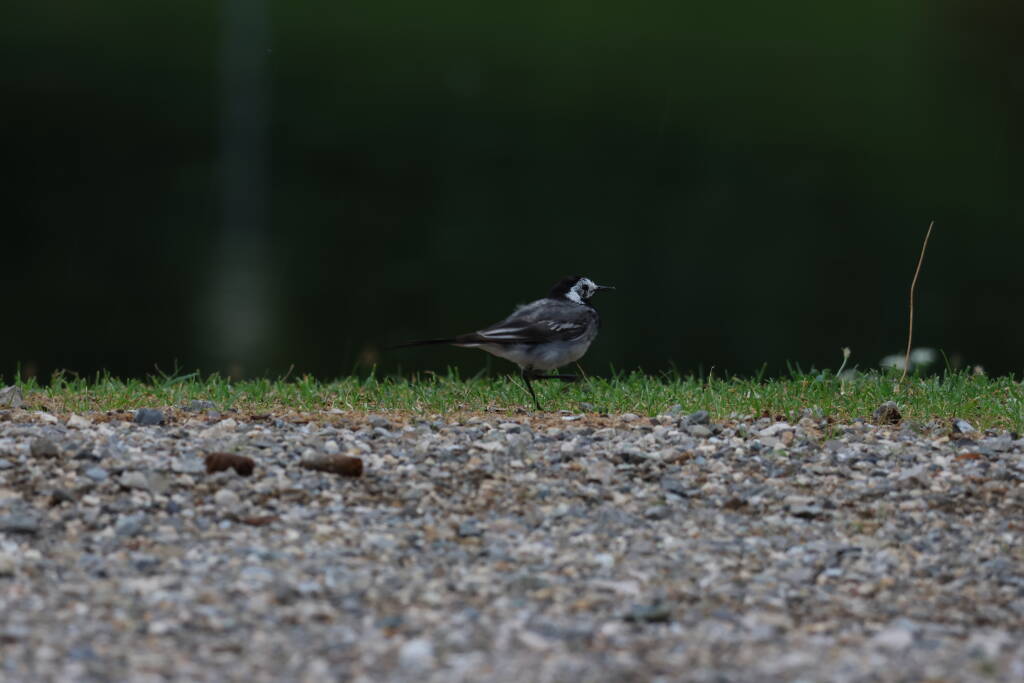
White wagtail on an olympic lawn.
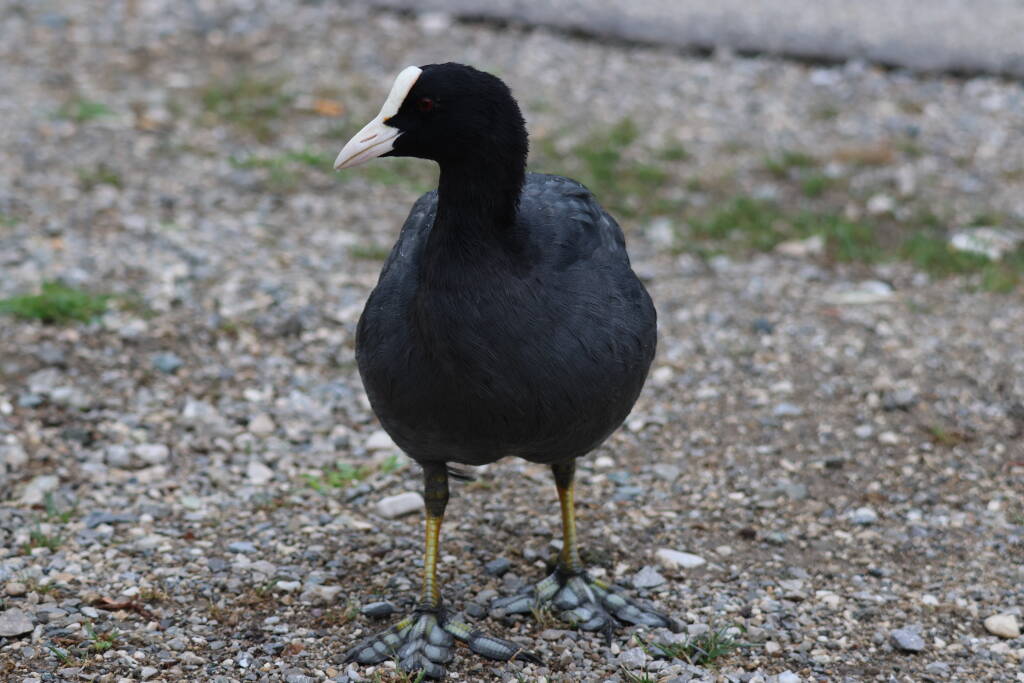
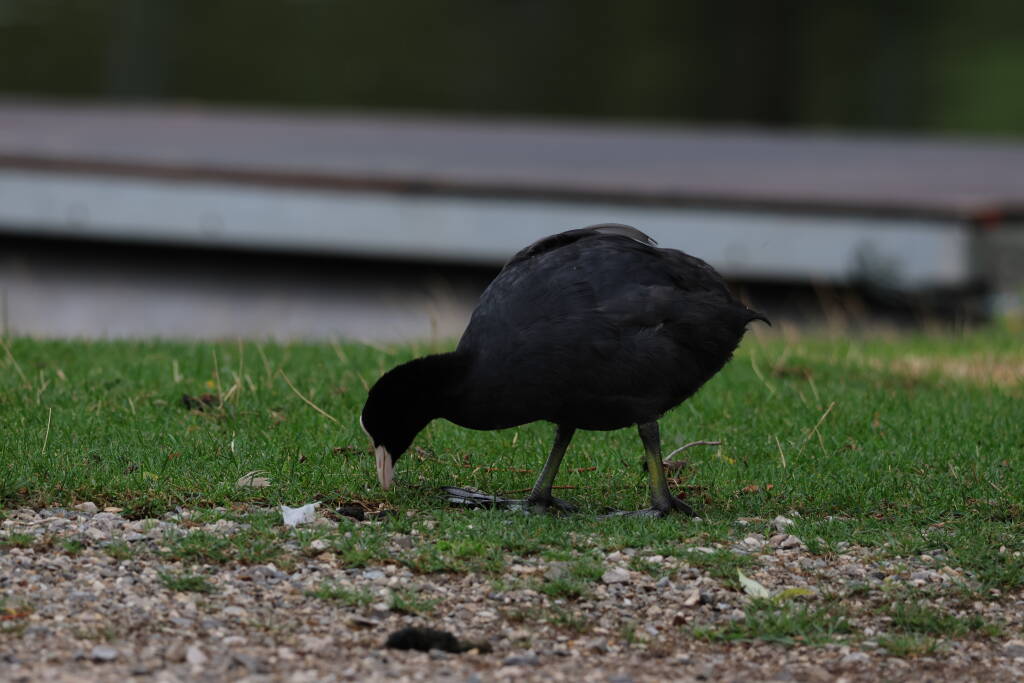
Eurasian coot on olympic gravel.
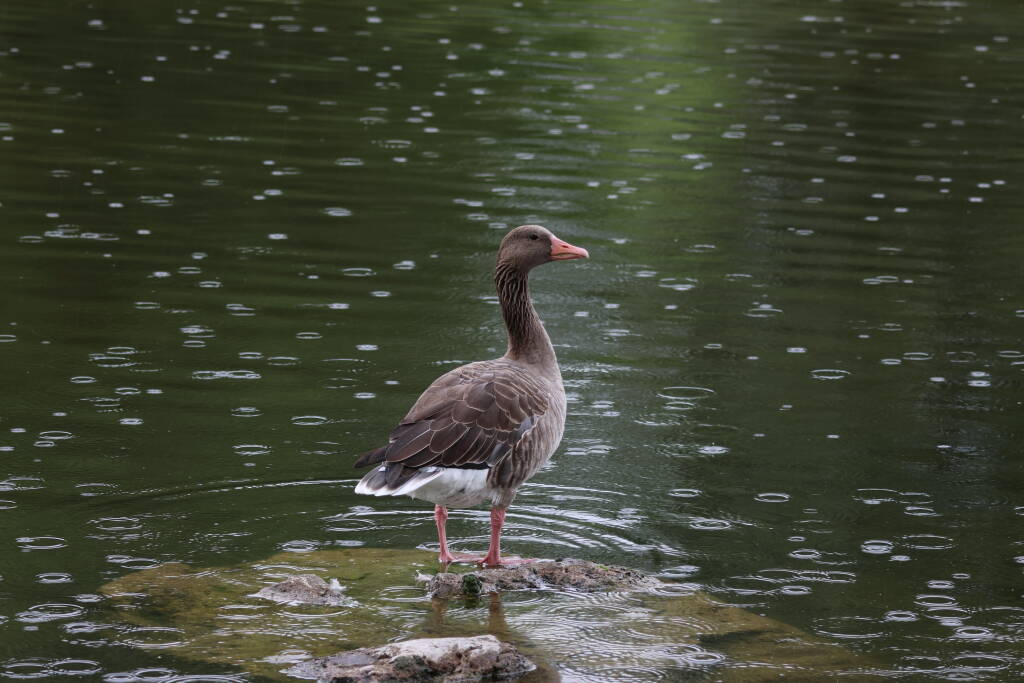
Greylag goose on an olympic pond.
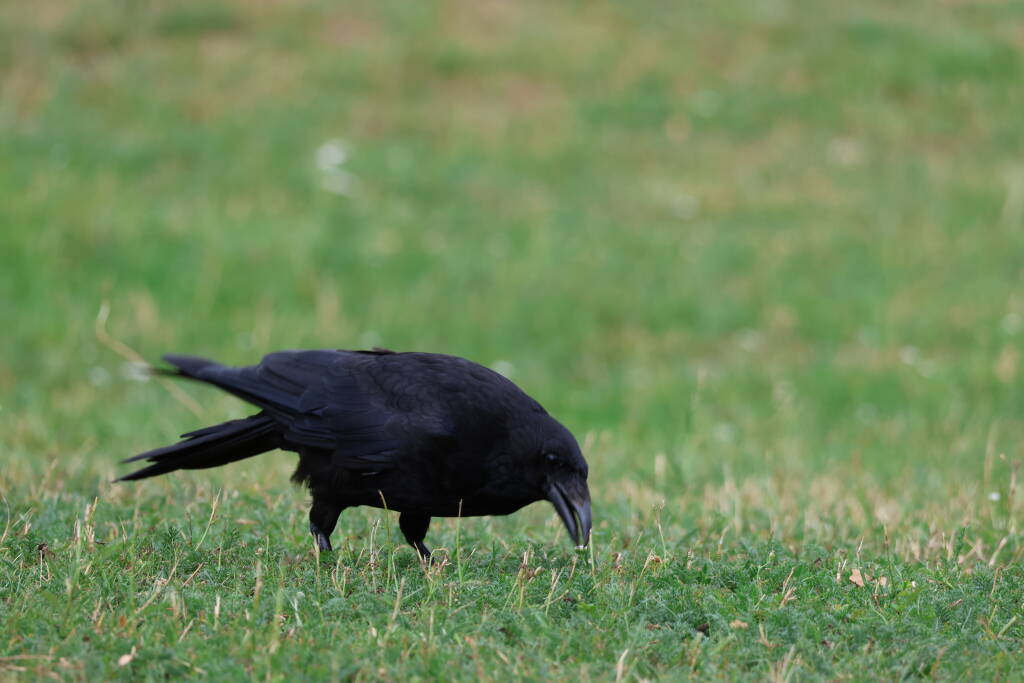
Is this a rook, just with a darker beak?
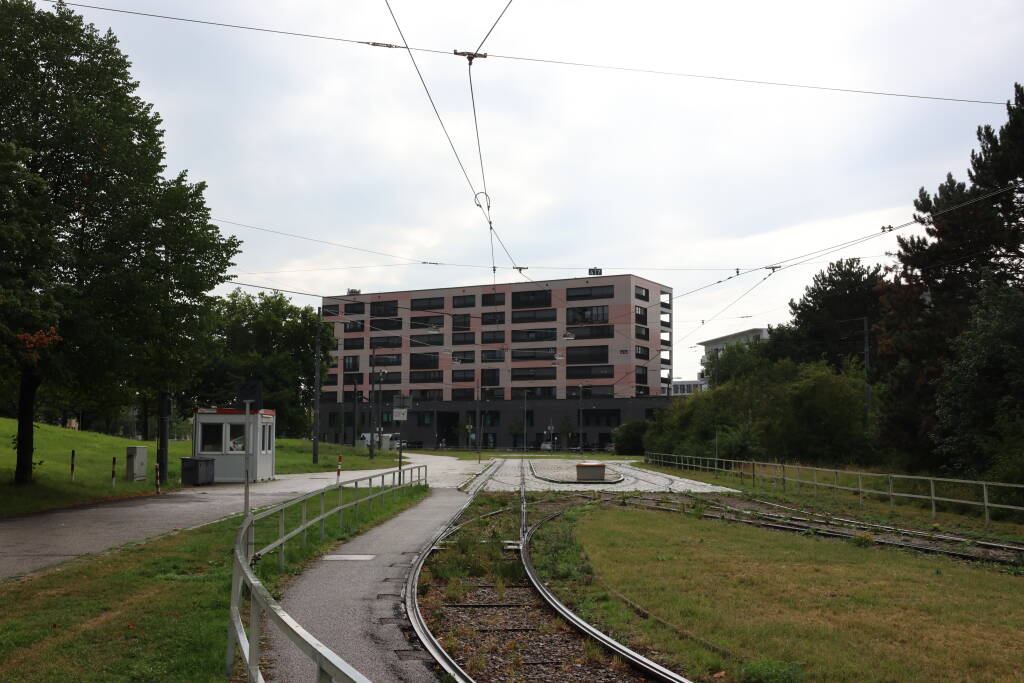
Olympic tram terminus, maintained but empty.
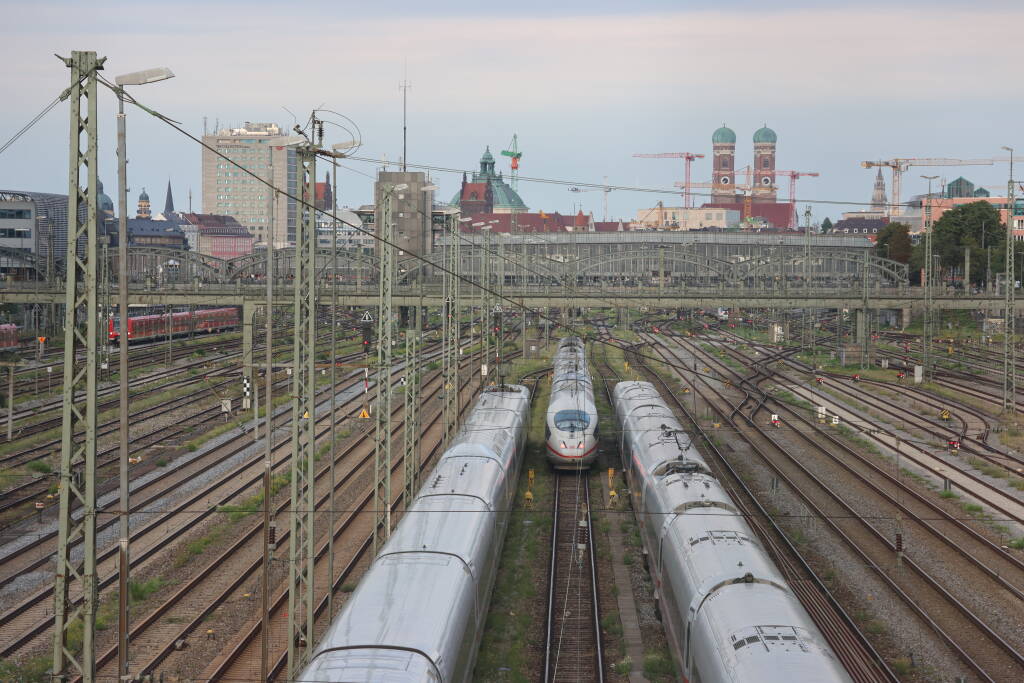
München HBf and stored ICE trains.
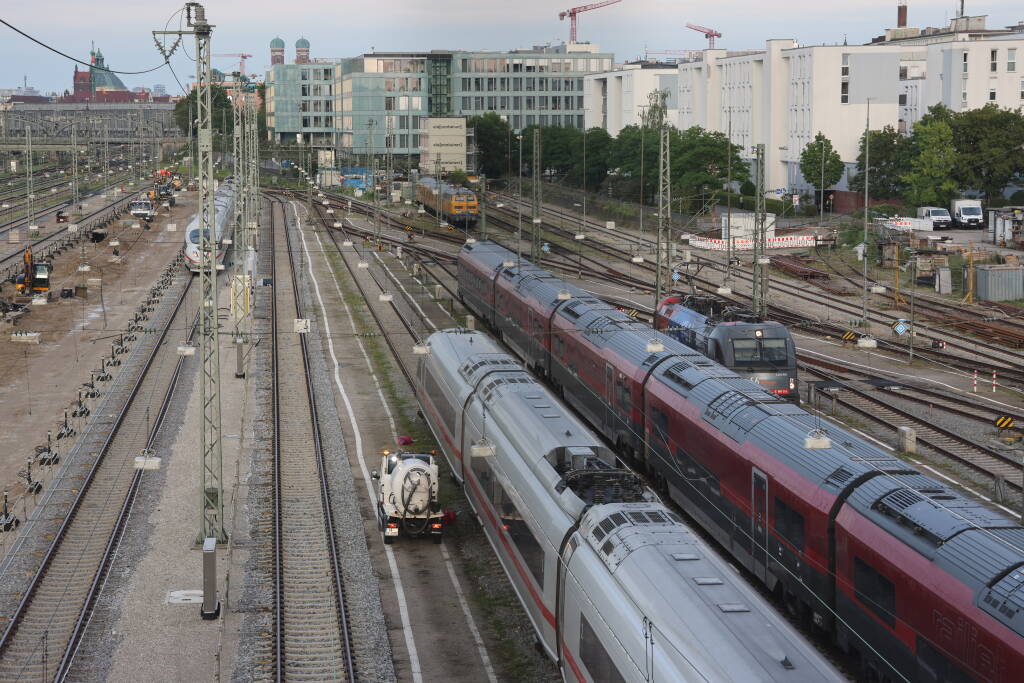
This ICE needs emptying of its lavatories.
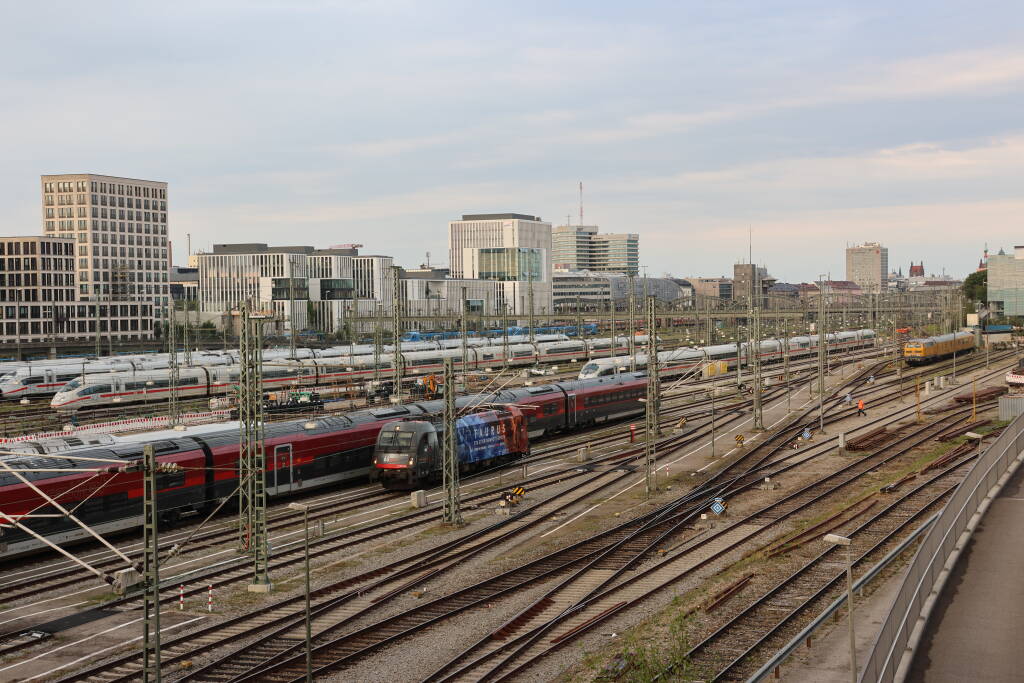
Trains which are expected to go somewhere but not right now, should not obstruct the platforms, and therefore they are here.
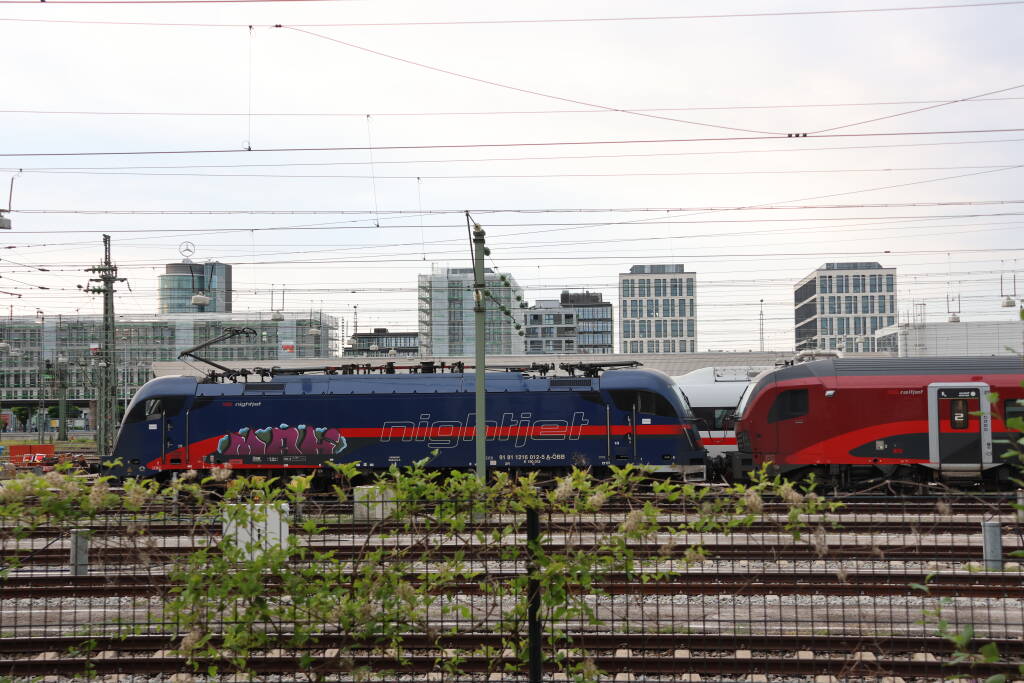
Railjet with a locomotive on the wrong side (cab wagon). Do they still lack certification or what?
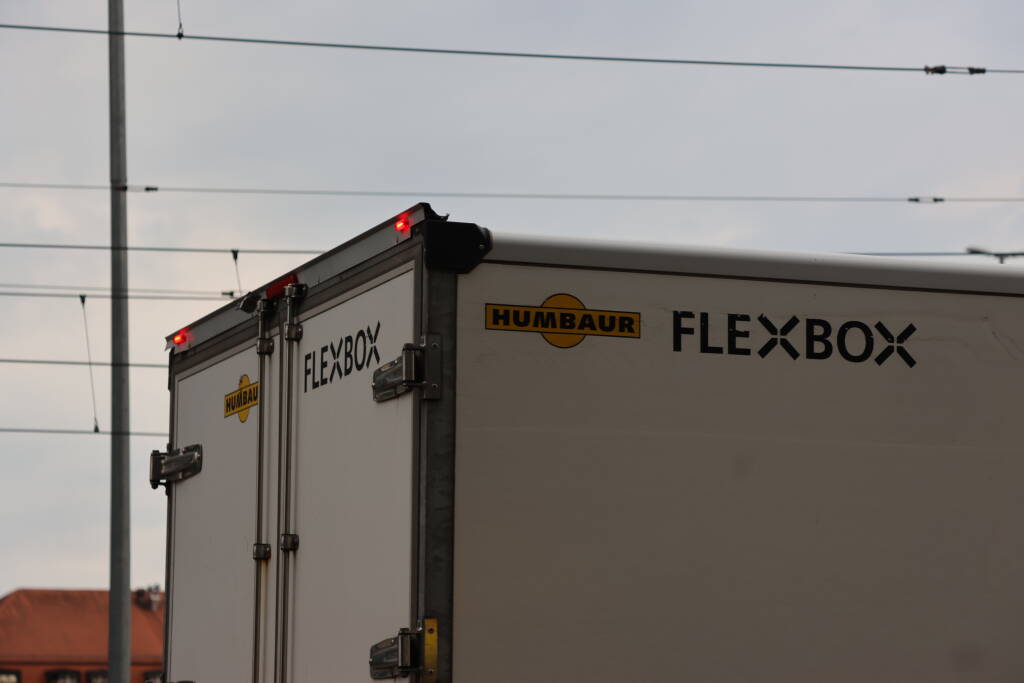
Flexbox is a very much overloaded term.
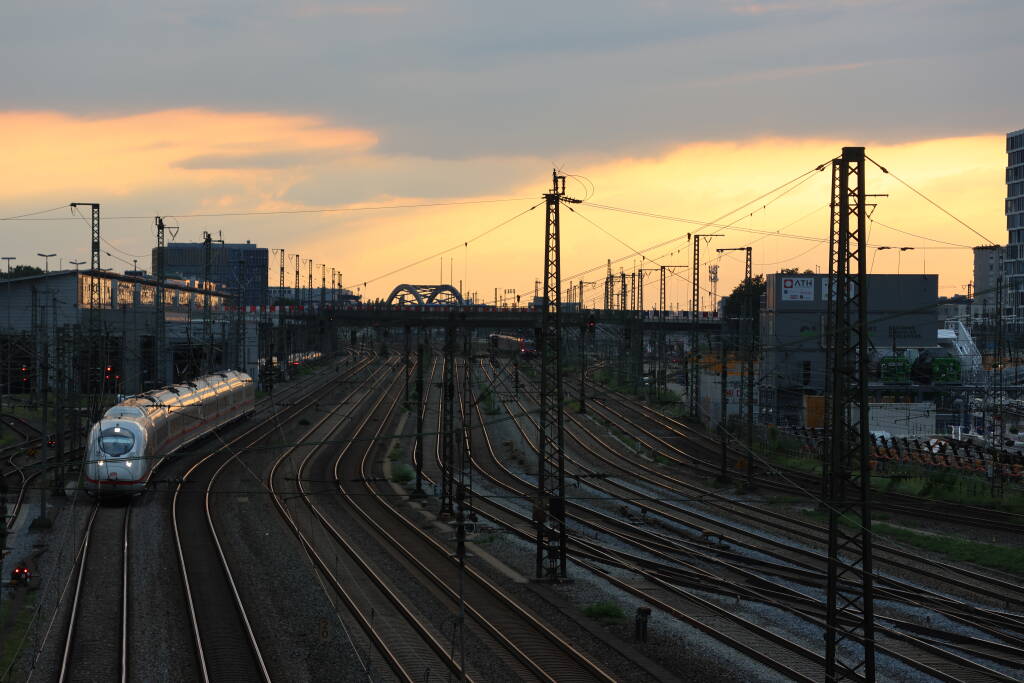
Arrival of an evening ICE to the station München HBf.
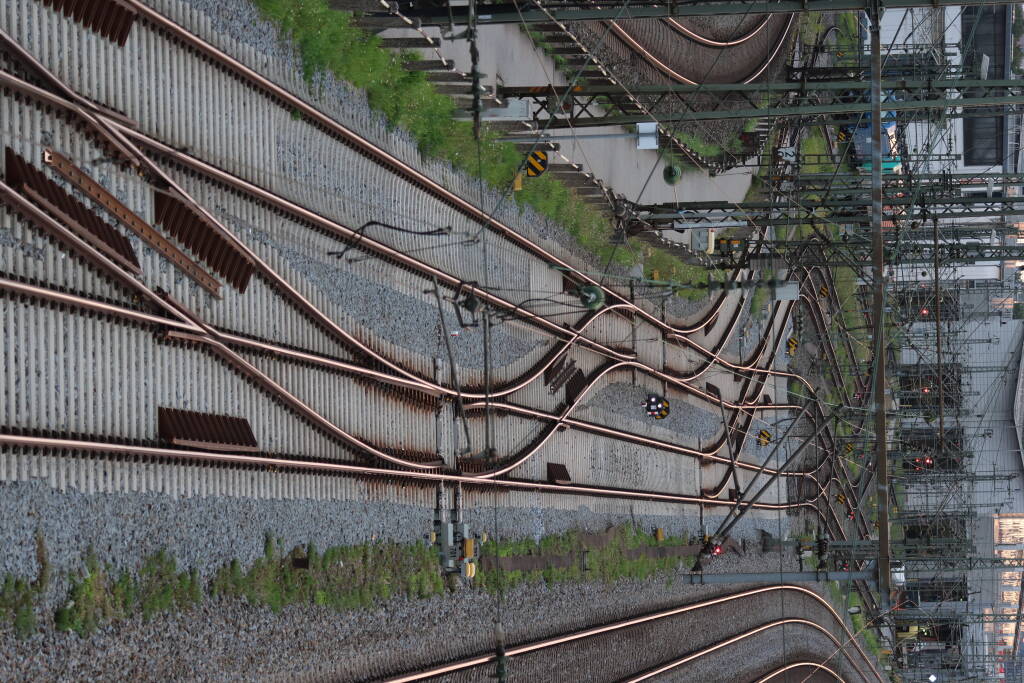
Shunting path prepared.
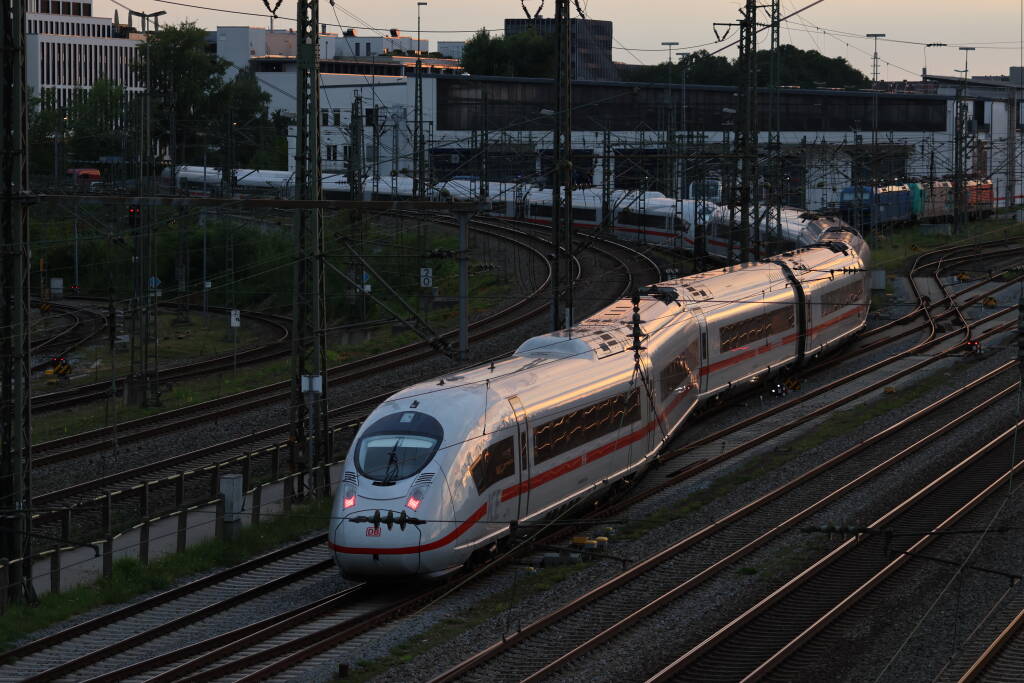
An ICE train is waving its way into the depot, as a shunting piece.
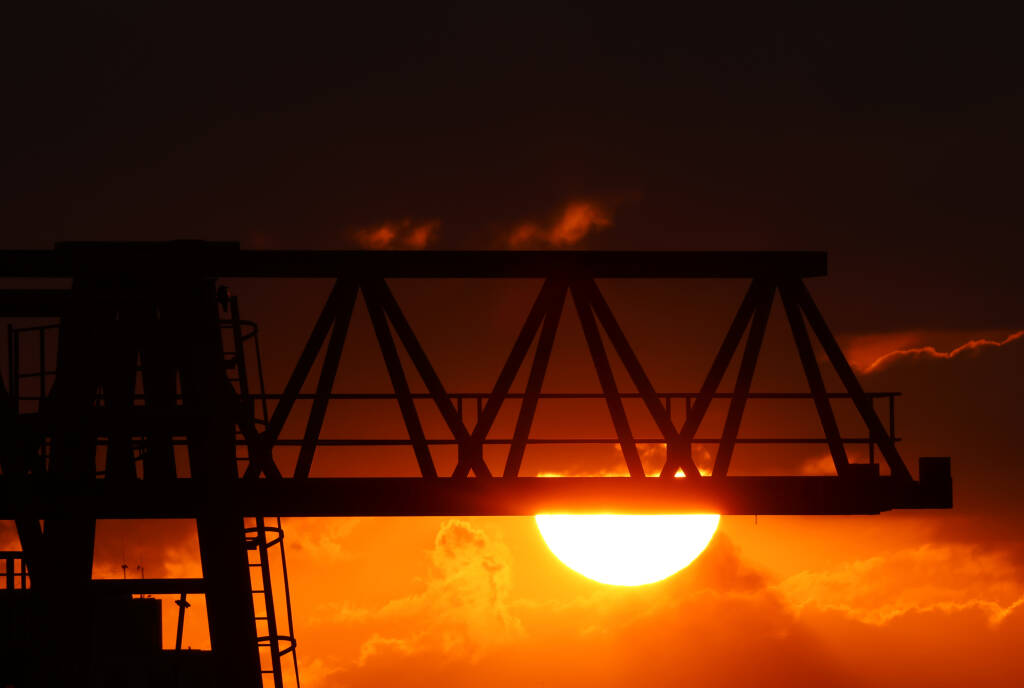
Setting sun behind a cloud and a gantry crane.
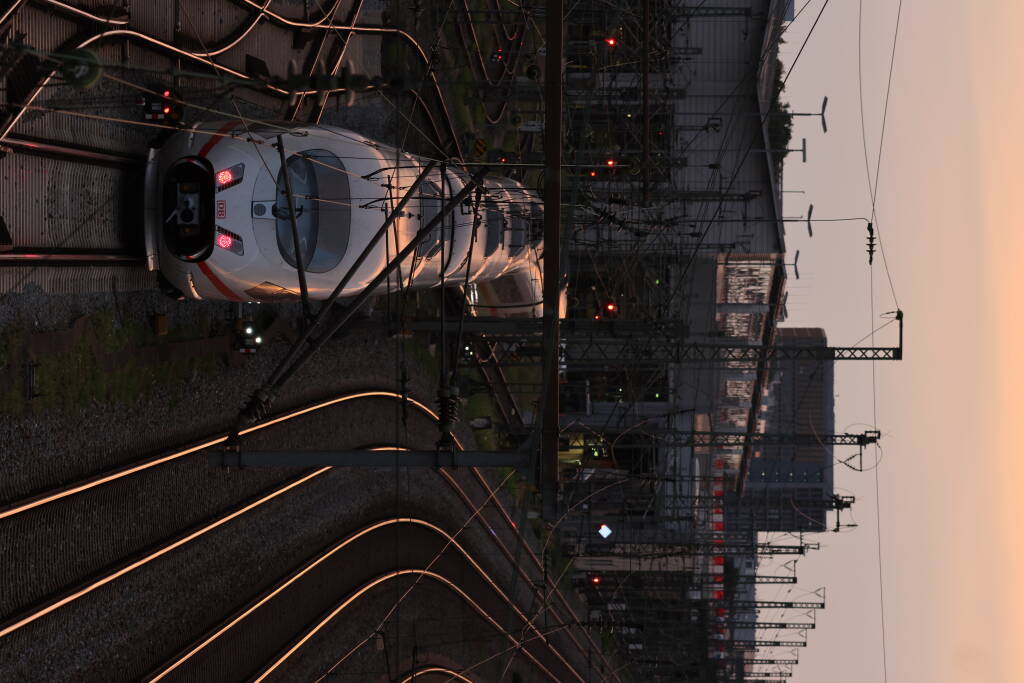
Another ICE train heading directly to bed.
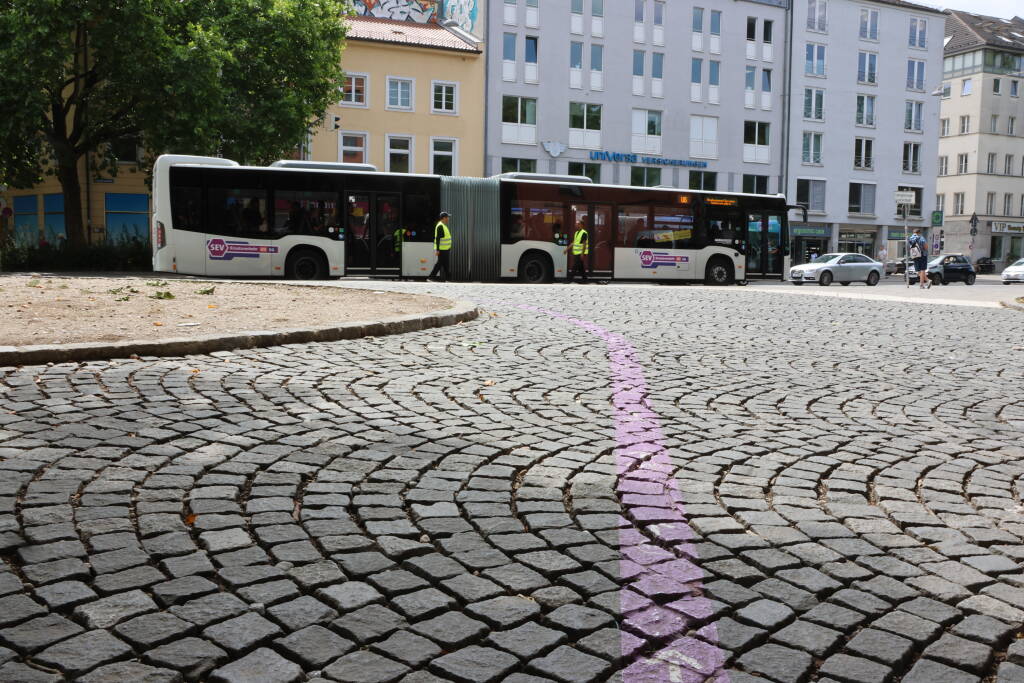
Last day, heading south … using a substitute bus transport for the underground.
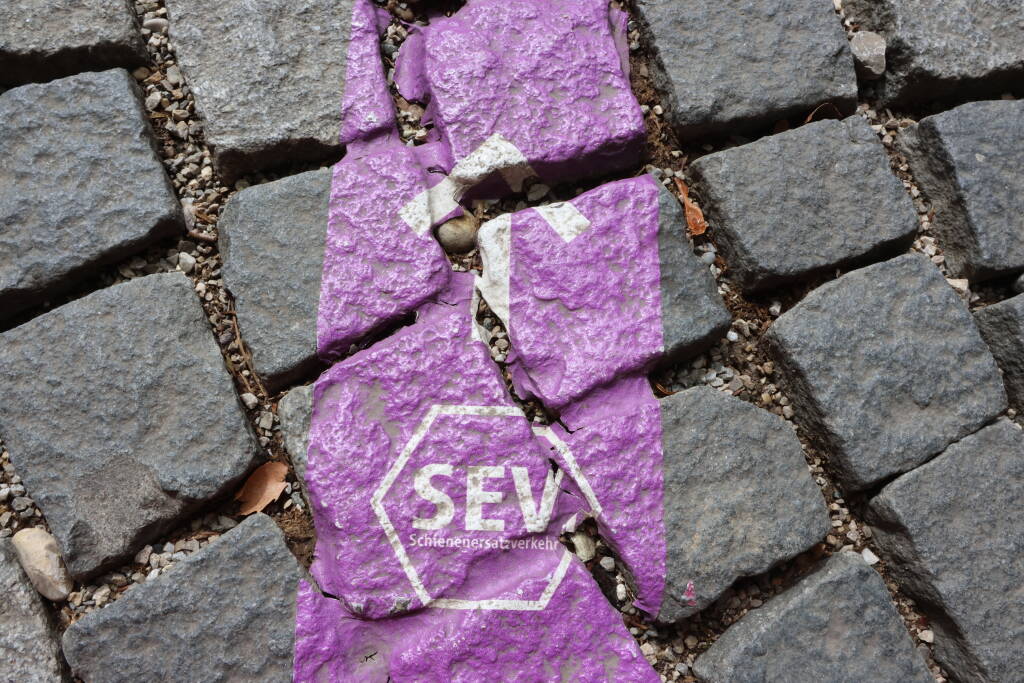
Navigation is painted directly on the sidewalk. For four months of closure it's useful.
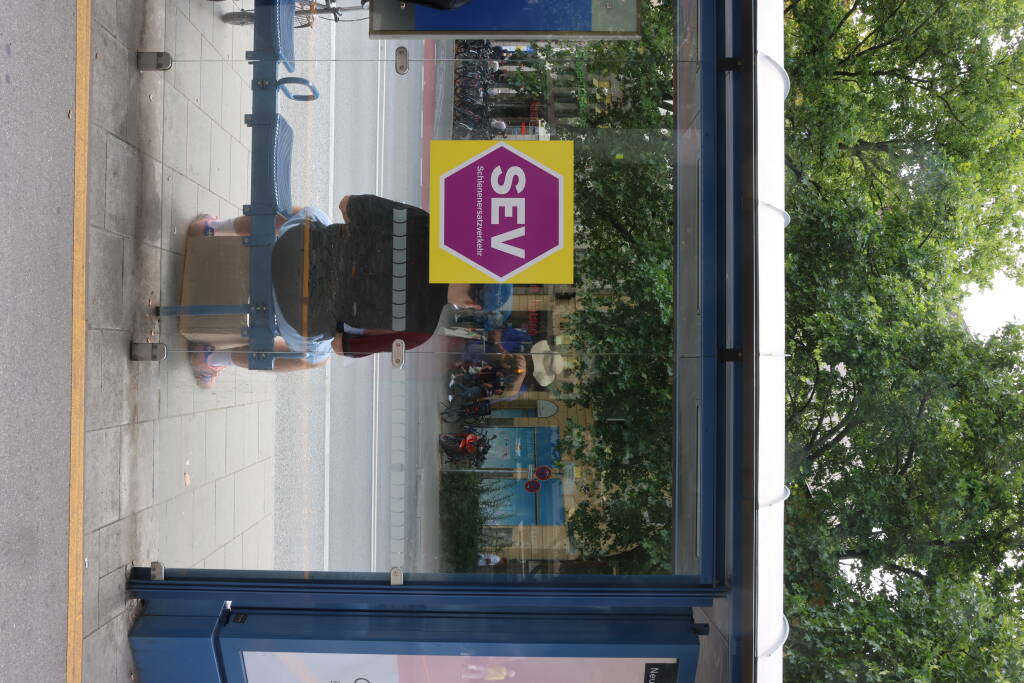
The bus stop is well marked. Stations Goetheplatz and Poccistraße are in reconstruction. It's slower than in Prague but they closed the line completely – in Prague, trains still pass the closed station every other minute or so.
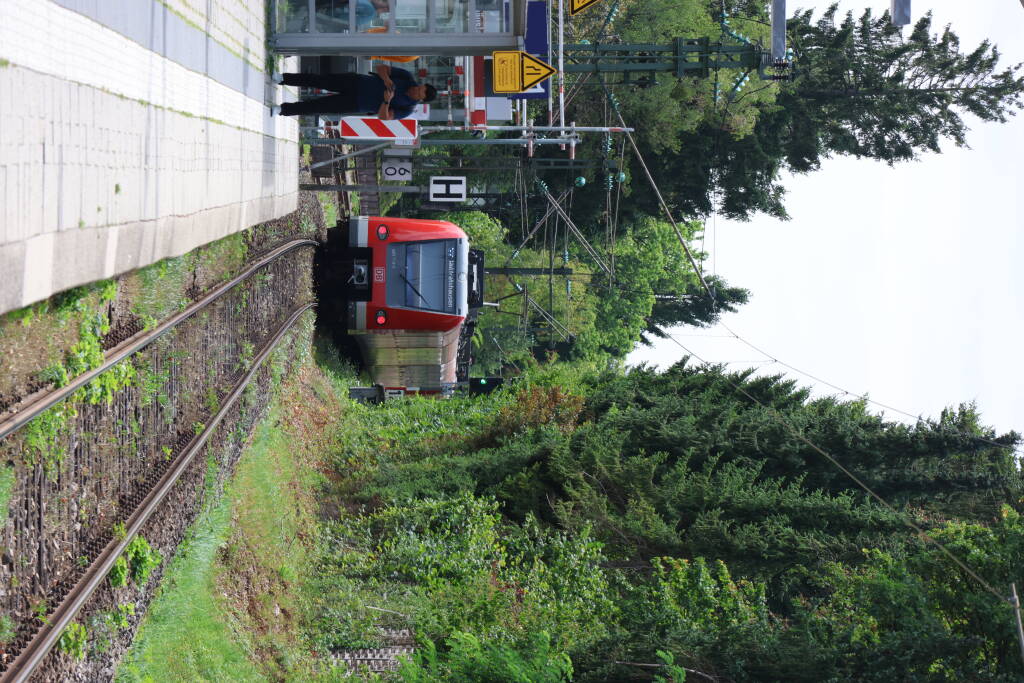
I reached the station Großhesselohe Isartalbahn. From here I go on foot.
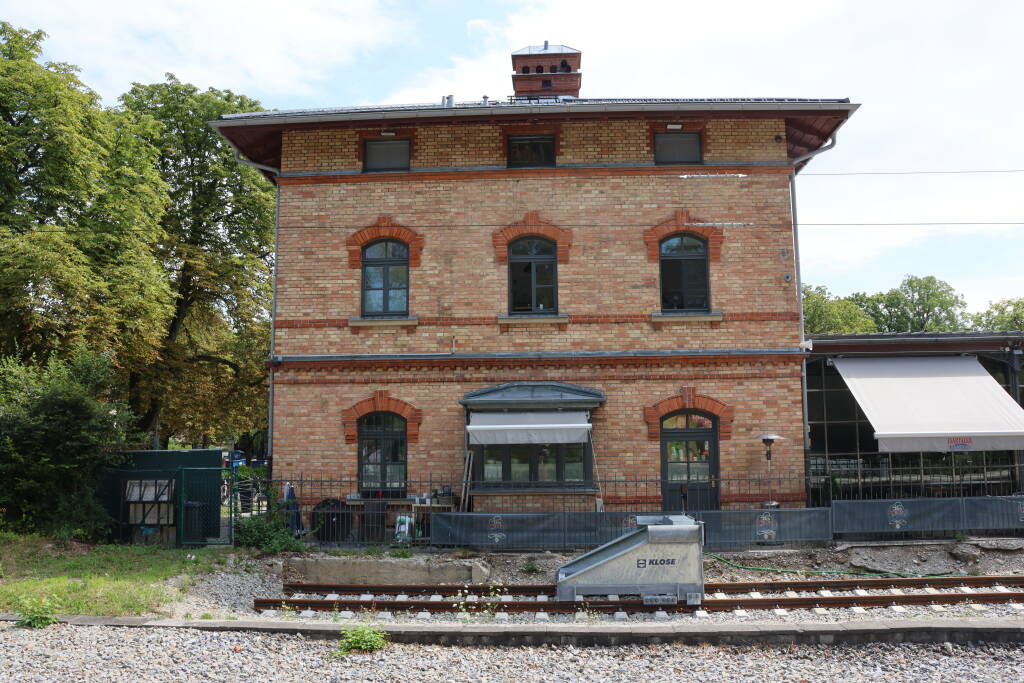
The original station building is nowadays a brewery. From here, the original railway went directly north. Nowadays, it's joining the railway from Lenggries.
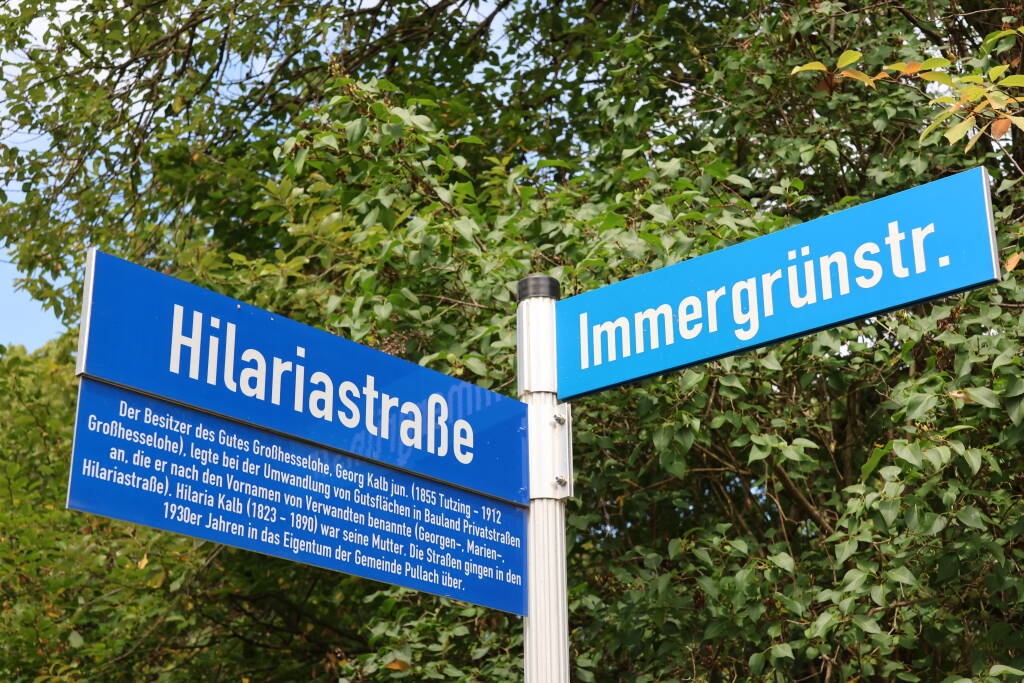
No comment.
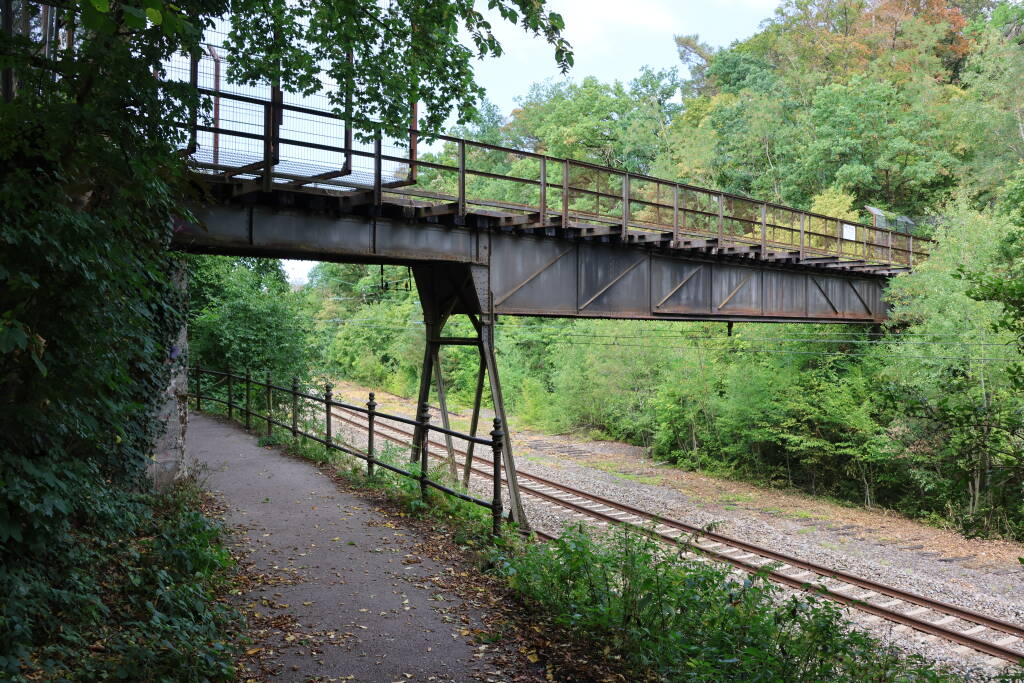
Historic bridge of Isartalbahn over the Lenggries railway. The map claims "gesperrt".
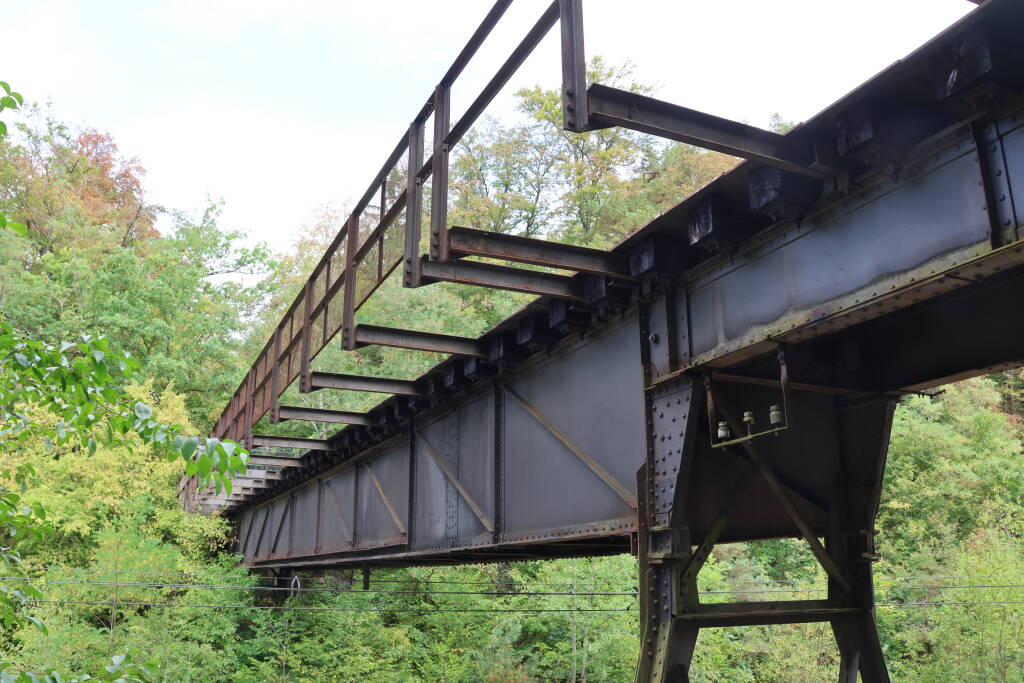
The bridge is missing some parts.
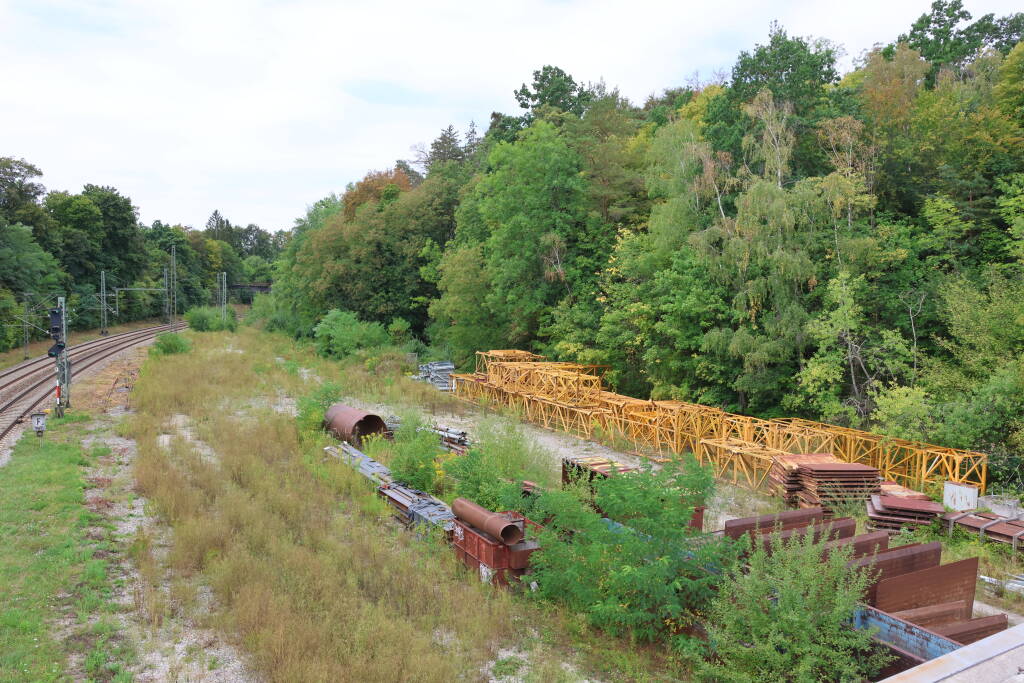
Just by the Lenggries tracks, there is crane piece storage.
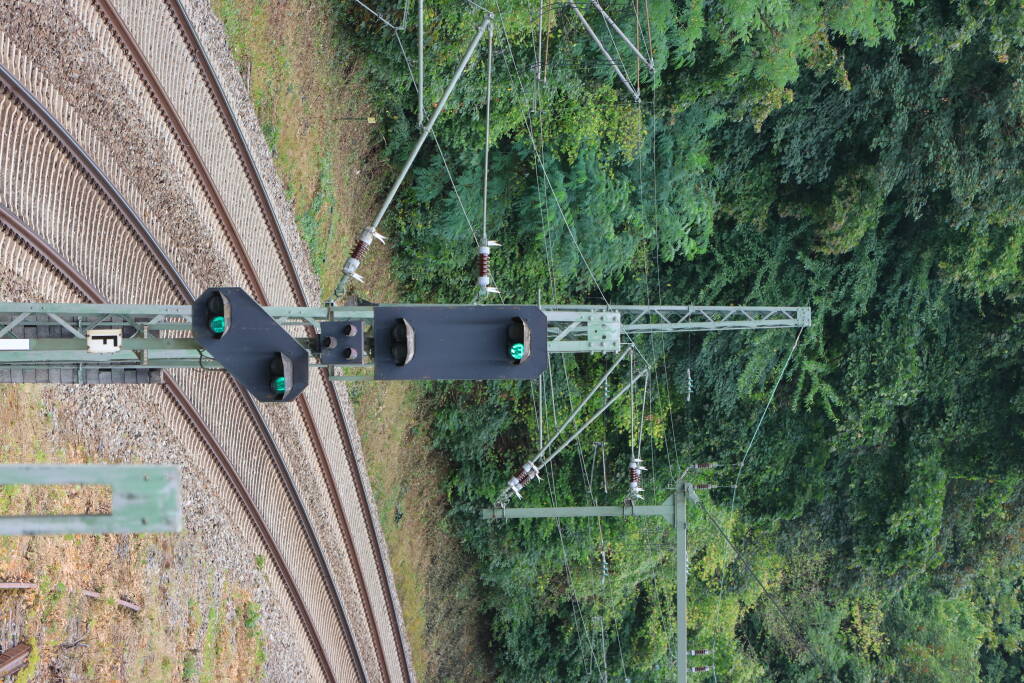
A train is about to ride.
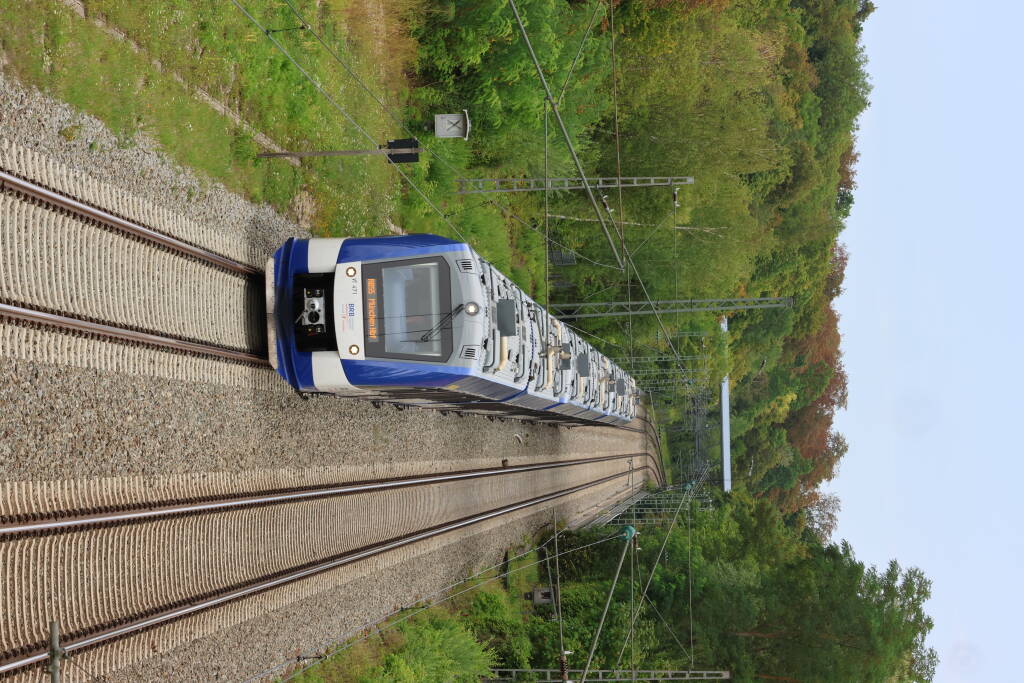
And indeed a train is coming.
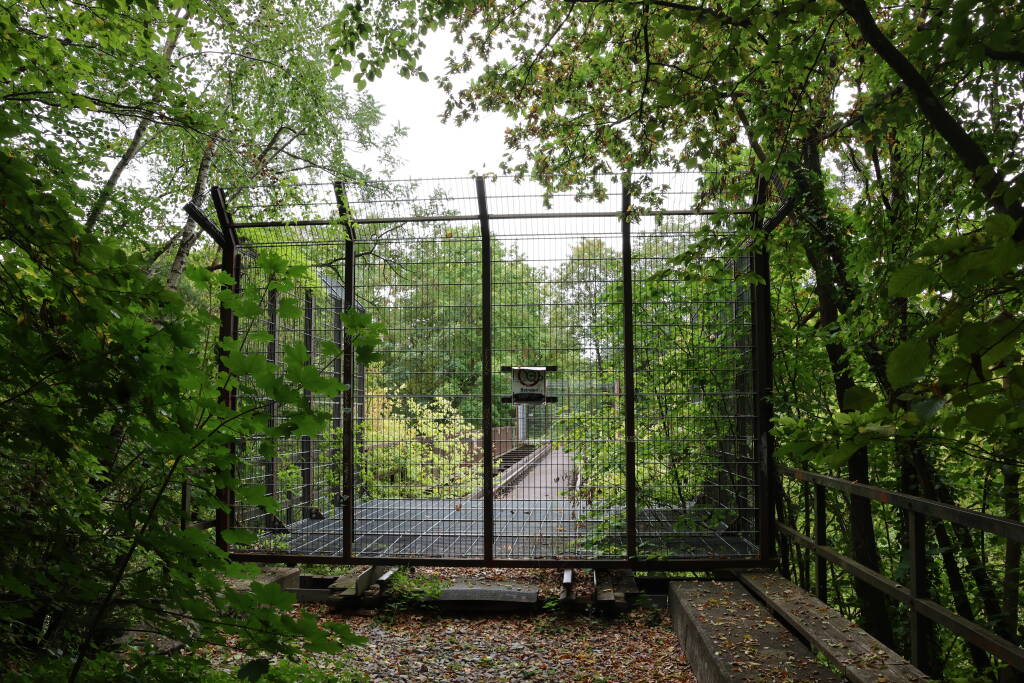
The bridge is gesperrt (closed) really thorougly.
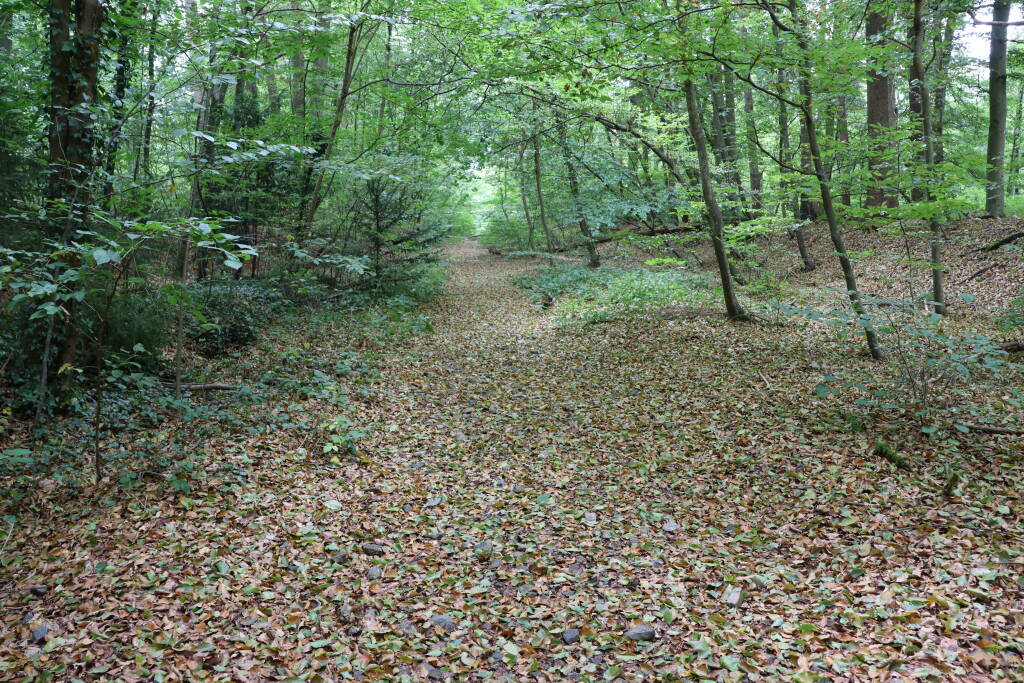
In the forest, one can see only the specific ground shape.
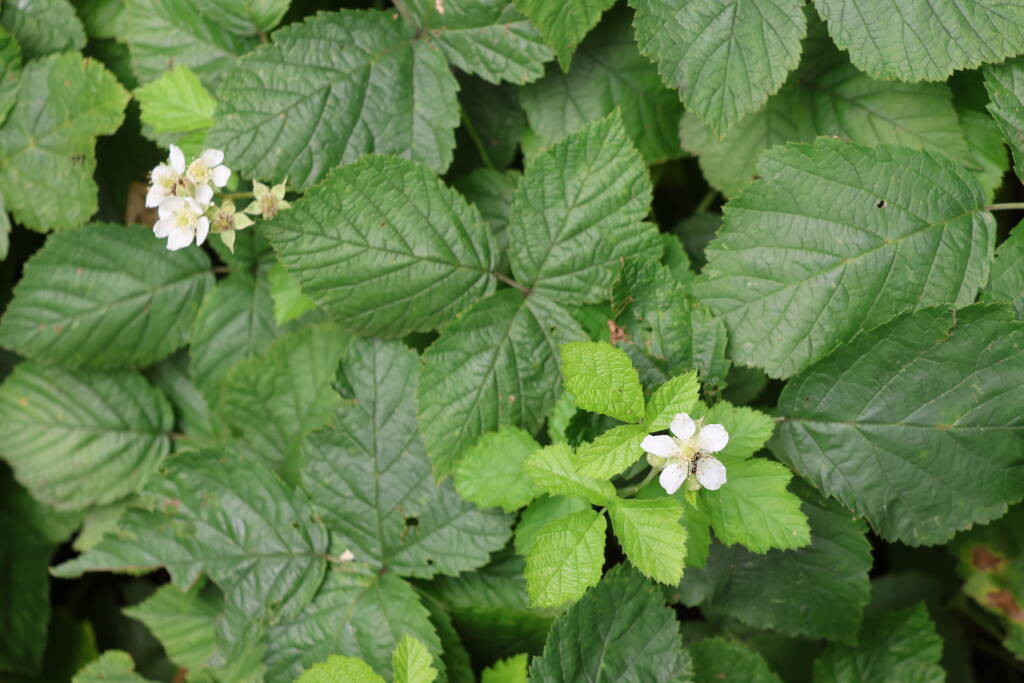
Blackberry flowers.
I always called this blackberry a railway variety because I almost never see it elsewhere than on railway embankments.
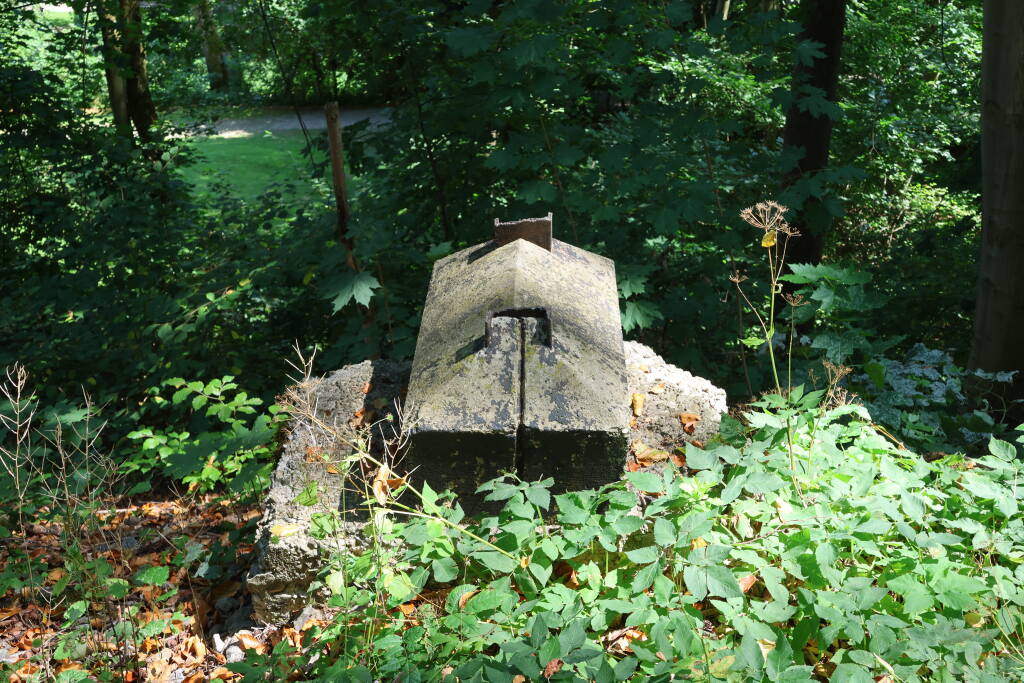
The former railway is now a cycling path and sometimes you can find concrete bases of something, probably signals. Or is it a remnant of catenary?
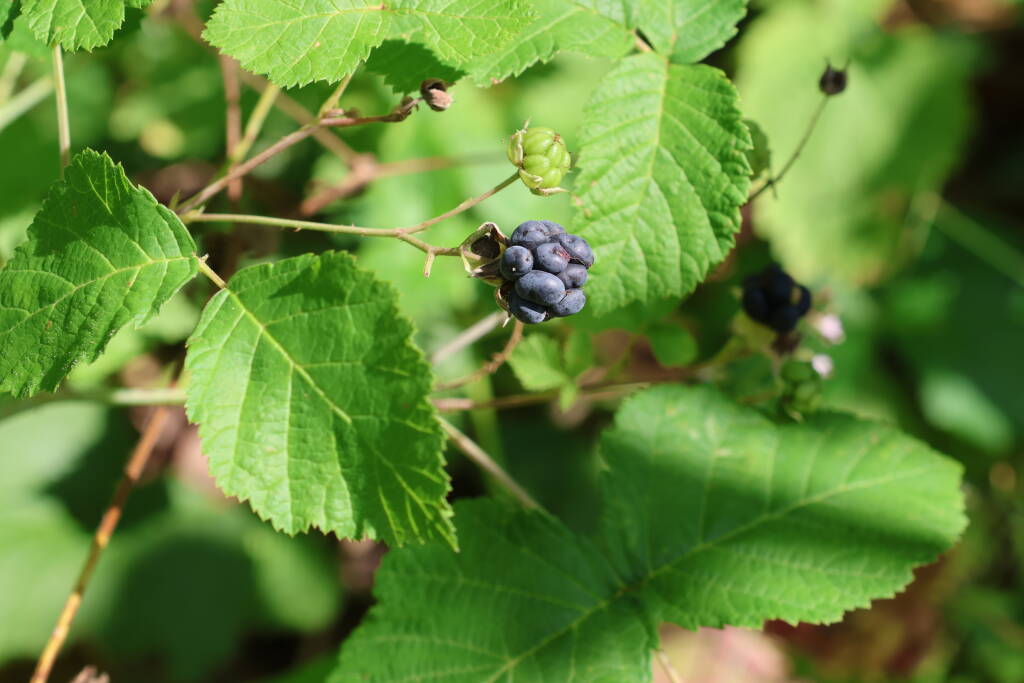
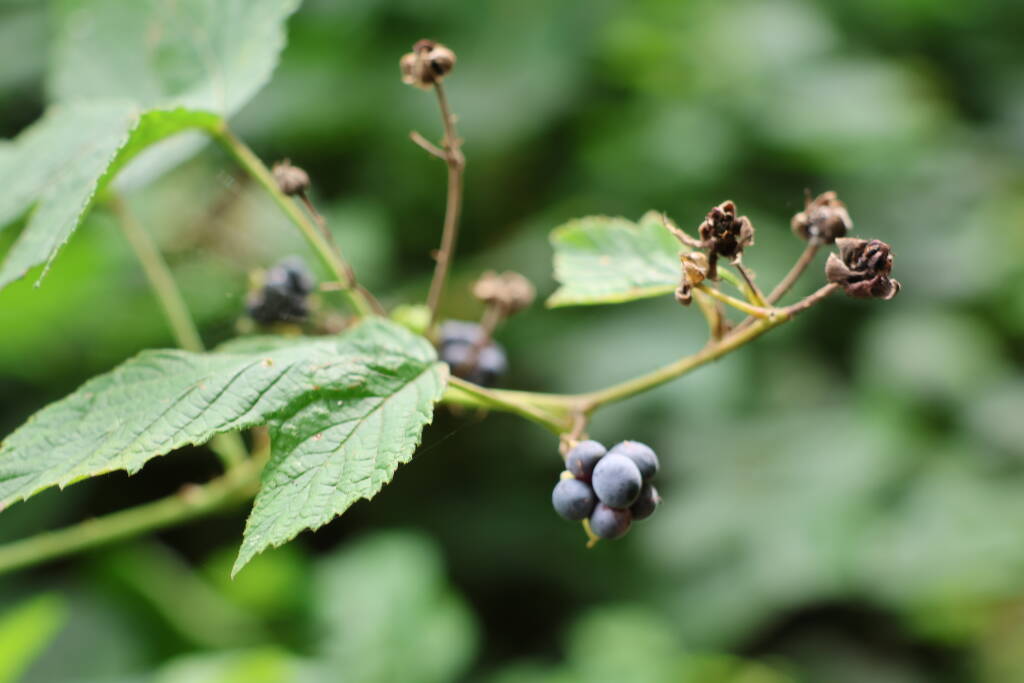
This blackberry doesn't really have black fruit, it's more like grayish blue. I was trying to find out what variety it is but wikipedia claims that not even botanic experts are sure about blackberry classification.
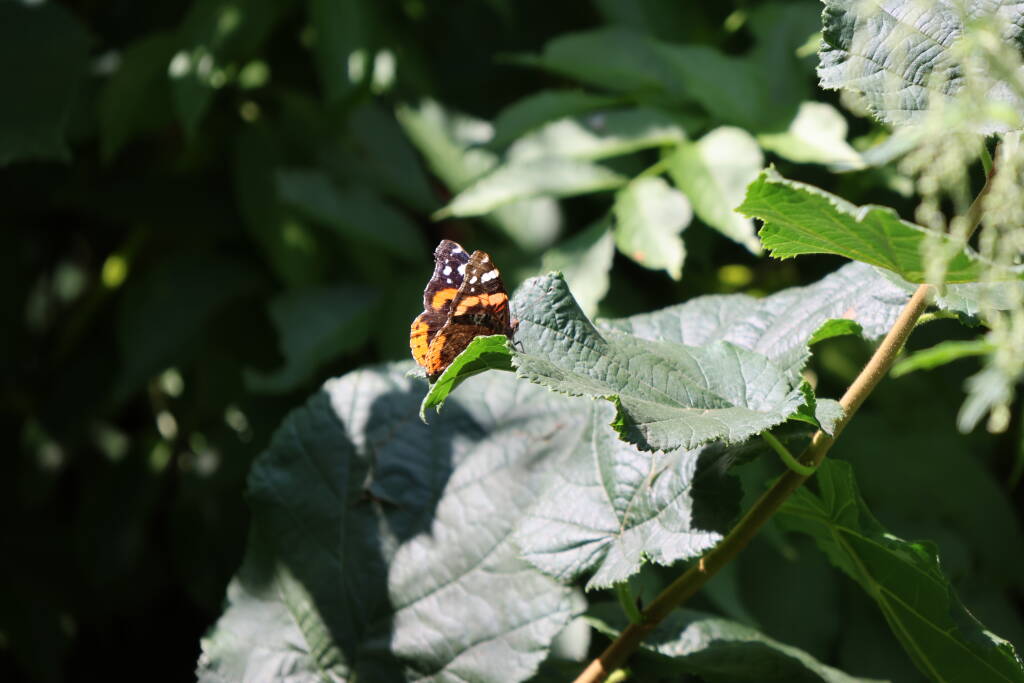
A butter fly, or better butterfly, the red admiral.
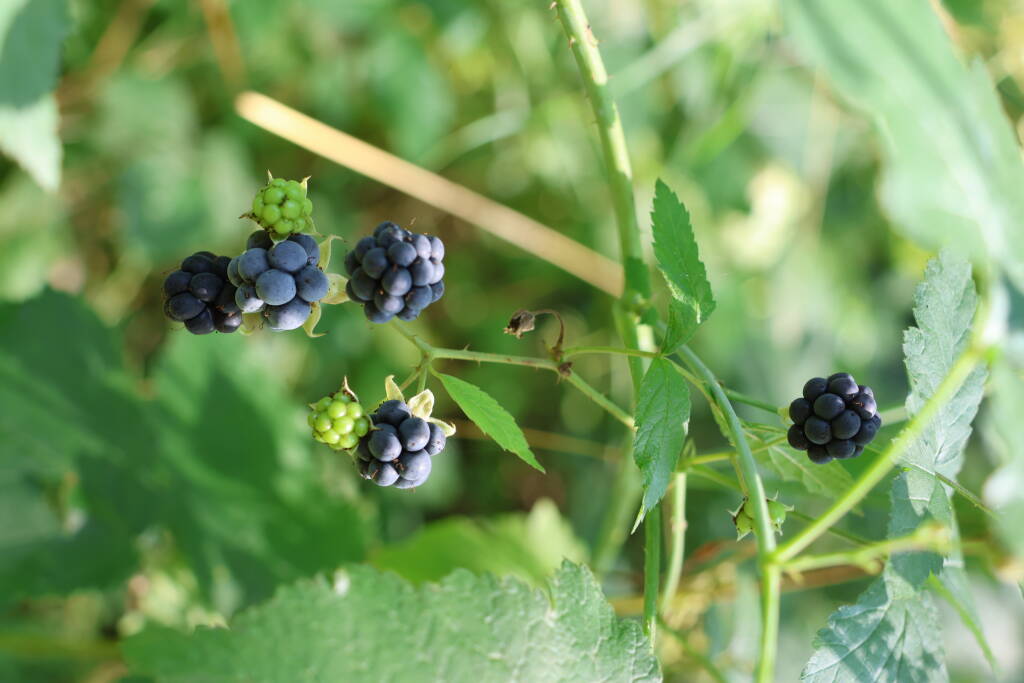
The railway blackberries didn't disappoint me. Everybody speeds around on bike, all blackberries remain for me.
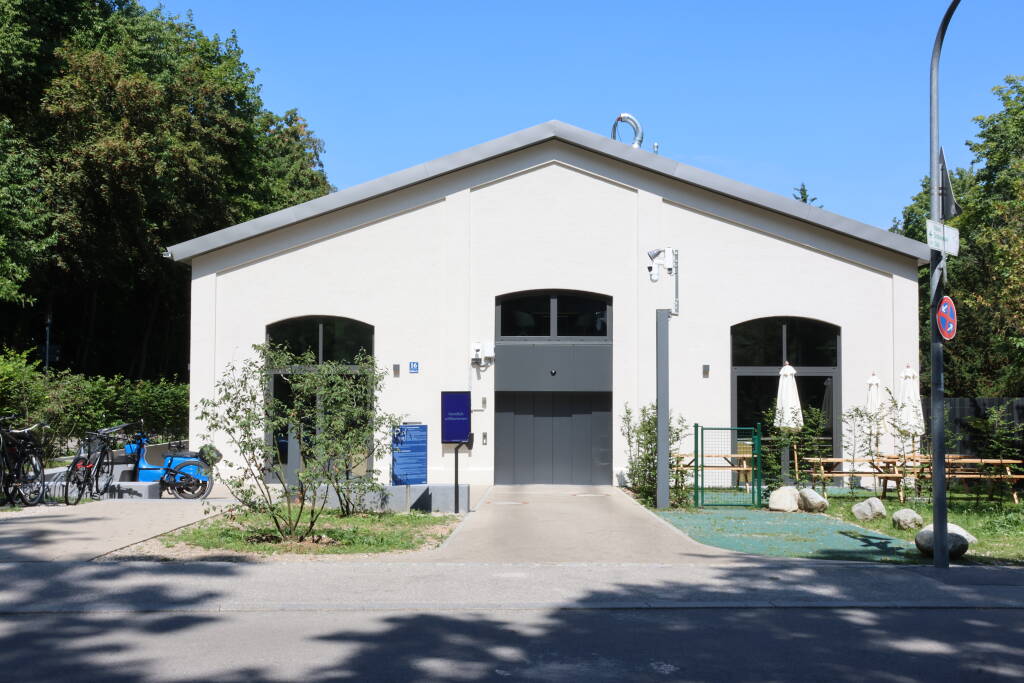
Former station and depot Thalkirchen.
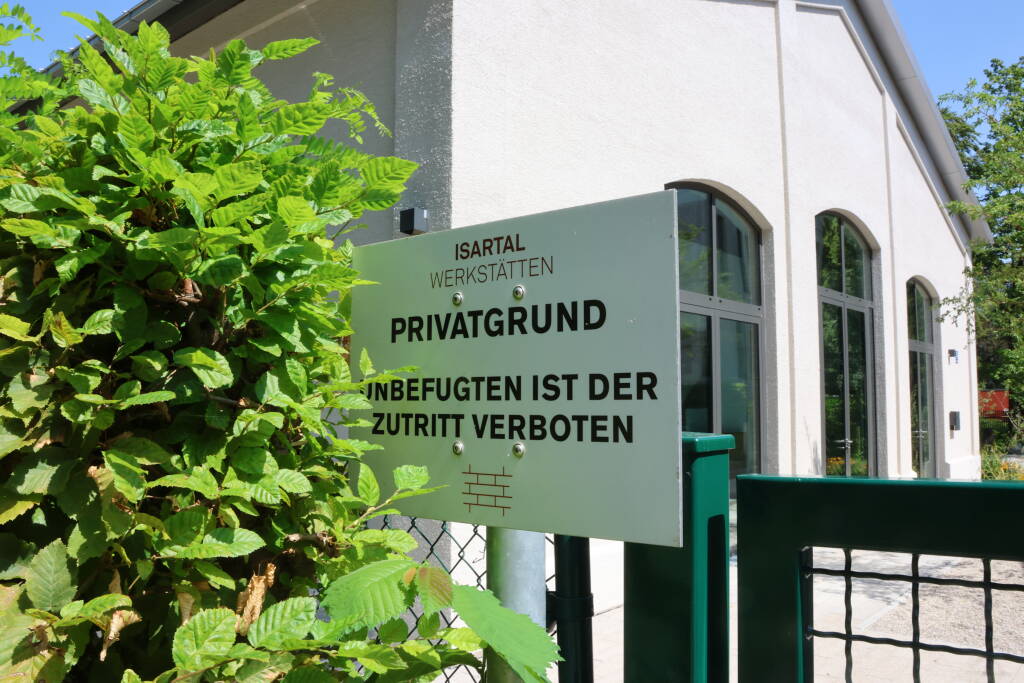
Nowadays there are offices and entry ban. At least it's possible to find interior photos by searching for "Loftige Büroflächen in den Isartal Werkstätten".
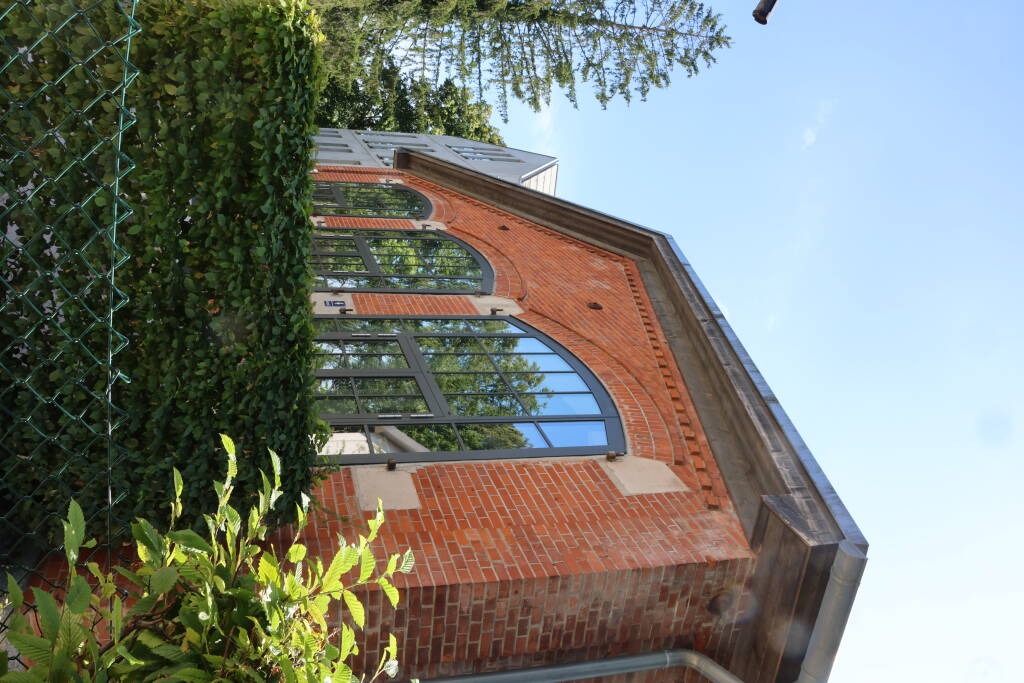
But it must be admitted that they fixed it well and it's now pretty.
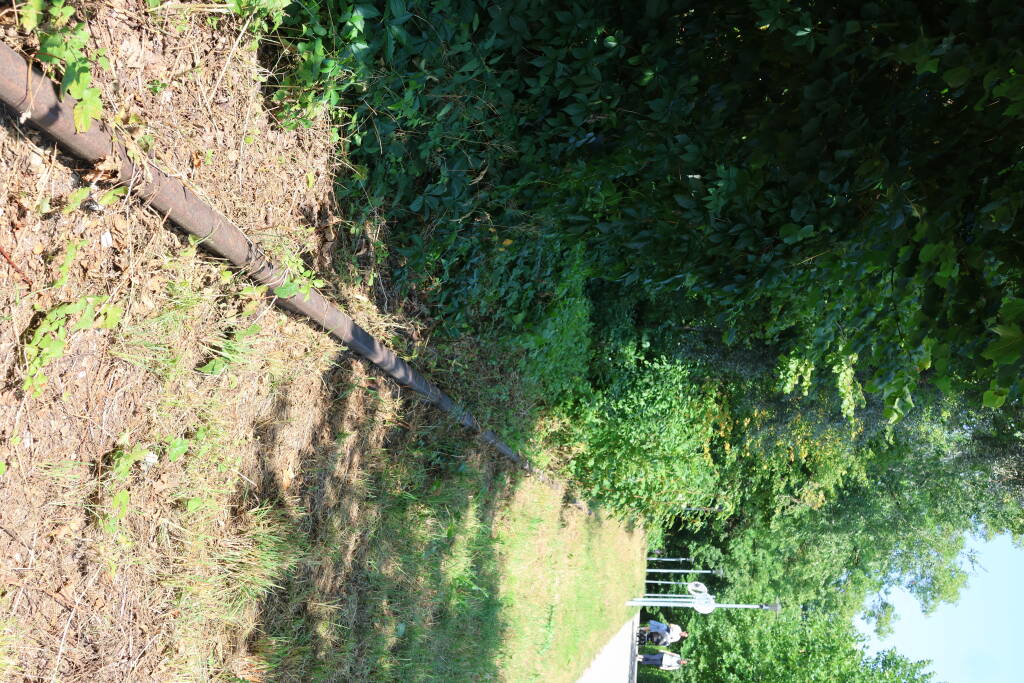
Just several meters from the offices, there are still abandoned rails in the bushes.
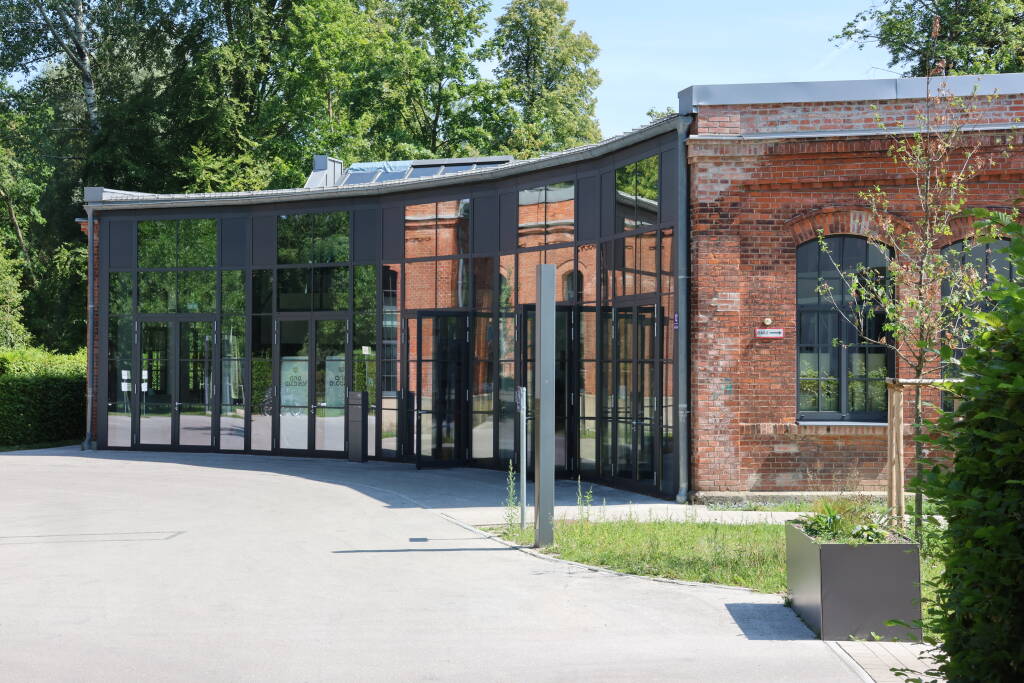
Locomotive depot. The turntable didn't survive, sadly. It could have been a merry-go-round for employees.
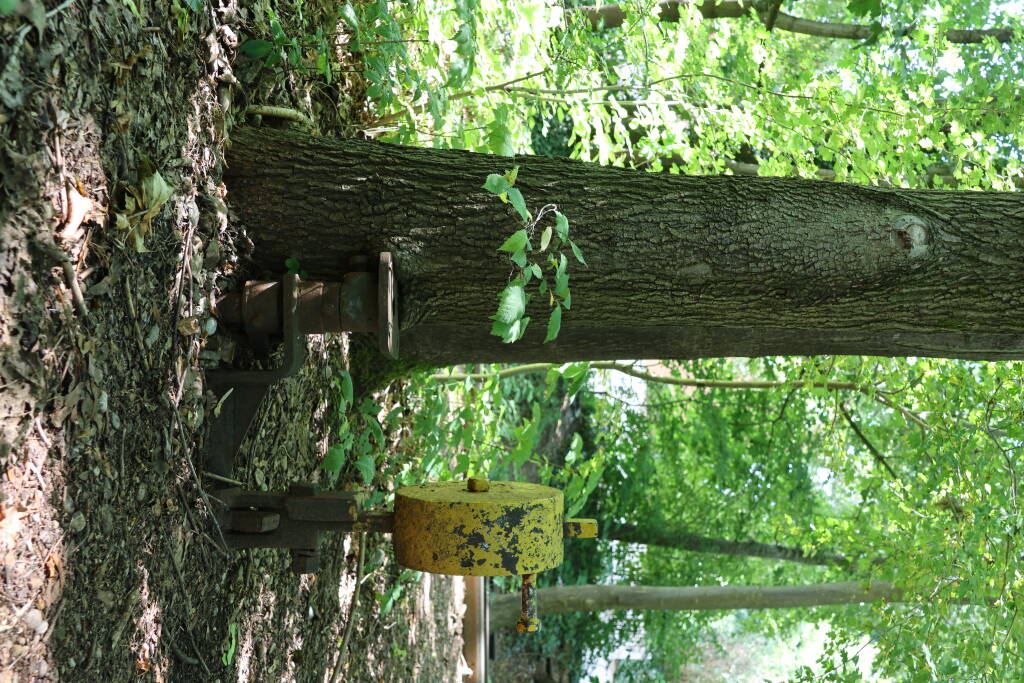
A switch ingrown in a tree.
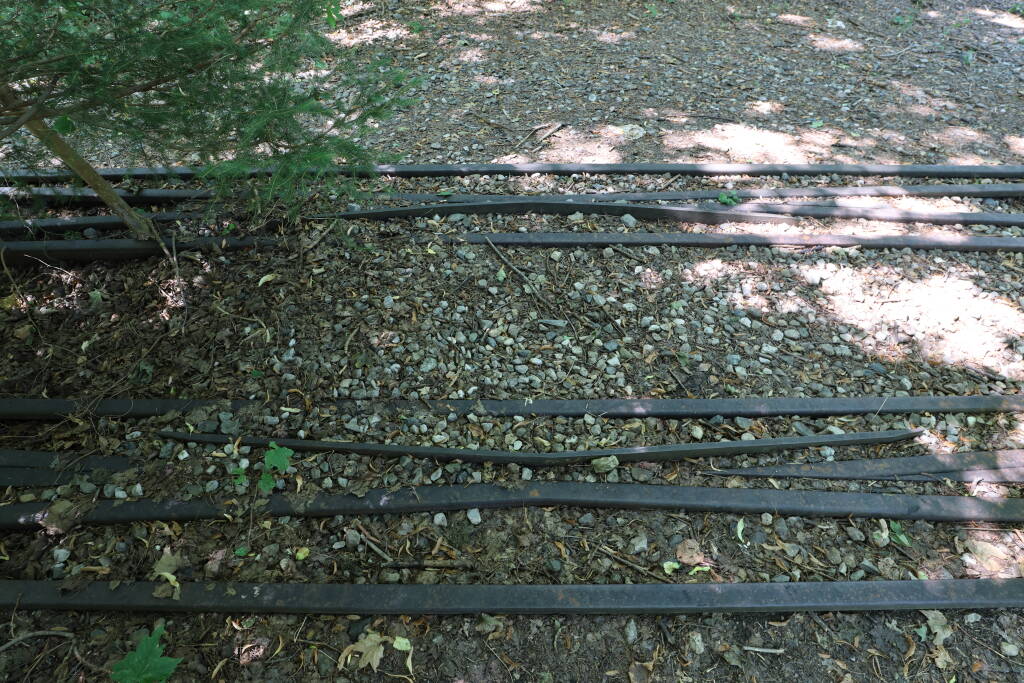
A crossing double slip switch is still complete in the bushes.
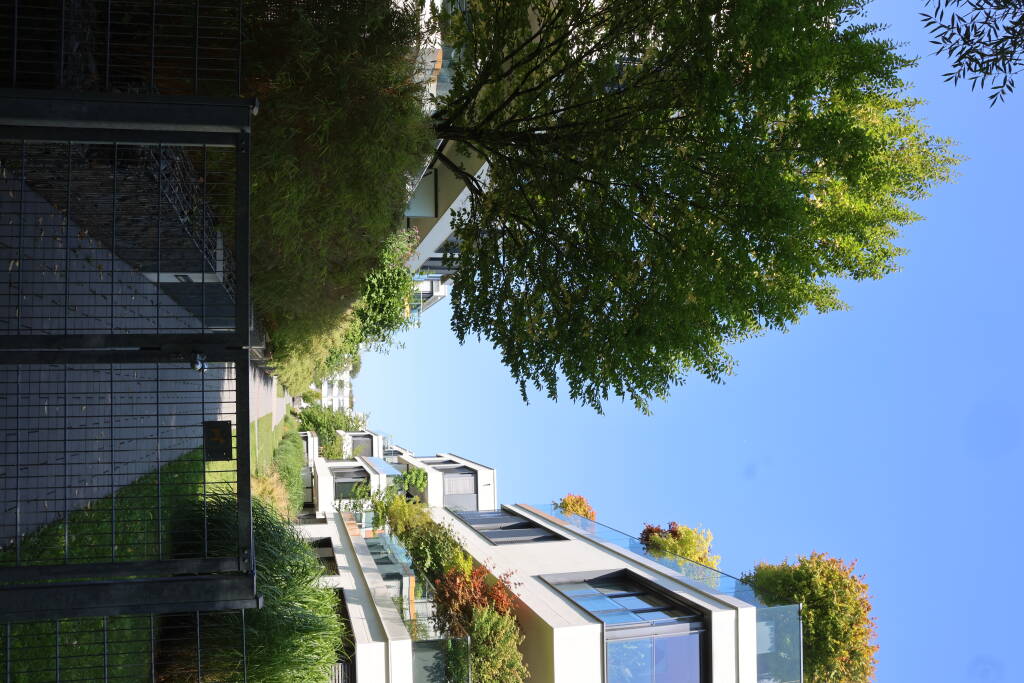
Following stretch of the route is completely destroyed by new apartments.
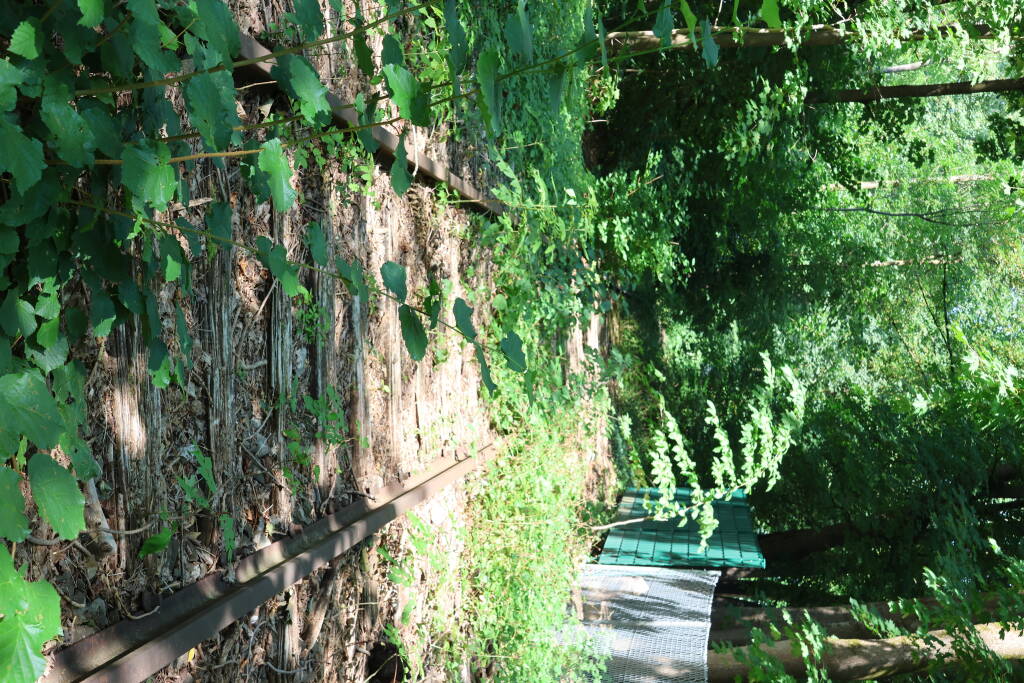
Only after passing an underground station and a hospital, there are some more pieces of track in the bushes.
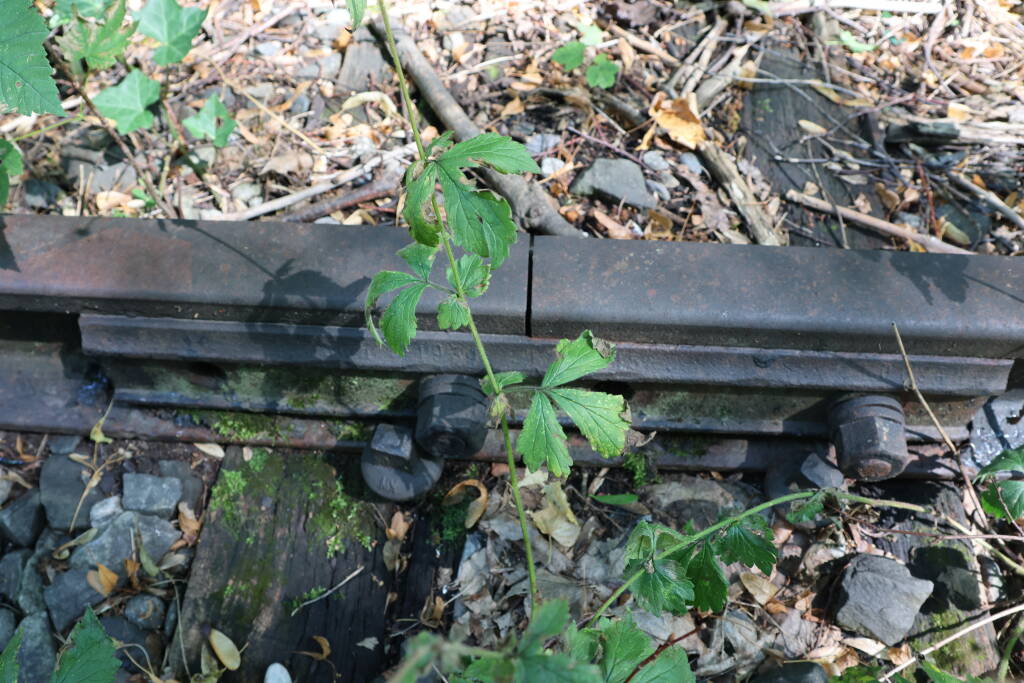
To my surprise, all screws and other parts are still there. Only the sleepers are thoroughly rotten, of course.
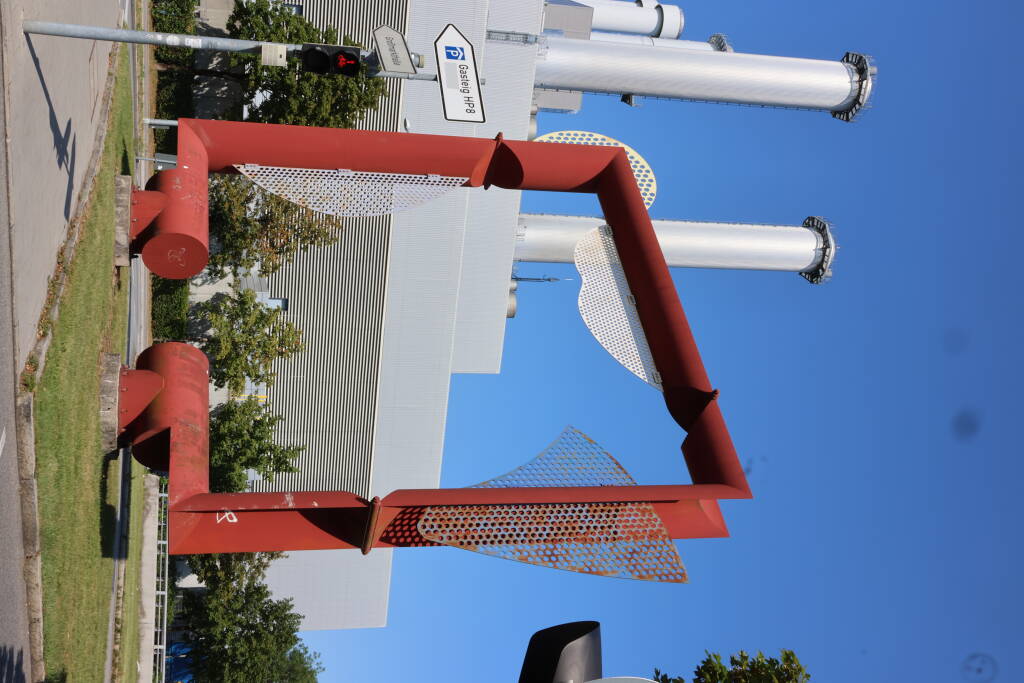
The railway disappeared after some tens of meters. The street continues to the local central heating facility. Here the crossing was removed around 1970 while building the ring road, and never restored.
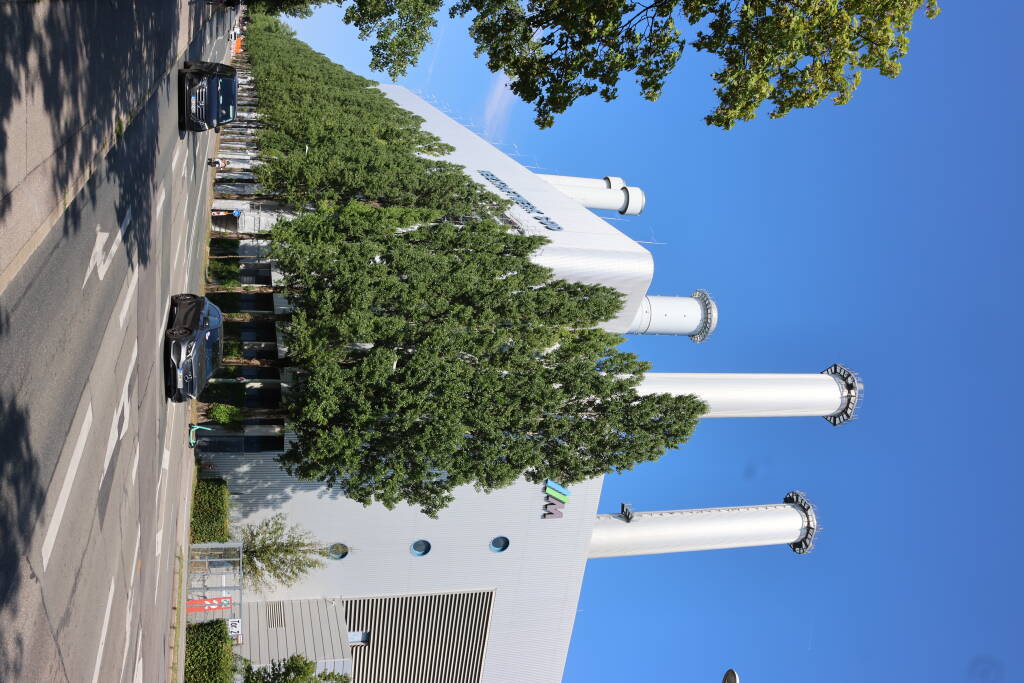
Behind the trees, there would be the railway but ending in the central heating facility after 1970.
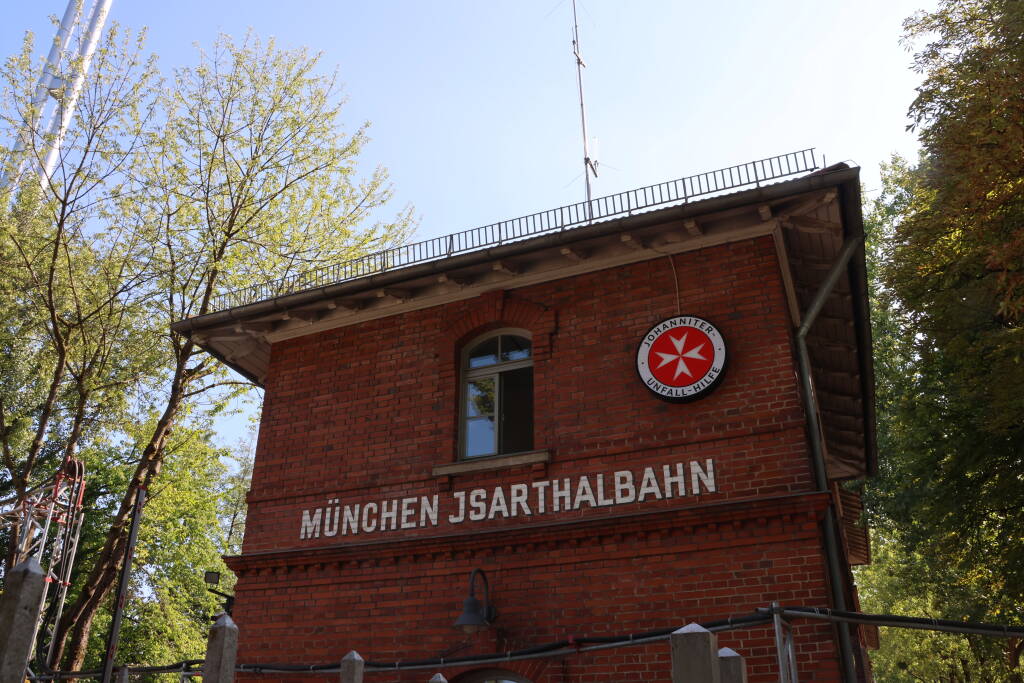
The former end station München Isartalbahnhof is now used as paramedic station.
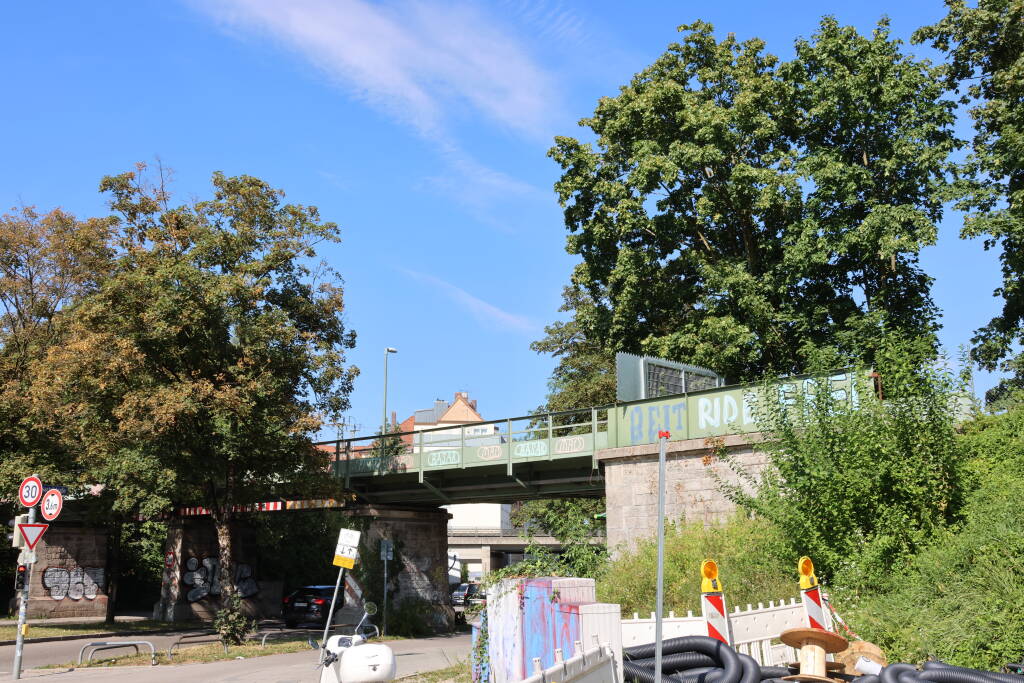
Bridge on a connecting track between Isartalbahn and the München Süd station. Gesperrt, of course.
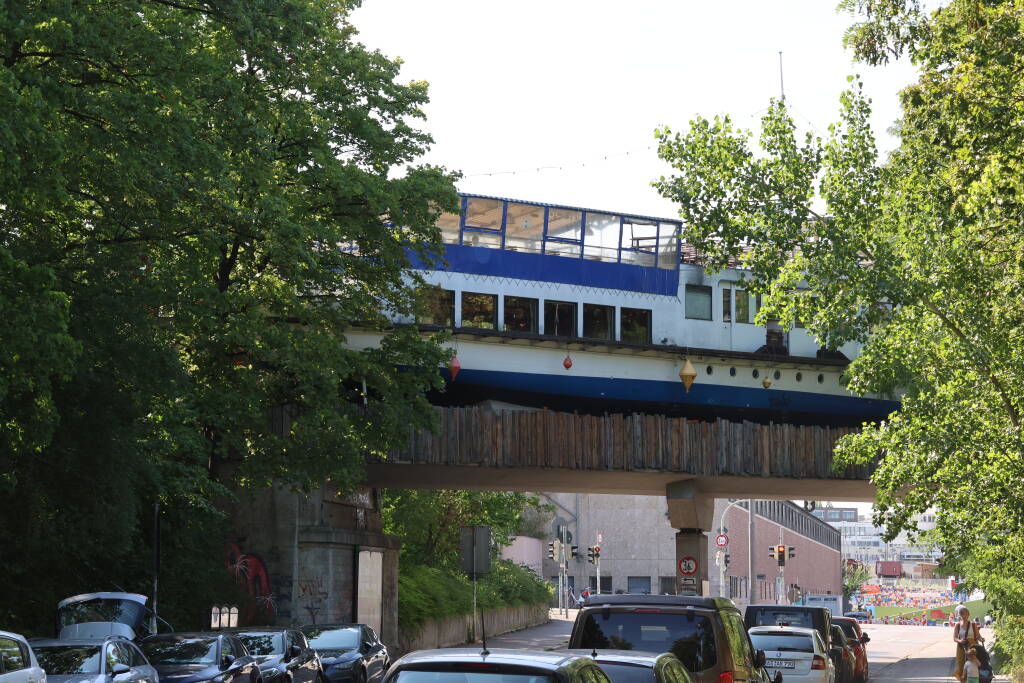
To an adjacent siding, somebody put a river boat and opened a pub there.